Dragon Ball Z: Battle of Gods and Dragon Ball Z: Resurrection ‘F’ are deeply connected stories that effectively launch the modern era of the Dragon Ball franchise. While they were originally released as separate movies, both films later became the foundation for the opening arcs of Dragon Ball Super. More importantly, the second movie directly builds on the concepts, power systems, and character development introduced in the first.
Before the Battle of Gods, Dragon Ball mainly focused on increasingly powerful mortal enemies and traditional Super Saiyan transformations. However, Beerus’ arrival changes the entire direction of the franchise by introducing divine hierarchy, godly ki, and multiverse-level power scaling. Resurrection ‘F’ then continues that evolution by showing the consequences of Goku and Vegeta training under Whis after the Beerus fight. This leads directly to the debut of Super Saiyan Blue and Frieza’s return in his Golden form.
The connection between these stories is therefore much deeper than simple chronological order. Battle of Gods establishes the new rules of power and introduces divine training, while Resurrection ‘F’ explores the next stage of that growth. Together, the two films create the narrative bridge between Dragon Ball Z and Dragon Ball Super.
Battle of Gods introduces the modern Dragon Ball era
The biggest connection between the two films begins with Battle of Gods, which completely redefines the Dragon Ball universe.
Before Beerus appears, Goku had already defeated enemies like Frieza, Cell, and Majin Buu using traditional Saiyan transformations. However, Beerus immediately demonstrates that even Super Saiyan 3 is insignificant compared to divine power. During their first encounter, Beerus defeats Goku effortlessly, establishing an entirely new level of strength.
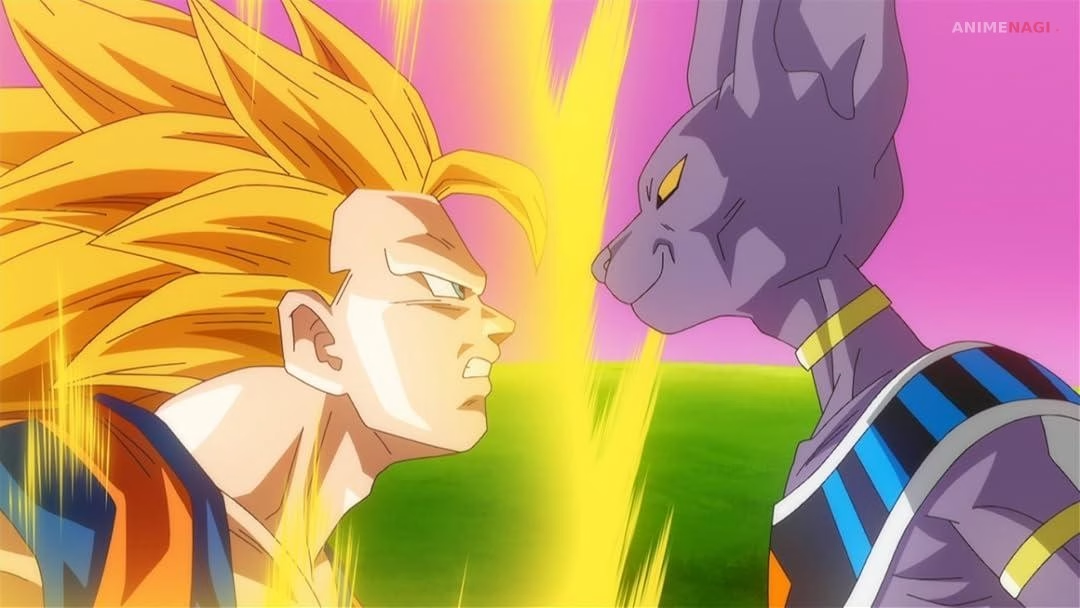
This changes the direction of the franchise dramatically. Instead of simply introducing stronger villains repeatedly, Battle of Gods expands the mythology by introducing Gods of Destruction, Angels, and godly ki. Beerus and Whis become central figures moving forward, especially because they remain involved throughout Dragon Ball Super afterward.
The movie also establishes the idea that Saiyans can evolve beyond normal Super Saiyan forms through divine energy. This concept becomes the direct foundation for Resurrection ‘F’ later.
Without the Battle of Gods, the entire power system used in Dragon Ball Super would not exist in its modern form.
Super Saiyan God becomes the foundation for everything later
One of the most important story links between the two films is the introduction of Super Saiyan God.
During Battle of Gods, Goku gains access to this transformation through a ritual involving five pure-hearted Saiyans transferring energy into him. The form gives Goku access to godly ki for the first time, allowing him to challenge Beerus directly despite still being weaker.
What matters most is not just the transformation itself, but the experience Goku gains while using divine power. During the battle, Goku learns what godly ki feels and begins adapting his body to it naturally. Even after the transformation fades, he retains traces of that power afterward.
This becomes critically important in Resurrection ‘F’. By that point, Goku and Vegeta are no longer simply trying to become stronger Saiyans. They are actively training to master godly ki completely under Whis’s guidance.
In many ways, Battle of Gods acts as Goku’s introduction to divine energy, while Resurrection ‘F’ explores what happens after he starts mastering it independently.
That progression directly connects both stories together.
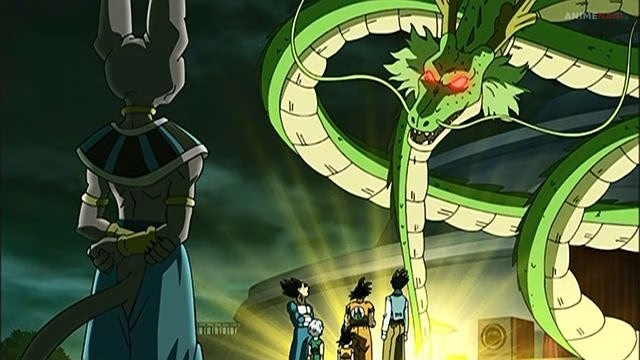
Beerus and Whis remain central characters in Resurrection ‘F’
Another major connection between the two movies is the continued presence of Beerus and Whis.
After the events of Battle of Gods, Beerus decides not to destroy Earth and instead becomes interested in Goku’s potential. This leads to Goku and Vegeta training under Whis, the angel attendant to Beerus and one of the strongest beings in Universe 7.
By the beginning of Resurrection ‘F’, Goku and Vegeta are already training regularly on Beerus’ planet. Their training focuses heavily on mastering ki control, movement efficiency, and divine energy usage. This directly continues the ideas introduced during the Beerus fight.
Whis especially becomes one of the franchise’s most important mentor characters moving forward. He teaches Goku and Vegeta how to control godly ki properly rather than relying purely on explosive transformations and raw power.
Beerus also shifts from being an antagonist to a recurring observer and occasional mentor figure. Although he remains far stronger than Goku and Vegeta, his role changes significantly after the Battle of Gods.
This continuing relationship is one of the clearest links connecting the two movies directly.
Resurrection ‘F’ shows the consequences of divine training
While Battle of Gods introduces godly power, Resurrection ‘F’ shows the results of training with that power.
At the start of the movie, Goku and Vegeta have already grown significantly stronger under Whis’s guidance. Unlike before, their fighting styles have become more controlled and refined. Whis repeatedly emphasizes the importance of calmness, efficiency, and ki management during combat.
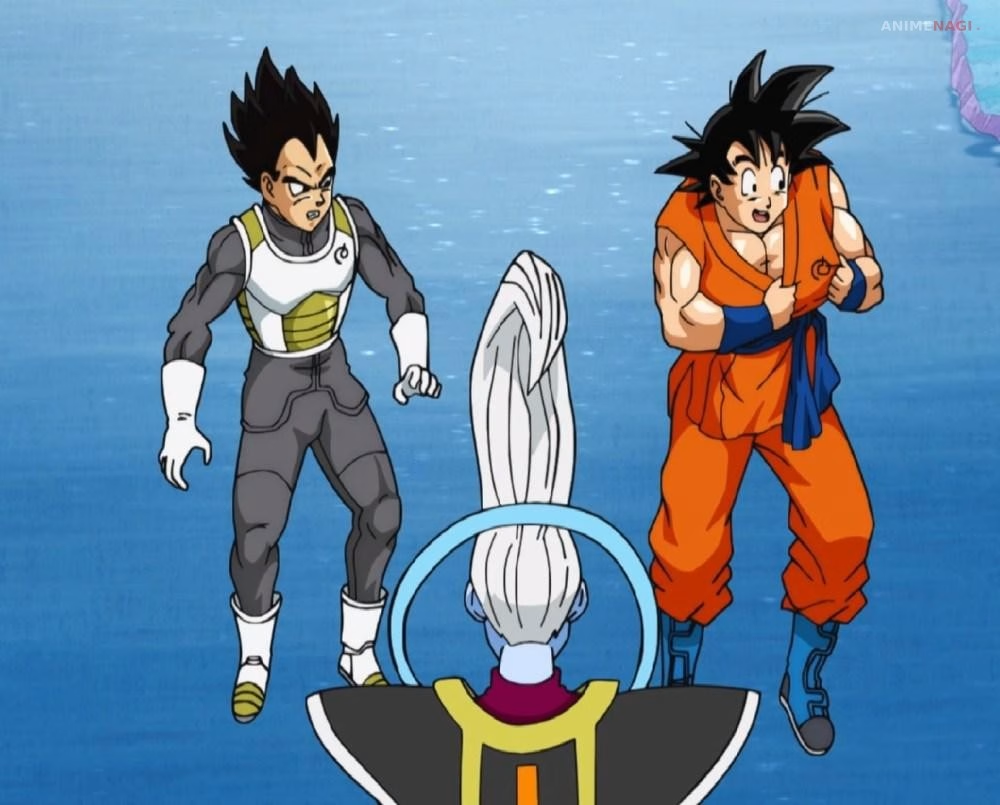
This training eventually leads to the creation of Super Saiyan Blue, also called Super Saiyan God Super Saiyan. The transformation combines the power of Super Saiyan with divine ki, creating a form far beyond Super Saiyan God in terms of usable combat power.
This progression only makes sense because of the groundwork established in Battle of Gods. Goku could not achieve Super Saiyan Blue without first experiencing godly ki during the ritual transformation against Beerus.
The two movies, therefore, function almost like two parts of the same character progression arc. One introduces divine power, while the other explores mastery and refinement.
That structure is why many fans view them as closely connected chapters rather than isolated films.
Frieza’s return contrasts directly with the Beerus arc
The villains themselves also highlight the thematic connection between the two movies.
Beerus represents divine power and introduces a completely new hierarchy within the Dragon Ball universe. He is calm, experienced, and vastly beyond mortal fighters in terms of strength and understanding. Fighting Beerus forces Goku to evolve beyond traditional Saiyan methods.
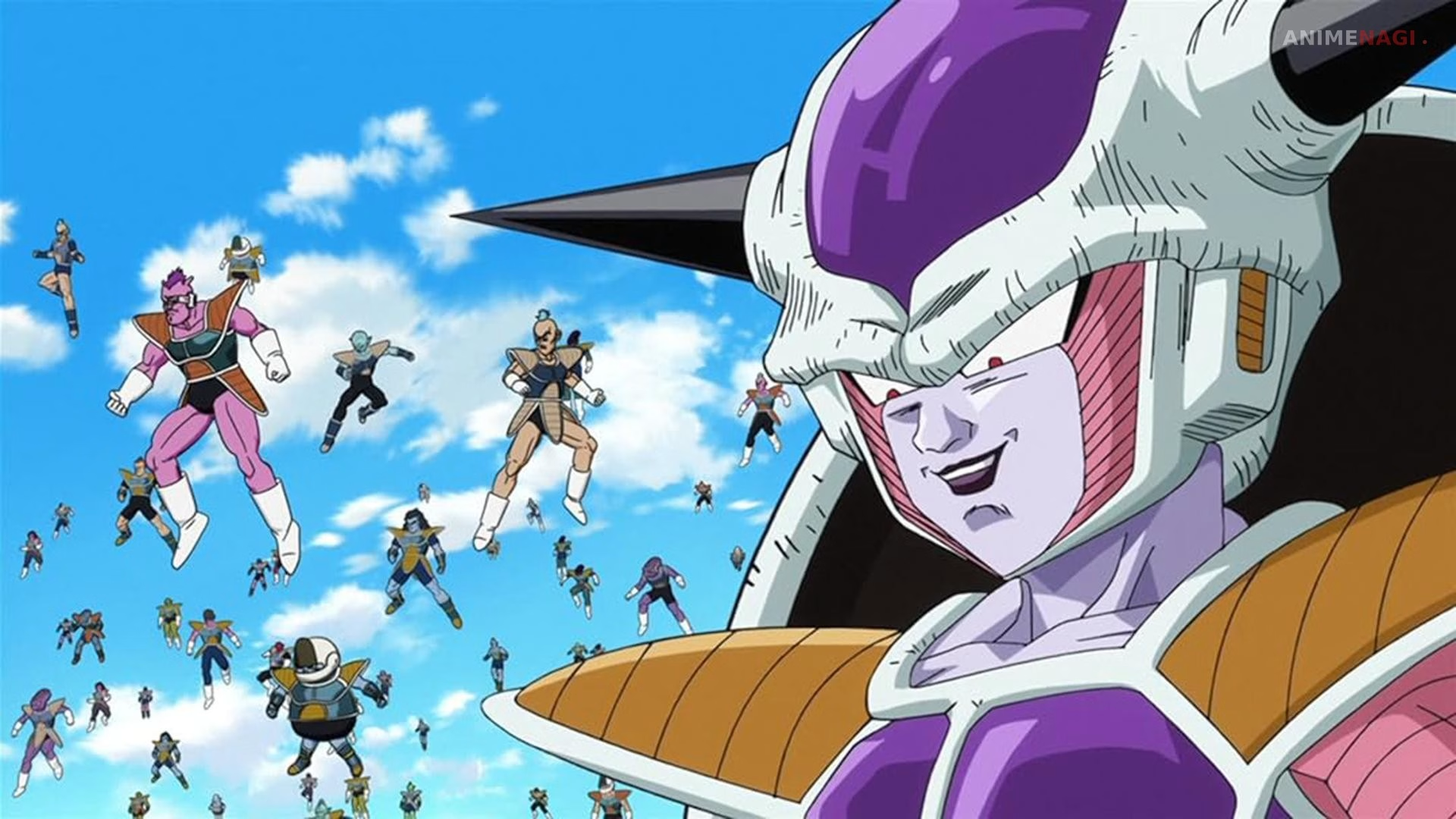
Frieza, on the other hand, represents the past returning. His resurrection reconnects the story to one of Dragon Ball Z’s most iconic villains while also showing how much the heroes have changed since Namek.
Unlike Beerus, Frieza achieves his new power quickly through raw potential and revenge-driven training. His Golden Frieza form contrasts heavily with Super Saiyan Blue because Frieza lacks the refined ki control and discipline taught by Whis.
This difference becomes central during the climax of Resurrection ‘F’. Although Golden Frieza initially rivals Super Saiyan Blue, his lack of stamina management causes his power to collapse rapidly during prolonged combat.
This mirrors one of the biggest lessons introduced after the Battle of Gods: true divine strength requires control, not just raw energy output.
That thematic continuation links both films closely together.
Battle of Gods changes Dragon Ball’s power scaling permanently
One reason Resurrection ‘F’ works as a sequel is that Battle of Gods completely resets Dragon Ball’s power structure beforehand.
Before Beerus appeared, Super Saiyan 3 represented one of Goku’s strongest transformations. However, Beerus defeats it effortlessly, making it clear that entirely new levels of power exist beyond mortal understanding.
This allows Resurrection ‘F’ to introduce Super Saiyan Blue naturally as the next step forward. Instead of simply being another color transformation, Blue represents Goku and Vegeta finally learning to combine Saiyan power with divine ki control.
The movies also shift combat away from purely destructive scaling toward refined technique and energy efficiency. Whis repeatedly criticizes both Goku and Vegeta for wasting movement and leaking unnecessary energy during battle.
This approach later becomes essential throughout Dragon Ball Super, especially during arcs involving Ultra Instinct and other god-level abilities.
Without Battle of Gods establishing divine scaling first, Resurrection ‘F’ would feel disconnected from the older series entirely.
Instead, the two films create a smooth transition into the new era.
Both movies were later adapted into Dragon Ball Super
Another major connection is that both films were eventually remade as the first two story arcs of Dragon Ball Super.
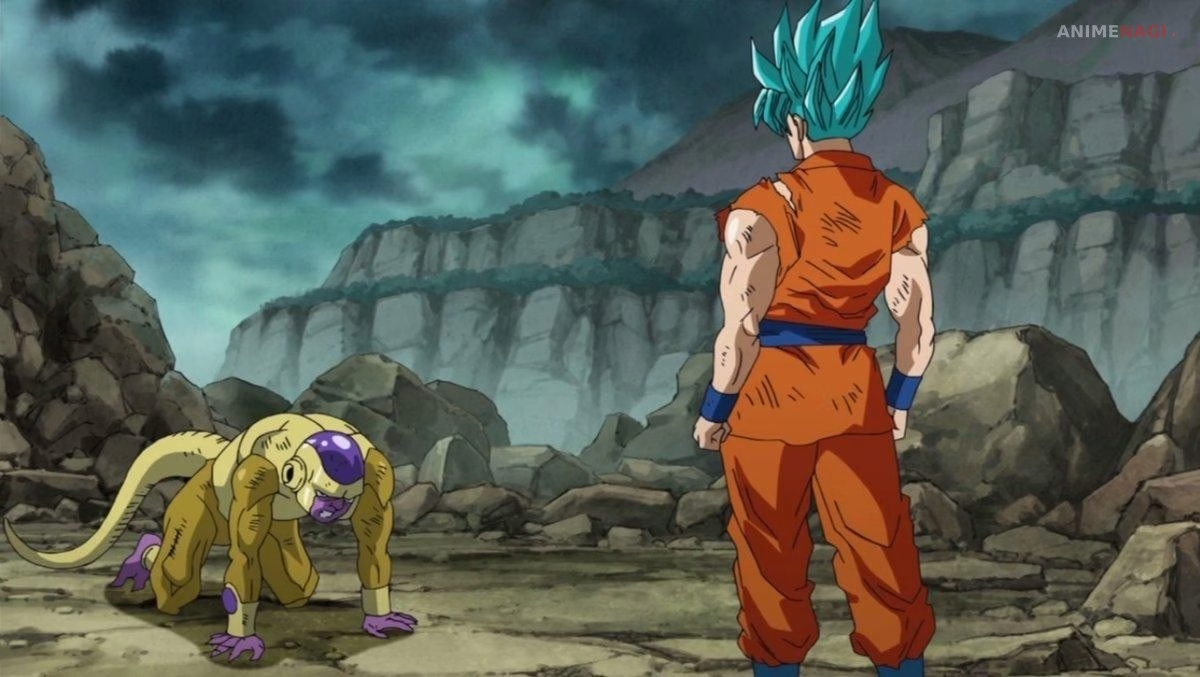
The anime adaptation expands certain scenes, adds additional dialogue, and changes some smaller details. However, the core events remain largely the same. Battle of Gods becomes the opening Beerus arc, while Resurrection ‘F’ becomes the Golden Frieza arc afterward.
This adaptation structure reinforces how connected the two stories are within the broader Dragon Ball timeline. They effectively act as the introduction to Dragon Ball Super’s main continuity.
The transition between arcs also feels natural because Resurrection ‘F’ directly references the consequences of the Beerus fight repeatedly. Goku and Vegeta’s training, Whis’ mentorship, and the existence of godly transformations all originate from the previous story.
The anime version also expands the worldbuilding around Beerus, Whis, and the concept of divine hierarchy further. This helps prepare viewers for later arcs involving Universe 6, Zamasu, and the Tournament of Power.
Together, both arcs establish the foundation for modern Dragon Ball storytelling completely.
Goku and Vegeta’s rivalry evolves between the two films
The connection between the movies also appears clearly through Goku and Vegeta’s evolving rivalry.
In Battle of Gods, Goku reaches Super Saiyan God first because he participates in the ritual. Vegeta initially falls behind and cannot access divine power directly. This frustrates him heavily because Goku once again achieves a major breakthrough before him.
By Resurrection ‘F’, however, Vegeta closes the gap significantly through intense training under Whis. He gains Super Saiyan Blue alongside Goku and even performs better against Frieza strategically in some moments.
This progression is important because it changes the dynamic between the two Saiyans moving forward. Instead of constantly chasing Goku emotionally, Vegeta begins pursuing divine mastery through discipline and focused training.
The rivalry becomes more balanced and mature afterward. Both characters continue pushing each other while developing different approaches toward strength.
This evolution begins directly because of the events introduced in Battle of Gods and continues naturally into Resurrection ‘F’.