The Dawn of the Witch is a fantasy anime that combines magic, mystery, political tension, and character-driven storytelling inside a world still recovering from war between witches and humans. While the series initially appears to follow a traditional “magic academy” setup, the story quickly evolves into something much more emotional and layered. Adapted from Kakeru Kobashiri’s light novel series, the anime serves as a sequel to Grimoire of Zero, taking place years after the events of the earlier story while introducing an entirely new cast of protagonists.
The anime follows Saybil, an amnesiac magic student struggling with poor academic performance and a mysterious past connected to dangerous magical power. Alongside fellow students Holt and Kudo, he embarks on a special training mission under the guidance of the eccentric Dawn Witch, Loux Krystas. Their journey gradually reveals hidden conspiracies, anti-witch tensions, magical disasters, and secrets tied directly to Saybil’s forgotten memories.
What makes The Dawn of the Witch stand out is its focus on discrimination, trauma, and coexistence rather than simple fantasy battles. The world remains unstable even after the war between the Church and witches supposedly ended. Fear, prejudice, and political conflict continue affecting both humans and magical races, giving the anime a more grounded emotional tone beneath its fantasy setting.
The story follows Saybil, a student who lost his memories
The main protagonist of the anime is Saybil, a student at the Royal Academy of Magic in the Kingdom of Wenias. Unlike the talented students around him, Saybil struggles academically and appears unable to use magic properly despite possessing enormous magical reserves. More importantly, he has no memories from before entering the academy several years earlier.
This missing memory becomes the central mystery driving the story forward. Saybil remembers almost nothing about his childhood, family, or why he chose to study magic in the first place. Because students expelled from the academy lose their memories of attending the school, Saybil fears that failing academically could erase the only memories he still possesses.
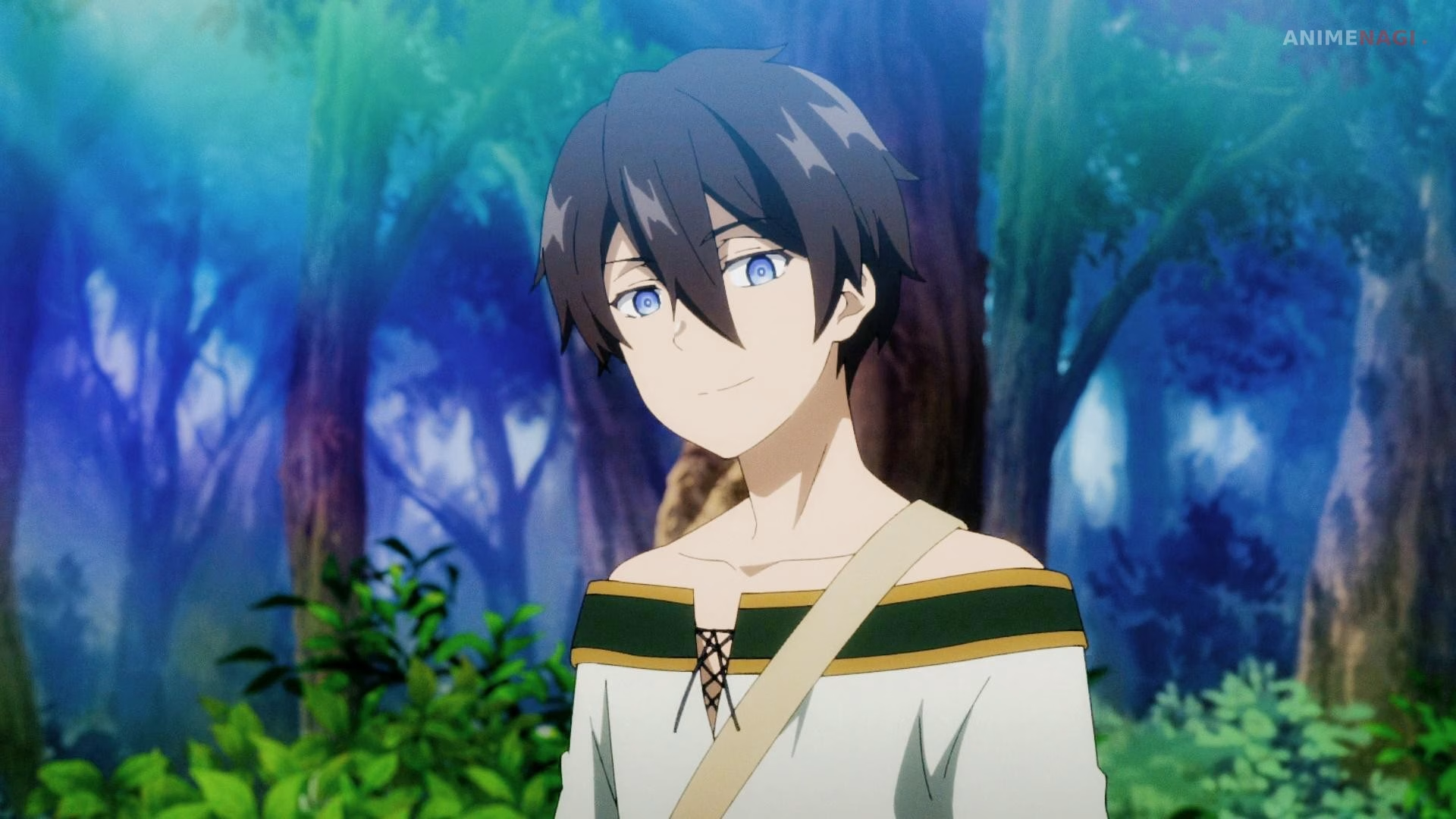
To avoid expulsion, Headmaster Albus assigns him to a special field training mission in the southern regions of the continent. These areas still contain strong anti-witch sentiment despite the official end of the war between witches and the Church. The mission is intended both as practical education and as an opportunity for Saybil to discover more about himself.
As the story progresses, Saybil slowly learns that his forgotten past is directly connected to some of the most dangerous magical events in recent history.
The anime takes place after Grimoire of Zero
One important detail many viewers initially miss is that The Dawn of the Witch is actually a sequel series.
The story takes place several years after Grimoire of Zero, another fantasy anime set in the same world. Characters like Zero and Mercenary from the earlier series appear throughout The Dawn of the Witch, although the focus remains mostly on the new cast.
The world itself is still recovering from a brutal five-hundred-year conflict between witches and the Church. Although peace officially exists now, distrust toward witches and magical races remains widespread across many regions. This lingering tension shapes nearly every major conflict in the anime.
Fortunately, new viewers can still follow the story without watching Grimoire of Zero first. The anime explains enough background information gradually for newcomers to understand the setting. However, viewers familiar with the earlier series gain additional context regarding Zero, Mercenary, the Grimoire of Zero, and the political state of the world.
This sequel structure allows the anime to expand its lore naturally while still telling a mostly self-contained story centered around Saybil.
Loux Krystas is one of the anime’s most important characters
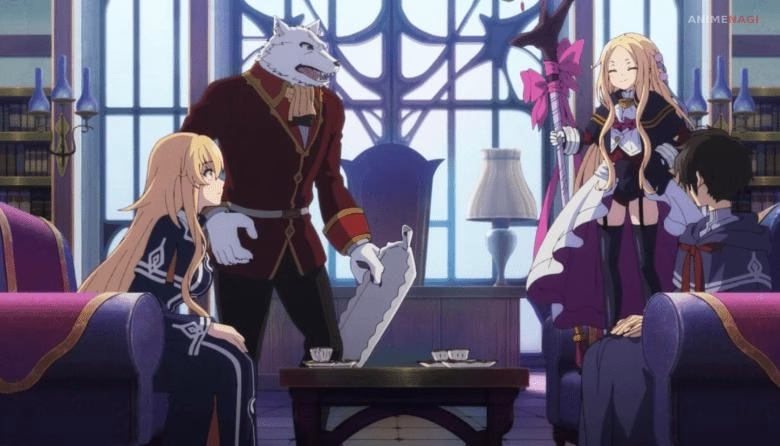
One of the standout characters in the series is Professor Loux Krystas, also known as the Dawn Witch.
Despite looking like a child, Loux is actually an extremely powerful witch over three hundred years old. She accompanies Saybil and the other students during their field mission while acting as both mentor and protector. Her personality initially appears playful and eccentric, but the anime gradually reveals she possesses deep knowledge about magic, war, and forbidden spells.
Loux also carries a mysterious magical staff called Luden, which is feared because it supposedly devours the magic of witches who touch it. Her interest in Saybil grows quickly because she recognizes the unusual nature of his magical power and hidden past.
Unlike many fantasy mentors, Loux is not portrayed as emotionally distant or perfect. She forms genuine bonds with the students while hiding personal fears and secrets regarding magic itself. Her relationship with Saybil becomes especially important once his true identity and powers begin emerging.
The anime uses Loux effectively to bridge the gap between older magical history and the younger generation now trying to reshape the future.
Holt and Kudo bring emotional depth to the story
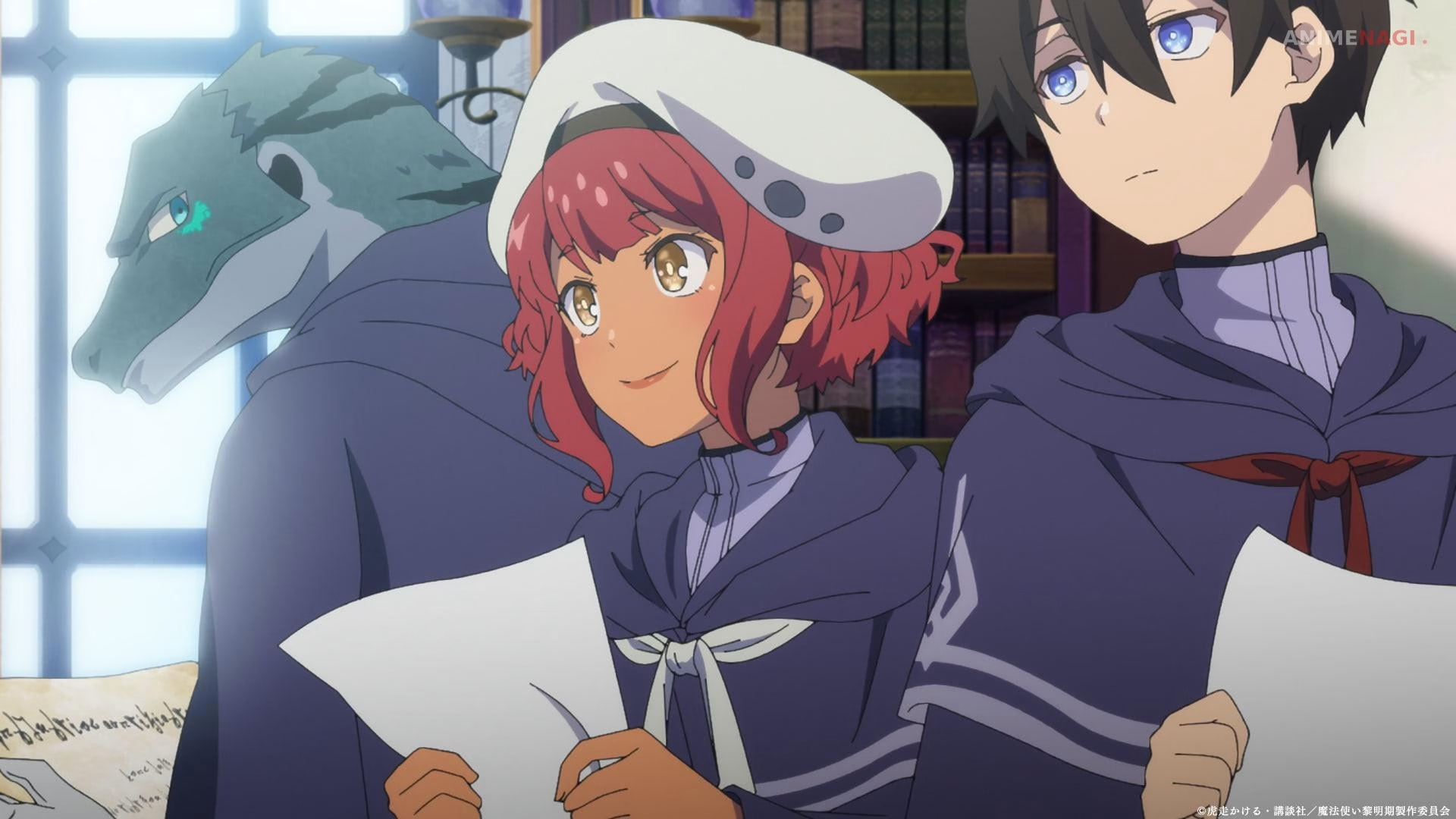
Although Saybil is the protagonist, Holt and Kudo become equally important to the emotional core of the anime.
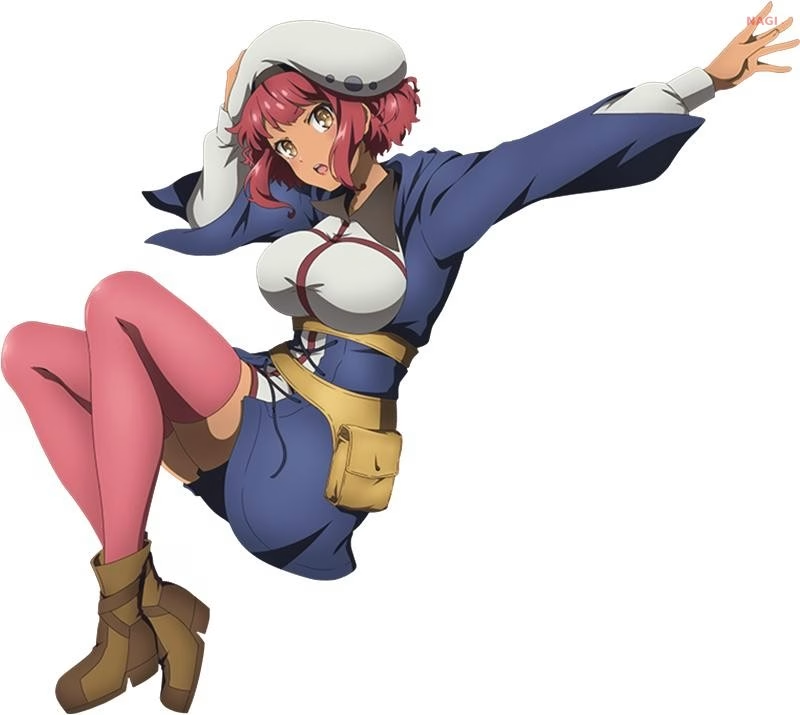
Holt is a talented beastfallen witch who possesses deer-like traits hidden beneath her appearance. Outwardly, she behaves kindly and confidently, but the anime later reveals she suffered severe manipulation and abuse from religious extremists during childhood. The Church convinced her she was cursed because of her beastfallen nature, leaving deep psychological scars that still affect her emotionally.
Kudo, meanwhile, is a lizard-beastfallen student who initially appears aggressive and rude. However, his hostility comes largely from years of discrimination and trauma. As a child, he was exploited cruelly because of his regenerative abilities and treated more like an attraction than a person.
The journey forces all three students to confront prejudice and emotional pain tied to their identities. Rather than focusing only on magical combat, the anime spends significant time exploring how discrimination shapes their personalities and relationships.
This focus on emotional healing gives the series much stronger character development than many fantasy school anime.
Magic in the series is powerful but dangerous
Magic functions as one of the most important elements of worldbuilding in The Dawn of the Witch.
The series divides magic into different systems and schools, many originating from the legendary Grimoire of Zero. Powerful sorcerers can manipulate enormous magical energy capable of destroying armies or entire cities if left uncontrolled. However, magic also creates fear among ordinary humans because of how destructive it became during the previous war.
Saybil himself represents this danger directly. Although he initially appears weak, the anime gradually reveals he possesses nearly limitless magical reserves inherited from his father, the infamous sorcerer Thirteen. Saybil subconsciously avoids using magic aggressively because he fears losing control and harming others accidentally.
This fear creates one of the series’ most important themes: whether overwhelming power can coexist with compassion and humanity. Many characters throughout the story struggle with the temptation to use magic for revenge, domination, or violence after suffering persecution.
The anime repeatedly emphasizes that magic itself is not evil. Instead, hatred and fear determine how people choose to use it.
The anti-witch conflict drives the larger story
Even though the war between witches and humans officially ended years earlier, hatred toward magic users remains widespread throughout the continent.
The southern regions visited by Saybil’s group still contain anti-witch factions and violent extremists who believe witches should be exterminated entirely. This creates constant danger during the students’ training mission because local tensions can erupt into violence unexpectedly.
The anime explores this conflict through both political and personal perspectives. Some humans fear witches because of real tragedies caused during the war, while others simply inherited prejudice through generations of propaganda and religious extremism.
At the same time, witches and beastfallen characters also struggle with anger and distrust toward humans after centuries of persecution. This creates a morally gray world where neither side is portrayed as completely innocent.
The series handles these themes more seriously than many fantasy anime by showing how fear and discrimination continue affecting society even after official peace agreements end wars.
Saybil’s hidden identity changes the story completely
One of the biggest revelations in the anime involves Saybil’s true heritage.
The series eventually reveals that Saybil is the son of Thirteen, an infamous sorcerer connected to dangerous magical incidents involving the Grimoire of Zero. Zero herself is also revealed to be Saybil’s aunt, linking him directly to some of the most powerful magical figures in the world.
His memories were erased after traumatic childhood events involving magical violence and overwhelming guilt. Zero intentionally removed those memories to protect him psychologically after Saybil accidentally unleashed catastrophic power while defending himself.
This revelation reframes much of the story retroactively. Saybil’s fear of magic, emotional numbness, and inability to control his abilities all stem from buried trauma rather than simple incompetence.
The anime gradually transforms from a school fantasy into a story about identity, emotional recovery, and learning to accept overwhelming power responsibly.
That emotional progression becomes the heart of the series by the final episodes.
The Dawn of the Witch focuses more on coexistence than action
Although the anime contains magical battles and dangerous confrontations, its primary focus is not constant action.
Instead, The Dawn of the Witch emphasizes coexistence between different races and ideologies inside a fractured world. Humans, witches, and beastfallen all carry resentment from past wars, but characters repeatedly attempt to build trust despite those divisions.
Saybil’s group itself symbolizes this idea. A human sorcerer with dangerous power, a beastfallen witch, a lizard beastfallen healer, and an ancient witch travel together despite their completely different backgrounds and traumas.
The anime argues repeatedly that fear and hatred grow stronger when people isolate themselves emotionally. Many conflicts throughout the story happen because characters refuse to understand each other, rather than because of simple evil intentions.
This thematic focus gives the series a calmer and more reflective tone compared to many mainstream fantasy action anime.