The Dragon Ball Super anime ended back in 2018 with Episode 131, concluding the massive Tournament of Power storyline. Since then, many fans who finished the anime have wondered where to continue the story in the manga. The confusion exists because the manga and anime sometimes handled arcs differently, especially during the later parts of Dragon Ball Super.
Fortunately, continuing the story is fairly simple once you know the correct chapter. The manga goes far beyond the anime and introduces entirely new story arcs that were never adapted during the anime’s original run. These include the fan-favorite Moro Arc, the Granolah the Survivor Saga, and the Super Hero adaptation featuring Gohan and Piccolo.
For longtime Dragon Ball fans, the manga continuation contains some of the franchise’s biggest transformations, strongest villains, and most important character development moments since the end of the Tournament of Power. Here is the complete guide explaining exactly where Dragon Ball Super ends in the manga and how to continue the story properly.
Where Does Dragon Ball Super Anime End in the Manga?
The Dragon Ball Super anime ends around Chapter 42 of the manga. More specifically, Episode 131 concludes the Tournament of Power, which also wraps up in the latter half of Chapter 42. Multiple fan discussions and manga reading guides consistently point to Chapter 42 as the correct starting point for anime viewers transitioning to the manga.
However, fans should know that the anime and manga versions of the Tournament of Power are not identical. The overall ending remains similar, but several fights, power-scaling moments, and character interactions differ between the two versions. Because of that, some readers prefer starting slightly earlier, around Chapters 39 to 42, for better context.
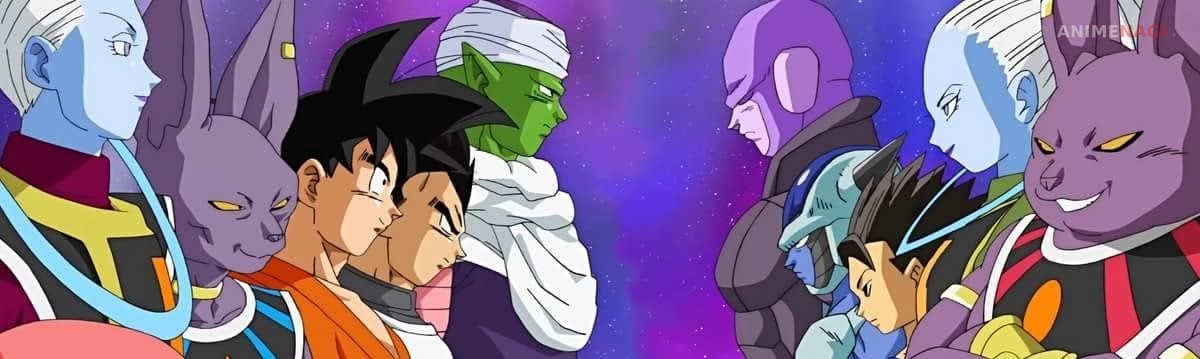
The final pages of Chapter 42 directly set up the next major storyline known as the Galactic Patrol Prisoner Saga, commonly called the Moro Arc. This is the first fully original manga-exclusive storyline after the anime’s conclusion.
For viewers who simply want to continue after the anime without rereading older material, starting from the second half of Chapter 42 is the best option.
Should You Watch Dragon Ball Super: Broly Before Reading the Manga?
Before jumping into the Moro Arc, fans should watch Dragon Ball Super: Broly because the manga largely skips over the events of the movie. Instead of fully adapting the film, the manga briefly references it and assumes readers already know what happened.
The Broly movie is important because it introduces the canon version of Broly and establishes the post-Tournament of Power status quo. It also further develops Goku and Vegeta’s rivalry while setting up future power progression.
Several online Dragon Ball reading guides also recommend watching the film before continuing with the manga because the Moro Arc directly follows the movie’s events.
Without watching Broly, some character relationships and references during the manga continuation may feel abrupt. Thankfully, the movie is considered one of the best Dragon Ball films ever made, so it is an enjoyable step rather than homework.
The Moro Arc Explained
The Moro Arc, officially called the Galactic Patrol Prisoner Saga, begins in Chapter 42 and continues through Chapter 67. It is the first completely new storyline after the anime and is widely considered one of the strongest modern Dragon Ball arcs.
The story begins when a dangerous ancient prisoner named Moro escapes from the Galactic Patrol prison. Unlike many previous Dragon Ball villains who relied mostly on raw strength, Moro uses magic and energy absorption abilities. That difference immediately gives the arc a unique tone compared to earlier sagas.
Moro quickly establishes himself as one of the franchise’s most dangerous enemies because he can drain life energy from entire planets. His abilities force Goku and Vegeta to adapt in ways they never had before. The arc heavily emphasizes training, strategy, and mastery of divine techniques rather than simply chasing bigger transformations.
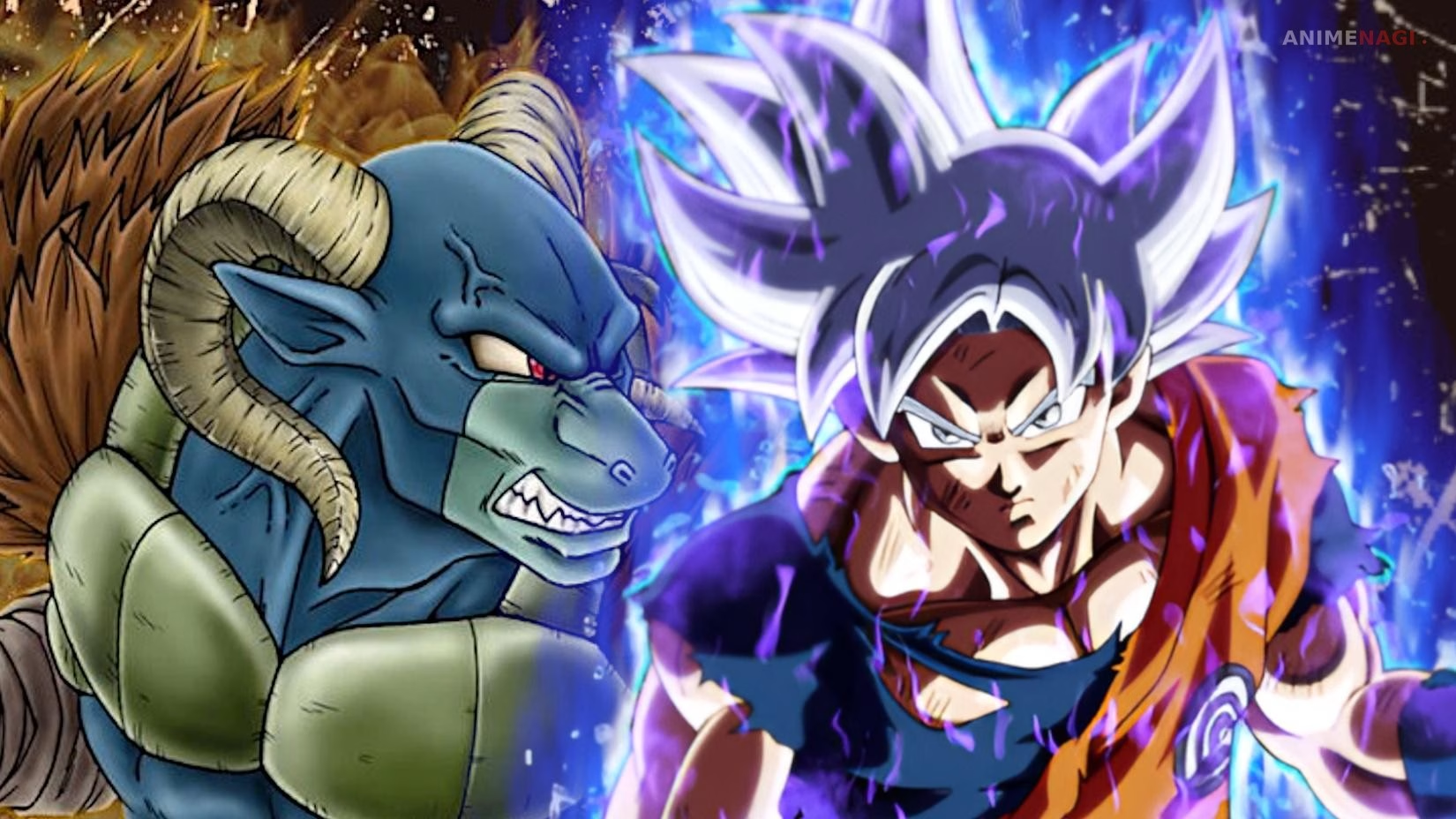
One of the biggest highlights of the saga is Vegeta’s character development. Instead of following Goku’s path, Vegeta travels to Planet Yardrat to learn Spirit Control techniques. This eventually leads to Forced Spirit Fission, one of the most creatively used abilities in modern Dragon Ball.
Meanwhile, Goku focuses on mastering Ultra Instinct properly after first unlocking it during the Tournament of Power. The manga spends significant time exploring the limitations of Ultra Instinct and how difficult it is to control consistently. That slower progression makes Goku’s development feel more earned compared to some earlier transformations.
The Moro Arc also introduces Merus, a Galactic Patrol member who becomes deeply important to the story. His connection to the angels adds major lore expansions to the Dragon Ball universe.
Fans frequently praise the arc because it combines classic Dragon Ball adventure elements with modern large-scale battles. Many readers especially appreciated how the story gave meaningful moments to side characters rather than focusing exclusively on Goku and Vegeta.
The saga concludes in Chapter 67 after a massive battle on Earth that pushes Ultra Instinct to new levels.
Why the Moro Arc Became So Popular
One reason the Moro Arc became so popular among fans is that it feels structurally closer to classic Dragon Ball Z storytelling. The arc includes exploration, training, tactical battles, and escalating threats rather than relying entirely on tournament structures.
Moro himself also stands out from recent villains because of his magical abilities and intimidating presence. Instead of being another straightforward powerhouse, he manipulates energy and uses intelligence to overwhelm opponents.
The arc additionally explores consequences and emotional stakes more effectively than some earlier Dragon Ball Super stories. Several moments involving the Galactic Patrol, Namekians, and Earth’s defenders help the saga feel larger in scale.
Another important factor is pacing. Since the manga releases monthly chapters, Toyotarou had more room to focus on character development and combat strategy. Many readers felt the slower pacing benefited Vegeta in particular because he finally received substantial growth outside his rivalry with Goku.
The Moro Arc is also where Ultra Instinct truly becomes central to Goku’s fighting philosophy rather than simply a temporary power-up.
The Granolah the Survivor Saga Explained
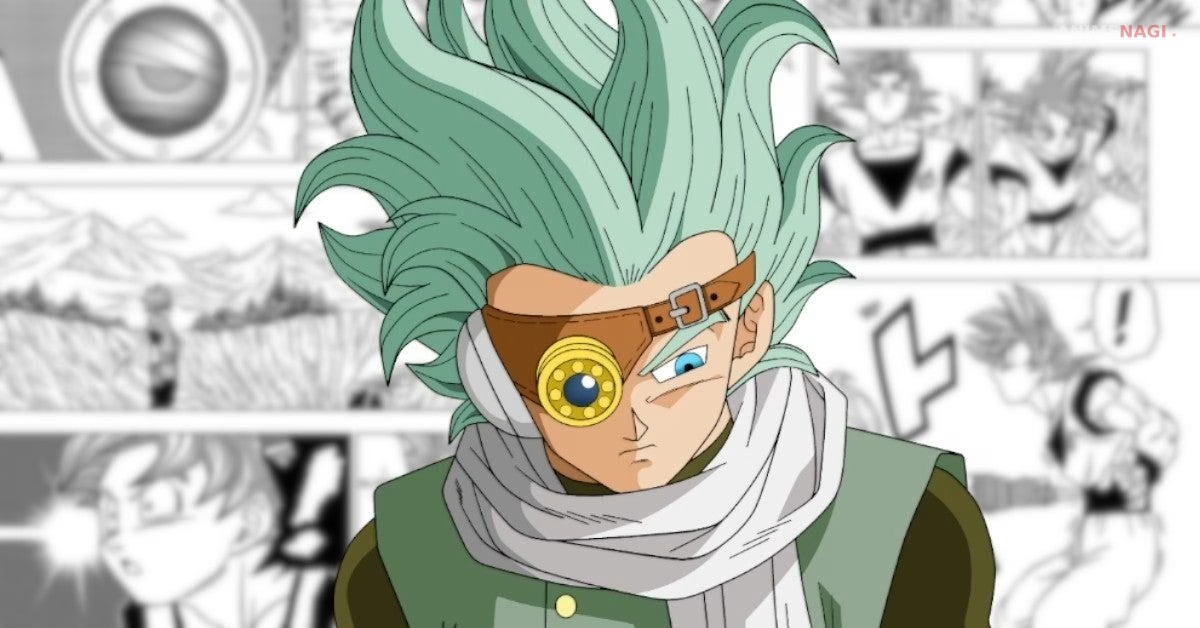
After Moro’s defeat, Dragon Ball Super transitions into the Granolah the Survivor Saga beginning in Chapter 67 and continuing through Chapter 87.
This arc introduces Granolah, the last surviving member of the Cerealian race. His people were exterminated years earlier by the Saiyans working under Frieza’s army. Because of that history, Granolah despises Saiyans and seeks revenge against those connected to his race’s destruction.
The Granolah Arc heavily focuses on Saiyan history and the moral consequences of their past actions. Unlike earlier Dragon Ball villains motivated mainly by conquest or destruction, Granolah’s anger comes from genuine trauma and loss.
This storyline also gives Vegeta some of his most meaningful development in the entire franchise. He openly acknowledges the sins committed by the Saiyans and struggles with inherited guilt in ways Dragon Ball rarely explored before.
Another major highlight is Vegeta unlocking Ultra Ego, a destructive god-like transformation connected to Beerus and the power of destruction. Meanwhile, Goku continues evolving Ultra Instinct into a more personalized fighting style.
The arc eventually expands beyond Granolah himself and introduces the Heeters, a manipulative criminal organization attempting to control the universe’s power balance. This adds multiple layers to the conflict instead of focusing solely on revenge.
While fan reception to the Granolah Arc was more divided than the Moro Saga, many readers still praised its lore expansion and Vegeta’s characterization.
The Dragon Ball Super: Super Hero Manga Arc
Following the Granolah storyline, the manga shifts toward adapting the events of Dragon Ball Super: Super Hero. This begins around Chapter 88 with a prequel focusing heavily on Goten and Trunks living superhero-inspired double lives in high school.
The manga version expands several scenes from the movie and provides more character interactions before the main conflict begins. It particularly gives additional attention to Goten and Trunks, something many fans appreciated because both characters had been sidelined for years.
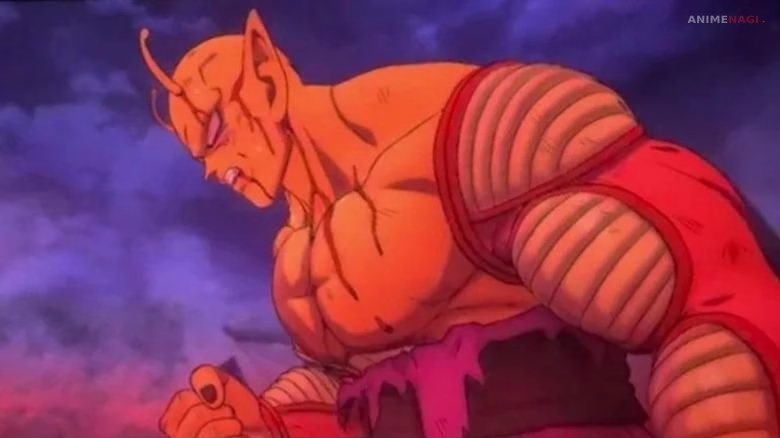
The Super Hero storyline centers primarily on Gohan and Piccolo rather than Goku and Vegeta. The Red Ribbon Army returns with new android threats, eventually leading to the debut of Gohan Beast and Orange Piccolo.
One advantage of reading the manga version is the added context and pacing improvements. Some scenes receive more buildup than they did in the movie adaptation.
The Super Hero adaptation also serves as the manga’s latest major completed storyline before the series entered a hiatus period following the passing of Akira Toriyama. Recent reports indicated that the manga’s future publication schedule slowed significantly afterward.
Anime vs Manga Differences You Should Know
Fans transitioning from the anime to the manga should understand that Dragon Ball Super’s manga is not a simple one-to-one adaptation. Unlike many anime franchises, both versions developed somewhat independently while following Toriyama’s broad outlines.
The Tournament of Power especially contains major differences. Certain characters perform far better in the manga, while some anime-exclusive fights never happen in print form.
Power scaling also differs considerably. The manga generally portrays battles with slightly more restraint compared to the anime’s explosive spectacle-heavy approach.
Another notable difference is pacing. The manga moves much faster during earlier arcs like Future Trunks and Universe Survival, while spending more time on the manga-exclusive stories afterward.
Because of these differences, some fans prefer reading the entire manga from the beginning rather than jumping directly into Chapter 42. However, casual viewers can still continue from the Moro Arc without major confusion.
Is the Dragon Ball Super Manga Still Ongoing?
Yes, the Dragon Ball Super manga is still technically ongoing, though publication slowed significantly after Toriyama’s death in 2024. Reports from editors and anime media outlets suggested the series would eventually continue under Toyotarou’s leadership.
The manga currently has over 100 chapters and continues far beyond the original anime adaptation. Fans hoping for future anime episodes have also remained optimistic because the manga now contains enough material for multiple new seasons.
Recent industry reports even mentioned plans for a potential new anime adaptation focusing on the Moro storyline, though official long-term production details remain limited.
For now, the manga remains the only way to experience Dragon Ball Super’s newest canon storylines.
Best Reading Order After the Anime
For fans wondering about the ideal continuation order, the process is fairly straightforward.
First, finish Episode 131 of Dragon Ball Super. After that, watch Dragon Ball Super: Broly because the manga assumes viewers already know its events.
Next, begin reading the manga from Chapter 42, preferably the latter half where the Moro setup begins. From there, continue through the Moro Arc, Granolah Saga, and Super Hero adaptation in release order.
This approach provides the smoothest transition from anime to manga while preserving all major story developments.