Few anime protagonists are as morally complex as Ainz Ooal Gown from Overlord. Unlike traditional heroes who value compassion and justice above all else, Ainz rules through overwhelming fear, psychological pressure, and ruthless efficiency. Throughout the series, he repeatedly chooses intimidation over mercy, even when peaceful alternatives exist. This has led many fans to question whether Ainz is truly evil or simply acting as a pragmatic ruler trying to protect Nazarick at any cost.
The answer is more complicated than a simple hero-versus-villain debate. Ainz’s philosophy is deeply shaped by his isolation, his responsibilities as the leader of Nazarick, and the expectations placed upon him by the NPCs created by his former guildmates. His decisions are rarely emotional outbursts. Instead, they are calculated actions designed to maintain authority, prevent rebellion, and secure the future of Nazarick.
Let’s break down why Ainz believes fear is more effective than mercy, how his philosophy evolves throughout Overlord, and what his rule ultimately says about power itself. Information in this article is based on the original light novels by Kugane Maruyama, official Overlord material, and character analysis from the fan community.
Ainz Views Leadership as Responsibility, Not Heroism
One of the biggest misunderstandings about Ainz is that he actively wants to become a cruel tyrant. In reality, Ainz initially enters the New World confused, lonely, and uncertain about what he should do. However, because the Guardians of Nazarick view him as a supreme and flawless ruler, he gradually begins acting in ways that match their expectations.
Ainz constantly fears disappointing the NPCs created by his old guildmates. To him, Nazarick is more than a kingdom. It is the final legacy of his friends from YGGDRASIL. Protecting it becomes his highest priority, even if innocent people suffer as a result. This pragmatic mindset heavily influences every major political and military decision he makes.
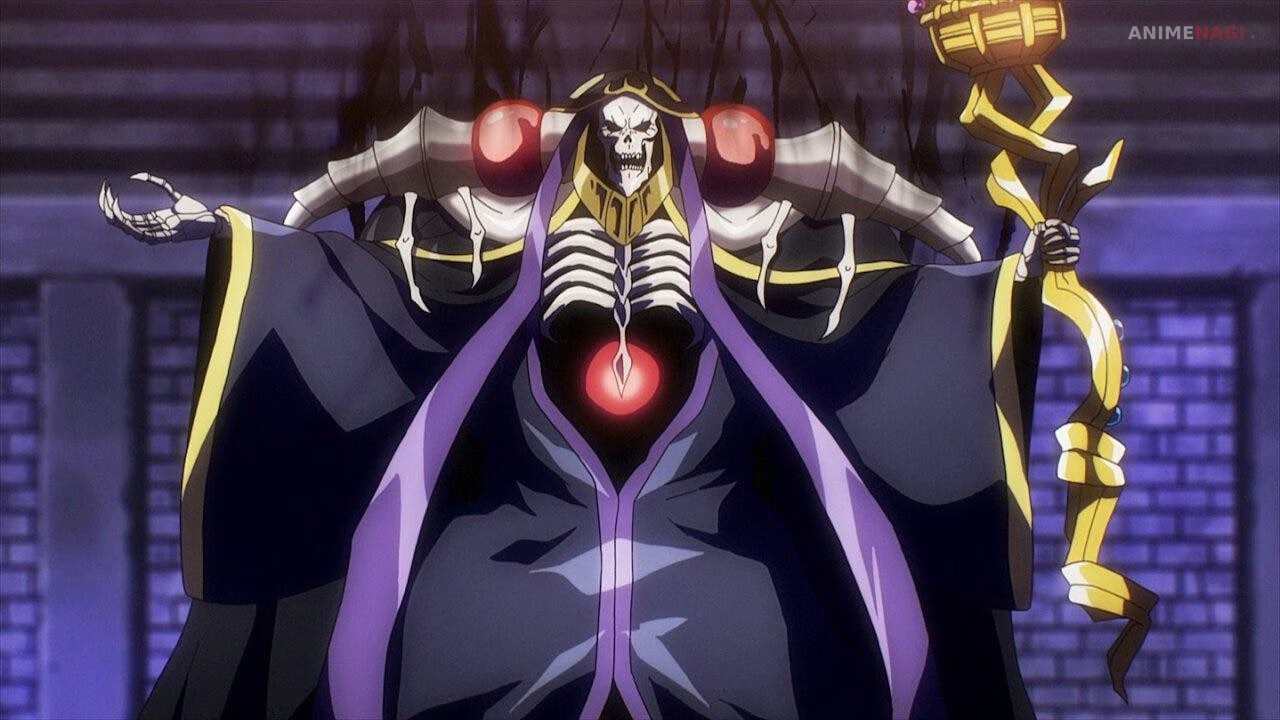
Unlike traditional fantasy kings, Ainz does not believe morality exists as an absolute concept. He measures good and evil almost entirely through the lens of whether something benefits Nazarick. If mercy strengthens Nazarick, he can be merciful. If fear creates stability and prevents threats, he chooses fear instead.
This philosophy explains why Ainz can save villages like Carne one moment and authorize mass slaughter the next. His morality is conditional, not universal.
Why Fear Is More Useful Than Mercy to Ainz
Ainz repeatedly demonstrates that fear is one of the most powerful political tools in the New World. Rather than relying purely on diplomacy, he wants enemies and neighboring nations to understand that opposing Nazarick carries catastrophic consequences.
The clearest example comes during the Katze Plains massacre. Ainz annihilates tens of thousands of soldiers using the spell “Iä Shub-Niggurath,” instantly establishing the Sorcerer Kingdom as a terrifying superpower. The massacre is not simply an act of cruelty. It is a calculated display meant to discourage future wars through overwhelming psychological shock.
From Ainz’s perspective, fear creates order more efficiently than kindness. Mercy can be interpreted as weakness, especially in a violent world filled with political betrayal and military conflict. By cultivating an image of an unstoppable undead ruler, Ainz ensures that many enemies surrender before fighting even begins.
This strategic thinking aligns with how the original guild Ainz Ooal Gown operated in YGGDRASIL. The guild specialized in preparation, intimidation, and overwhelming tactical advantages rather than honorable combat. Those habits continue shaping Ainz’s leadership style in the New World.
At the same time, fear also protects Nazarick internally. The Guardians are fiercely loyal partly because they believe Ainz is an unmatched supreme being whose decisions transcend ordinary understanding. Maintaining that image becomes essential for preserving unity within Nazarick itself.
Ainz Believes Stability Matters More Than Compassion
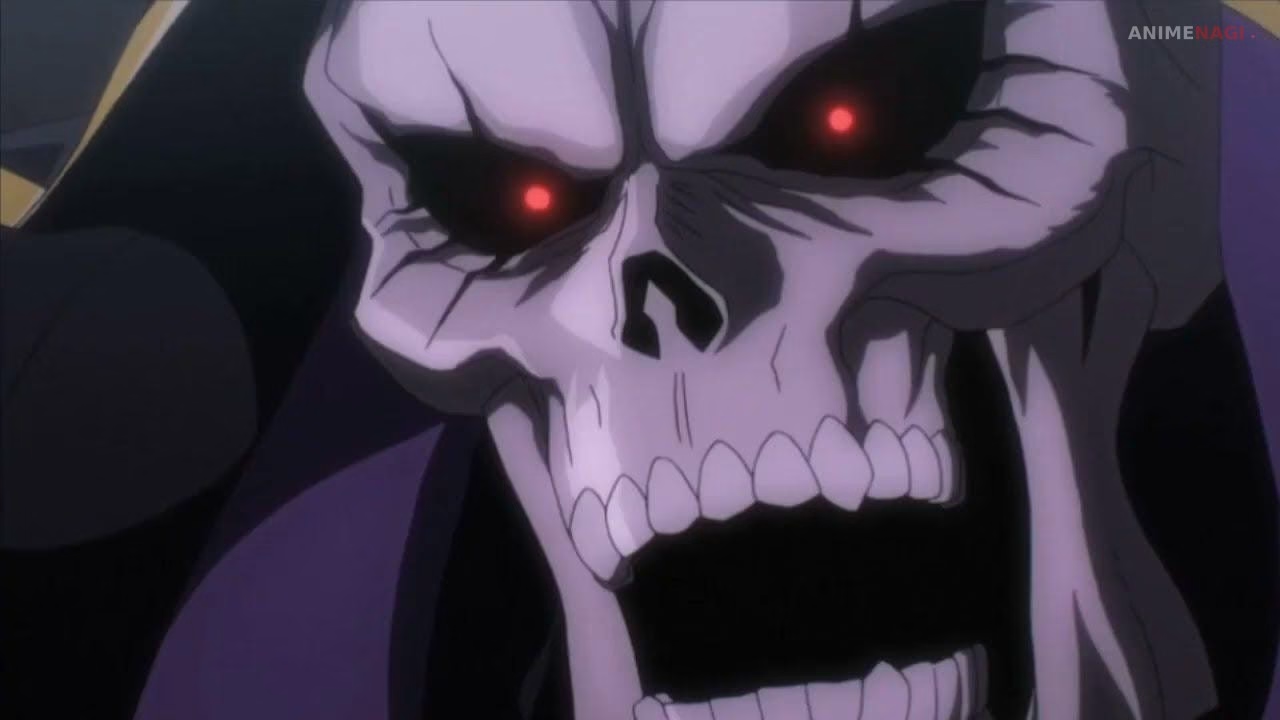
Despite his brutal methods, Ainz is not completely indifferent to peace. In fact, one of his long-term goals is to create a stable society where different races can coexist under Nazarick’s rule. However, he believes lasting peace can only exist when supported by overwhelming authority.
This is why Ainz often treats mercy as a secondary concern. To him, temporary cruelty may prevent larger conflicts later. If destroying one army prevents years of war, he considers the decision logical. That mindset resembles authoritarian rulers throughout history who justified harsh measures in the name of stability.
The irony is that many citizens living under the Sorcerer Kingdom actually experience safer and more stable lives than under previous rulers. Crime decreases, trade improves, and several non-human races receive fairer treatment than they did in human nations. Yet these benefits exist alongside horrifying displays of violence against anyone perceived as a threat.
This contradiction is central to Ainz’s character. He is neither a purely sadistic villain nor a noble king. Instead, he rules according to cold pragmatism. If fear achieves peace faster than compassion, he sees little reason to prioritize mercy.
Some fan analyses even describe Ainz as a ruler trapped by his own reputation. Because everyone around him believes he is a genius mastermind, he feels pressured to constantly act with absolute confidence and ruthless decisiveness.
The Influence of Nazarick’s Guardians on Ainz’s Philosophy
Another major reason Ainz chooses fear over mercy is the influence of Nazarick’s Guardians, especially characters like Demiurge and Albedo.
The Guardians were created by players who often gave them extreme personalities and unwavering loyalty toward Nazarick. Many of them naturally favor domination, cruelty, and absolute obedience. Demiurge in particular constantly interprets Ainz’s accidental remarks as parts of elaborate world-conquering strategies.
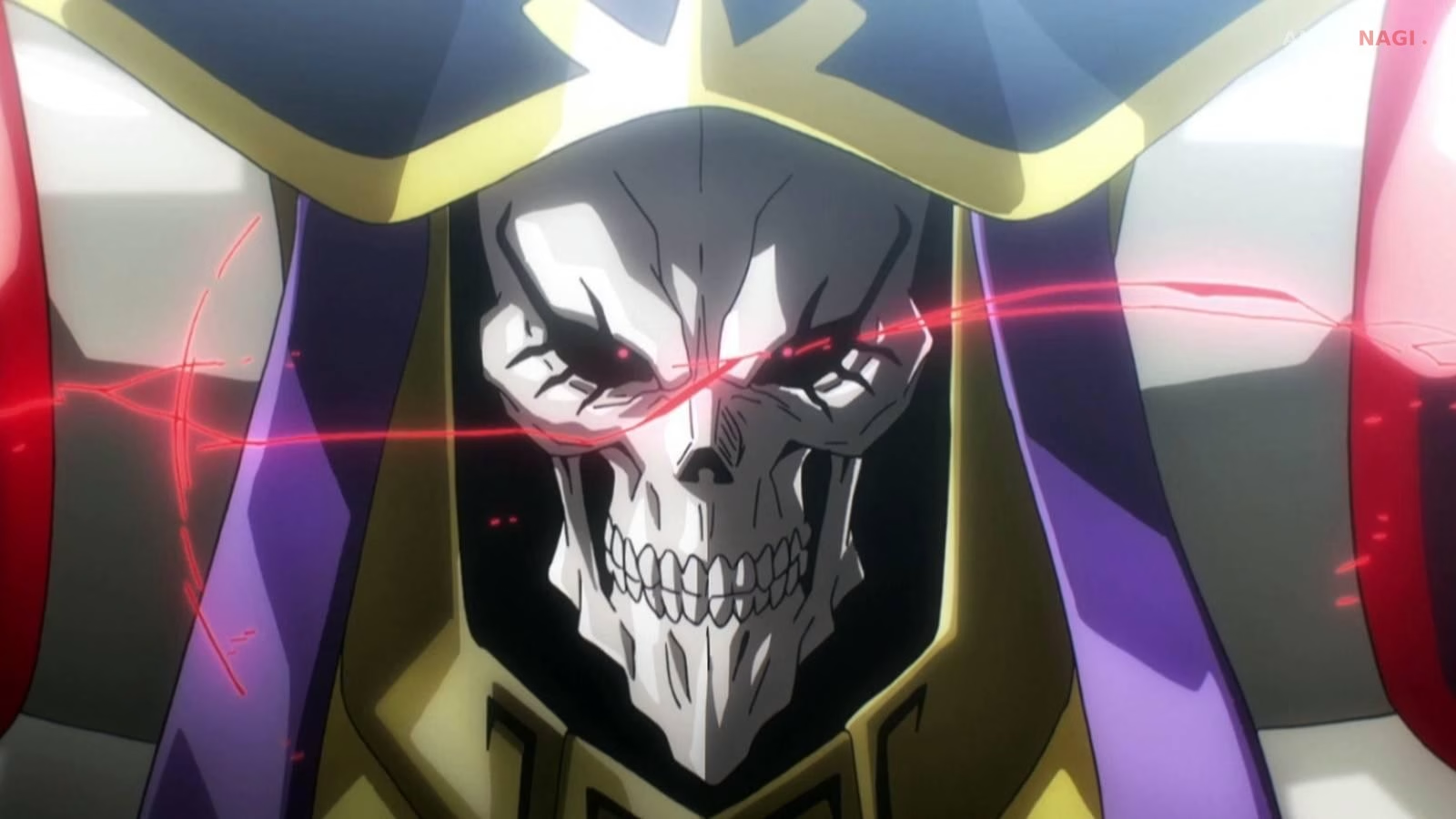
Over time, Ainz begins adapting to these expectations instead of correcting them. In many situations, he chooses intimidation because it is what the Guardians expect from a supreme ruler. Admitting uncertainty or emotional weakness could damage their image of him.
This creates one of Overlord’s most fascinating themes. Ainz is technically the most powerful being in Nazarick, yet he is psychologically trapped by the role he feels obligated to perform. His identity slowly shifts from an ordinary salaryman into the terrifying undead king everyone believes him to be.
The emotional suppression caused by his undead body also contributes to this transformation. As an Overlord, intense human emotions are automatically dampened. This makes it easier for Ainz to make ruthless decisions without being overwhelmed by guilt or empathy.
Is Ainz Truly Evil?
The debate surrounding Ainz’s morality remains one of the most discussed aspects of Overlord. From a human perspective, many of his actions are unquestionably monstrous. He authorizes torture, mass killings, forced experimentation, and military annihilation on an enormous scale. Entire populations suffer because Nazarick views outsiders as expendable compared to its own interests.
However, Overlord intentionally avoids presenting morality in simple black-and-white terms. The New World itself is already filled with corruption, slavery, discrimination, and political violence long before Ainz arrives. Many rulers commit atrocities while pretending to be righteous heroes.
Ainz, in contrast, rarely hides what he is. He openly rules through fear and power while focusing almost entirely on protecting Nazarick and fulfilling what he believes are his responsibilities as guild leader.
Interestingly, Ainz still occasionally shows traces of humanity. He honors loyalty, respects competence, and sometimes grants mercy when it aligns with his goals or personal emotions. His protection of Carne Village and certain subordinates demonstrates that he is still capable of selective compassion.
Yet those moments never override his core philosophy. When forced to choose between Nazarick’s security and human morality, Ainz almost always chooses Nazarick.
What Ainz’s Rule Really Represents in Overlord
At its core, Overlord is partly an exploration of absolute power and how it changes people. Ainz begins the story as an emotionally exhausted man clinging to the memory of his lost friends. However, unlimited power and constant worship slowly reshape his worldview.
Fear becomes his primary political weapon because it guarantees results. Mercy introduces uncertainty, while terror creates obedience. From Ainz’s perspective, a feared ruler can maintain peace more effectively than a compassionate but vulnerable king.
The tragedy is that Ainz occasionally recognizes how far he has drifted from ordinary human morality, yet he continues moving deeper into that role because Nazarick depends on him. The more successful he becomes as the Sorcerer King, the less human he ultimately feels.
That moral ambiguity is exactly why Ainz remains one of anime’s most compelling protagonists. He is not a traditional hero trying to save the world. He is a ruler attempting to preserve his kingdom through whatever means he believes are necessary, even if those methods transform him into the very monster the world fears.
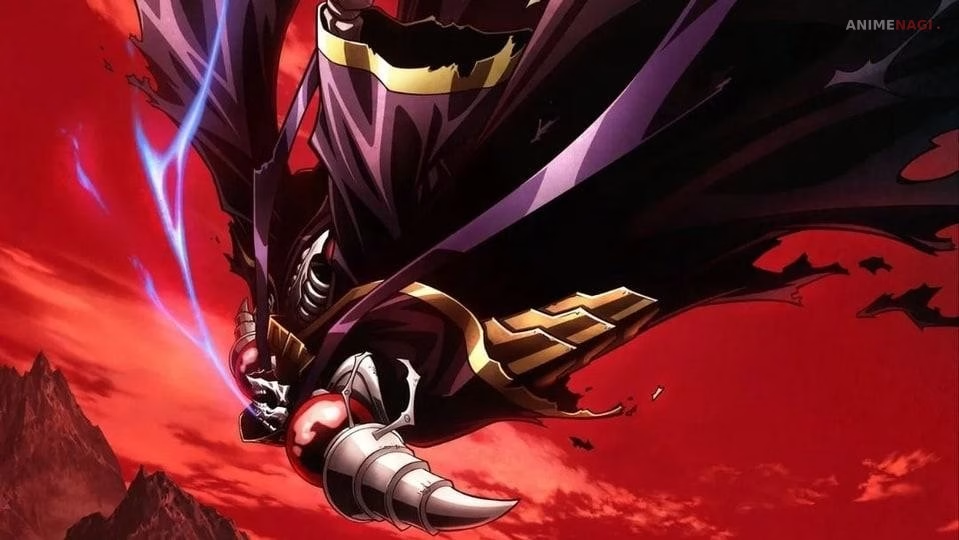
Another important layer to Ainz’s reliance on fear is his long-term vision for Nazarick’s dominance in the New World. In Overlord, he understands that early impressions shape how nations respond to emerging powers, which is why he prioritizes overwhelming displays of strength at the beginning of his rule.
By establishing Nazarick as an untouchable force, he reduces the likelihood of prolonged wars that could drain resources or expose vulnerabilities. This approach reflects a preventative strategy rather than pure aggression. In Ainz’s mind, instilling fear early allows him to control the narrative of power, ensuring that future conflicts are avoided before they even begin.