The battle involving Benkei in Samurai 8: The Tale of Hachimaru is one of the most defining early confrontations in the series. While it may initially seem like a straightforward clash between warriors, the deeper context reveals a layered encounter shaped by strategy, ideology, and character growth. Benkei’s defeat is not simply about power levels but about mindset, adaptability, and the evolving role of Hachimaru as a samurai.
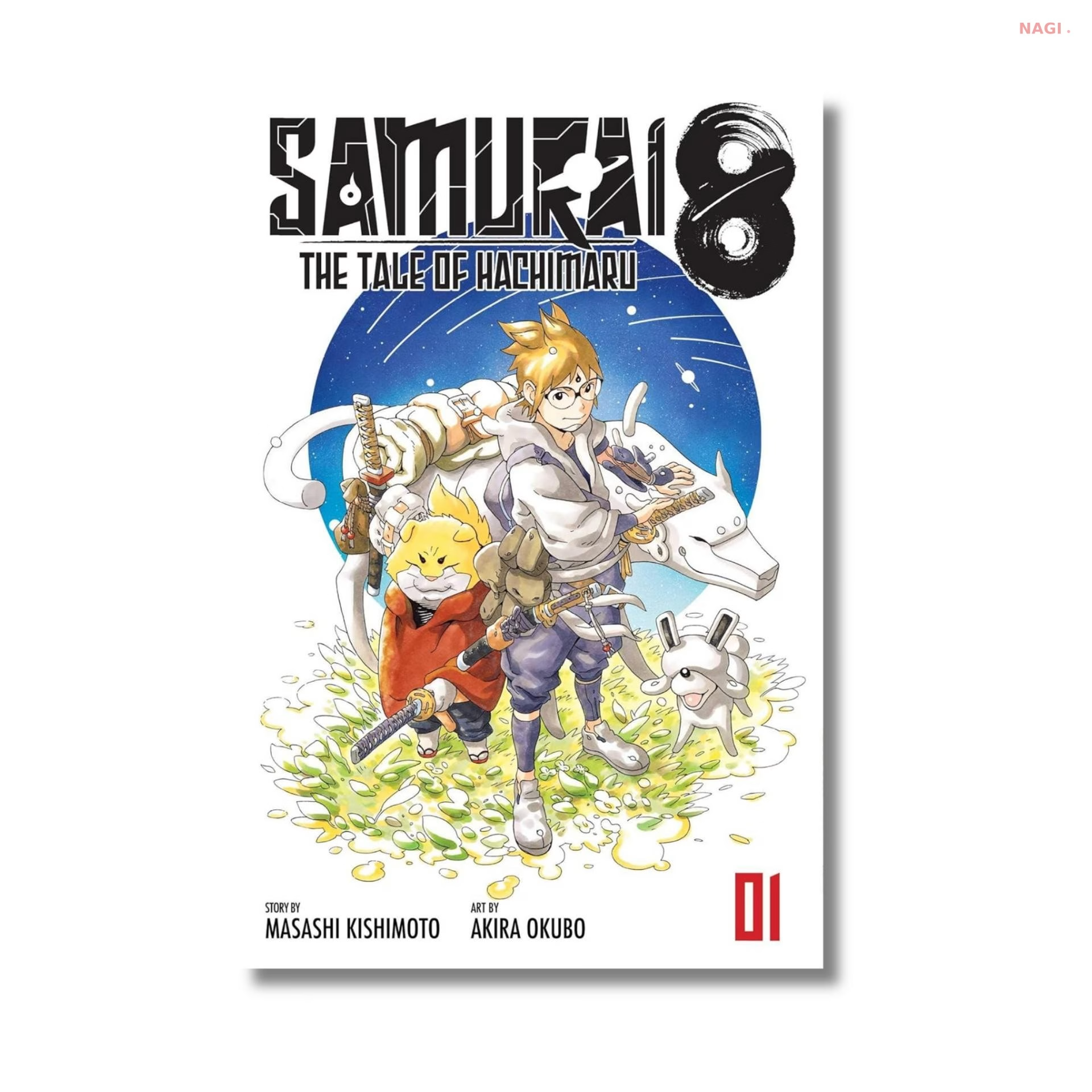
Samurai 8, created by Masashi Kishimoto, introduces a futuristic world where samurai blend traditional swordsmanship with advanced technology. In this setting, characters like Benkei represent brute strength and rigid belief systems, while Hachimaru embodies growth and unpredictability. Their clash highlights the core themes of the series, including the importance of willpower, understanding, and spiritual evolution.
Understanding why Benkei was defeated requires examining the circumstances of the fight, Hachimaru’s development, and the underlying philosophy of samurai combat in the series. This breakdown explains the key factors that led to Benkei’s downfall and why Hachimaru’s role was central to the outcome.
Who Is Benkei in Samurai 8?
Benkei in Samurai 8 is portrayed as a formidable warrior aligned with powerful forces within the story’s larger conflict. Inspired by the historical figure of the same name, this version of Benkei carries a sense of dominance and confidence that borders on arrogance. He relies heavily on his strength and experience, making him a dangerous opponent for less seasoned fighters.
His combat style reflects a traditional approach to battle. Benkei prioritizes overwhelming force and direct confrontation, often underestimating opponents who do not fit his expectations. This becomes a critical flaw during his encounter with Hachimaru.
Benkei’s role in the story is not just as an antagonist but as a representation of outdated thinking. His inability to adapt to new strategies and perspectives puts him at a disadvantage against characters who embrace change. This thematic contrast plays a major role in explaining his defeat.
Hachimaru’s Growth Leading Into the Fight
Hachimaru’s journey up to this point is defined by rapid growth and self-discovery. Initially introduced as physically weak and confined by illness, he undergoes a transformation after becoming a samurai. This change gives him not only enhanced physical abilities but also a new perspective on life.
Despite his newfound strength, Hachimaru lacks experience compared to seasoned warriors like Benkei. However, what he lacks in experience, he makes up for with adaptability and determination. His willingness to learn and evolve becomes a key factor in his success.
Hachimaru’s mindset is fundamentally different from Benkei’s. Instead of relying solely on strength, he approaches combat with curiosity and creativity. This allows him to find solutions in situations where traditional methods might fail.
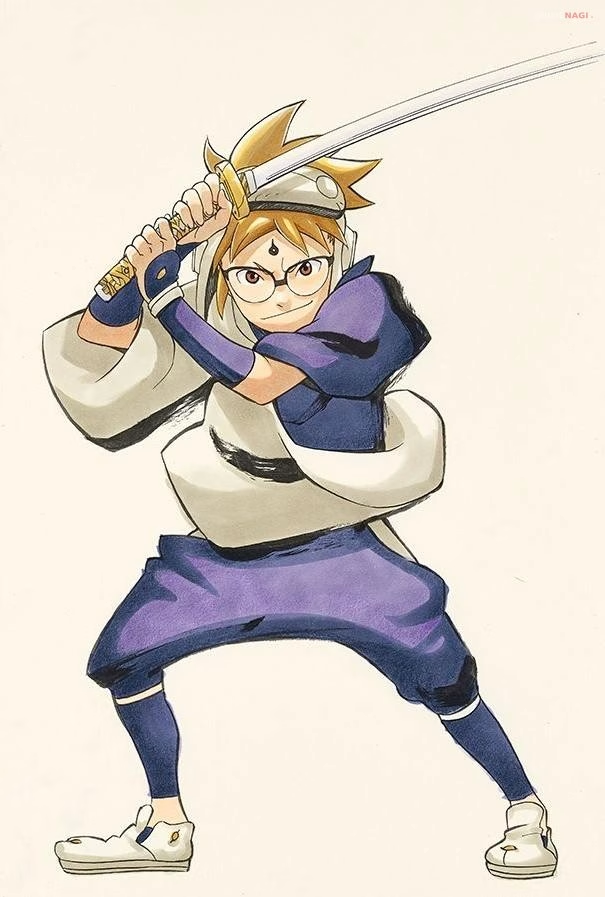
His growth is not just physical but also emotional and philosophical. By the time he faces Benkei, Hachimaru has developed a stronger sense of purpose, which influences his decisions during the battle.
The Key Weakness That Led to Benkei’s Defeat
One of the most important reasons for Benkei’s defeat is his inability to adapt. In Samurai 8, battles are not determined solely by physical strength but also by a character’s understanding of their abilities and the situation at hand.
Benkei’s overconfidence leads him to underestimate Hachimaru. He views him as an inexperienced fighter and fails to recognize his potential. This misjudgment causes Benkei to rely on predictable tactics, which Hachimaru is able to counter.
Another critical weakness is Benkei’s rigid mindset. He approaches the fight with a fixed strategy, leaving little room for adjustment. In contrast, Hachimaru constantly adapts his approach, responding to changes in the battle.
This difference in mindset ultimately determines the outcome. Benkei’s strength becomes less effective when faced with an opponent who refuses to fight on his terms. His inability to evolve during the battle is the primary reason for his defeat.
Hachimaru’s Strategy and Role in the Fight
Hachimaru’s role in Benkei’s defeat goes beyond simply landing the final blow. His strategy revolves around observation, timing, and the effective use of his abilities. Instead of rushing into the fight, he carefully analyzes Benkei’s movements and patterns.
This analytical approach allows Hachimaru to identify openings in Benkei’s defense. By exploiting these weaknesses, he is able to turn the tide of the battle despite the difference in experience. His strategy reflects a deeper understanding of samurai combat.
Hachimaru also demonstrates the importance of mental resilience. Throughout the fight, he remains focused and does not allow Benkei’s intimidation to affect him. This composure gives him a significant advantage.
His role in the battle highlights his potential as a samurai. It shows that success in this world is not determined solely by strength but by the ability to think and adapt under pressure.
The Role of Samurai Philosophy in the Outcome
Samurai 8 places a strong emphasis on philosophy and spiritual growth. This is evident in the way battles are portrayed, with concepts like the soul, keys, and lockers playing a significant role.
Benkei’s approach to combat lacks this deeper understanding. He relies on physical dominance without fully embracing the philosophical aspects of being a samurai. This limits his potential and prevents him from reaching a higher level of mastery.
Hachimaru, on the other hand, begins to grasp these concepts during his journey. His openness to learning allows him to connect with the spiritual side of combat. This gives him an edge over opponents who rely solely on strength.
The fight between Hachimaru and Benkei serves as a demonstration of this philosophy. It shows that true strength comes from balance, not just power. This theme is central to the series and plays a key role in explaining the outcome of the battle.
What Benkei’s Defeat Means for the Story
Benkei’s defeat is not just an isolated event but a significant moment in the larger narrative. It establishes Hachimaru as a capable fighter and signals his growth as a protagonist. This victory builds confidence in his abilities and sets the stage for future challenges.
The battle also reinforces the themes of the series. It highlights the importance of adaptability, understanding, and personal growth. These elements continue to shape the story as it progresses.
For the audience, Benkei’s defeat serves as a turning point. It demonstrates that Hachimaru is not just a beginner but a character with the potential to overcome powerful opponents. This raises the stakes for future encounters.
Additionally, the fight provides insight into the power dynamics of the Samurai 8 world. It shows that strength alone is not enough to guarantee victory, adding depth to the story’s conflicts.