Hitoshi Shinso’s rise in My Hero Academia is one of the series’ most satisfying character developments. Introduced as a General Studies student with a powerful but misunderstood Brainwashing Quirk, Shinso initially lacked the combat abilities needed to compete with students in U.A. High School’s Hero Course. That changed when Shota Aizawa, better known as Eraser Head, took him under his wing.
One of the biggest changes fans noticed during the Joint Training Arc was Shinso carrying and using the same capture weapon associated with Aizawa. The cloth-like weapon immediately drew comparisons between the two characters and sparked questions about why Shinso adopted it. The answer goes beyond simple imitation.
Aizawa recognized that Shinso faced many of the same challenges he once did and trained him to overcome the weaknesses of a non-combat-focused Quirk. By learning Aizawa’s capture weapon techniques, Shinso gained a way to fight effectively even when his Brainwashing ability could not be activated. This mentorship ultimately helped him become a more complete hero candidate.
Aizawa Personally Trained Shinso to Use the Capture Weapon
The primary reason Shinso uses a capture weapon is that Aizawa personally trained him in its use. During the period between the U.A. Sports Festival and the Joint Training Arc, Aizawa took a special interest in Shinso’s development. He saw potential in the student and recognized similarities between their Quirks and career paths.
Aizawa’s signature weapon is a specialized capture cloth made from carbon fibers and a unique metal alloy. Over many years, he developed a combat style centered around this weapon, allowing him to restrain enemies while supporting his Erasure Quirk. Later, he passed these techniques on to Shinso as part of his hero training.
When Shinso reappears during the Joint Training Arc, he is equipped with his own capture weapon and demonstrates a surprising level of proficiency. This is a direct result of the training he received from Aizawa.
Shinso’s Brainwashing Quirk is powerful, but it has a major limitation. It only activates when someone verbally responds to him. If opponents know how his Quirk works or simply refuse to answer, they can avoid being brainwashed altogether.
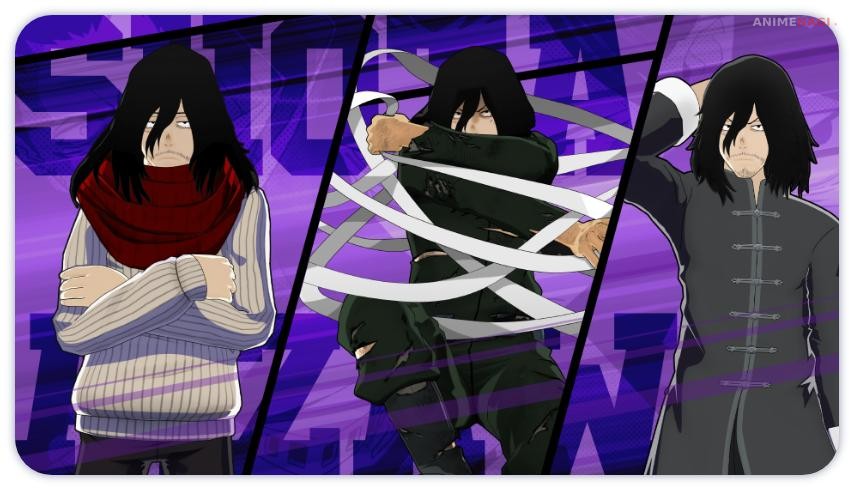
This weakness creates a problem for a future hero. A professional hero cannot rely on a single condition being met before taking action. Aizawa understood this issue because his own Erasure Quirk also has limitations. While Erasure can disable many Quirks, it does not physically stop opponents from attacking.
The capture weapon gives Shinso an effective backup option. Even if Brainwashing fails, he can still restrain enemies, create openings, control the battlefield, and defend himself. This makes him much more versatile during combat situations.
The Capture Weapon Complements Shinso’s Fighting Style
Another reason the capture weapon works so well for Shinso is that it fits his strategic approach to combat. Unlike characters who rely on overwhelming strength or destructive abilities, Shinso excels through planning, deception, and control.
His Brainwashing Quirk already revolves around manipulating opponents into making mistakes. The capture weapon extends this concept by allowing him to restrain enemies from a distance and capitalize on openings. During the Joint Training Arc, Shinso successfully combines his equipment and Quirk to pressure opponents and contribute to his team’s success.
The weapon also pairs well with his Artificial Vocal Cords support item, which lets him mimic other people’s voices. Together, these tools make Shinso a highly tactical fighter capable of confusing and controlling opponents in multiple ways.