When Jujutsu Kaisen: Cursed Clash was first announced, many anime fans believed it could become the definitive fighting game adaptation of the massively popular franchise. With explosive cursed techniques, fast-paced battles, and beloved characters like Satoru Gojo and Yuji Itadori, the source material seemed perfect for an arena fighter. Expectations only grew stronger because anime-based fighting games have historically performed well commercially, especially under publishers like Bandai Namco Entertainment.
However, shortly after launch, the game faced heavy criticism from players and reviewers alike. Complaints about shallow gameplay, poor visuals, limited content, and missing features quickly spread across social media, Steam reviews, Reddit discussions, and review platforms like Metacritic. Instead of becoming a breakout anime game hit, Cursed Clash became an example of how even a massively popular IP cannot guarantee success without polished execution.
Here’s why Jujutsu Kaisen: Cursed Clash failed, what gameplay issues hurt the experience, and why the backlash from fans became so severe.
The Massive Expectations Behind Jujutsu Kaisen: Cursed Clash
Before discussing the game’s problems, it is important to understand why expectations were so high. Jujutsu Kaisen was already one of the biggest anime franchises in the world when the game launched. The anime’s dynamic fights, cinematic animation from MAPPA, and hugely popular characters made fans believe the adaptation could rival games like Dragon Ball FighterZ or the Naruto Storm series.
The game also marketed itself around 2v2 combat mechanics and cooperative cursed technique battles. According to official descriptions, players would combine attacks and synchronize abilities to trigger powerful joint attacks.
On paper, that sounded promising. The world of Jujutsu Kaisen naturally fits tag-team combat because the anime itself frequently emphasizes teamwork between sorcerers. Unfortunately, many players felt the final execution lacked the depth and polish needed to support those ideas.
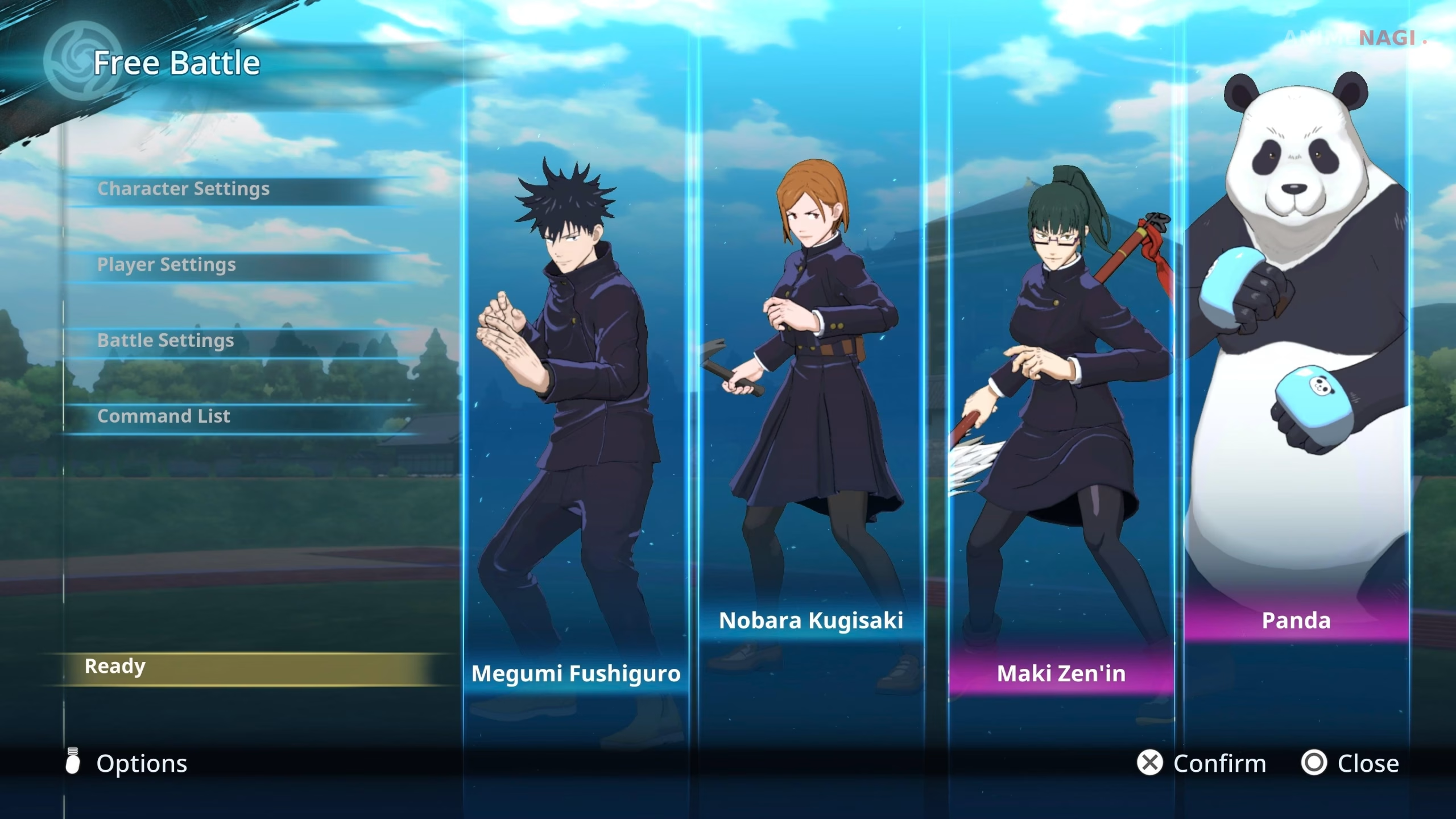
The gameplay felt clunky and Repetitive
The biggest criticism aimed at Cursed Clash involved its gameplay mechanics. Many players described the combat as stiff, unresponsive, and overly simplistic. While the game attempted to create strategic team-based battles, fans often felt fights devolved into repetitive attack loops with limited variety.
Several reviewers criticized the combo system for lacking depth. Instead of rewarding creativity or advanced timing, players could rely heavily on auto-combos and repetitive attack chains. Some Steam users specifically pointed out that movement felt awkward and that basic combat lacked impact.
This became especially damaging because anime arena fighters already struggle with criticism about shallow gameplay. Fans hoped Jujutsu Kaisen’s complex power system would allow for more strategic combat mechanics. Instead, many players felt the game copied familiar arena fighter systems without meaningfully improving them.
Critics from OpenCritic and GamingTrend also argued that the combat failed to capture the stylish intensity of the anime’s battles. The anime is known for fluid choreography, brutal hand-to-hand combat, and visually creative cursed techniques. Players expected the game to recreate that excitement, but many felt the action looked and felt lifeless.
Poor Visual Quality Hurt the Experience
One of the harshest complaints from fans involved the game’s visuals. Despite releasing during the PlayStation 5 and Xbox Series X generation, many players felt Cursed Clash looked outdated. Critics frequently compared the graphics to lower-budget anime games or even mobile titles.
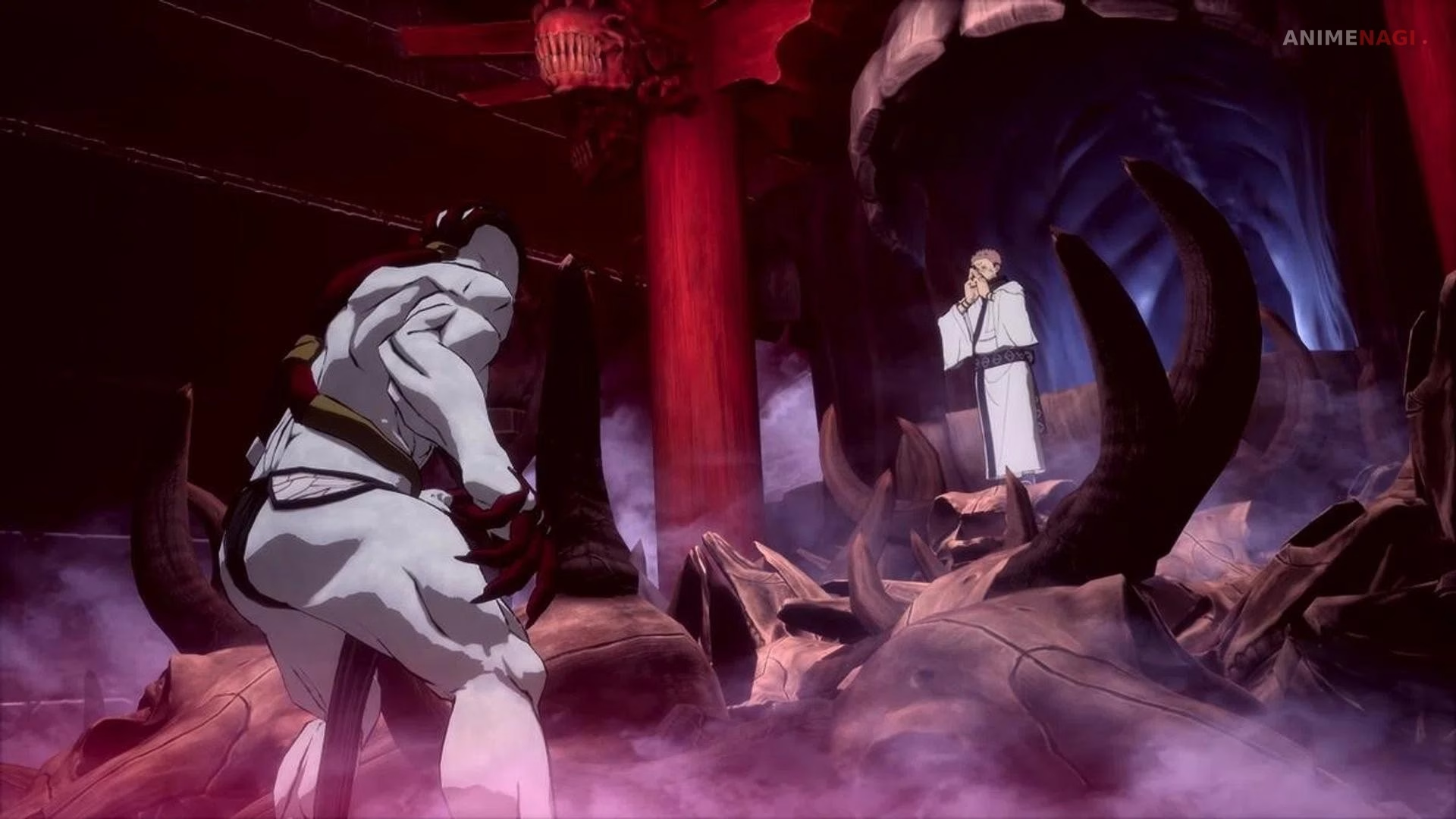
This criticism became more noticeable because modern anime games have significantly improved visually over the past decade. Titles like Dragon Ball FighterZ and Guilty Gear Strive demonstrated how anime aesthetics could be translated beautifully into games. Compared to those titles, Cursed Clash appeared technically behind.
Players also criticized environmental design and animations. While some ultimate attacks looked flashy, reviewers argued that many arenas lacked detail and personality.
The visual presentation especially disappointed fans because Jujutsu Kaisen itself is famous for stunning animation. The anime’s intense fights and cinematic direction created expectations that the game simply could not match.
The Story Mode Became One of the Biggest Complaints
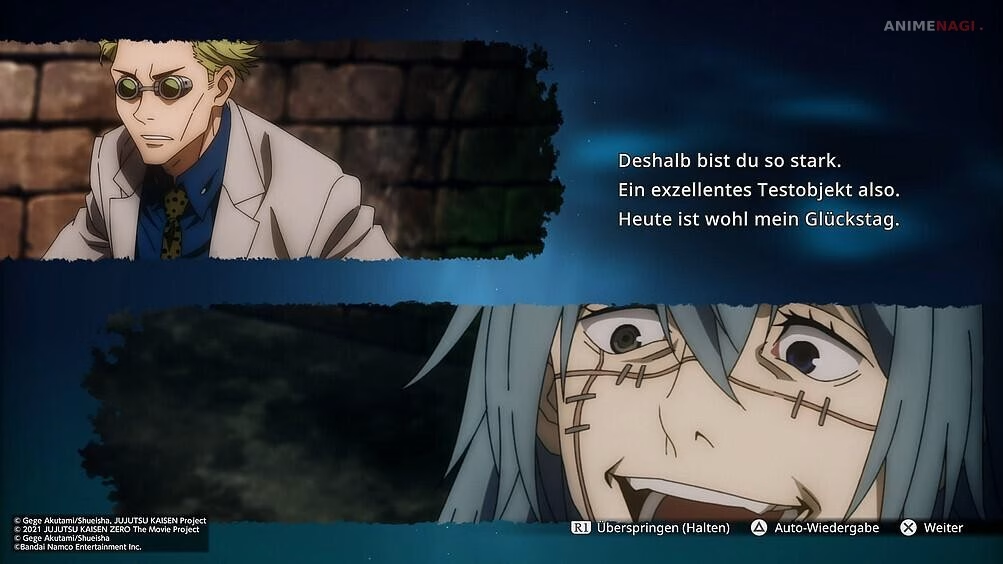
The story mode generated some of the strongest backlash after launch. Instead of fully recreating iconic scenes from the anime with cinematic storytelling, the game often relied on static screenshots and simplified cutscenes.
For many players, this felt lazy and unfinished. Fans expected dramatic recreations of major moments from the anime’s first season and the Jujutsu Kaisen 0 movie. Instead, much of the story progression resembled a slideshow presentation rather than a modern story campaign.
Reviewers repeatedly criticized the lack of immersion. Some described the campaign as feeling more like a recap than an actual narrative experience.
This issue mattered because anime game adaptations often rely heavily on nostalgia and emotional attachment. Players want to relive memorable arcs with cinematic quality. Games like the Naruto Storm series succeeded partly because they recreated anime moments with high-energy presentation. Cursed Clash failed to deliver that same emotional impact.
Missing Features Frustrate Fighting Game Fans
Another major reason for the backlash was the surprising lack of basic features expected from fighting games. One of the most criticized omissions was the absence of local multiplayer at launch.
For a fighting game, especially one tied to a massive anime franchise, this decision baffled many fans. Local couch multiplayer has historically been a core part of anime fighting games. Removing it made the game feel incomplete to many players.
The game also lacked a dedicated training mode, which frustrated players trying to learn mechanics and combos. Competitive fighting games often rely on robust practice systems, frame analysis, and tutorials to help players improve. Cursed Clash offered limited tools for mastering its combat systems.
Online functionality also received criticism. Some players reported unstable matchmaking and underwhelming netcode performance. Since the game emphasized cooperative online play, technical issues damaged one of its primary selling points.
When combined together, these missing features created the impression that the game launched without enough development polish.
Fans Accused the Game of Being a Cash Grab
As criticism intensified, many players began accusing the game of existing primarily to capitalize on Jujutsu Kaisen’s popularity rather than deliver a genuinely high-quality experience. Some reviews openly described it as a “soulless” adaptation that failed to understand what made the anime special.
This perception became even stronger because of the game’s pricing structure and DLC plans. Players already frustrated with the base game questioned why additional paid content arrived despite complaints about missing features and limited polish.
The “cash grab” narrative spread heavily across social media and Reddit discussions. On Reddit, some users argued that the game deserved criticism because it felt rushed and underdeveloped compared to the quality of the anime itself.
At the same time, not every player hated the game. Some fans defended its combat ideas and enjoyed the cooperative mechanics. However, the negative reception quickly became the dominant public narrative surrounding the release.
The Arena Fighter Genre’s Reputation Also Hurt the Game
Cursed Clash also suffered from broader problems tied to the anime arena fighter genre itself. Over the years, many anime games have received criticism for prioritizing fan service over deep gameplay systems.
Players increasingly compare anime fighters to more polished competitive games like Tekken 8 or Street Fighter 6. That comparison makes shallow mechanics or repetitive combat harder to ignore.
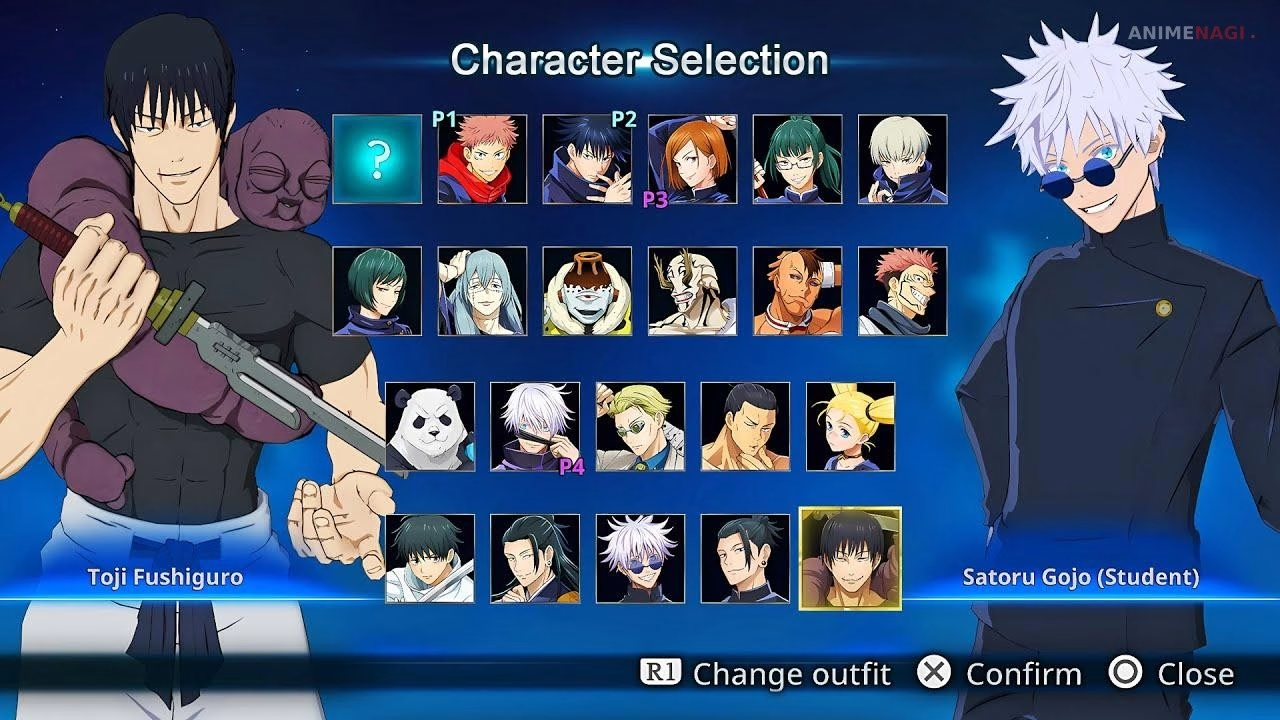
Several critics argued that Cursed Clash represented the worst habits of the genre. Eurogamer reportedly called it “a product disguised as a game,” criticizing its lack of meaningful innovation.
The problem is that Jujutsu Kaisen as a franchise had the potential to break that pattern. Its power system, tactical battles, and diverse characters could have inspired a more creative fighting game structure. Fans saw missed potential everywhere, which made the disappointment feel even stronger.
Weak Long-Term Player Retention Added to the Failure
Another sign of the game’s struggles came through declining player activity after launch. According to SteamDB, the game reached an early peak but later experienced a sharp drop in active players.
This decline suggested that many players did not stay engaged long-term. Fighting games often survive through competitive communities, online matchmaking, and replay value. If players quickly lose interest, matchmaking quality and community activity decline as well.
The lack of strong post-launch momentum hurt the game’s reputation further. Instead of growing through positive word-of-mouth, the title became increasingly associated with disappointment.
Some DLC expansions later received better reactions from players. However, by then, much of the initial damage to the game’s reputation had already been done.
Why the Backlash Became So Intense
The backlash surrounding Cursed Clash was not only about technical flaws or missing features. It was also emotional. Fans genuinely believed Jujutsu Kaisen deserved a better adaptation.
The anime’s explosive popularity created expectations for a game that could stand beside the best anime fighters on the market. Instead, many players felt they received an unfinished product that relied too heavily on brand recognition.
That emotional disappointment amplified every criticism online. Weak visuals became more frustrating because the anime looked incredible. Simplified combat became more disappointing because the source material featured highly strategic battles. Missing features felt less forgivable because fans expected premium quality from such a major franchise.
In many ways, the backlash reflected wasted potential more than outright hatred.
Could Jujutsu Kaisen Still Get a Better Game Adaptation?
Despite Cursed Clash’s reception, the franchise still has enormous gaming potential. The world of Jujutsu Kaisen contains complex abilities, memorable characters, and intense battles that could inspire an excellent fighting game if handled properly.
Some fans believe the franchise would work better as a traditional competitive fighter rather than an arena-based brawler. Others think an action RPG or cinematic action game could better capture the atmosphere of the anime.
The poor reception of Cursed Clash does not necessarily mean future adaptations will fail. Many anime franchises have recovered from weak game releases before eventually receiving stronger titles.
However, Cursed Clash became a clear lesson for publishers. Modern anime fans expect more than recognizable characters and flashy attacks. They want polished gameplay, meaningful content, strong visuals, and a level of care that matches the quality of the original series.
Without that effort, even one of the world’s biggest anime franchises can struggle to satisfy its audience.