Few anime endings have created as much debate as the conclusion of Code Geass: Lelouch of the Rebellion. For years, fans argued over one major question: did Lelouch vi Britannia truly die during the Zero Requiem, or did he secretly survive through the mysterious power known as “Code”? The original anime intentionally left his fate ambiguous, fueling theories that lasted for more than a decade.
Those theories became even more complicated after Code Geass Lelouch of the Re;surrection officially brought Lelouch back. The film confirmed that Lelouch’s story was not over, but it also changed how fans understood immortality, Geass powers, and C’s World itself. Rather than simply undoing his death randomly, the movie introduced deeper lore surrounding resurrection and the mysterious “Code” carried by immortal characters like C.C.
Understanding how Lelouch survives requires examining both the original series and the alternate continuity created by the recap films leading into Lelouch of the Re;surrection. The explanation involves Geass evolution, Charles zi Britannia’s Code, C’s World, and the hidden mechanics of immortality within the Code Geass universe.
The result is one of anime’s most complicated and heavily discussed resurrection stories.
What is the “Code” in Code Geass?
To understand Lelouch’s survival, it is first necessary to understand what a “Code” actually is in the Code Geass: Lelouch of the Rebellion universe.
The Code is a mysterious immortal power possessed by characters like C.C. and V.V. Unlike Geass, which grants supernatural abilities such as mind control or memory manipulation, the Code grants immortality and immunity from aging. Characters who possess a Code cannot die through normal means and often lose their Geass powers after fully inheriting immortality.
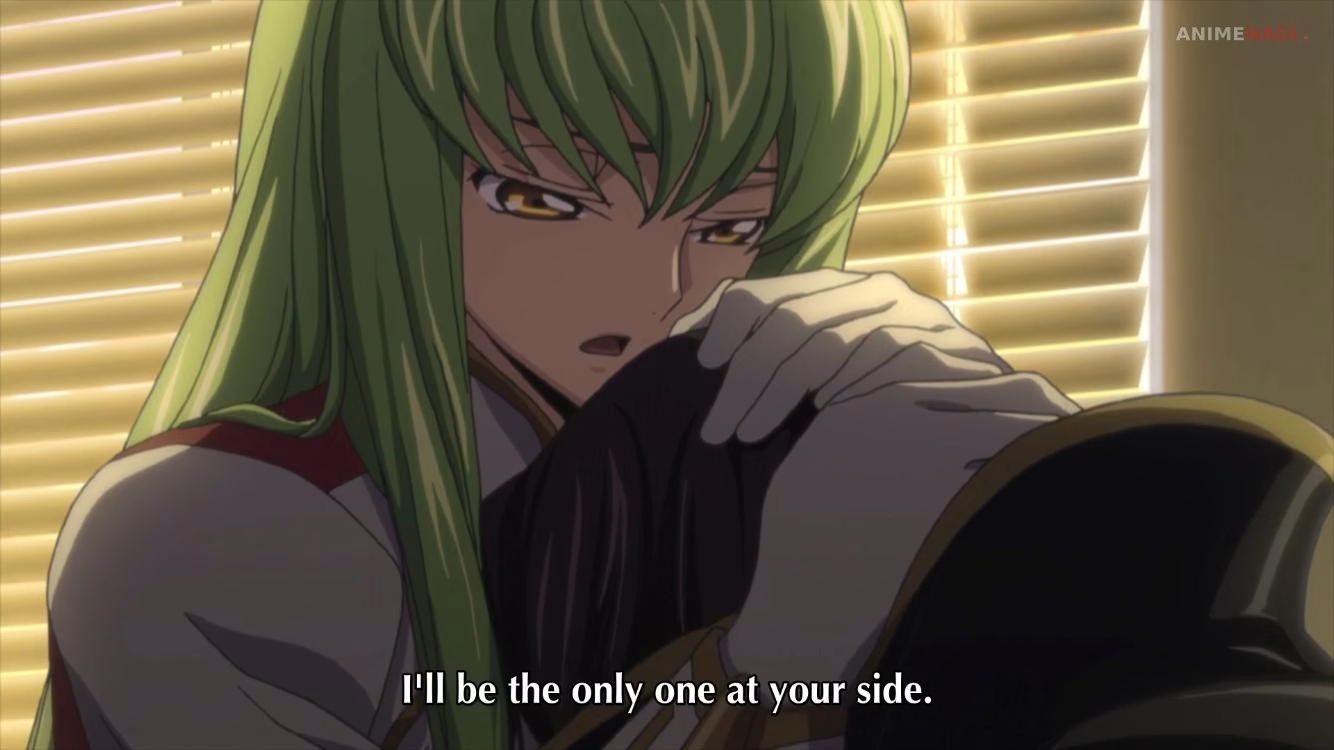
Throughout the original series, the anime gradually reveals that a Geass user can theoretically inherit a Code from another Code bearer under specific conditions. Emperor Charles zi Britannia himself possessed a Code later in the story, allowing him to survive fatal injuries repeatedly.
This concept became the foundation of the famous “Lelouch is alive” theory after the original anime ended in 2008. Many fans believed Lelouch inherited Charles’ Code during their confrontation in C’s World. According to the theory, Lelouch’s apparent death during the Zero Requiem only activated the immortality afterward, similar to how C.C.’s immortality awakened after she experienced death centuries earlier.
The original anime never officially confirmed this theory directly. In fact, the creators repeatedly described the TV ending as intentionally tragic and emotionally complete. However, subtle details continued fueling speculation for years.
Why fans believed Lelouch survived the original ending
The ending of Code Geass R2 became one of anime’s most debated conclusions because several scenes appeared suspiciously ambiguous.
During the Zero Requiem, Lelouch intentionally allowed Suzaku, disguised as Zero, to publicly assassinate him. The plan was designed to unite the world through hatred toward Emperor Lelouch before symbolically killing that hatred through Zero’s victory. Officially, Lelouch died to create world peace.
However, the anime’s final moments created endless theories.
One of the biggest clues involved C.C.’s final monologue while riding on a hay cart. She speaks directly to Lelouch during the scene, saying Geass does not always lead to loneliness. Because the camera avoids clearly revealing the cart driver’s face, many viewers believed Lelouch himself was secretly alive nearby.
Other theories focused on Charles’ Code. During Lelouch’s confrontation with his father in C’s World, Charles physically grabs Lelouch shortly before dying. Some fans interpreted this moment as a hidden Code transfer. Since Code bearers become immortal, supporters of the theory believed Lelouch survived his public execution afterward.
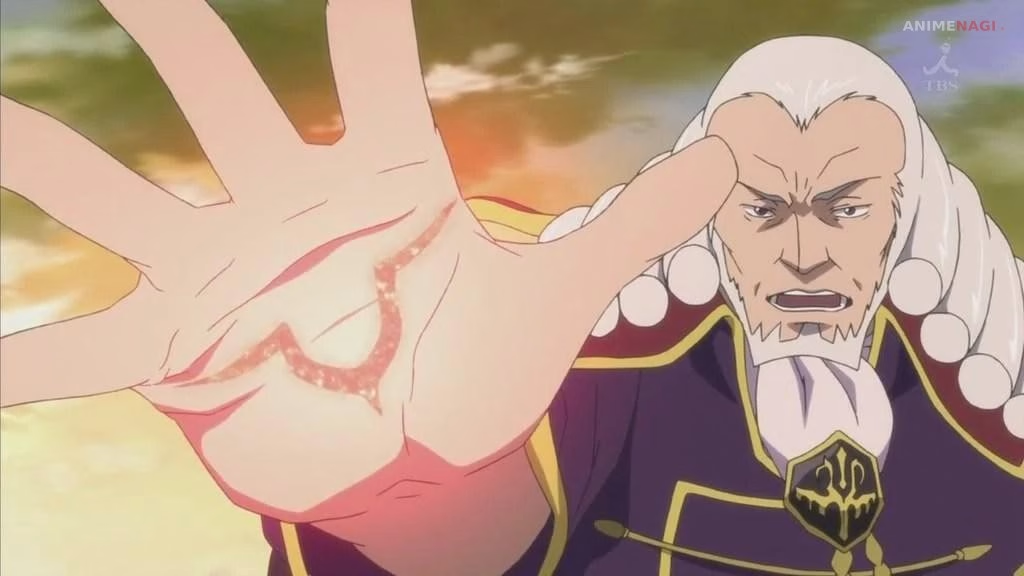
The series also repeatedly connected immortality with memory transfer and physical resurrection. Characters touching Code bearers often experienced flashes of memories or consciousness. Nunnally briefly seeing Lelouch’s memories while touching him during his death scene further intensified speculation.
Even today, the original TV ending remains intentionally open to interpretation despite later sequel material.
Lelouch of the Re;surrection changes the timeline
One crucial detail many viewers miss is that Code Geass Lelouch of the Re;surrection does not continue directly from the original TV anime timeline.
Instead, the movie follows the alternate continuity created by the three recap films: Initiation, Transgression, and Glorification. These movies retell the original series while changing several important story details. The biggest difference involves Shirley Fenette surviving instead of dying.
This timeline distinction matters because it gives the creators flexibility to revive Lelouch without directly overriding every interpretation of the original ending.
According to the film’s official plot, Shirley secretly recovers Lelouch’s body after the Zero Requiem and delivers it to C.C. C.C. then reconstructs Lelouch physically using the power connected to C’s World. However, although his body returns, his consciousness and memories remain trapped inside the collective unconsciousness.
This creates an unusual situation where Lelouch exists physically but lacks his complete identity initially.
Later in the movie, C.C. successfully restores Lelouch’s mind fully through an entrance into C’s World, completing his resurrection. This explanation differs significantly from older fan theories that claimed Lelouch survived continuously since R2.
Instead, Re;surrection suggests Lelouch genuinely died physically but could be restored because of his incomplete connection to Code and C’s World.
Did Lelouch actually inherit a Code?
The movie intentionally leaves this question partially ambiguous.
Although Lelouch of the Re;surrection strongly implies Lelouch possesses Code-related qualities, it never explains the mechanics completely in direct detail. However, several clues strongly suggest Lelouch inherited at least an incomplete or unstable version of Charles’ Code.
The biggest evidence comes from Lelouch’s new name at the end of the film: “L.L.” Similar to immortal Code bearers like C.C. and V.V., the double initials imply Lelouch has entered the same category of existence.
The film’s resurrection mechanics also support this interpretation. C.C. explains that Lelouch’s body could be reconstructed because of his connection to the Code system and C’s World. Ordinary humans in Code Geass cannot simply be revived after death this way.
However, Lelouch’s resurrection appears imperfect initially. Unlike C.C., who possesses stable immortality, Lelouch’s consciousness becomes fragmented and trapped. This instability suggests his Code inheritance may have been incomplete or damaged during the Zero Requiem.
Some theories propose that Lelouch inherited Charles’ Code improperly because Charles died abnormally inside C’s World rather than through traditional transfer conditions. This would explain why Lelouch required external restoration from C.C. instead of reviving naturally.
The movie deliberately avoids overexplaining these mechanics, likely to preserve some of the original mystery surrounding Lelouch’s fate.
How C’s World allowed Lelouch’s resurrection
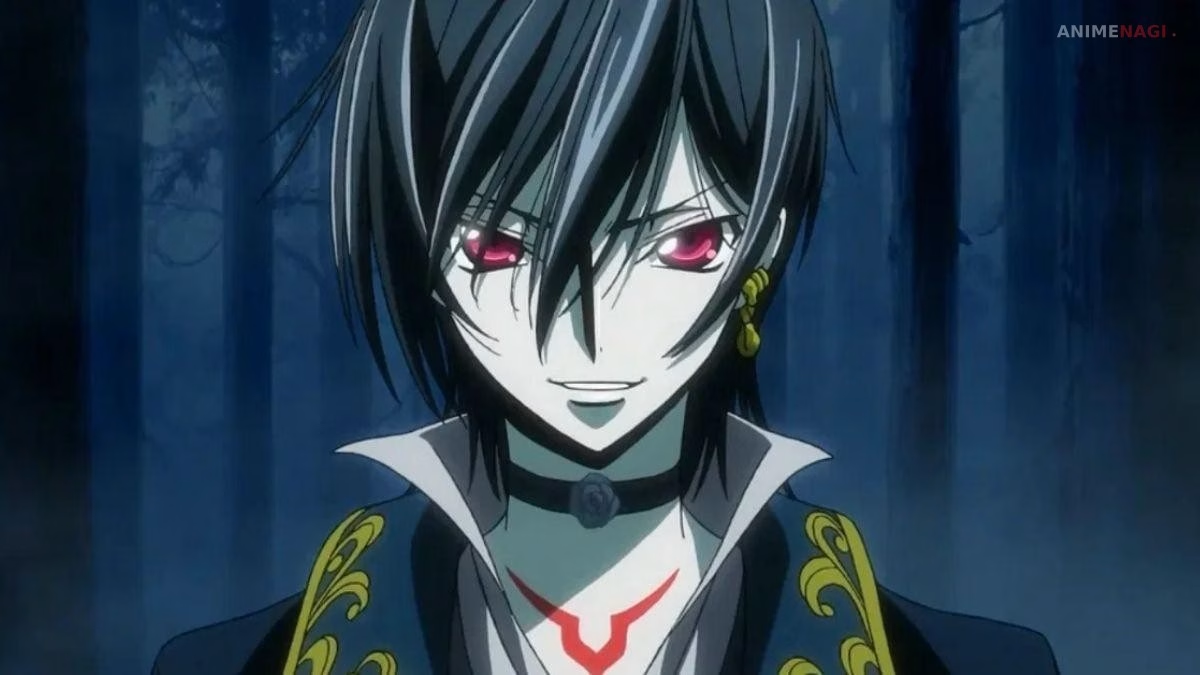
C’s World plays a major role in Lelouch’s return.
Throughout the franchise, C’s World is portrayed as a metaphysical kingdom connected to human consciousness, memories, and Geass powers. Characters can communicate with dead consciousnesses there, alter memories, and interact with collective human thought itself.
After Lelouch’s death, his consciousness apparently remained trapped inside C’s World rather than disappearing entirely. Because his body was restored physically by C.C., the main problem became reconnecting his soul and memories to that reconstructed body.
The movie’s second half revolves around this process.
When Lelouch finally enters C’s World again, he gradually recovers his memories, personality, and strategic intelligence. Once reunited fully with his consciousness, he returns completely as the Lelouch viewers remember.
This explanation also fits larger Code Geass themes involving identity and masks. Lelouch spent most of the series balancing multiple identities including Lelouch Lamperouge, Zero, and Emperor Lelouch. His resurrection story continues exploring the idea that identity itself can exist separately from physical form.
Rather than functioning like traditional anime resurrection magic, C’s World treats consciousness almost as transferable data connected to collective existence.
Why Lelouch’s resurrection remains controversial
Even years after release, Code Geass Lelouch of the Re;surrection remains divisive among fans.
Many viewers loved seeing Lelouch return because he remains one of anime’s most iconic protagonists. The movie also allowed fans to see him interact again with characters like C.C., Suzaku, Kallen, and Nunnally after years of separation.
However, others felt the resurrection weakened the emotional impact of the original Zero Requiem ending.
The original series portrayed Lelouch’s death as the ultimate sacrifice. He willingly destroyed his own reputation and life to create peace for the world and protect Nunnally’s future. Reviving him risks reducing the finality of that sacrifice emotionally.
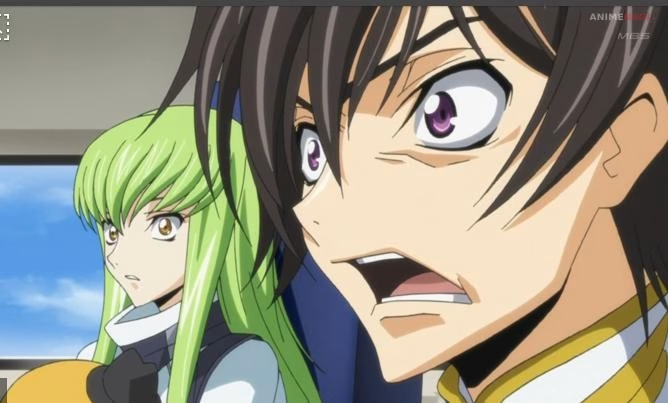
The creators partially addressed this criticism by placing Re;surrection within the alternate movie timeline rather than replacing the TV canon directly. This approach allows both interpretations to coexist.
Fans who prefer the tragic original ending can still treat R2 as complete. Meanwhile, fans who wanted Lelouch and C.C. to continue traveling together can accept the movie continuity instead.
This compromise explains why the franchise continues using alternate timelines carefully rather than fully rewriting the original anime.
Why does Lelouch become “L.L.” at the end
The ending of Re;surrection strongly reinforces Lelouch’s transformation into a Code bearer. After helping stop the kingdom of Zilkhstan and rescuing Nunnally again, Lelouch chooses not to reclaim political power publicly. Instead, he leaves alongside C.C. and adopts the name “L.L.” This name matters symbolically.
Every major immortal Code bearer in the franchise uses repeated initials. C.C. and V.V. both abandoned ordinary human names long ago after becoming immortal. Lelouch adopting “L.L.” suggests he has accepted a similar existence outside normal humanity.
The film also frames this moment almost like a spiritual marriage between Lelouch and C.C. After years of emotional partnership, the two finally travel together freely beyond politics, war, and empire-building.
In many ways, this conclusion resolves C.C.’s original emotional arc, too. Her greatest fear throughout Code Geass involved eternal loneliness caused by immortality. Lelouch surviving allows her to finally share that burden with someone who understands her completely.
The ending, therefore, transforms Lelouch from a revolutionary emperor into a wandering immortal connected permanently to the Geass system itself.