In the Final War Arc of My Hero Academia, the stakes reach their absolute peak as Tomura Shigaraki evolves into a near-unstoppable force. Naturally, fans look toward the three strongest students, Midoriya, Bakugo, and Todoroki, expecting them to take him down together. These three represent the future of hero society, each possessing elite Quirks, combat experience, and rapid growth. However, despite their immense potential, they still struggle to match Shigaraki’s overwhelming power. This is not just a matter of strength but a reflection of how far Shigaraki has surpassed conventional limits.
The gap between them exists because Shigaraki is no longer a standard villain. His body enhancements, multiple Quirks, and destructive capabilities place him in a tier designed to challenge the very strongest heroes. Even coordinated attacks from top fighters often fail to slow him down significantly. This creates a situation where even the combined efforts of Midoriya, Bakugo, and Todoroki are not enough for a decisive victory. Understanding why requires breaking down both their strengths and Shigaraki’s evolution in detail.
Shigaraki’s Evolution Beyond Human Limits
Tomura Shigaraki becomes a completely different entity after undergoing a transformation under All For One. His body is engineered to handle immense power, granting him superhuman strength, speed, and durability. These enhancements alone would make him a top-tier threat even without additional abilities. However, his transformation goes much further than physical upgrades.
Shigaraki gains access to multiple Quirks, dramatically increasing his versatility in battle. This allows him to adapt to different opponents and counter various attack styles effectively. He is no longer limited to a single approach and can switch tactics instantly. This unpredictability makes him extremely difficult to fight against, even for highly skilled opponents.
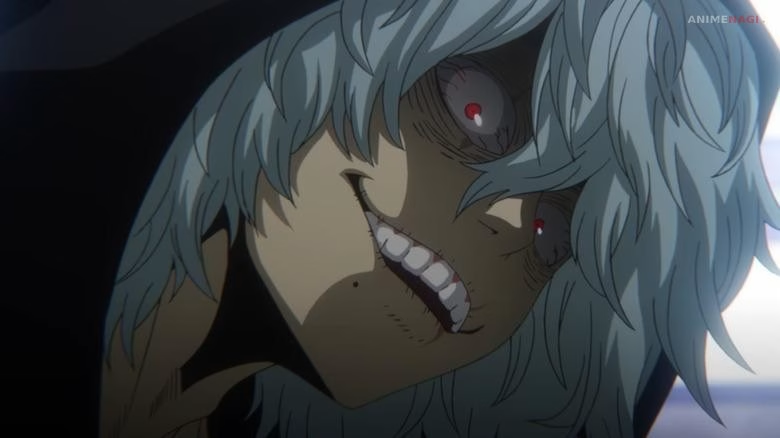
His presence also changes the scale of combat itself. Instead of fighting like a traditional villain, Shigaraki overwhelms entire battlefields. His attacks affect large areas, forcing opponents to focus on survival rather than offense. This fundamental shift in combat dynamics is one of the main reasons even the strongest students struggle against him.
Why Decay Makes Close Combat Nearly Impossible
Shigaraki’s Decay Quirk becomes one of the most dangerous abilities in the series after his awakening. It evolves from requiring direct contact to spreading across surfaces rapidly. This allows him to destroy entire sections of the battlefield in moments. As a result, fighting him at close range becomes extremely risky.
For Midoriya and Bakugo, this creates a major limitation. Both rely heavily on aggressive combat styles that involve closing distance and applying pressure. However, Decay forces them to constantly reposition and avoid contact. This reduces their ability to maintain consistent offensive momentum.
The psychological pressure of Decay also affects their performance. Knowing that a single mistake can lead to instant destruction forces them to be cautious. This hesitation gives Shigaraki more control over the fight. It shifts the balance in his favor even before considering his other abilities.
Why Midoriya Alone Isn’t Enough
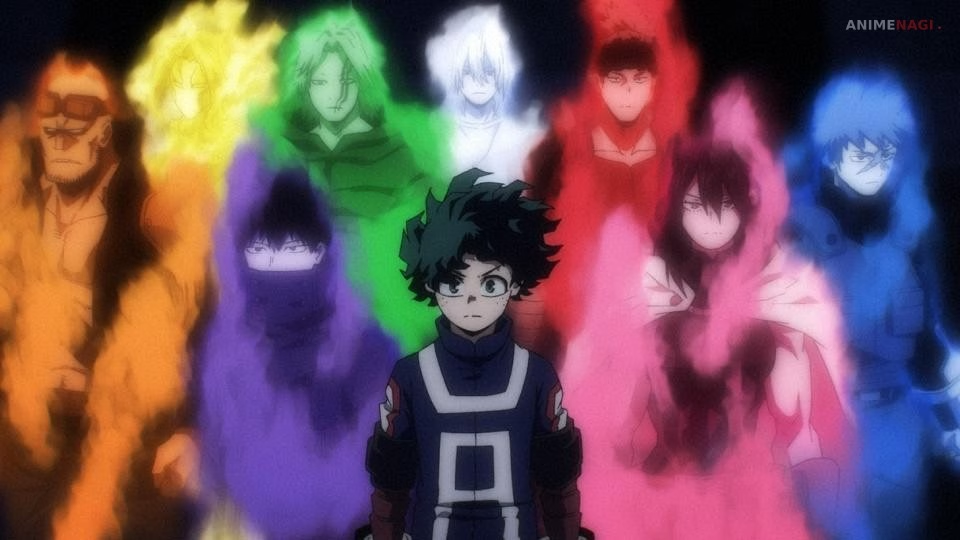
Izuku Midoriya is the strongest among the three due to his mastery of One For All. His enhanced strength, speed, and additional Quirks make him one of the few characters capable of fighting Shigaraki directly. However, even Midoriya faces limitations when dealing with Shigaraki’s full power. His attacks, while powerful, do not always produce lasting damage.
Shigaraki’s durability and regeneration reduce the impact of Midoriya’s strikes significantly. Even when Midoriya lands powerful blows, Shigaraki can recover quickly. This turns the fight into a battle of endurance, which favors Shigaraki due to his enhancements. Midoriya must maintain a constant high-level output, which is difficult to sustain.
Additionally, Midoriya carries the burden of protecting others during battle. He cannot focus entirely on offense because he must also prevent collateral damage. This divides his attention and reduces his efficiency. As a result, even his immense power is not enough for a quick victory.
Why Bakugo’s Explosive Power Falls Short
Katsuki Bakugo brings incredible speed and offensive power through his Explosion Quirk. His aggressive fighting style and sharp instincts make him one of the most dangerous combatants among students. He can deliver rapid, high-impact attacks that overwhelm most opponents. However, Shigaraki’s durability neutralizes much of this advantage.
Bakugo’s explosions can damage Shigaraki, but they rarely cause decisive harm. Shigaraki can withstand the blasts and continue fighting without significant slowdown. This reduces the effectiveness of Bakugo’s primary strength, which is overwhelming opponents through sheer force.
Bakugo also faces the challenge of maintaining distance. While his mobility allows him to stay airborne, Shigaraki’s wide-area attacks still pose a threat. This forces Bakugo to focus on evasion as much as offense. As a result, he cannot fully utilize his aggressive combat style.
Why Todoroki’s Balance Isn’t Enough
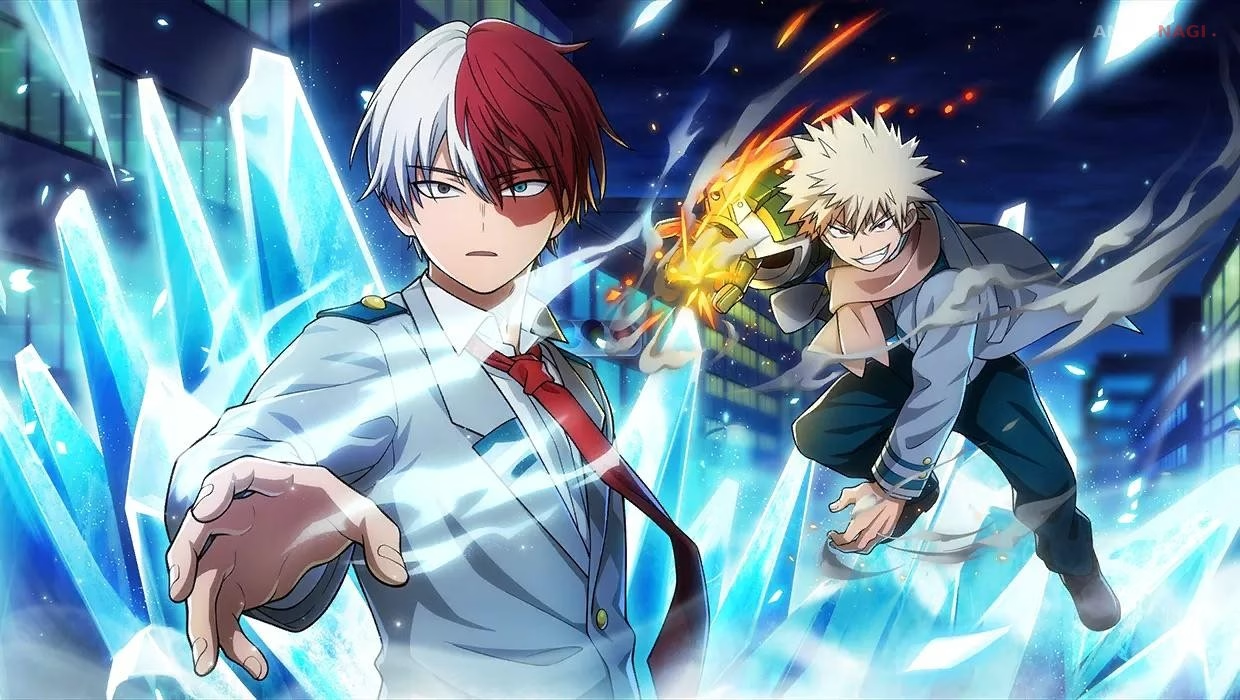
Shoto Todoroki offers a balanced approach with his Half-Cold Half-Hot Quirk. His ability to control both ice and fire gives him strong offensive and defensive options. He can create large-scale attacks and control the battlefield effectively. However, these advantages are limited against Shigaraki’s resilience.
Todoroki’s attacks can slow Shigaraki temporarily but cannot stop him completely. His ice barriers can delay movement, but Shigaraki can break through them with enough force. Similarly, his fire attacks struggle to deal lasting damage. This limits his effectiveness in prolonged combat.
Todoroki also lacks the raw destructive output needed to overpower Shigaraki. While his abilities are versatile, they are not designed to defeat an opponent of this scale alone. This places him in a supporting role rather than a decisive one. His contributions are valuable but not enough to end the fight.
Why Their Teamwork Still Isn’t Enough
In theory, Midoriya, Bakugo, and Todoroki working together should create a powerful combination. Their abilities complement each other and allow for coordinated attacks. However, Shigaraki’s overwhelming power disrupts this synergy. His attacks force them to focus on survival rather than executing complex strategies.
Coordination becomes difficult under constant pressure. Each of them must adapt individually to Shigaraki’s movements and attacks. This reduces their ability to function as a unified team. As a result, their combined strength does not reach its full potential.
Even when they manage to coordinate, their attacks lack the necessary impact. Shigaraki’s durability allows him to endure their combined efforts. This highlights the gap between their level and his. Teamwork alone cannot overcome such a difference in power.
The Massive Gap Between Heroes and Endgame Villains
The core issue lies in the power gap between even top students and endgame-level villains. Shigaraki is designed to challenge the strongest heroes in the world. His abilities reflect a level of power that goes beyond normal combat scenarios. This places him in a completely different tier.
Midoriya, Bakugo, and Todoroki are still developing as heroes. While they are incredibly strong, they have not yet reached their full potential. This limits their ability to handle threats of this magnitude. Their growth is ongoing, but Shigaraki is already at his peak.
This gap is intentional within the story. It emphasizes the scale of the Final War and the danger Shigaraki represents. It also sets the stage for further growth and development. The heroes must evolve to overcome such threats.
Narrative Purpose: Why Shigaraki Can’t Be Easily Defeated
Shigaraki’s role in the story is to serve as the ultimate antagonist. He represents the culmination of All For One’s legacy and the chaos it creates. His power level reflects this narrative importance. He is not meant to be defeated easily or quickly.
Midoriya is positioned as his primary opponent. Their conflict represents the clash between opposing ideals and inherited power. Bakugo and Todoroki play crucial supporting roles in this struggle. However, the final victory is tied to Midoriya’s journey.
This narrative structure explains why the three of them cannot defeat Shigaraki together. Their roles are important but not central to the final outcome. This ensures that the story remains focused on its core themes. It also maintains the significance of the main conflict.