When One-Punch Man debuted in 2015, it instantly became one of the most celebrated anime adaptations of the decade. The first season combined stunning animation, fluid fight choreography, sharp comedy, and faithful manga adaptation into a package that exceeded nearly every fan expectation. Madhouse, alongside director Shingo Natsume and a team of elite freelance animators, delivered visuals that many viewers considered movie-quality despite the show being a television anime.
Because of that success, fans expected a second season announcement quickly. Instead, One Punch Man Season 2 faced a long and confusing delay that stretched nearly four years between seasons. During that period, rumors spread constantly online regarding studio conflicts, scheduling problems, staff departures, and production troubles. By the time Season 2 finally aired in 2019, the anime community was already deeply worried about whether the sequel could match the original.
The truth behind the delay was more complicated than a single production problem. Multiple behind-the-scenes issues combined to slow development significantly, including studio changes, director availability, scheduling conflicts, and the immense pressure created by Season 1’s success. Understanding those factors explains why One Punch Man Season 2 became one of anime’s most controversial sequel productions.
Why One Punch Man Season 1 became so difficult to follow
One Punch Man Season 1 succeeded partly because it assembled an unusually talented production team under ideal circumstances. Although Madhouse officially animated the series, many of the season’s best action sequences came from elite freelance animators recruited through director Shingo Natsume’s industry connections.
The production featured contributions from highly respected animators across multiple studios rather than relying only on Madhouse’s internal staff. This gave Season 1 an unusually polished and dynamic visual style that stood far above typical television anime at the time. Fans especially praised fights involving Genos, Boros, and Saitama because of their cinematic animation quality.
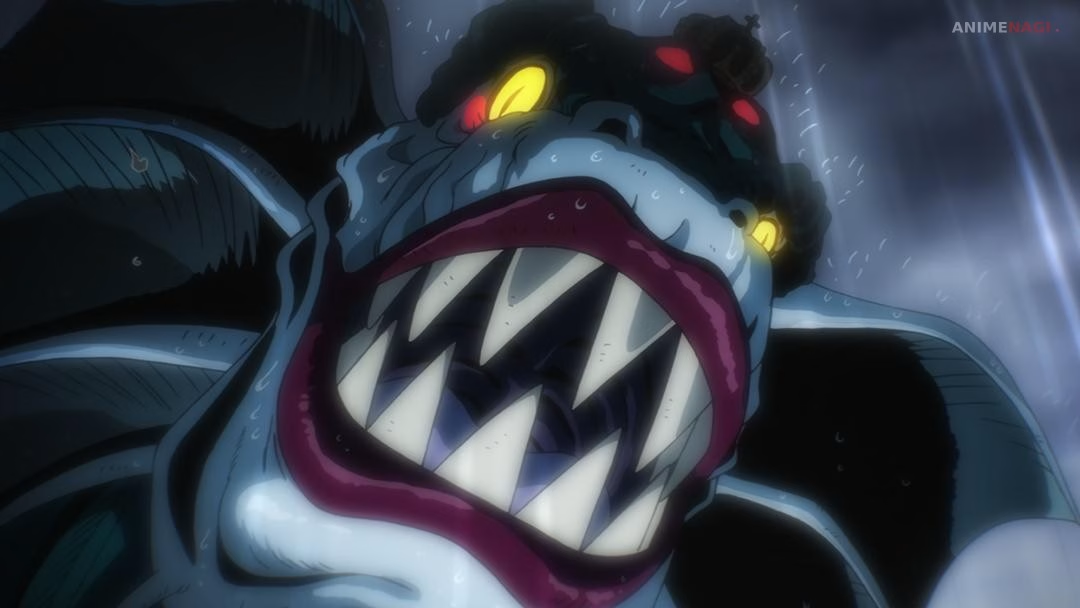
However, this success created a hidden problem immediately. Reassembling that exact creative team for a second season became extremely difficult because many contributors were freelancers with busy schedules spread across the anime industry. Unlike long-running studio productions with stable internal teams, Season 1 operated more like a special collaboration project.
That meant Season 2 could not simply continue production automatically after the first season ended. Coordinating the same level of talent again required timing, availability, and scheduling that became increasingly difficult as years passed.
Madhouse did not return for Season 2
One of the biggest turning points behind the delay happened in 2017 when it was officially announced that Madhouse would no longer animate the series. Instead, J.C.Staff would take over production duties for Season 2.
This stunned fans immediately because Madhouse had become closely associated with the first season’s incredible animation quality. The studio already had a legendary reputation from projects like Death Note, Hunter x Hunter, and Perfect Blue. Losing Madhouse raised concerns that the sequel would not maintain the same production standards.
More importantly, the studio switch likely slowed development considerably behind the scenes. Changing animation studios during a major anime production is rarely simple. New staff members must familiarize themselves with the source material, recreate established visual styles, rebuild production pipelines, and coordinate schedules from scratch.
The transition also meant the production committee had to reorganize much of the anime’s creative structure. Even if planning for Season 2 had already started internally, the studio change almost certainly disrupted the process significantly.
This became one of the central reasons why the sequel took much longer to release than fans initially expected.
Director Shingo Natsume’s departure changed everything
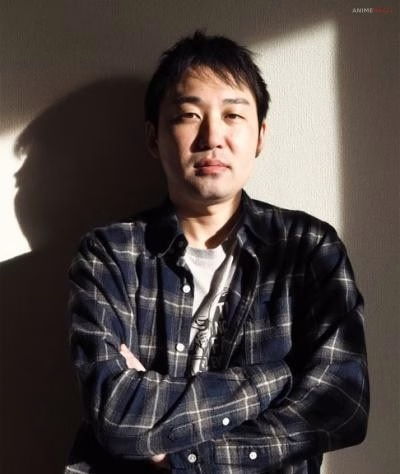
The loss of director Shingo Natsume may have been even more important than the studio change itself.
Natsume directed Season 1 and played a major role in assembling the elite animator lineup that gave the anime its signature visual quality. His connections throughout the anime industry helped attract top-tier freelance talent to the project. Many fans and animators later emphasized that Season 1’s success depended heavily on Natsume’s leadership, specifically, rather than Madhouse alone.
When Season 2 entered production, Natsume did not return as director. Instead, Chikara Sakurai took over directing responsibilities under J.C.Staff. While Sakurai had prior directing experience, replacing someone as creatively influential as Natsume created enormous pressure immediately.
The transition likely complicated pre-production scheduling, too. Directors heavily influence anime planning, staffing decisions, animation priorities, and production coordination. Replacing the original director meant rebuilding much of the project’s creative structure during development.
Fans quickly noticed this difference after Season 2 aired. While the story remained largely faithful to the manga, viewers criticized the direction, pacing, sound design, and action choreography compared to Season 1.
Scheduling conflicts reportedly caused major production problems
Scheduling became another major obstacle to the delay. Anime production schedules are often planned years in advance, especially for popular studios and directors. After Season 1 became a massive success, many staff members involved moved onto other projects quickly because no immediate Season 2 production had been locked officially.
Online discussions and industry speculation repeatedly suggested that reuniting the original creative team became nearly impossible because key staff members were already committed elsewhere. Some fans specifically pointed toward Madhouse and Natsume becoming busy with other productions during the gap period.
This issue highlights one of the anime industry’s biggest structural problems. Unlike Hollywood franchises that often secure long-term production plans immediately, anime sequels frequently depend on committee decisions, merchandise performance, staff availability, and scheduling logistics that can change dramatically over time.
As the delay continued, expectations also increased. The production committee likely understood that releasing a weaker sequel too quickly could damage the franchise’s reputation significantly. Ironically, however, the long wait ultimately increased fan expectations to nearly impossible levels anyway.
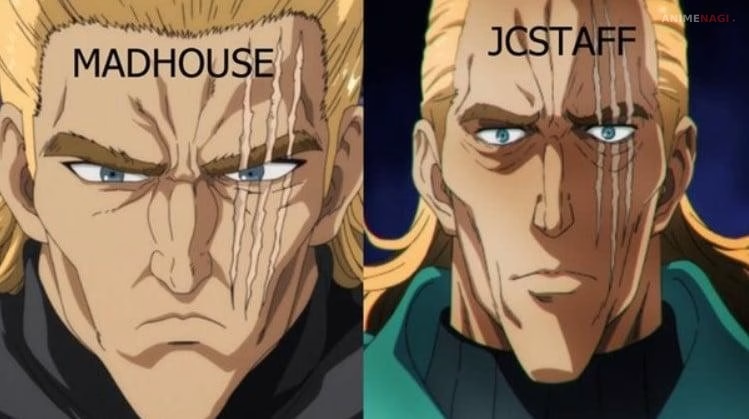
By the time Season 2 finally approached release, many fans expected another visual masterpiece comparable to Season 1.
J.C.Staff faced enormous pressure from fans
When J.C.Staff officially inherited the project, the studio entered an extremely difficult situation.
No matter what quality level Season 2 achieved, comparisons to the first season were inevitable. Season 1 had become one of the most praised anime productions of the decade, visually. Any downgrade, even a moderate one, would attract criticism immediately.
Unfortunately for J.C.Staff, the production schedule reportedly appeared extremely tight as the anime approached release. Fans later criticized stiff movement, inconsistent action choreography, metallic sound effects, and reduced animation fluidity throughout many major fights.
Importantly, some animators and industry observers later defended J.C.Staff partially by arguing that broader production committee issues and scheduling limitations contributed heavily to the final product. Even years later, animators discussing the franchise noted that studios often receive blame for structural production problems they cannot fully control.
This context does not erase criticism toward Season 2’s visuals, but it explains why the production became so complicated behind the scenes.
The studio was essentially tasked with following one of modern anime’s most visually celebrated seasons under extremely difficult expectations.
The manga’s art style created additional pressure
Another major factor behind the delay involved the source material itself.
Yusuke Murata’s manga adaptation of One Punch Man is widely considered one of the best-drawn manga in the industry. Murata’s hyper-detailed art, explosive action spreads, and cinematic paneling created enormous expectations for the anime adaptation visually.
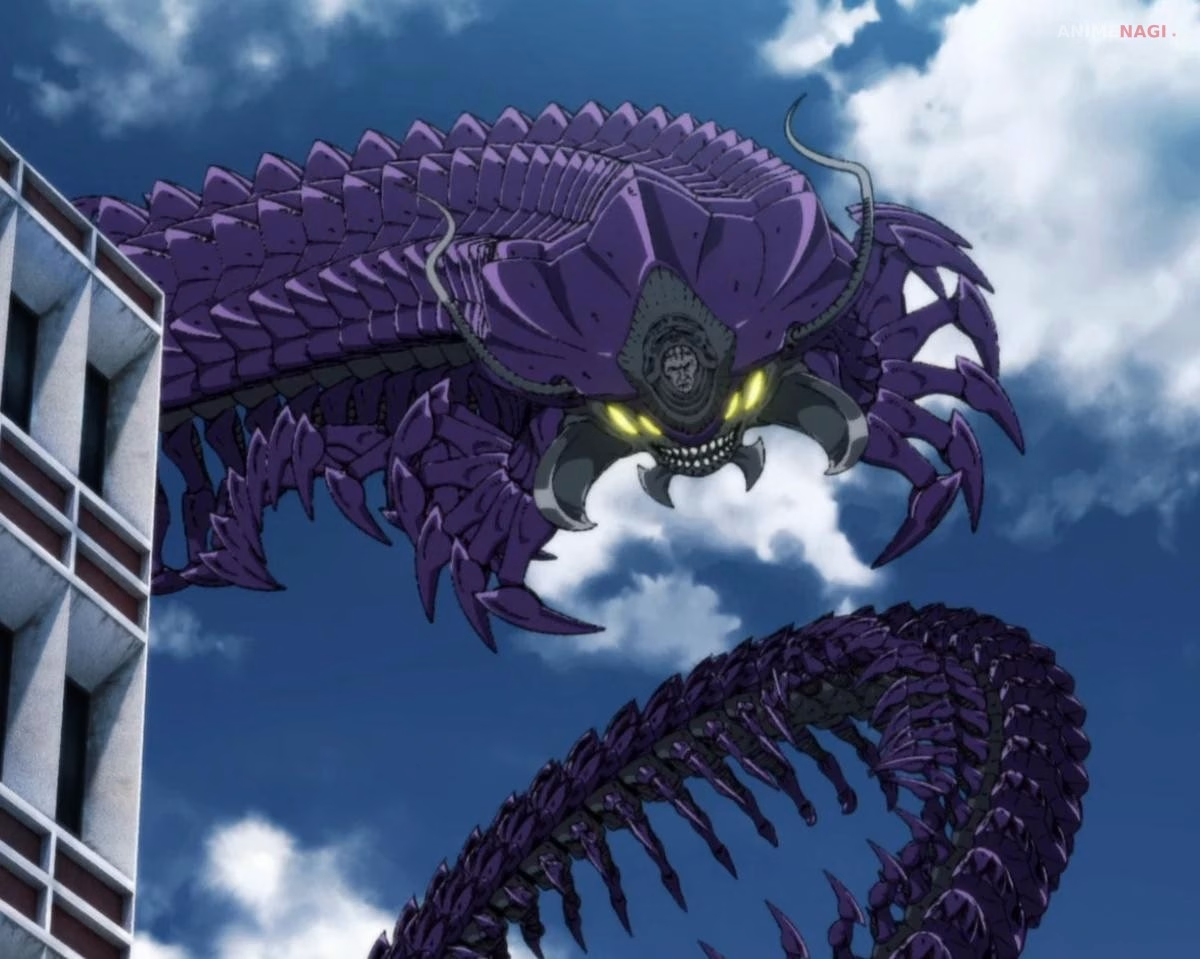
Season 1 succeeded partly because it captured much of that energy effectively. However, adapting Murata’s increasingly ambitious artwork consistently for television animation required massive production resources and elite animation talent.
As the manga progressed into larger Monster Association storylines, the complexity of battles increased dramatically. Characters like Garou, Elder Centipede, and multiple S-Class heroes demanded large-scale action scenes that were difficult to animate convincingly on television schedules.
This likely made production planning even more challenging during Season 2 development. The anime needed enough time, staff, and resources to handle source material that had become increasingly demanding visually.
Fans also constantly compared anime screenshots directly against Murata’s manga panels online, which intensified scrutiny further once promotional trailers began appearing.
Fan backlash started before Season 2 even aired
One unusual aspect of the delay was that fan anxiety began building long before the anime actually released.
The studio change announcement alone immediately triggered concern online. Reddit discussions from the time show fans already debating whether J.C.Staff could maintain the animation quality associated with Season 1. Many discussions focused specifically on losing Shingo Natsume and Madhouse simultaneously.
As promotional trailers and preview images appeared later, criticism intensified. Some viewers argued the animation already looked noticeably weaker compared to the original season’s dynamic visual style.
This created an extremely difficult environment for the production team. Instead of building excitement gradually during the delay, anticipation increasingly transformed into skepticism and fear within parts of the fandom.
By the time Season 2 premiered in 2019, many viewers were already expecting disappointment. That atmosphere amplified negative reactions once the anime aired weekly and visual differences became more obvious.
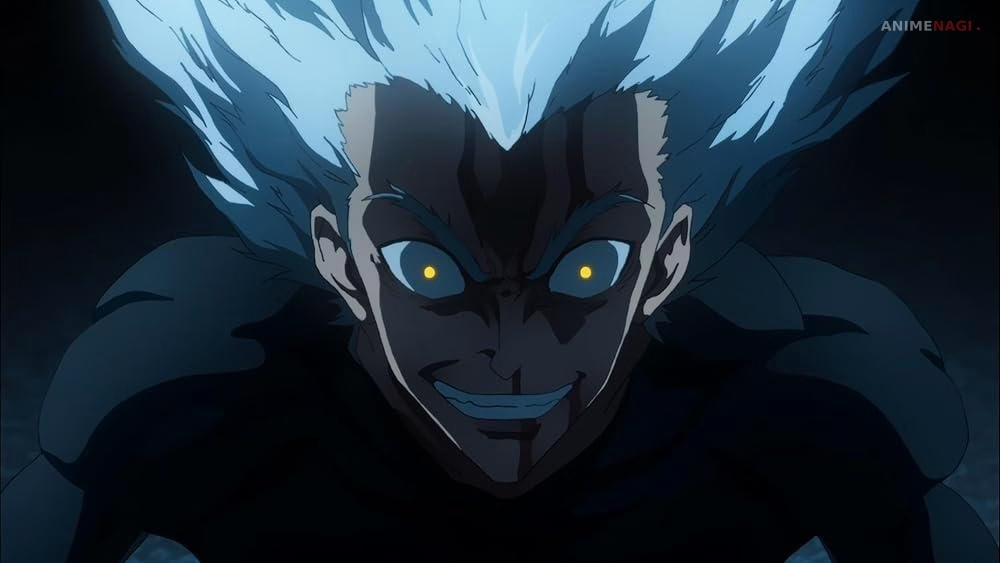
The long delay, therefore, unintentionally worsened audience expectations rather than helping production pressure.
Season 2 still succeeded commercially despite criticism
Despite the backlash surrounding animation quality, One Punch Man Season 2 still performed successfully commercially.
The anime remained extremely popular internationally and continued adapting one of manga’s biggest franchises. Many viewers also praised the season’s story progression, especially Garou’s development as a morally complex antagonist. Some critics even argued that the narrative focus improved in certain areas compared to the first season.
However, the production controversy permanently changed the discussion surrounding the franchise. Instead of focusing mainly on story and characters, conversations around One Punch Man increasingly centered on animation quality, studio management, and production problems. This reputation followed the anime for years afterward, especially during discussions surrounding Season 3.
Even recent debates involving newer seasons continue referencing the Season 2 production shift as the moment many fans believe the anime lost its original visual identity. The delay, therefore, had long-term consequences beyond simply postponing the release itself.