Ever since Tomura Shigaraki became the central antagonist of My Hero Academia, anime fans have frequently compared him to Obito Uchiha from Naruto Shippuden. Both characters were manipulated by older masterminds, both experienced traumatic childhoods, and both eventually became symbolic threats to society. Because of these similarities, some viewers labeled Shigaraki as an “Obito clone” early in My Hero Academia’s darker arcs.
However, that comparison ignores the major differences between the two characters. While creator Kōhei Horikoshi has openly acknowledged Naruto as an influence on his work, Shigaraki’s role, ideology, personality, and emotional trajectory differ heavily from Obito’s.
The two villains may share surface-level story beats, but they represent completely different ideas within their respective series. Obito is ultimately a fallen idealist chasing a false utopia, while Shigaraki is the product of societal neglect, emotional decay, and accumulated hatred. Understanding those distinctions explains why Shigaraki stands as his own character rather than a simple copy of Naruto’s iconic antagonist.
The “Manipulated Villain” Trope Exists Far Beyond Naruto
One major reason fans compare Shigaraki and Obito is that older masterminds manipulated both.
Obito was rescued and shaped by Madara Uchiha after Rin’s death shattered his worldview. Shigaraki, meanwhile, was taken in by All For One after accidentally killing his family with Decay. In both stories, an experienced villain exploited a traumatized child and transformed them into a successor.
But this storytelling device is far older than Naruto. The “corrupted apprentice” archetype appears across anime, comics, mythology, and superhero fiction. Characters like Darth Vader, Griffith, Johan Liebert, and even Magneto explore variations of manipulated or emotionally broken antagonists. Similar setups do not automatically make two characters identical. More importantly, the manipulation affects Obito and Shigaraki differently.
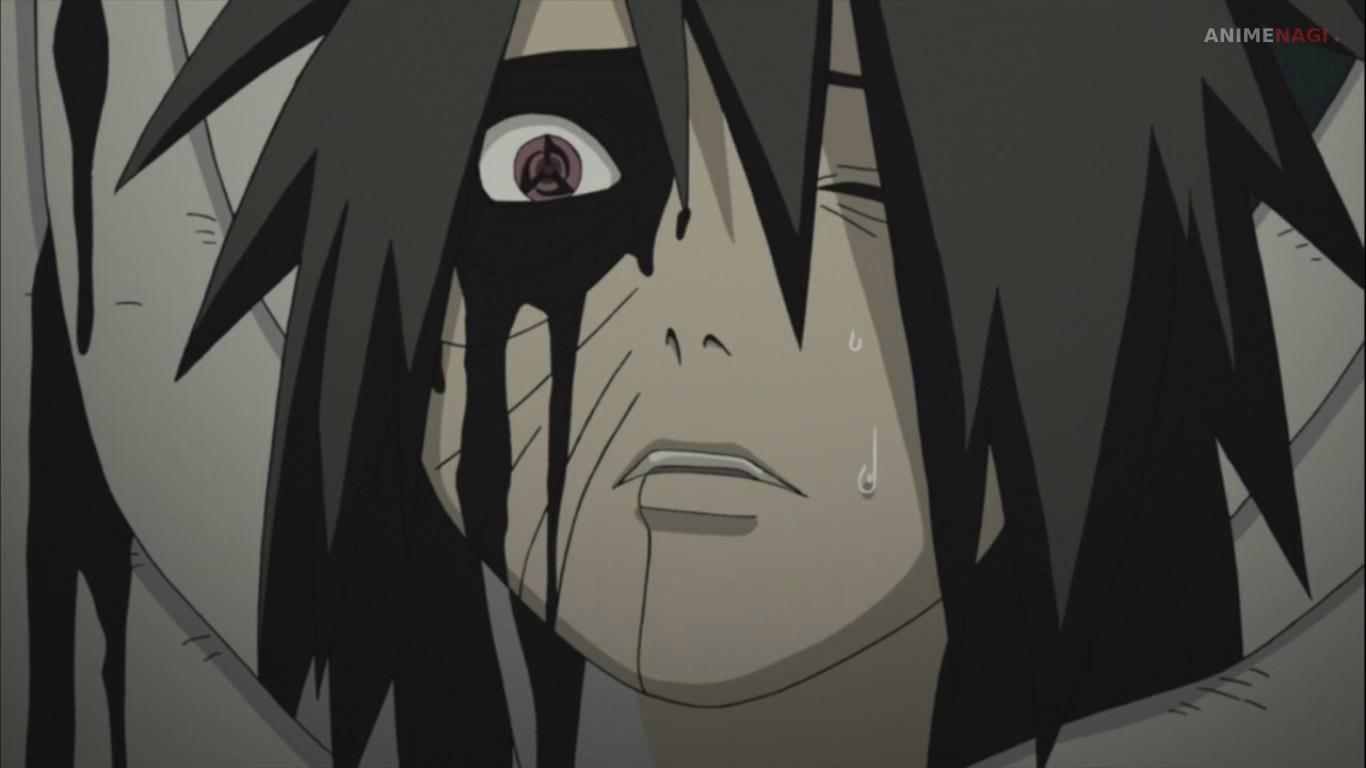
Obito slowly adopts Madara’s ideology because he loses faith in reality itself. Shigaraki, on the other hand, never fully becomes a philosophical extension of All For One. Instead, he develops into a chaotic force driven by personal rage and emotional emptiness. Even later in My Hero Academia, Shigaraki repeatedly resists becoming merely a vessel for All For One’s will.
That distinction alone separates their narrative purposes significantly.
Obito wanted to escape reality, while Shigaraki wanted to Destroy It
The biggest difference between Obito and Shigaraki lies in their motivations. Obito’s central goal in Naruto was the Infinite Tsukuyomi. He wanted to trap humanity inside a dream world where pain, war, and suffering no longer existed. Despite his horrific actions, Obito genuinely believed he was creating peace.
Shigaraki does not seek peace or illusion. From the beginning of My Hero Academia, Shigaraki is driven by destruction itself. He hates hero society because he believes it abandoned people like him. His anger is deeply personal rather than ideological. While Obito dreams of replacing reality, Shigaraki wants to tear the existing world apart completely. This creates two fundamentally different villain philosophies.
Obito represents escapism and disillusionment. He cannot accept the cruelty of reality, so he attempts to overwrite it with fantasy. Shigaraki represents societal collapse and accumulated resentment. He wants society to feel the same helplessness and decay that consumed his childhood.
Even their speeches reflect this contrast. Obito frequently talks about hope, dreams, despair, and false reality. Shigaraki speaks more about destruction, hatred, oppression, and emotional suffocation. Their language reveals entirely different emotional cores.
Shigaraki Is More Closely Tied to Social Criticism
Another major difference is how each character connects to their series’ themes. Naruto often focuses on cycles of hatred, war, inherited pain, and loneliness. Obito embodies those themes directly. He serves as a dark mirror to Naruto because both characters once shared nearly identical dreams and personalities.
Shigaraki functions differently in My Hero Academia. Horikoshi uses Shigaraki to criticize hero society itself. His backstory highlights how ordinary civilians ignored a suffering child because they assumed heroes would eventually intervene. That moment became one of the defining commentaries of the series.
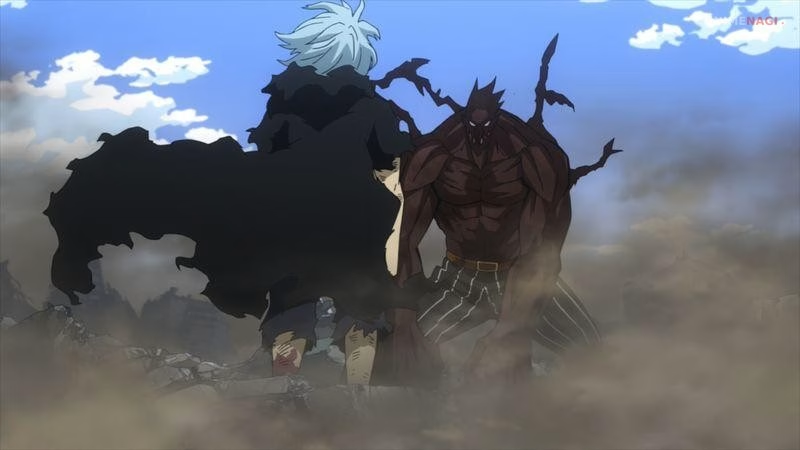
Shigaraki’s tragedy is not simply personal loss. It is systemic failure. His story questions whether a society built around celebrity heroes truly protects vulnerable people emotionally. Even after becoming a mass murderer, Shigaraki still symbolizes the consequences of neglect and social complacency.
Obito’s tragedy is rooted mainly in emotional trauma and war. Shigaraki’s tragedy stems from abandonment inside a supposedly peaceful society. That thematic distinction completely changes how both characters operate narratively.
Their Relationships With the Main Heroes Are Completely Different
Many fans compare Shigaraki and Obito because both oppose optimistic protagonists. However, their relationships with those protagonists are not remotely the same.
Obito and Naruto Uzumaki are intentionally written as parallels. Obito essentially represents the version of Naruto who gave up on hope. Their ideological conflict drives much of Naruto’s final arc.
Obito constantly challenges Naruto philosophically. He tries to prove that idealism eventually collapses under suffering. Naruto defeating Obito therefore becomes a rejection of despair itself.
Shigaraki’s connection with Izuku Midoriya is less philosophical and more emotional.
Deku does not see Shigaraki as a twisted reflection of himself in the same direct way Naruto views Obito. Instead, Deku gradually realizes that Shigaraki is someone who was never saved when he needed help most. Their relationship revolves around the meaning of heroism rather than competing ideologies. This distinction matters greatly.
Naruto’s final battle against Obito centers on proving ideals correct. Deku’s struggle with Shigaraki centers on whether society failed him before he became a monster.Those are entirely different narrative goals.
Obito Was Built Around Redemption While Shigaraki Was Built Around Tragedy
One of the clearest differences between the two villains is how their stories conclude emotionally.
Naruto ultimately frames Obito as someone who lost his way but regained part of his humanity before death. After realizing Madara had manipulated him, Obito helps Naruto and sacrifices himself during the war. Shigaraki’s story is much darker.
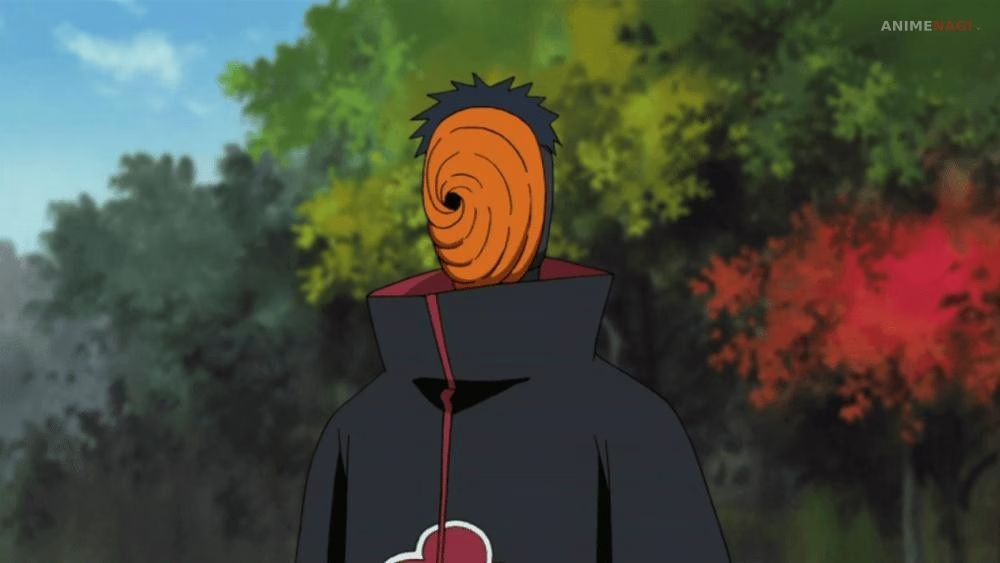
Even when traces of Tenko Shimura remain beneath the hatred, My Hero Academia never fully transforms him into a redeemed hero figure. His character arc emphasizes irreversible damage and emotional destruction far more than moral recovery.
That tonal difference changes audience perception entirely.
Obito’s story leans toward reconciliation and forgiveness. Shigaraki’s story leans toward mourning and societal accountability. While Deku wants to understand Shigaraki, the series never romanticizes his crimes as simple misunderstandings.
Shigaraki remains terrifying precisely because his suffering does not erase the devastation he causes.
Shigaraki’s personality is wildly different from Obito’s
Surface similarities often disappear once fans actually examine how the characters behave.
Obito, especially after adopting the “Tobi” identity, shifts between goofy deception and calculated manipulation. Once fully revealed, he becomes calm, philosophical, and emotionally restrained. Much of his menace comes from composure and strategic intelligence. Shigaraki is emotionally unstable for most of My Hero Academia.
Early in the series, he acts impulsively, scratches himself compulsively, and throws violent tantrums when frustrated. Even after maturing as a leader, Shigaraki retains a chaotic emotional presence. His anger feels raw and uncontrollable rather than calculated.
This difference is intentional. Obito often feels like a mastermind operating above events. Shigaraki feels like accumulated societal rage exploding outward. Their energy on-screen is completely different despite both wearing dark clothing and leading villain groups. Even visually, Horikoshi emphasizes decay, deterioration, and discomfort with Shigaraki’s design. Obito’s design evolves more toward godlike imagery and masked mystique.
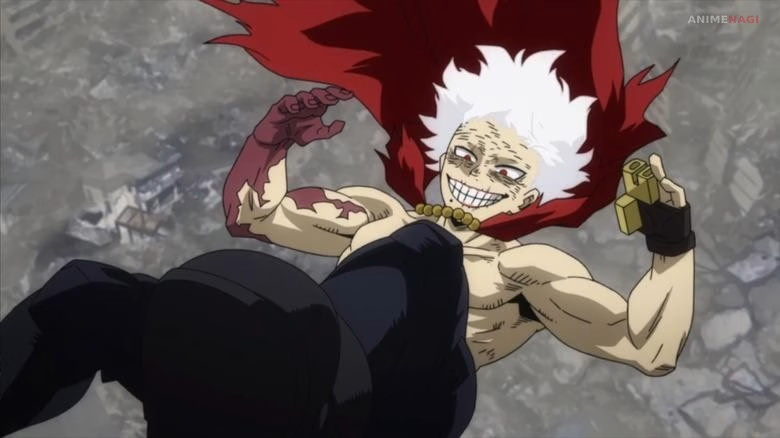
All For One and Madara Serve Different Narrative Roles
Fans also oversimplify the similarities between All For One and Madara.
Madara acts almost like a mythological figure inside Naruto. Even before appearing physically, his legacy shapes the ninja world. Obito becomes the inheritor of Madara’s worldview and continues his dream project.
All For One operates differently in My Hero Academia.
Rather than inspiring awe through ideology, All For One behaves more like a manipulative parasite. He views people as tools and quirks as possessions. His relationship with Shigaraki becomes disturbingly possessive as the series progresses.
That dynamic changes Shigaraki’s role dramatically.
Obito eventually chooses to carry Madara’s plan willingly. Shigaraki repeatedly struggles against becoming consumed entirely by All For One’s influence. Their mentor-student relationships therefore function very differently emotionally.
This is why many fans actually criticize the later possession storyline in My Hero Academia. Some readers felt it temporarily weakened Shigaraki’s individuality because All For One overshadowed him. Even that criticism, however, proves Shigaraki is treated as his own character rather than merely a Naruto imitation.
Shigaraki Represents Modern Superhero Anxiety
Another overlooked distinction is genre influence. Naruto draws heavily from traditional ninja mythology, war epics, and inherited clan conflict. Obito fits naturally into those themes. His downfall reflects the emotional devastation caused by endless warfare and revenge cycles.
My Hero Academia, meanwhile, is heavily influenced by Western superhero stories. Shigaraki reflects anxieties specific to hero-based societies, including public complacency, commercialization, and emotional alienation.
This gives Shigaraki a more modern social dimension. He is not simply a tragic warrior corrupted by war. He is the byproduct of a society that became too dependent on symbolic heroes to notice individual suffering. That concept feels closer to modern superhero deconstruction than classic shonen rivalry.
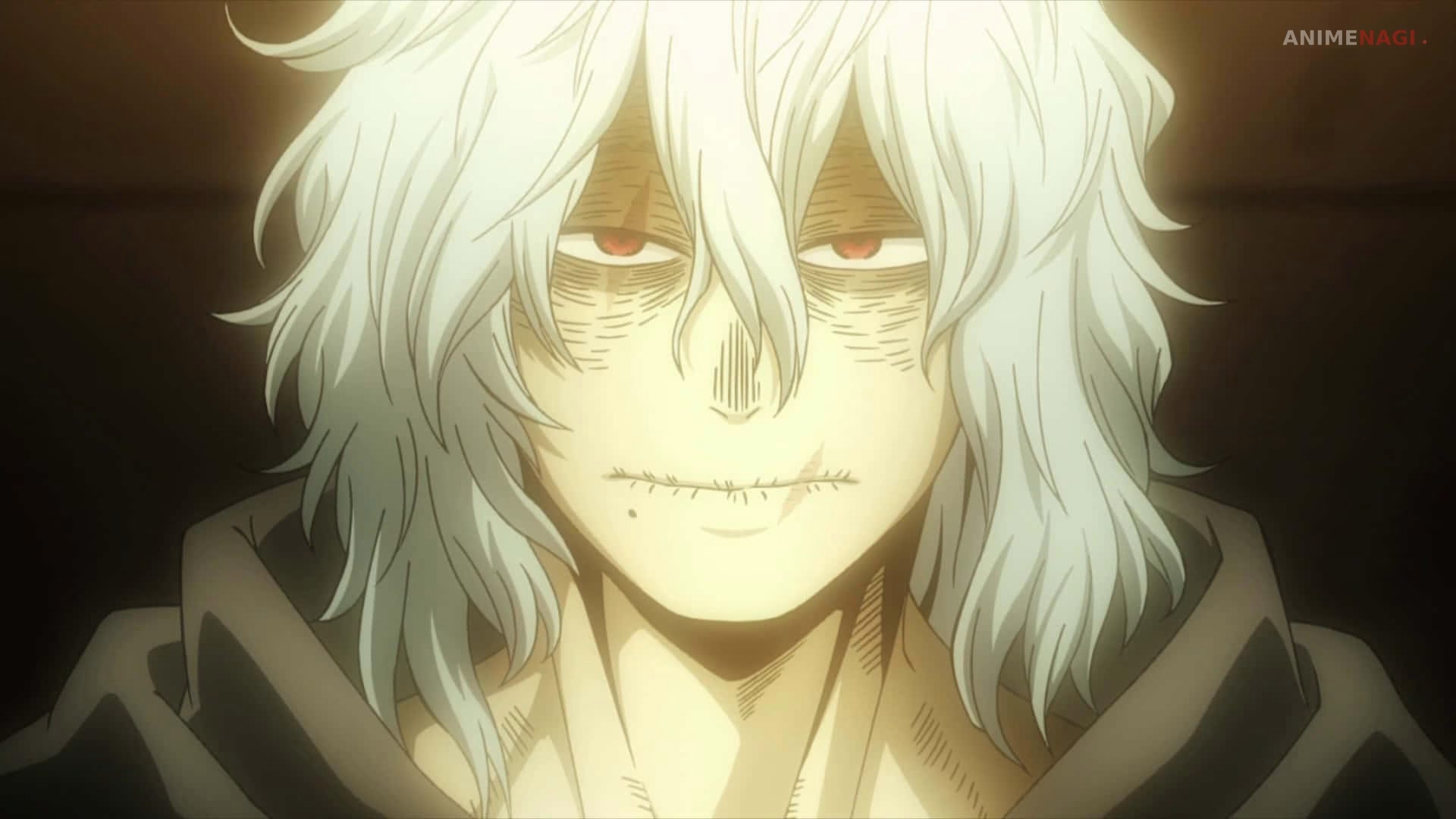
Horikoshi intentionally uses Shigaraki to expose cracks beneath Hero Society’s polished image. Obito instead exposes the endless emotional cost of war and hatred.
Why Fans Continue Comparing Them
Despite all these differences, fans will likely continue comparing Shigaraki and Obito for years. Both characters are scarred young men manipulated by legendary villains. Both oppose optimistic protagonists who want to save people emotionally rather than merely defeat them physically. Both become central antagonists in hugely popular shonen series.
Those broad similarities naturally invite comparisons. However, similarity does not equal imitation. Anime history is full of recurring archetypes. Rival characters, fallen heroes, corrupted apprentices, and tragic villains exist across nearly every major franchise. Execution matters more than surface structure.
Shigaraki ultimately succeeds as his own character because his themes, emotional identity, and narrative purpose differ heavily from Obito’s. Even when My Hero Academia borrows familiar shonen ideas, Horikoshi reshapes them around hero society critique and psychological decay.