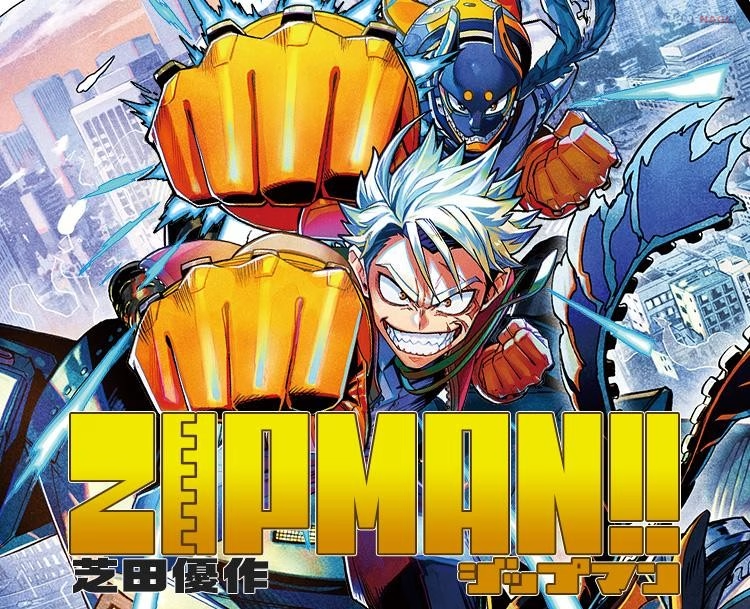
Zipman!!, created by Yusaku Shibata, is a short-lived action manga that blends superhero tropes with high school dynamics and sci-fi elements. Among its key story segments, the School Arc plays an important role in establishing the series’ tone, power system, and character relationships. While the manga was canceled early in its run, this arc still serves as a crucial foundation for understanding Kaname Tatara’s development and the larger narrative direction.
The School Arc introduces a more grounded setting compared to the larger conflicts involving robotic suits and global threats. However, beneath its seemingly simple high school environment lies a deeper exploration of identity, grief, and responsibility. It is during this arc that Kaname begins to truly understand what it means to carry forward his brother’s legacy. Let’s break down the Zipman School Arc in detail and explain its significance in the story.
What Is the Zipman School Arc?
The School Arc takes place shortly after Kaname Tatara inherits his brother Tokijiro’s Zipman suit. Instead of immediately jumping into large-scale battles, the story shifts to Kaname’s daily life as a student. This allows the narrative to establish a sense of normalcy before introducing more complex conflicts.
The arc primarily unfolds within Kaname’s school, where he attempts to balance his new responsibilities with his everyday routine. This setting creates opportunities to explore how his dual identity begins to affect his interactions with classmates. It also serves as a testing ground for his abilities as Zipman.
At its core, the School Arc functions as a transition phase. It bridges the emotional aftermath of Tokijiro’s death with the rising external threats tied to the Zipman technology. This balance between personal and external conflict gives the arc its narrative weight.
Kaname’s Struggle With Identity and Responsibility
One of the central themes of the School Arc is Kaname’s internal conflict. After losing his brother, he is suddenly forced into a role he never asked for. Wearing the Zipman suit is not just about fighting enemies but about carrying on Tokijiro’s ideals.
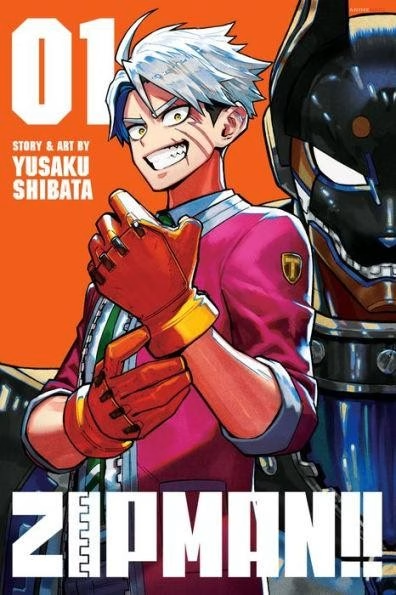
At school, Kaname tries to act like a normal teenager. However, his responsibilities constantly pull him away from that life. This creates tension between who he wants to be and who he needs to become. The contrast is especially visible in scenes where he struggles to focus on school life while dealing with threats as Zipman.
This duality is what makes Kaname’s character compelling. He is not portrayed as a naturally confident hero. Instead, he grows gradually, learning from mistakes and adapting to situations he does not fully understand.
Introduction of Supporting Characters
The School Arc also plays a key role in introducing and developing supporting characters. These characters provide insight into Kaname’s personality while also contributing to the story’s emotional and narrative depth.
Classmates and school figures are not just background elements. They serve as reminders of the normal life Kaname is trying to preserve. Their presence highlights what is at stake if he fails in his role as Zipman.
Additionally, some characters begin to suspect that Kaname is hiding something. This creates subtle tension within the school environment, adding another layer of conflict beyond physical battles.
How the Arc Expands the Zipman Power System
Another important function of the School Arc is to further explain the Zipman suit and its capabilities. While earlier chapters introduce the basic concept, this arc explores how the technology works in practical situations.
Kaname experiments with the suit’s abilities, learning how to use it effectively in combat. These moments are crucial for establishing the rules of the power system. They also show that mastering the suit requires skill and strategy, not just raw strength.
The arc also hints at the larger implications of the technology. It suggests that the Zipman suit is part of a broader system that could have significant consequences if misused. This setup becomes important for later conflicts in the story.
The Role of School-Based Conflicts
Unlike large-scale battles, the conflicts in the School Arc are more contained. However, this does not make them less important. In many ways, these smaller conflicts are more personal and emotionally impactful.
Kaname faces situations where he must protect others without revealing his identity. This adds a layer of difficulty to his actions. Every decision carries the risk of exposing his secret or putting others in danger.
These conflicts also allow the story to explore themes of trust and secrecy. Kaname’s inability to fully open up to those around him creates emotional distance, reinforcing the isolation that comes with his role.
Early Antagonists and Threats
The School Arc introduces early antagonistic elements that hint at the larger dangers to come. While these threats are not as powerful as later villains, they play an important role in shaping the narrative.
These early enemies often serve as tests for Kaname. They challenge his understanding of the Zipman suit and force him to think strategically. Each encounter contributes to his growth as a fighter and as a person.
More importantly, these threats establish the idea that the Zipman technology is not unique to Kaname. Others are aware of it and are willing to use it for their own purposes. This revelation raises the stakes of the story.
Emotional Core: Living in Tokijiro’s Shadow
A key emotional element of the School Arc is Kaname’s relationship with his late brother Tokijiro. Even though Tokijiro is no longer alive, his presence is felt throughout the story.
Kaname constantly compares himself to Tokijiro, believing he cannot live up to his brother’s abilities. This self-doubt affects his confidence both in battle and in everyday life. The school setting amplifies this struggle, as it represents the life Tokijiro once shared with him.
Over time, Kaname begins to realize that he does not need to become his brother. Instead, he must find his own way of being a hero. This realization marks a turning point in his development.
How the School Arc Builds Toward Bigger Conflicts
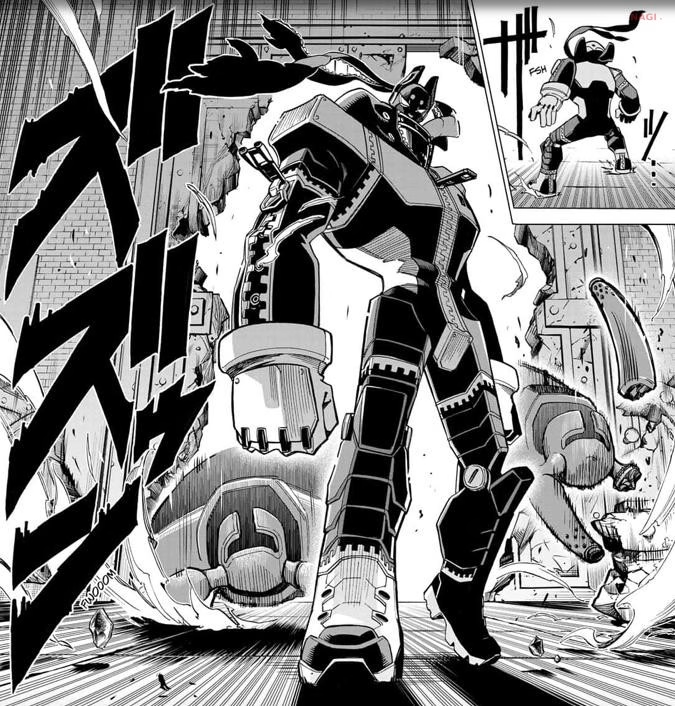
Although the School Arc focuses on smaller-scale events, it lays the groundwork for future storylines. The introduction of the Zipman technology, early enemies, and Kaname’s growth all contribute to the larger narrative.
The arc gradually shifts the tone from personal struggles to broader conflicts. By the end of this segment, it becomes clear that the story will expand beyond the school setting. The threats Kaname faces are only the beginning.
This progression is important for maintaining narrative momentum. It ensures that the story evolves naturally, moving from character-driven moments to more complex plot developments.
Strengths and Weaknesses of the Arc
The School Arc succeeds in establishing the emotional and thematic foundation of Zipman!!. Its focus on character development and internal conflict makes it engaging despite its relatively simple setting.
One of its strengths is the balance between action and character moments. The arc does not rely solely on fights to maintain interest. Instead, it uses emotional stakes to drive the narrative forward.
However, the arc is not without flaws. Due to the manga’s short run, some elements feel underdeveloped. Certain characters and plot points could have benefited from more time and exploration. This limitation affects the impact of the story.