
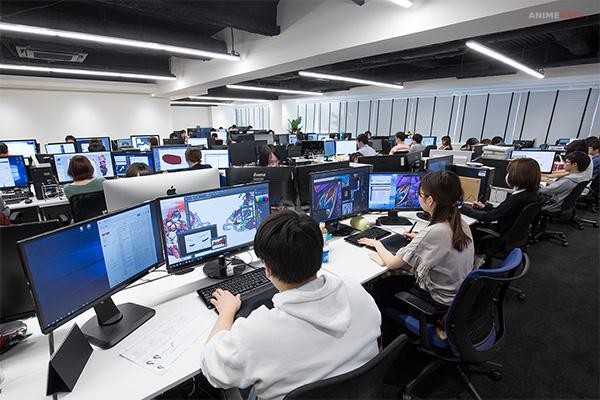
Generative AI has become increasingly common across the video game industry, with a new survey from the Computer Entertainment Supplier’s Association (CESA) showing that 85.8% of respondents at CEDEC 2026 use the technology. The survey gathered responses from 1,349 individuals and included tools such as ChatGPT, GitHub Copilot, image generators and asset-generation services.
The findings indicate that while AI has quickly become part of developers’ everyday workflows, its use in finished games remains considerably more limited. CESA presented the results alongside its latest research into how Japanese game companies are adopting both generative and conventional artificial intelligence.
Most Game Developers Are Already Using Generative AI
According to CESA’s CEDEC 2026 survey, 63% of respondents said they use generative AI every day, while another 22.8% use it occasionally. A further 8.6% said they are currently testing or introducing AI tools, suggesting that adoption could increase even further.
Only 4.8% of respondents said they had never used generative AI, while 0.7% had previously used it but stopped.
However, the numbers change when developers were asked whether AI is being used directly in released products and services. Of 1,284 respondents to that question, 40% said they do not use generative AI in released products at all.
Another 39% use AI as a supporting tool during development, including brainstorming, experimentation and creating internal assets, while humans remain responsible for the final work.
The survey also shows several other ways AI is being incorporated into game production. Around 28% of respondents said generative AI is used for workflow automation, testing or asset optimization, while 22% use it to generate or modify assets.
Only 3% reported using generative AI algorithms directly inside released products, demonstrating the significant gap between experimenting with AI during development and putting AI-generated technology into consumers’ hands.
CESA’s separate survey of 50 member companies found that generative AI is being used for internal business operations, programming support, project proposals, translations, visual production, testing and marketing. Some companies also reported using it for scenarios, text, music and audio.
CESA also surveyed member companies about conventional AI applications. Respondents reported using AI for data analysis and forecasting, testing, production management, NPC and enemy behavior, game balancing, customer support and fraud prevention.
The organization presented the findings in a preview edition of its 2026 Video Game Industry Report. The complete 460-page report is scheduled to arrive in December 2026, with a listed price of ¥55,000, or approximately $350.