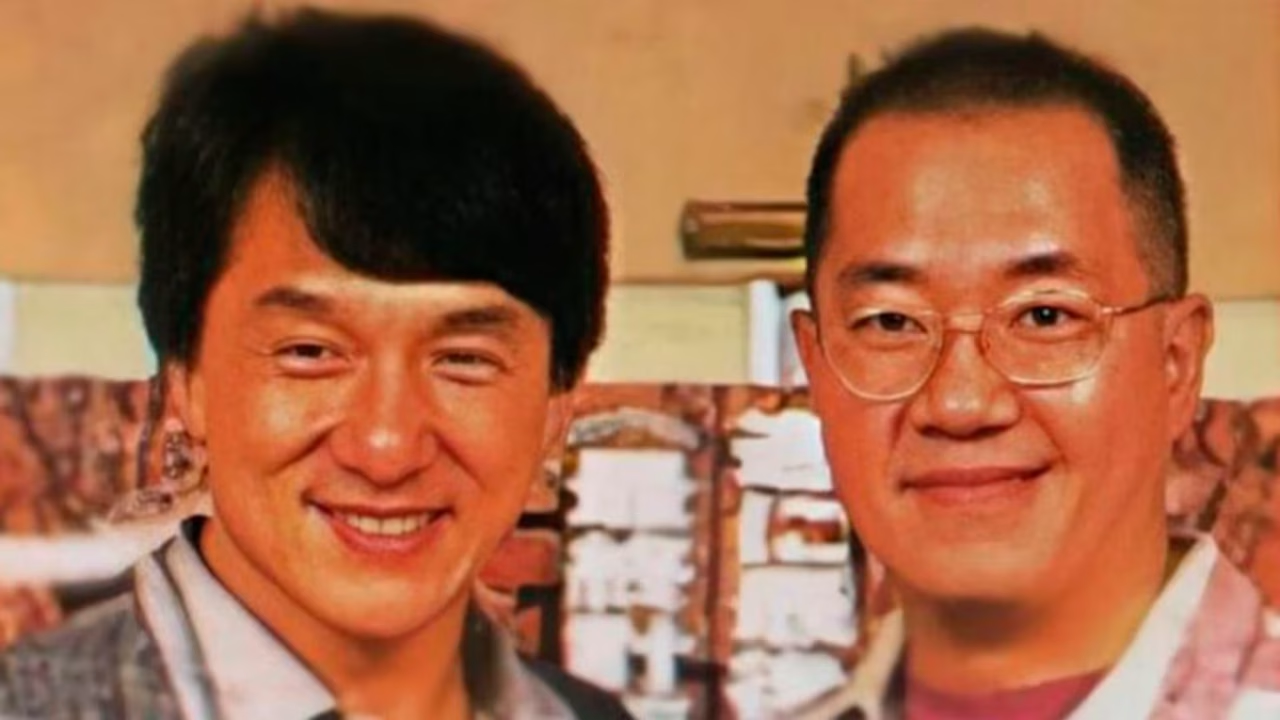
The relationship between Akira Toriyama and Jackie Chan is one of the most interesting creative connections in entertainment history because the influence worked in both directions. Most anime fans already know that Jackie Chan’s martial arts films heavily inspired Dragon Ball’s early tone and fight choreography. However, fewer people realize that Toriyama’s work later influenced Jackie Chan’s movies and public image as well.
This creative exchange helped shape modern action storytelling across anime and cinema. Toriyama openly admitted that Dragon Ball would not exist in the same form without Jackie Chan’s films, especially Drunken Master. At the same time, Jackie Chan later embraced Toriyama’s creations publicly, referenced them in his movies, and became connected to Dragon Ball culture worldwide.
The connection is deeper than simple admiration. Both creators shared a similar philosophy about action: fights should feel energetic, creative, comedic, and visually expressive instead of purely violent. That shared style helped influence generations of anime, martial arts films, and even modern blockbuster action choreography.
Let’s break down how Akira Toriyama and Jackie Chan influenced each other and why their connection became so important to both anime and martial arts cinema.
How Jackie Chan Inspired Dragon Ball
The foundation of Dragon Ball’s martial arts style came directly from Jackie Chan movies. According to production details from Dragon Ball and interviews with Toriyama, he was obsessed with Hong Kong martial arts films during the early 1980s, particularly Jackie Chan’s work in Drunken Master.
Toriyama later admitted:
“If I hadn’t seen this movie [Drunken Master], I would never have come up with Dragon Ball.”
That statement alone shows how significant Jackie Chan’s influence was on Dragon Ball’s creation.
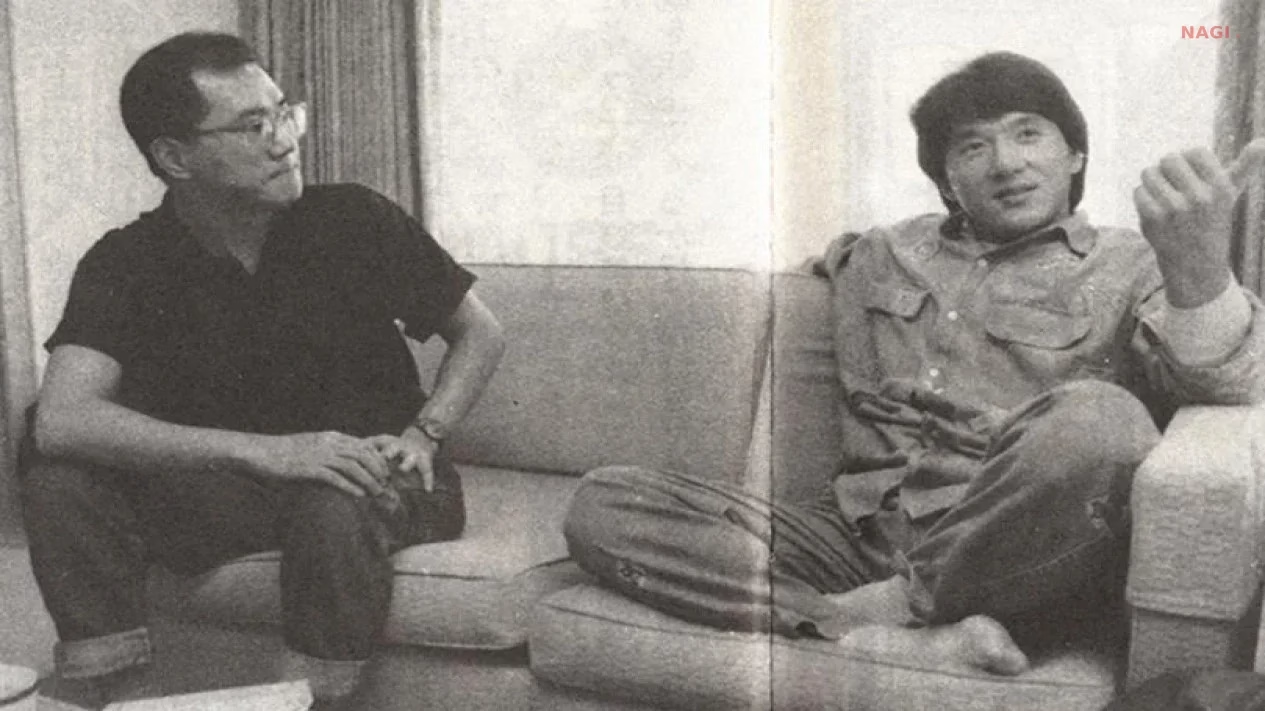
Before Dragon Ball, Toriyama mainly worked on comedy manga like Dr. Slump. His editor encouraged him to combine humor with martial arts action, and Jackie Chan’s films provided the perfect blueprint. Chan’s movies balanced slapstick comedy, acrobatic choreography, exaggerated reactions, and impressive martial arts techniques in ways that felt fresh and entertaining. Dragon Ball adopted that exact energy.
Early Dragon Ball arcs focused less on universe-ending battles and more on adventurous martial arts comedy. Goku’s playful fighting style, exaggerated facial expressions, and creative combat techniques closely reflected the tone of Jackie Chan’s classic kung fu films.
Even Master Roshi’s disguise as “Jackie Chun” was a direct homage to Jackie Chan. Toriyama intentionally referenced Chan through the character’s name and martial arts behavior.
Why Drunken Master Changed Toriyama’s Creative Direction
Drunken Master became the single most important Jackie Chan movie for Toriyama’s creative evolution. Released in 1978, the film redefined martial arts cinema by mixing humor with highly dynamic action choreography. Unlike the serious tone of many Bruce Lee films, Drunken Master emphasized personality, comedy, and creative movement. That lighter tone strongly appealed to Toriyama.
According to interviews referenced in Dragon Ball production histories, Toriyama watched Drunken Master repeatedly while deciding what kind of manga he wanted to create after Dr. Slump. His editor eventually suggested creating a kung fu manga inspired by those films.
This directly led to the creation of the one-shot manga Dragon Boy, which later evolved into Dragon Ball. The influence appears throughout early Dragon Ball. Training sequences, tournament fights, and exaggerated martial arts poses all resemble classic Jackie Chan choreography. Even the balance between comedy and action feels remarkably similar to Chan’s late-1970s films.
One of the clearest examples is Master Roshi’s drunken fighting style during the World Martial Arts Tournament, which closely references Jackie Chan’s drunken boxing scenes from Drunken Master.
Without Drunken Master, Dragon Ball likely would have developed into a completely different type of manga.
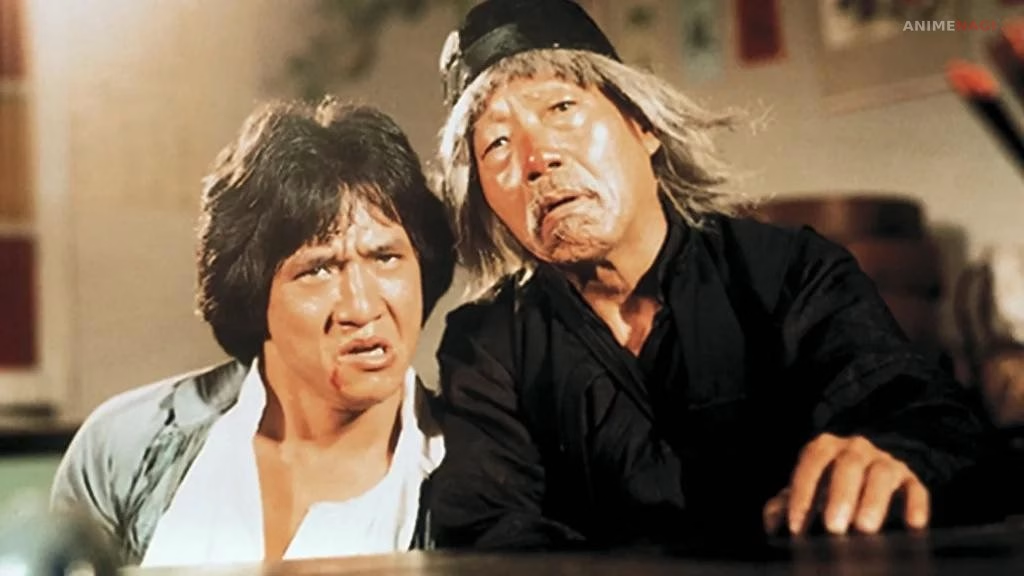
How Akira Toriyama Later Influenced Jackie Chan
Interestingly, the influence eventually reversed direction. As Dragon Ball became a global phenomenon, Toriyama’s work began influencing Jackie Chan’s films and public image. According to reports discussing their mutual admiration, Jackie Chan openly acknowledged Dragon Ball’s popularity and referenced Toriyama’s work multiple times.
One notable example appeared in My Lucky Stars, where Jackie Chan wore clothing inspired by Arale Norimaki from Dr. Slump. This reference demonstrated that Jackie Chan was familiar with Toriyama’s manga and appreciated its comedic style.
The connection became even stronger as Dragon Ball’s popularity exploded internationally. Jackie Chan frequently became associated with live-action discussions surrounding Dragon Ball because Toriyama himself once stated that a young Jackie Chan would have been perfect for playing Goku in a live-action adaptation.
That statement makes sense when comparing their personalities. Young Jackie Chan’s energetic expressions, comedic timing, acrobatic movement, and playful fighting style strongly resembled Goku’s early characterization. In many ways, Goku already felt like an anime version of Jackie Chan’s martial arts persona.
The Shared Philosophy Behind Their Action Styles
The strongest connection between Toriyama and Jackie Chan is not just visual inspiration. It is their shared philosophy about action storytelling. Both creators believed fights should entertain through creativity and personality rather than realism alone.
Jackie Chan revolutionized martial arts cinema by emphasizing improvisation, environmental interaction, humor, and expressive reactions during combat. His characters often struggled, adapted, and used surrounding objects creatively instead of simply overpowering opponents. Toriyama brought those same ideas into Dragon Ball.
Early Dragon Ball fights constantly emphasized movement, surprise tactics, exaggerated reactions, and comedic pacing. Characters bounced through environments, improvised techniques mid-battle, and mixed humor directly into combat scenes.
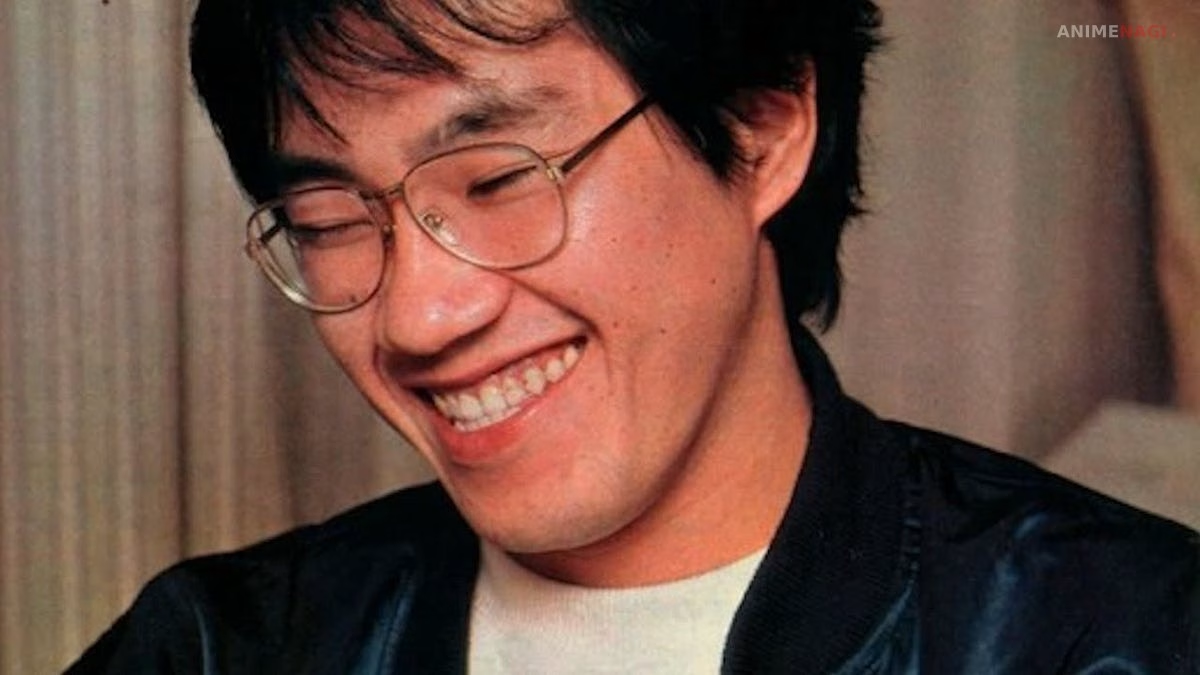
This approach helped separate Dragon Ball from darker martial arts manga of the era like Fist of the North Star. Instead of focusing purely on violence or intimidation, Dragon Ball treated combat as something exciting and fun. That tone mirrored Jackie Chan’s best films almost perfectly.
Even modern shōnen anime still reflects this influence today. Series like Naruto, One Piece, and My Hero Academia continue blending comedy with flashy action in ways traceable back to Toriyama and Jackie Chan’s shared style.
Why Their Connection Became Important to Global Pop Culture
The Toriyama and Jackie Chan connection matters because it represents a rare cultural exchange between anime and martial arts cinema that influenced global entertainment.
Jackie Chan helped inspire one of the most influential manga ever created. Dragon Ball then went on to inspire countless anime, games, movies, and action series worldwide. Through Dragon Ball, Jackie Chan’s martial arts philosophy indirectly shaped generations of creators who may never have even watched his original films.
At the same time, Dragon Ball’s popularity strengthened Jackie Chan’s connection with anime culture internationally. Fans constantly compared Goku’s energy and fighting style to Jackie Chan’s younger screen persona.
This mutual influence demonstrates how entertainment evolves across mediums and countries. Hong Kong kung fu cinema inspired Japanese manga, which later influenced global animation and blockbuster action storytelling.
The connection also explains why Dragon Ball’s fights feel different from many other battle series. Toriyama approached martial arts with the rhythm of a Jackie Chan movie rather than the structure of traditional superhero action. That playful energy became one of Dragon Ball’s defining strengths.
How Akira Toriyama Honored Jackie Chan Through Dragon Ball
Toriyama constantly honored Jackie Chan throughout Dragon Ball’s early years. The most obvious example remains Jackie Chun, Master Roshi’s tournament disguise. The name itself is an unmistakable reference to Jackie Chan, while the fighting style and comedic martial arts behavior also closely resemble Chan’s film persona.
Beyond direct references, Toriyama also incorporated Jackie Chan’s stunt-inspired choreography into manga paneling. Dragon Ball’s fights often feel unusually fluid and cinematic because Toriyama drew combat with movement and momentum in mind, similar to how Jackie Chan staged action scenes.
Even Goku’s personality reflects Chan’s influence. Early Goku is playful, curious, energetic, innocent, and physically expressive in ways strongly reminiscent of Jackie Chan’s younger martial arts characters. That influence helped make Dragon Ball more approachable and entertaining than many action manga at the time.
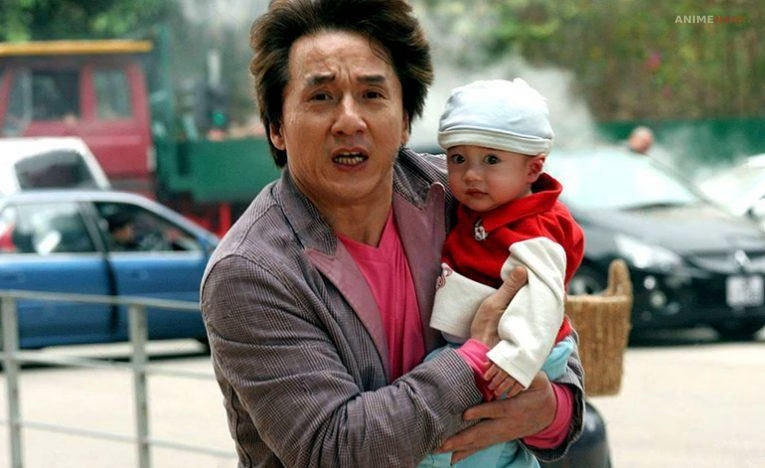
Ultimately, the connection between Akira Toriyama and Jackie Chan represents one of the most important creative exchanges in pop culture history. Without Jackie Chan’s films, Dragon Ball may never have existed in its iconic form. Without Dragon Ball, Jackie Chan’s influence on global anime culture might never have become so widespread. Together, they helped redefine how action and comedy could work together across generations of entertainment.
Another interesting aspect of this connection is how both Akira Toriyama and Jackie Chan prioritized accessibility in their storytelling. Their works were not limited to hardcore action fans but appealed to a much broader audience because of their humor and relatability.
Dragon Ball’s early adventures could be enjoyed by younger viewers, just as Jackie Chan’s films were often family-friendly despite intense action sequences. This shared approach helped both creators achieve global success, making their influence extend far beyond their original audiences and into mainstream pop culture worldwide.
Another layer to this influence can be seen in how modern action choreography continues to borrow from both creators. Many contemporary films and anime emphasize fluid motion, expressive reactions, and creative use of the environment during fights, all elements popularized by Jackie Chan and refined in Dragon Ball.
This legacy proves that their combined impact did not remain confined to their own works. Instead, it shaped how action is designed and perceived today, from Hollywood blockbusters to anime fight scenes, ensuring that their creative philosophies continue to influence new generations of storytellers and audiences alike.