The Dragon Ball Super manga can feel surprisingly confusing for new readers because it does not follow the exact same structure as the anime. Some story arcs are adapted differently, certain movie events are skipped almost entirely, and several major arcs exist only in manga form. Because of this, many fans are unsure where to begin reading or how the manga connects to the anime and films.
Unlike the original Dragon Ball manga, Dragon Ball Super exists alongside multiple versions of the same story. The anime, movies, and manga all share Akira Toriyama’s core ideas, but they often handle events differently. This has created confusion about reading order, canon continuity, and which chapters adapt specific storylines.
The good news is that the manga itself is actually very easy to follow once you understand its structure. Whether you are starting fresh after Dragon Ball Z, continuing after the anime, or looking specifically for the Moro and Granolah arcs, there is a straightforward way to experience the story properly.
Here’s a complete guide explaining how to read the Dragon Ball Super manga, including chapter order, story arcs, anime differences, movie connections, and the best starting point for new readers.
What Is the Dragon Ball Super Manga?
Dragon Ball Super is the official sequel manga to the original Dragon Ball story created by Akira Toriyama and illustrated by Toyotarou. The series takes place during the ten-year gap between the defeat of Majin Buu and the ending chapters of the original Dragon Ball manga.
The manga began serialization in 2015 through V Jump magazine and follows Goku, Vegeta, and the Z Fighters as they face increasingly powerful threats across multiple universes. While the anime adaptation became globally popular first, the manga eventually expanded the story far beyond where the anime stopped.
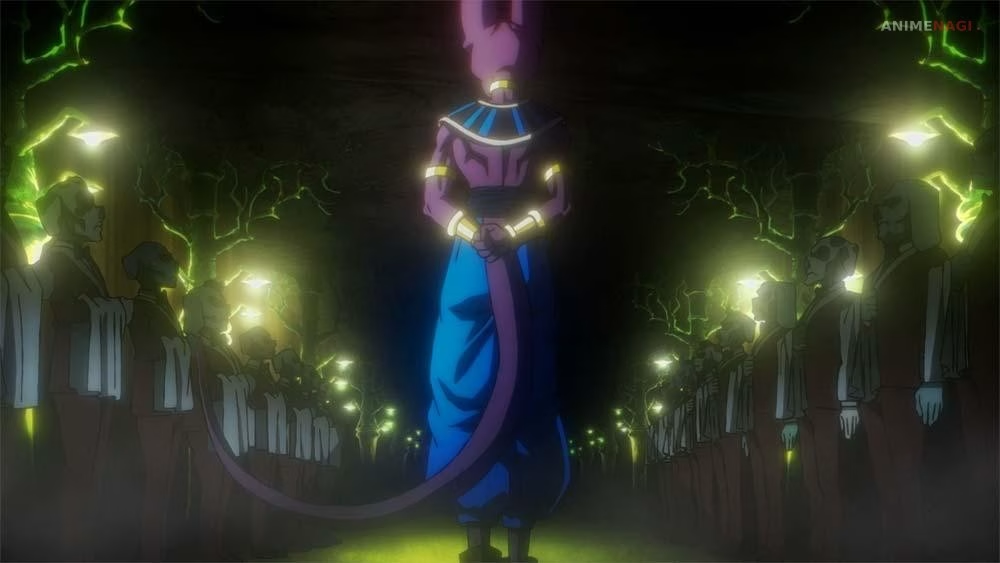
One important thing to understand is that manga and anime are considered parallel adaptations rather than perfectly identical versions. Both use Toriyama’s outlines, but Toyotarou and the anime staff often handled details differently.
Because of this, some arcs play out differently depending on whether you watch the anime or read the manga.
Where Should New Readers Start?
For completely new readers, the best starting point is Chapter 1 of the Dragon Ball Super manga. Even if you have already watched the anime, beginning from the start helps you understand the manga’s pacing and differences.
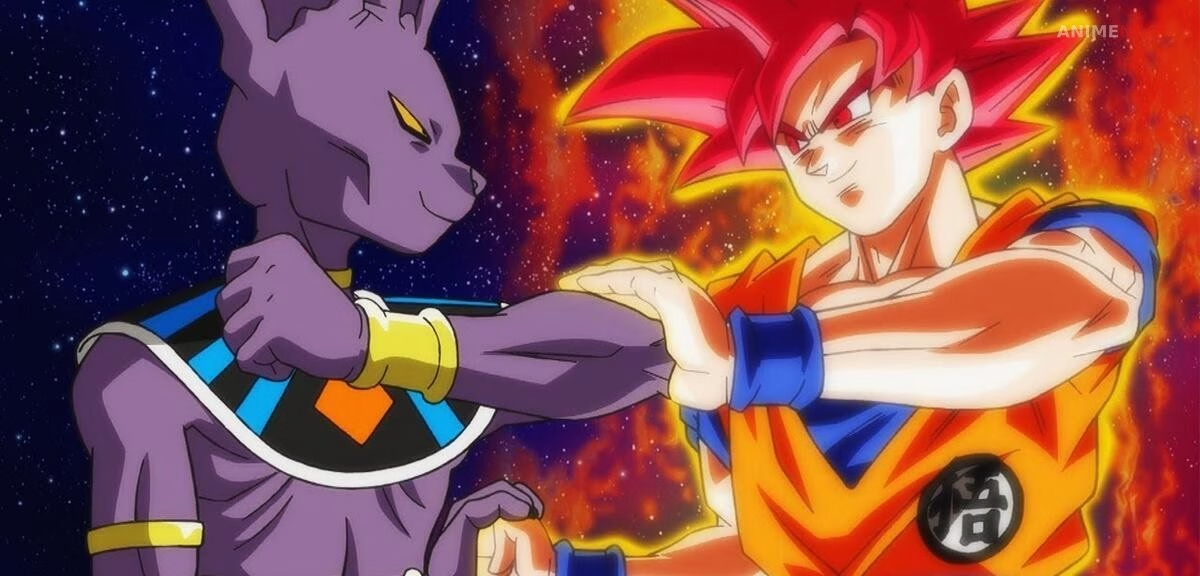
The manga quickly adapts the early Beerus storyline before moving into original manga interpretations of later arcs. While some events remain similar to the anime, others feature noticeable differences in fights, transformations, and character moments.
Starting from Chapter 1 also prevents confusion later because the manga introduces concepts and pacing differently compared to the anime adaptation. Certain characters receive altered roles, and some battles are shorter or handled differently entirely.
Readers who only watched the anime are often surprised by how differently some major arcs feel in manga form.
Dragon Ball Super Manga Arc Order Explained
The Dragon Ball Super manga is divided into multiple major story arcs. Understanding this structure makes reading much easier, especially for fans continuing after the anime ending.
According to official chapter listings, the manga arcs are structured as follows:
- God of Destruction Beerus Saga: Chapters 1–4
- Universe 6 Saga: Chapters 5–13
- Future Trunks Saga: Chapters 14–26
- Tournament of Power Saga: Chapters 27–42
- Galactic Patrol Prisoner Saga (Moro Arc): Chapters 42–67
- Granolah the Survivor Saga: Chapters 67–87
- High School Saga: Chapters 88–90
- Super Hero Saga: Chapters 91–104
The first four arcs overlap heavily with the anime adaptation, although there are several important differences. The Moro Arc and Granolah Arc, however, exist primarily in manga form and continue the story beyond the anime’s ending.
This means manga readers currently have access to major storylines that anime-only fans have not fully experienced yet.
Should You Watch the Movies Before Reading?
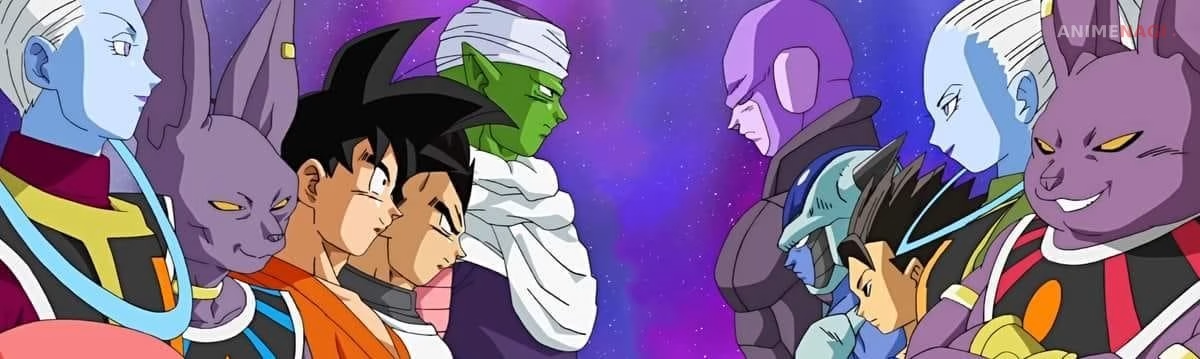
One of the biggest points of confusion involves the Dragon Ball Super movies and how they connect to the manga.
The manga adapts the Battle of Gods material early through the Beerus Saga, but it mostly skips Resurrection ‘F.’ Instead of fully retelling the movie, the manga references its events briefly and moves forward afterward.
Because of this, new readers are strongly recommended to watch the following movies alongside the manga:
- Dragon Ball Z: Battle of Gods
- Dragon Ball Z: Resurrection ‘F’
- Dragon Ball Super: Broly
- Dragon Ball Super: Super Hero
The Broly movie is especially important because the manga references its events without fully adapting them initially. Readers are expected to already know what happened.
Meanwhile, the Super Hero storyline later receives a direct manga adaptation beginning around Chapter 91.
How Different Is the Manga From the Anime?
Many fans assume the manga simply retells the anime scene-for-scene, but that is not accurate. The broad storyline remains similar, but the execution differs in several major ways.
The Tournament of Power arc is one of the clearest examples. The anime version focuses heavily on massive action sequences and extended fights, while the manga handles the tournament more quickly and strategically. Some characters perform better in one version than the other.
Transformations and techniques are also handled differently at times. Certain forms appear earlier or are explained differently depending on the version. Character interactions and battle outcomes occasionally change as well.
The Future Trunks Saga especially contains major structural differences between anime and manga versions.
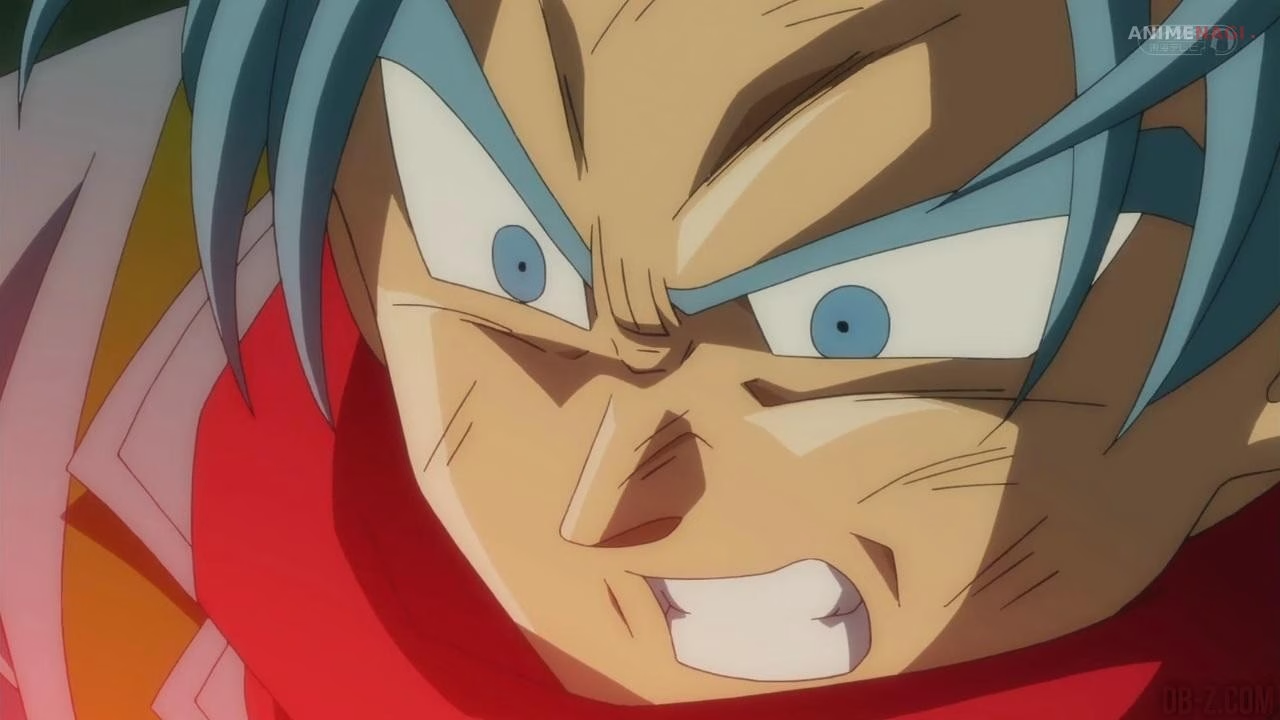
Because of this, many longtime Dragon Ball fans enjoy experiencing both versions separately rather than treating one as a replacement for the other.
Where the Anime Ends in the Manga
The Dragon Ball Super anime ends after the Tournament of Power storyline. For readers continuing directly from the anime ending, the correct place to start is Chapter 42.
This chapter transitions into the Galactic Patrol Prisoner Saga, more commonly known as the Moro Arc. The story introduces Moro, a powerful ancient sorcerer who consumes planetary energy and threatens the entire galaxy.
The Moro Arc is one of the most important reasons many fans began reading the manga after the anime stopped. It introduces major new techniques, character growth for Vegeta, and some of the strongest battles in Dragon Ball Super so far.
Readers continuing after the anime should ideally watch the Broly movie first before starting Chapter 42. This keeps the timeline consistent.
The Moro Arc Reading Guide
The Galactic Patrol Prisoner Saga begins midway through Chapter 42 and continues until Chapter 67. This arc introduces several important characters, including Moro and Merus.
The storyline focuses heavily on Galactic Patrol conflicts, magical powers, and Ultra Instinct development. Unlike many earlier Dragon Ball villains, Moro fights more like a sorcerer than a straightforward powerhouse.
Vegeta also receives some of his best development in this arc. His training on Planet Yardrat expands his abilities beyond simple transformations and introduces Forced Spirit Fission.
Many fans consider the Moro Arc one of the strongest Dragon Ball Super manga arcs because it combines classic Dragon Ball adventure elements with modern large-scale battles.
The Granolah Arc Reading Guide
After finishing the Moro Arc, readers move directly into the Granolah the Survivor Saga beginning around Chapter 67. This storyline focuses on Granolah, the last survivor of the Cerealian race destroyed by the Saiyans and Frieza’s forces.
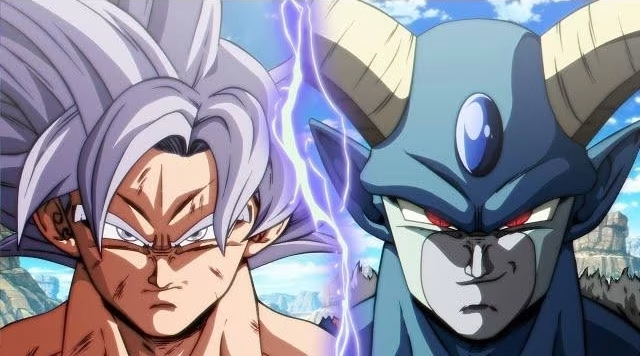
The Granolah Arc explores Saiyan history much more deeply than previous storylines. Bardock becomes especially important during this section, adding emotional context to Goku’s family history.
This arc also introduces Ultra Ego Vegeta, one of the manga’s biggest exclusive transformations so far. Meanwhile, Frieza eventually returns with one of the most surprising power upgrades in the franchise.
The Granolah Saga is much more character-driven than earlier arcs and focuses heavily on revenge, legacy, and manipulation.
Understanding the Super Hero Arc
The Super Hero Saga begins with several slice-of-life chapters focusing on Goten and Trunks before transitioning into a manga adaptation of Dragon Ball Super: Super Hero.
The early chapters feel surprisingly different from typical Dragon Ball action arcs. They intentionally recreate the lighter tone of Gohan’s high school storyline from the original manga.
Eventually, the manga retells the events involving the Red Ribbon Army, Gamma 1, Gamma 2, Cell Max, and Gohan Beast. While many scenes remain similar to the movie, the manga adds additional context and some extra character moments.
Readers who already watched the movie can still enjoy the manga version because of these small additions and Toyotarou’s artwork.
Best Reading Experience for New Fans
For the smoothest possible experience, most fans should follow this order:
- Read Dragon Ball chapters through the Majin Buu Saga
- Watch or read Dragon Ball Super beginning from Chapter 1
- Watch Resurrection ‘F’ since the manga mostly skips it
- Continue reading through the Tournament of Power
- Watch Dragon Ball Super: Broly
- Start Chapter 42 for the Moro Arc
- Continue through Granolah and Super Hero arcs
This order keeps all major storylines and transformations consistent while avoiding confusion caused by skipped movie adaptations.
Although some fans choose anime-only or manga-only approaches, combining both versions creates the fullest Dragon Ball Super experience overall.
Is the Manga Still Ongoing?
Following Akira Toriyama’s passing in 2024, the Dragon Ball Super manga entered hiatus status. However, the series remains one of Shueisha’s biggest franchises, and additional content has still appeared afterward.
As of recent chapter releases, the manga reached Chapter 104 and completed the Super Hero adaptation. A special prequel one-shot chapter connected to the arc was also released afterward.
Because of the hiatus situation, many fans are currently waiting for official confirmation regarding the manga’s long-term future.
Despite this uncertainty, there is already a massive amount of post-anime content available for readers to enjoy.
Physical Volumes vs Digital Reading
New readers also frequently ask whether they should read Dragon Ball Super digitally or through collected volumes.
Digital reading is often the easiest option because platforms like VIZ Media and Manga Plus provide official chapter access.
Physical volumes, however, provide cleaner pacing because chapters are grouped by story arcs. They are also ideal for collectors and longtime Dragon Ball fans.
Currently, over 20 collected volumes exist, covering everything from the Beerus Saga through the Super Hero storyline.
Why the Manga Is Worth Reading Even for Anime Fans
Many anime-only fans initially hesitate to read Dragon Ball Super because they assume they already know the story. However, the manga provides a genuinely different experience.
Toyotarou’s art style, altered pacing, and manga-exclusive arcs make the series feel fresh even for longtime Dragon Ball viewers. The Moro and Granolah arcs especially contain major developments unavailable in animated form currently.
The manga also gives Vegeta significantly stronger development in several places. Some fans even prefer the manga’s handling of certain characters compared to the anime adaptation.
For anyone who wants more Dragon Ball content after the anime ending, the manga is currently the only place to continue the main story properly.
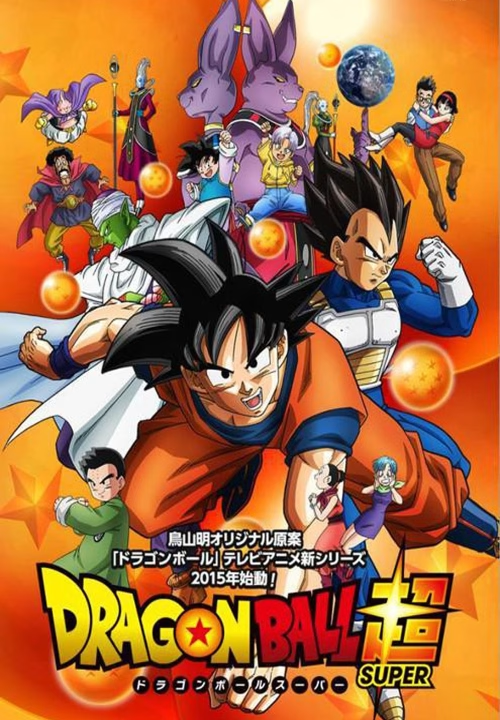
| Date Aired (Start) | July 5, 2015 |
|---|---|
| Studio | Toei Animation |
| Director | Kimitoshi Chioka |