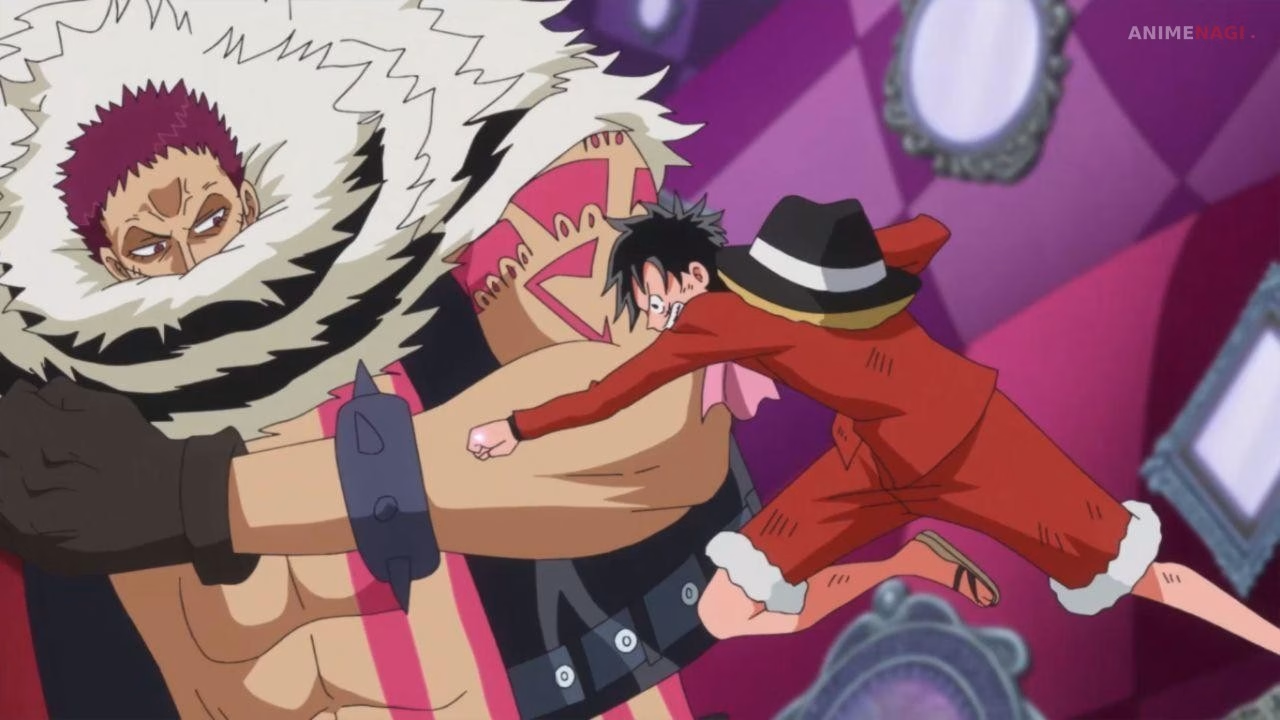
The fight between Monkey D. Luffy and Charlotte Katakuri is widely considered one of the greatest battles in One Piece. While the series already featured iconic fights before Whole Cake Island, this confrontation stood apart because it was not simply about defeating a stronger enemy. Instead, the battle explored themes of growth, identity, respect, and the burden of expectations in a way few previous fights had done.
Taking place during the climax of the Whole Cake Island Arc, the battle trapped Luffy inside the Mirro-World against Big Mom’s strongest Sweet Commander. At first, Katakuri appeared completely unbeatable. His Advanced Observation Haki allowed him to see slightly into the future; his awakened Mochi Devil Fruit mirrored many of Luffy’s own fighting traits, and his combat experience far surpassed Luffy’s.
However, what began as a hopeless fight gradually transformed into one of the most important character moments in the entire series. The battle changed Luffy fundamentally while also reshaping how fans viewed Katakuri himself. More than just a physical victory, the fight symbolized Luffy taking another major step toward becoming the future Pirate King.
Why Katakuri Was Luffy’s Perfect Opponent
Katakuri stood out immediately because he felt like a dark reflection of Luffy. Both fighters possessed abilities based around stretching and elasticity, both relied heavily on creativity in combat, and both inspired loyalty from people around them. However, Katakuri represented a far more perfected and disciplined version of what Luffy could potentially become.
Unlike many previous antagonists, Katakuri was calm, intelligent, and highly respected by his crew. He maintained an image of absolute perfection within the Big Mom Pirates, with his siblings viewing him as an invincible protector who never failed. According to official One Piece lore, Katakuri had never fallen onto his back in front of others before his fight with Luffy.
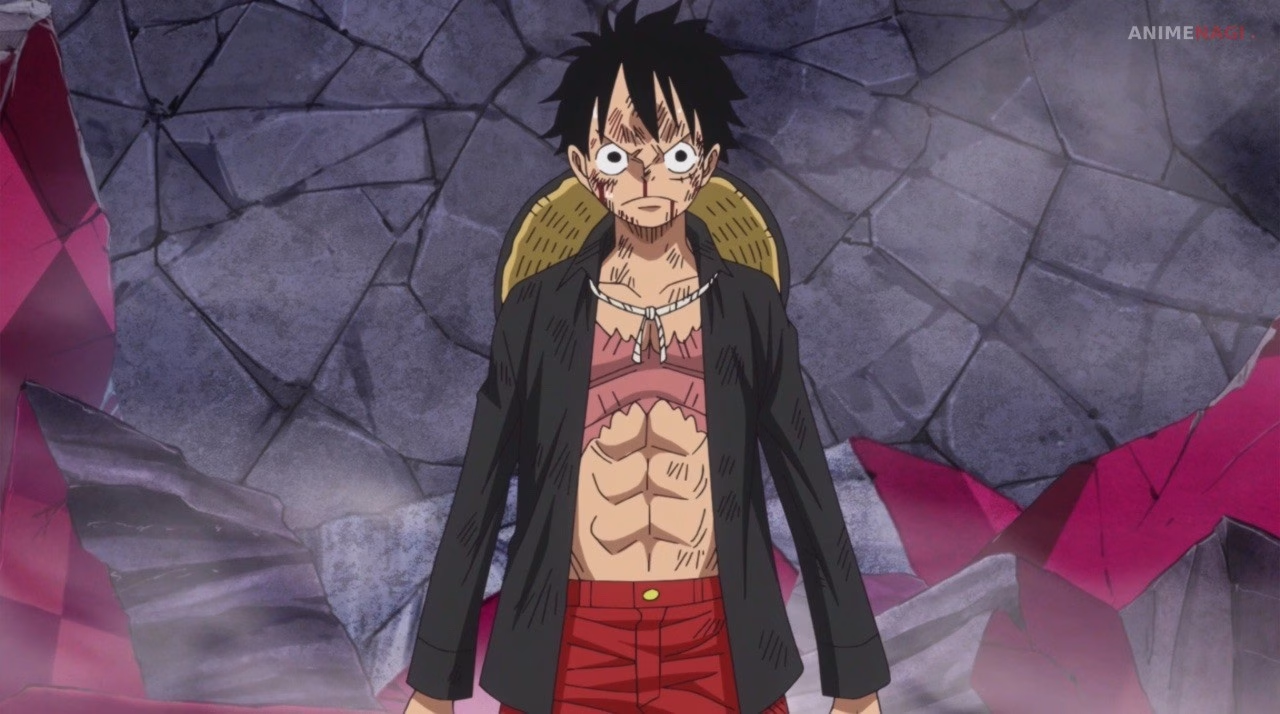
Katakuri’s abilities also overwhelmed Luffy completely during the early stages of the fight. His Future Sight Observation Haki allowed him to predict attacks before they happened, making him almost untouchable. Combined with his awakened Mochi Mochi no Mi powers, Katakuri dominated nearly every exchange initially.
This overwhelming superiority is exactly why the fight mattered so much. Luffy was not facing a villain weakened by arrogance or emotional instability. He was facing an opponent who was simply better than him in almost every category at the start of the battle.
One major reason the battle became so important is that it focused heavily on Luffy’s growth during combat. Earlier One Piece fights often involved Luffy discovering a new strategy or overpowering opponents through determination. Against Katakuri, however, Luffy needed to evolve mentally and technically throughout the battle just to survive.
At the beginning, Luffy could barely land meaningful hits because Katakuri’s Future Sight made every attack predictable. This forced Luffy to gradually sharpen his own Observation Haki during the fight itself. Instead of suddenly unlocking a power-up without explanation, the story showed Luffy learning through repeated failure and adaptation.
The fight also lasted an extremely long time compared to many previous One Piece battles. According to episode and arc references, Luffy and Katakuri fought for nearly twelve hours inside the Mirro-World. This extended duration reinforced how exhausting and difficult the battle truly was for both fighters.
More importantly, the fight forced Luffy to improve his mindset. He stopped approaching the battle recklessly and began carefully observing Katakuri’s rhythm, habits, and emotional state. That gradual growth is what transformed the fight into a major turning point for Luffy’s development.
Katakuri Became More Human During the Battle
Another reason this fight became so memorable is that Katakuri himself changed dramatically throughout the battle. At first, he appeared almost inhumanly perfect. His siblings idolized him, his enemies feared him, and even his behavior remained controlled and emotionless. However, the fight slowly peeled away that image.
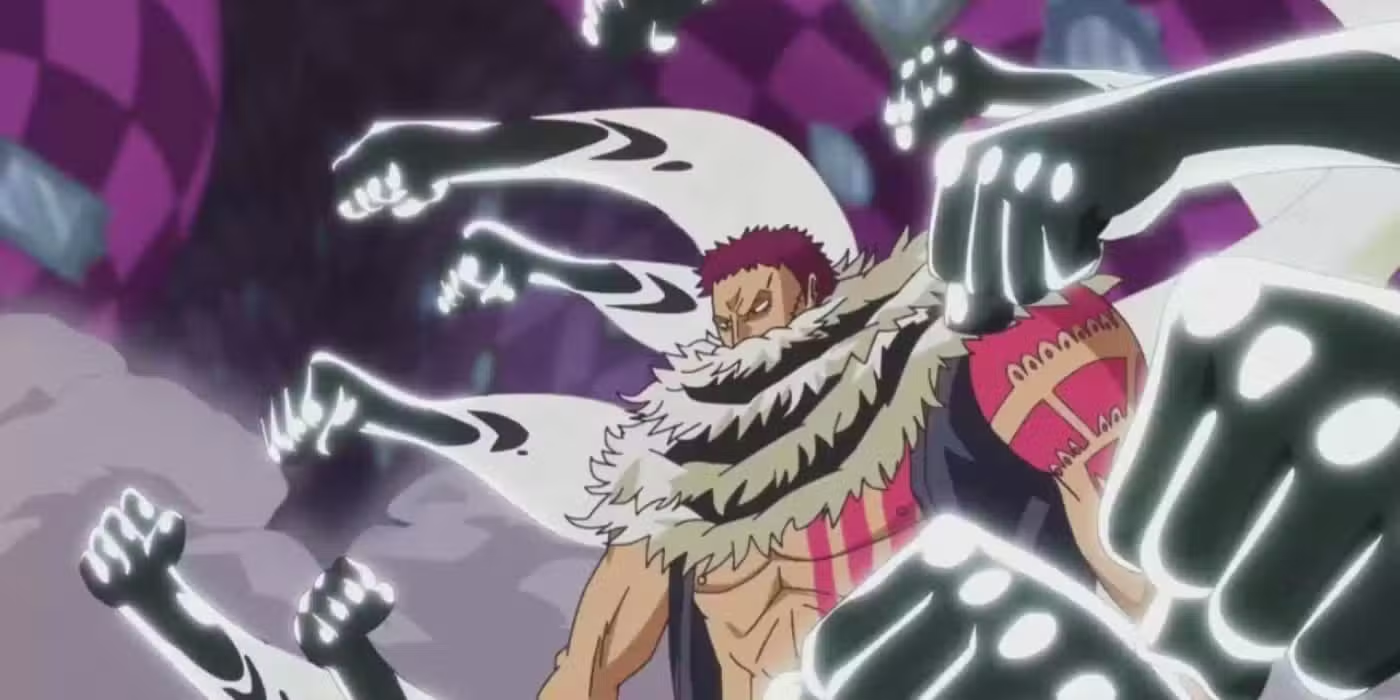
One of the most important moments came when Luffy discovered Katakuri’s hidden face and private donut-eating habit. This revealed that Katakuri’s perfect public persona was actually something he maintained to protect his family and preserve their confidence in him. Beneath that image was a tired and emotionally burdened person forced to constantly uphold unrealistic expectations.
As the fight progressed, Katakuri gradually stopped treating Luffy as an inferior opponent and began respecting him genuinely. This shift became especially clear after Flampe interfered in the fight unfairly. Rather than accepting an easy advantage, Katakuri stabbed himself to make the fight equal again.
That moment completely changed the emotional tone of the battle. It was no longer simply hero versus villain. Instead, it became a clash between two determined individuals who slowly came to understand each other.
Luffy’s Snake Man transformation became one of the most iconic moments in the Whole Cake Island Arc because it represented the culmination of everything he learned during the battle. Unlike Boundman, which focused on overwhelming power, Snake Man emphasized speed, unpredictability, and constant acceleration. This form was specifically suited for fighting Katakuri.
Katakuri’s Future Sight allowed him to predict normal attacks, but Snake Man’s constantly changing trajectories made those predictions much harder to react to consistently. Techniques like Jet Culverin evolved mid-flight, forcing Katakuri to adjust repeatedly during exchanges.
What makes Snake Man important narratively is that it symbolizes adaptation rather than brute force. Luffy did not win because he suddenly became physically stronger than Katakuri. Instead, he created a fighting style specifically designed to challenge Katakuri’s strengths.
This approach made the victory feel earned through learning and evolution rather than simple plot convenience. Even fans who debate the exact outcome of the battle generally acknowledge that the fight fundamentally changed Luffy’s combat abilities moving forward.
The Fight Redefined What Strength Means in One Piece
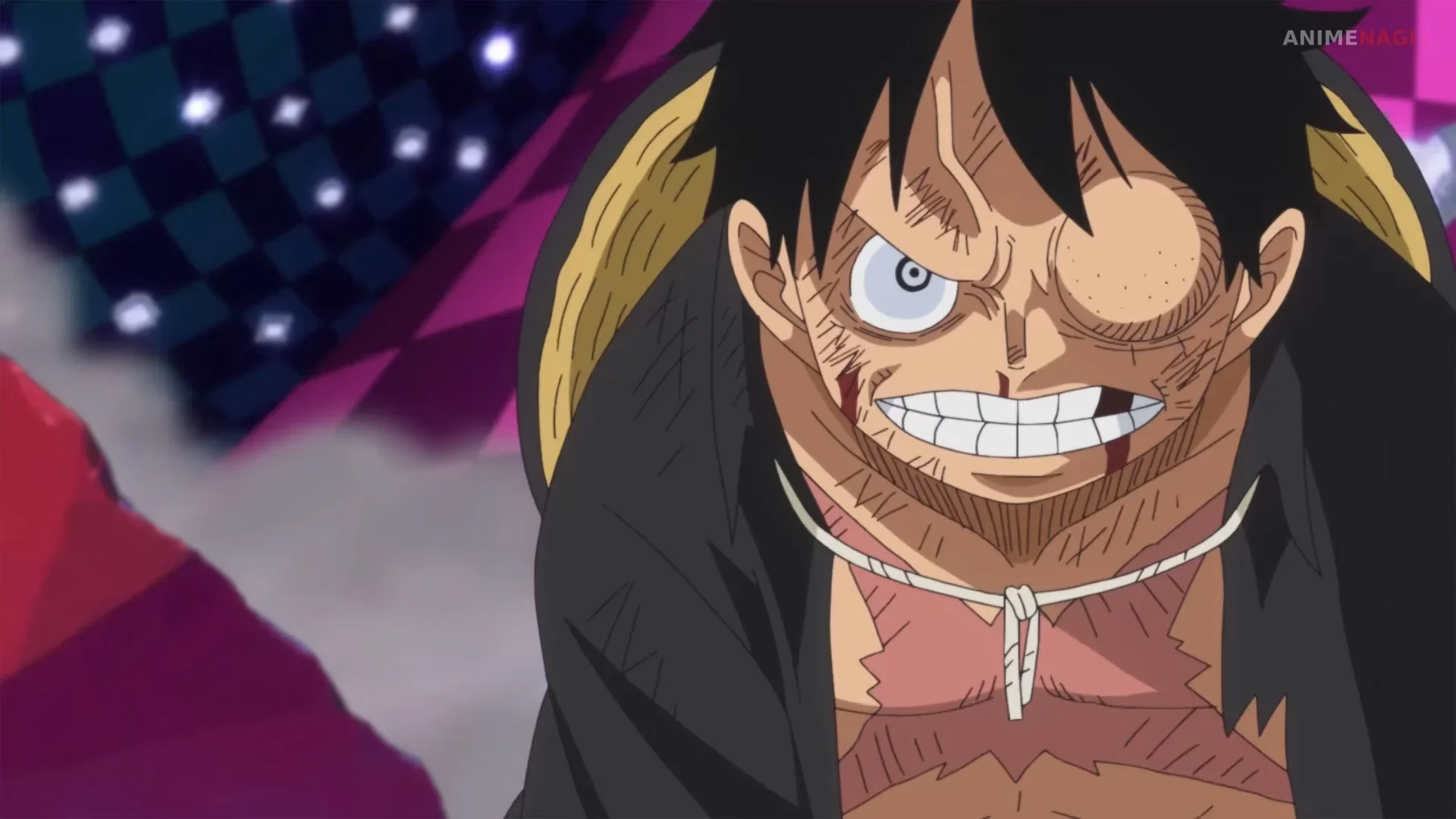
One of the deepest aspects of the fight is how it redefined strength emotionally rather than physically. Katakuri initially represented traditional perfection. He was stronger, calmer, smarter, and more experienced than Luffy in almost every measurable way. Yet Luffy gradually challenged Katakuri through persistence, honesty, and emotional freedom.
Katakuri spent years maintaining a false image because he believed his family needed an invincible protector. Luffy, on the other hand, openly embraced his flaws, failures, and emotions without shame. Over time, Katakuri began admiring that freedom because it represented something he personally lacked.
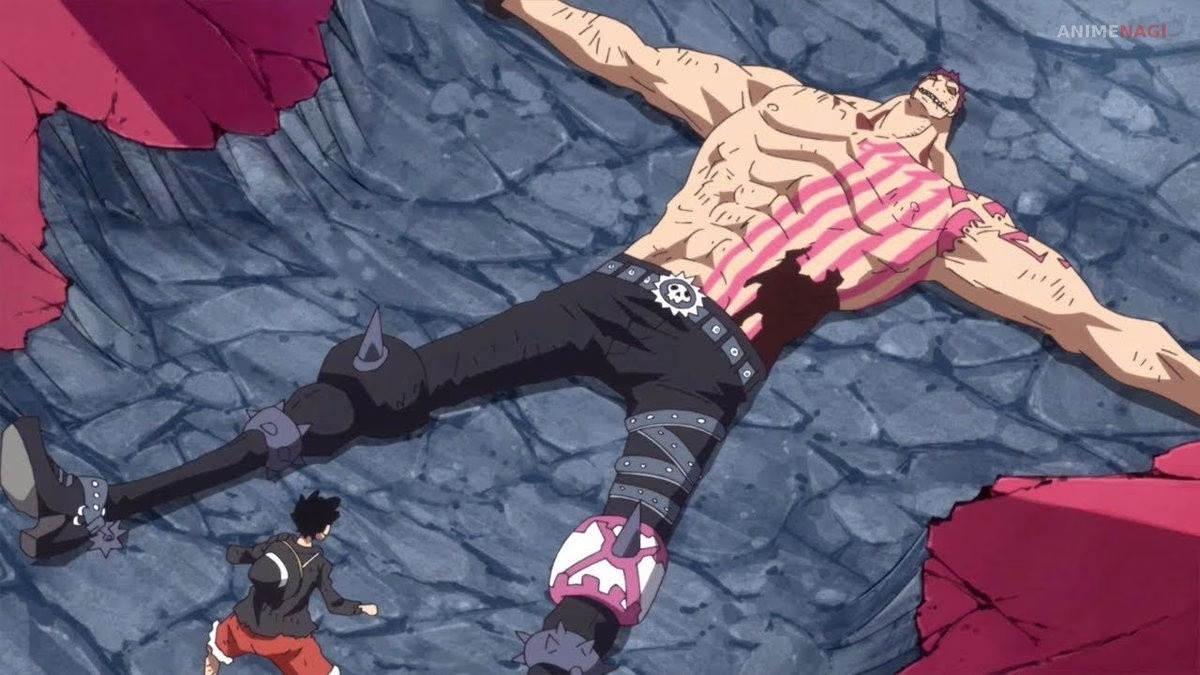
This emotional shift becomes especially clear during the fight’s ending. After collapsing onto his back for the first time publicly, Katakuri asks Luffy whether he will someday return to defeat Big Mom. Luffy confidently answers yes, and Katakuri smiles beneath his scarf. Many fans interpret this moment as Katakuri acknowledging Luffy as someone truly capable of becoming Pirate King.
That emotional resolution is a huge reason the battle remains so beloved. It ends not with hatred, but with mutual respect and understanding.
Why the Fight Was the Most Important Battle in Whole Cake Island
The Whole Cake Island Arc contained several major conflicts involving Big Mom, Sanji, Germa 66, and the Straw Hats. However, the Luffy versus Katakuri fight became the arc’s emotional centerpiece because it represented the core themes of growth and freedom running throughout the storyline.
For Luffy, the battle proved he could challenge Yonko commanders directly and continue evolving under impossible pressure. This was a critical step toward eventually confronting Emperors like Kaido and Big Mom on equal footing.
For Katakuri, the battle allowed him to briefly abandon the impossible perfection he had maintained his entire life. Luffy’s determination and honesty inspired him in ways no previous opponent had managed.
The fight also dramatically expanded the importance of Haki within One Piece’s combat system. Advanced Observation Haki became one of the arc’s defining mechanics, and Luffy’s development during the battle laid groundwork for later power progression throughout Wano and beyond.
Most importantly, the fight captured what makes One Piece special emotionally. It balanced incredible action with character growth, psychological depth, and thematic storytelling all at once.
Luffy vs Katakuri Changed One Piece Forever
Monkey D. Luffy versus Charlotte Katakuri remains one of the most important fights in One Piece because it changed both characters permanently. It was not simply about defeating a stronger enemy or escaping Whole Cake Island safely. The battle represented growth through struggle, mutual respect between enemies, and the emotional burden of expectations.
Luffy emerged from the fight stronger mentally and physically, while Katakuri finally allowed himself to stop pretending to be perfect. Their clash, therefore, became much more than a standard shonen battle. It became a turning point for the future Pirate King himself.
Another important layer of the battle is how it elevated Monkey D. Luffy’s reputation across the One Piece world. News of Luffy defeating a top commander like Charlotte Katakuri spread quickly, strengthening his image as a rising threat among the Yonko. This victory was not just personal growth but a major shift in how other powerful figures began to view him. It signaled that Luffy was no longer just a reckless pirate but a serious contender capable of challenging the balance of power in the New World.
At the same time, the fight deepened the thematic contrast between inherited roles and chosen identity. Katakuri spent his life carrying the expectations of his family, while Luffy continued forging his own path without being bound by others’ perceptions. This contrast reinforced one of the series’ core ideas that true strength comes from embracing freedom rather than perfection. By the end of the fight, both characters had influenced each other in meaningful ways, making their clash one of the most emotionally complete battles in the entire series.