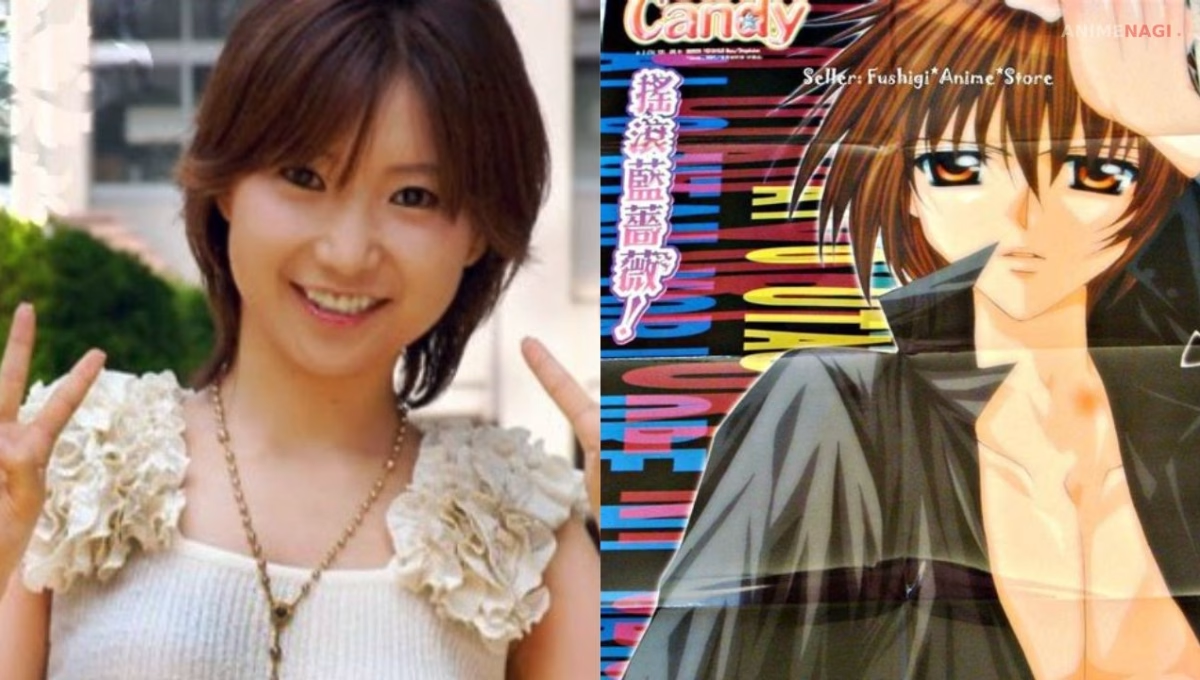
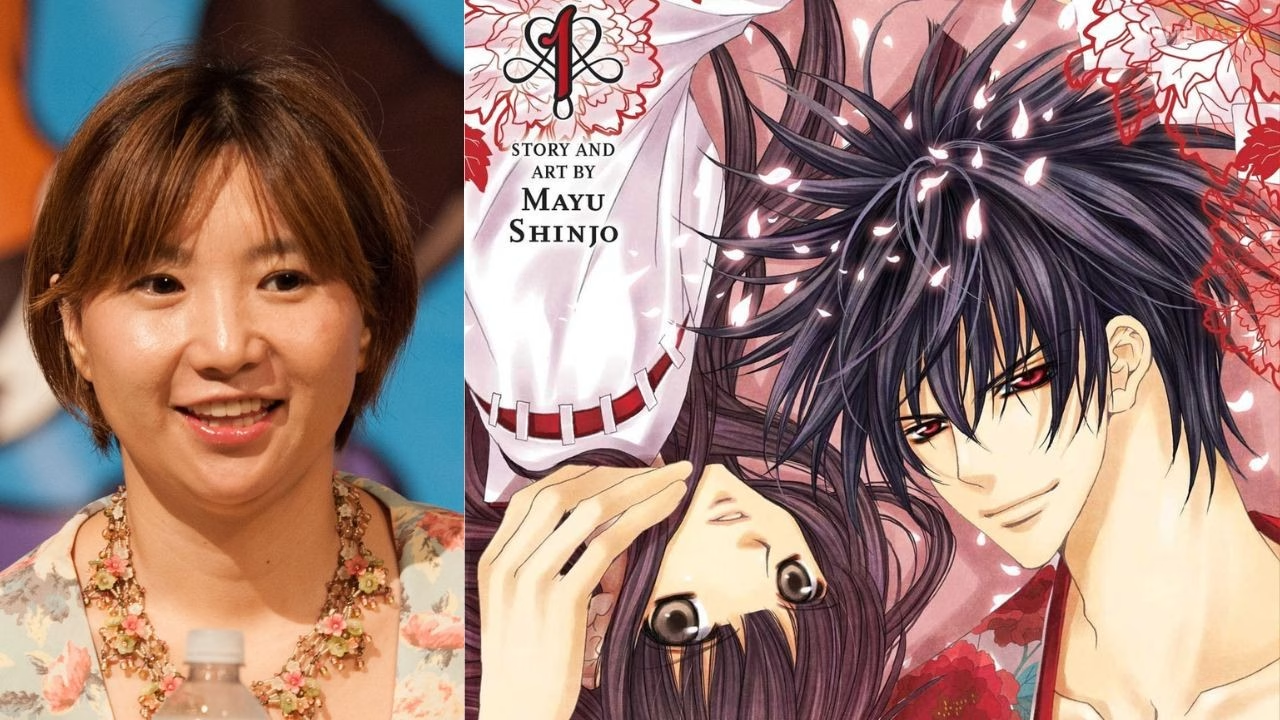
The manga industry is once again under scrutiny after veteran artist Mayu Shinjo publicly criticized major publisher Shogakukan. Her comments have triggered widespread debate among creators, fans, and industry observers. While controversies in the manga world are not new, the scale and timing of this situation have made it particularly significant.
Shinjo is not an unknown voice. She is a well-established creator who has worked in the industry for decades. Because of her experience, her criticism carries weight and has reopened long-standing discussions about how manga artists are treated.
The issue began when Shinjo spoke out about internal practices at Shogakukan. Her comments came during a period when the manga industry was already dealing with sensitive issues related to creator rights and publisher responsibility.
She suggested that some publishers still operate with outdated systems that limit the independence of manga artists. According to her, creators often have little control over important decisions involving their work. This includes how stories are edited, published, and sometimes adapted into other formats.
Her remarks quickly spread online, leading to strong reactions. Some people praised her honesty, while others felt she was being too critical of a major company.
One of the most notable aspects of this controversy is the reaction from within the manga community itself. Mayu Shinjo revealed that she faced indirect criticism from another manga artist. Instead of addressing her directly, the individual reportedly contacted her business partner and spoke against her.
Shinjo described this behavior as unfair and unprofessional. She argued that disagreements should be handled openly rather than behind the scenes.
Longstanding Issues With Publishers
Shinjo’s criticism is rooted in her own experience. She worked with Shogakukan for many years before leaving in 2007. Even at that time, she had raised concerns about working conditions and the overall structure of the industry.
Several key issues continue to come up in discussions:
Low earnings remain a major concern. Manga artists often receive a relatively small share of the revenue generated by their work. Even successful series may not provide long-term financial security.
Limited creative control is another problem. In many cases, publishers have the final say on story direction, deadlines, and business decisions. This can lead to conflicts between artistic vision and commercial priorities.
Financial pressure also affects creators. Many artists are responsible for paying assistants and covering production costs. This reduces their overall income and increases stress.
These problems are not unique to one company. However, Shinjo’s comments have brought them back into public focus.
The current controversy is gaining more attention because of the broader context. The manga industry has recently faced multiple challenges, including public criticism over how creators are treated and how certain cases have been handled by publishers.
As a result, there is growing awareness of structural issues within the industry. Fans are more informed than before, and creators are increasingly willing to speak about their experiences.
In this environment, Mayu Shinjo’s comments are not being seen as isolated complaints. Instead, they are part of a larger conversation about fairness, transparency, and accountability.
Digital platforms have also changed the landscape. Artists today have more ways to reach audiences directly, reducing their dependence on traditional publishers. This shift is slowly changing the balance of power.
Fan Reactions and Public Debate
The reaction from fans has been mixed. Many people support Shinjo and believe she is highlighting real problems. They argue that creators deserve better pay, more control, and improved working conditions.
Others are more cautious. Some fans worry that strong criticism of major publishers could harm the industry or reduce opportunities for new artists. There is also concern that not all companies operate in the same way, and generalizing could be unfair.
Social media has played a major role in spreading the discussion. Conversations about creator rights, workplace culture, and industry reform are now more visible than ever.
This level of public engagement is relatively new for the manga industry, which has traditionally been more private about internal matters.
Publishers such as Shogakukan play a central role in the manga ecosystem. They handle editing, distribution, marketing, and licensing. Without them, many series would struggle to reach a wide audience.
However, this central role also gives publishers significant power. They often control key aspects of a manga’s success, from serialization to international expansion.
Critics argue that this power imbalance can lead to situations where creators have limited negotiating strength. Shinjo’s comments directly challenge this structure, suggesting that it may no longer be suitable in a changing industry.
At the same time, supporters of publishers point out that they take financial risks and provide essential support. From this perspective, the current system is seen as necessary for maintaining stability.
A Turning Point or Temporary Debate
It is still unclear whether this controversy will lead to meaningful change. The manga industry has faced criticism before, but reforms have often been slow.
However, several factors suggest that this situation could be different. Increased global interest in manga, combined with digital distribution and social media, has made the industry more transparent.
Creators now have more visibility and, in some cases, more leverage. Public opinion can also influence companies more than it did in the past.
Mayu Shinjo’s willingness to speak openly may encourage other artists to share their experiences. If that happens, pressure for reform could grow.