Spirited Away is often described as one of the greatest animated films ever made, but its ending continues to spark discussion more than two decades after release. Directed by Hayao Miyazaki and produced by Studio Ghibli, the film combines fantasy, Japanese folklore, environmental themes, and emotional coming-of-age storytelling into a deeply symbolic narrative.
At first glance, the ending appears simple. Chihiro rescues her parents, leaves the spirit world, and returns to the human world as a more mature person. However, the final scenes contain layers of symbolism connected to identity, memory, childhood, greed, environmental destruction, and emotional growth.
The ending also leaves several questions intentionally ambiguous. Does Chihiro remember the spirit world afterward? What happened to Haku? Why does she not look back when leaving? And what does the film ultimately say about growing up?
The power of Spirited Away’s ending comes from how emotionally honest it feels despite its surreal fantasy setting. Rather than delivering a straightforward explanation, Miyazaki uses symbolism and visual storytelling to communicate Chihiro’s transformation from a frightened child into someone capable of independence, empathy, and courage.
Here’s a full breakdown of the ending of Spirited Away, including Chihiro’s emotional growth, Haku’s role, the hidden symbolism behind the final scenes, and the deeper meaning of Miyazaki’s masterpiece.
What Happens at the End of Spirited Away?
Near the end of the film, Chihiro successfully passes Yubaba’s final test by correctly identifying that none of the pigs presented before her are actually her parents. After this, Yubaba honors their agreement and allows Chihiro and her parents to leave the spirit world.
Before departing, Chihiro shares an emotional goodbye with Haku, who finally remembers his true identity as the spirit of the Kohaku River. Haku promises they will meet again someday, although the film never confirms whether that reunion actually happens.
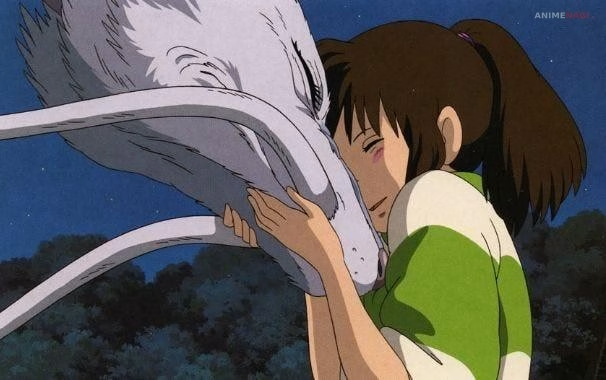
As Chihiro walks away with her parents, Haku tells her not to look back. She obeys and continues forward through the tunnel leading back to the human world. Once outside, her parents seem completely unaware of everything that happened.
The family returns to their dusty car and drives toward their new home. However, Chihiro herself is noticeably calmer and more emotionally mature compared to the frightened child seen at the beginning of the movie.
Chihiro’s Transformation Is the Real Ending
The true ending of Spirited Away is not simply escaping the spirit world. It is Chihiro’s emotional transformation.
At the beginning of the film, Chihiro is insecure, fearful, dependent on her parents, and resistant to change. She complains constantly about moving to a new town and reacts to unfamiliar situations with anxiety. Miyazaki intentionally designed her as an ordinary child rather than an idealized hero.
Inside the spirit world, however, Chihiro is forced to survive independently. She works difficult jobs, solves problems without parental support, and learns how to navigate dangerous situations through empathy rather than violence.
By the end, she no longer behaves like the frightened girl from the opening scenes. Her confidence becomes visible in subtle ways, including her posture, facial expressions, and decision-making. She does not panic during Yubaba’s final challenge because she has learned to trust herself.
This transformation reflects one of the film’s core ideas: growing up means learning who you are without losing your humanity.
Why Chihiro Recognizes Her Parents Aren’t Pigs
One of the most important moments in the ending occurs when Yubaba asks Chihiro to identify her parents among a group of pigs. Chihiro calmly responds that none of them are her parents.
This moment is often misunderstood as magical intuition, but it represents Chihiro’s emotional maturity and self-awareness. Earlier in the film, she depended heavily on external reassurance and reacted emotionally to fear. By the end, she trusts her instincts completely.
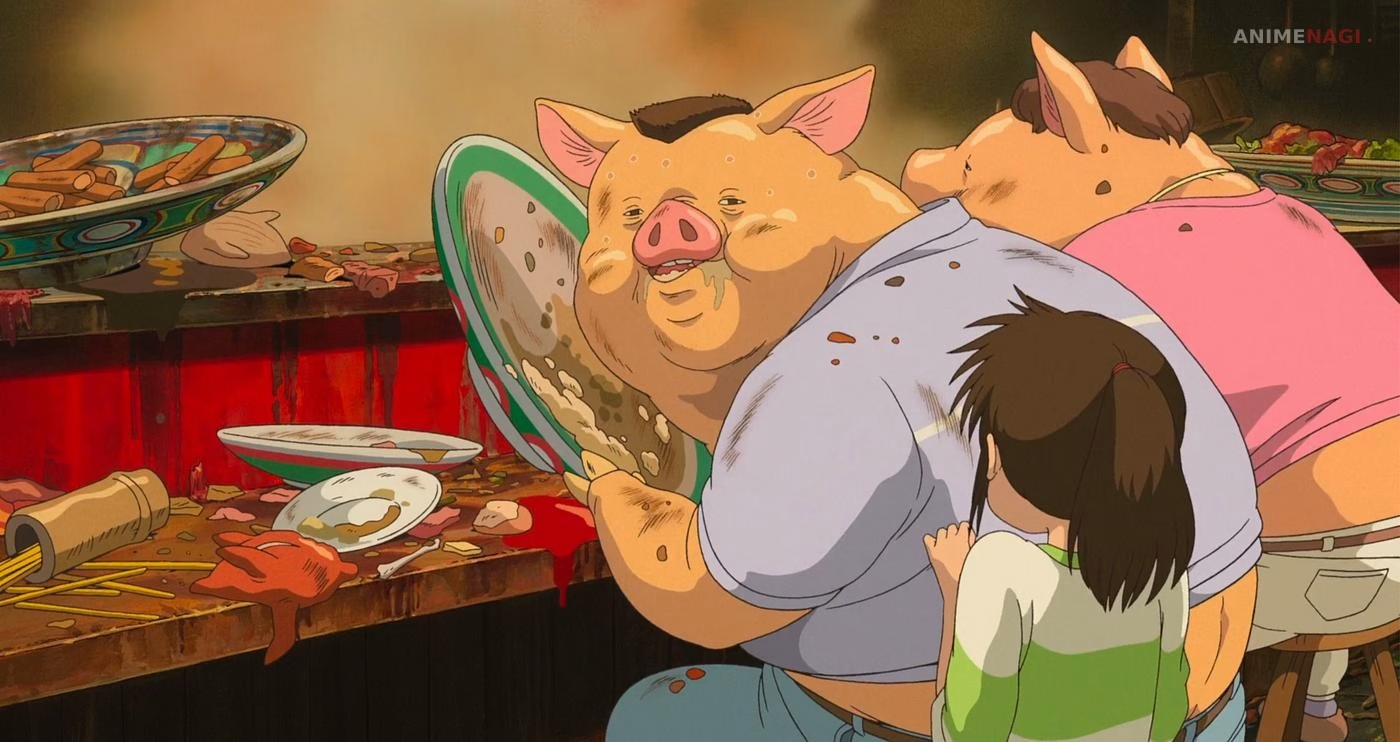
The pigs also carry symbolic meaning throughout the movie. Chihiro’s parents become pigs because of greed and overconsumption after eating food meant for spirits. Miyazaki uses them to criticize materialism and selfish behavior.
When Chihiro realizes her parents are not among the pigs, she symbolically recognizes that people are more than their greed or appearances. She has developed emotional perception strong enough to see beyond surface illusions.
Haku Represents Memory and Lost Identity
Haku is one of the film’s most important symbolic characters. Throughout most of Spirited Away, he serves Yubaba while lacking memory of his real name and identity.
Eventually, Chihiro remembers that Haku is actually the spirit of the Kohaku River, a river she fell into as a child before it was destroyed by urban development. This revelation restores Haku’s identity and frees him emotionally.
Thematically, Haku represents lost memory, forgotten nature, and emotional disconnection caused by modernization. The destruction of his river reflects Miyazaki’s environmental concerns, which appear throughout the film. Human expansion literally erased Haku’s home and identity.
Chihiro saving Haku by remembering him is deeply significant. It suggests that memory and emotional connection can restore things lost to greed and modernization.
This also connects directly to Chihiro’s own struggle to remember her real name after Yubaba renames her “Sen.” Both characters fight against losing their identities in a world built around control and consumption.
Why Haku Says “Don’t Look Back”
One of the most discussed moments in the ending is Haku telling Chihiro not to look back while leaving the spirit world.
This scene references mythological traditions connected to crossing between worlds. Similar “do not look back” motifs appear in Greek mythology, Japanese folklore, and religious stories involving journeys from the underworld.
Symbolically, looking back often represents refusing to let go of the past or failing to complete a spiritual transition. By continuing forward without turning around, Chihiro proves she is ready to return fully to the human world.
The scene also reflects emotional growth. Earlier in the story, Chihiro constantly hesitates and clings to safety. At the end, she moves forward confidently despite uncertainty.
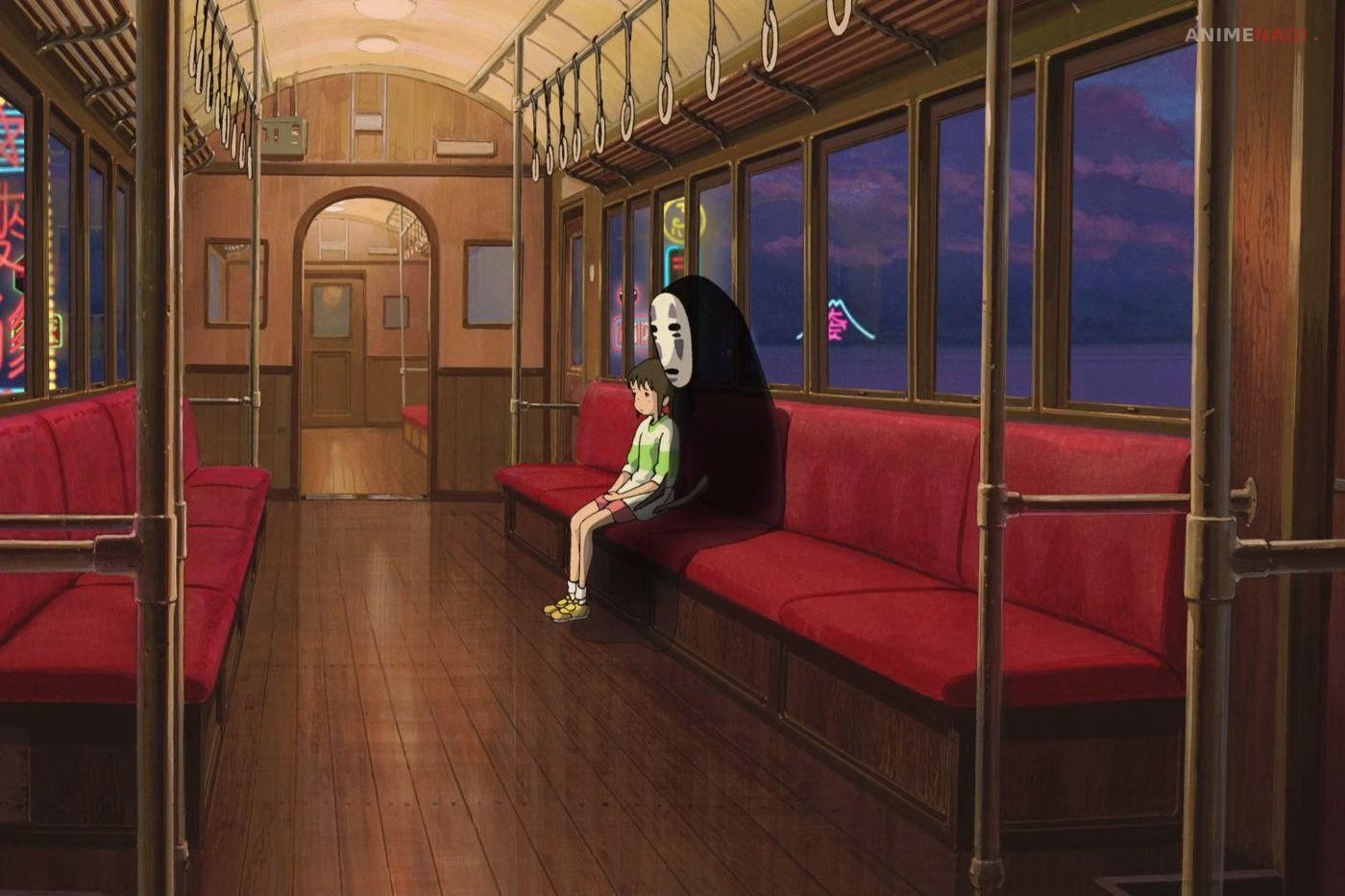
Haku’s instruction, therefore, becomes more than a magical rule. It represents accepting change and continuing life after personal transformation.
Does Chihiro Remember the Spirit World?
One of the film’s biggest ambiguities involves whether Chihiro remembers the spirit world after leaving.
Her parents clearly do not remember anything. They behave as though no time passed at all. However, Chihiro’s reaction is more complicated. The final scenes imply she retains some emotional memory even if specific details fade over time.
Miyazaki himself suggested that memories of the spirit world may become distant or dreamlike rather than disappearing entirely. This ambiguity is intentional because childhood experiences often feel similar. Emotional truths remain even when exact details become unclear.
The hair tie given to Chihiro by Zeniba subtly sparkles near the ending, hinting that the supernatural events truly happened rather than being imaginary.
This detail suggests Chihiro carries the experience emotionally even if ordinary life gradually pulls her away from it.
The Spirit World Reflects Modern Society
Although Spirited Away appears fantastical, Miyazaki repeatedly described the spirit world as a reflection of modern society rather than pure fantasy.
The bathhouse operates like a capitalist workplace built around consumption, labor, hierarchy, and greed. Workers exhaust themselves serving wealthy guests while characters constantly obsess over money, gold, and status.
No-Face becomes especially important here. Initially gentle and lonely, he transforms into a monstrous creature after absorbing the bathhouse’s greed and gluttony. His destructive behavior reflects how environments shape identity and morality.
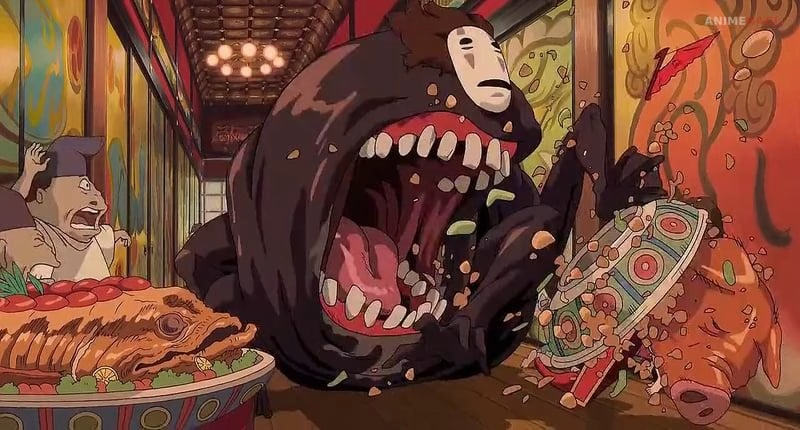
Chihiro survives because she resists becoming corrupted by greed. She consistently refuses excessive rewards and prioritizes compassion over personal gain.
This moral resistance allows her to retain her identity while others lose themselves emotionally.
The Environmental Meaning Behind the Ending
Environmental themes play a major role throughout Spirited Away, especially during the film’s second half.
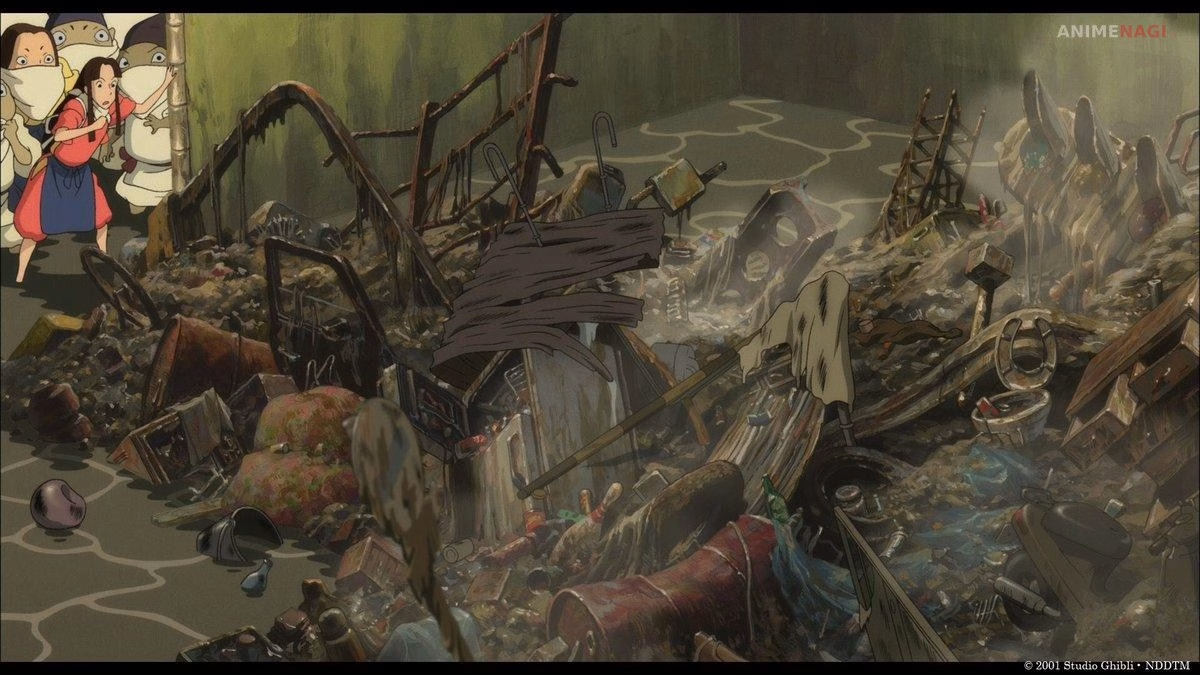
The polluted “stink spirit” scene is one of the clearest examples. Chihiro cleans what initially appears to be a disgusting monster, only to reveal a polluted river spirit buried under human trash and waste.
Haku’s destroyed river reinforces the same message. Human development erased a natural space entirely, disconnecting people from nature and spiritual identity.
The ending reflects hope despite this destruction. Chihiro remembering Haku symbolically restores emotional respect for nature even if the physical river no longer exists.
Miyazaki does not present environmentalism as abstract politics. Instead, he frames it emotionally through memory, loss, and personal connection.
Why No-Face Changes So Dramatically
No-Face’s role becomes easier to understand when viewed through the film’s larger themes.
He begins as a quiet and emotionally empty spirit who mirrors the behavior of those around him. Inside the greedy bathhouse environment, he becomes obsessed with consumption and validation.
However, once removed from that environment and brought to Zeniba’s peaceful cottage, No-Face becomes calm and gentle again.
This transformation reflects one of the film’s core ideas: environments influence identity deeply. Greed and emotional emptiness create monsters, while kindness and simplicity restore balance.
Chihiro helps No-Face not by fighting him but by guiding him toward a healthier emotional space.
Why the Ending Feels Bittersweet
Spirited Away’s ending feels emotionally satisfying but also melancholic.
Chihiro survives and matures, but she leaves behind the magical world and the relationships she formed there. Her goodbye with Haku feels especially bittersweet because the film never confirms whether they reunite again.
This emotional tone reflects real childhood experiences. Growing up often involves leaving important emotional spaces behind while carrying their influence internally.
Miyazaki avoids giving the audience complete closure because life itself rarely works that way. People change, relationships fade, and memories become distant, but emotional growth remains meaningful.
That bittersweet realism is a major reason the ending resonates so deeply with audiences of different ages.
Chihiro’s Name Is Central to the Entire Story
One of the most important recurring themes in Spirited Away is identity through names.
When Yubaba renames Chihiro as “Sen,” she attempts to control her by severing her connection to her true self. Haku warns her repeatedly never to forget her real name because losing it completely would trap her permanently.
Names in the film represent memory, individuality, and emotional truth. Characters who lose their names lose their autonomy and sense of self.
Chihiro succeeds partly because she continues remembering who she truly is despite pressure to conform.
This theme connects strongly to adolescence and adulthood. Growing up often involves external systems trying to define identity, while emotional maturity requires protecting one’s authentic self.
Spirited Away Is Ultimately About Growing Up
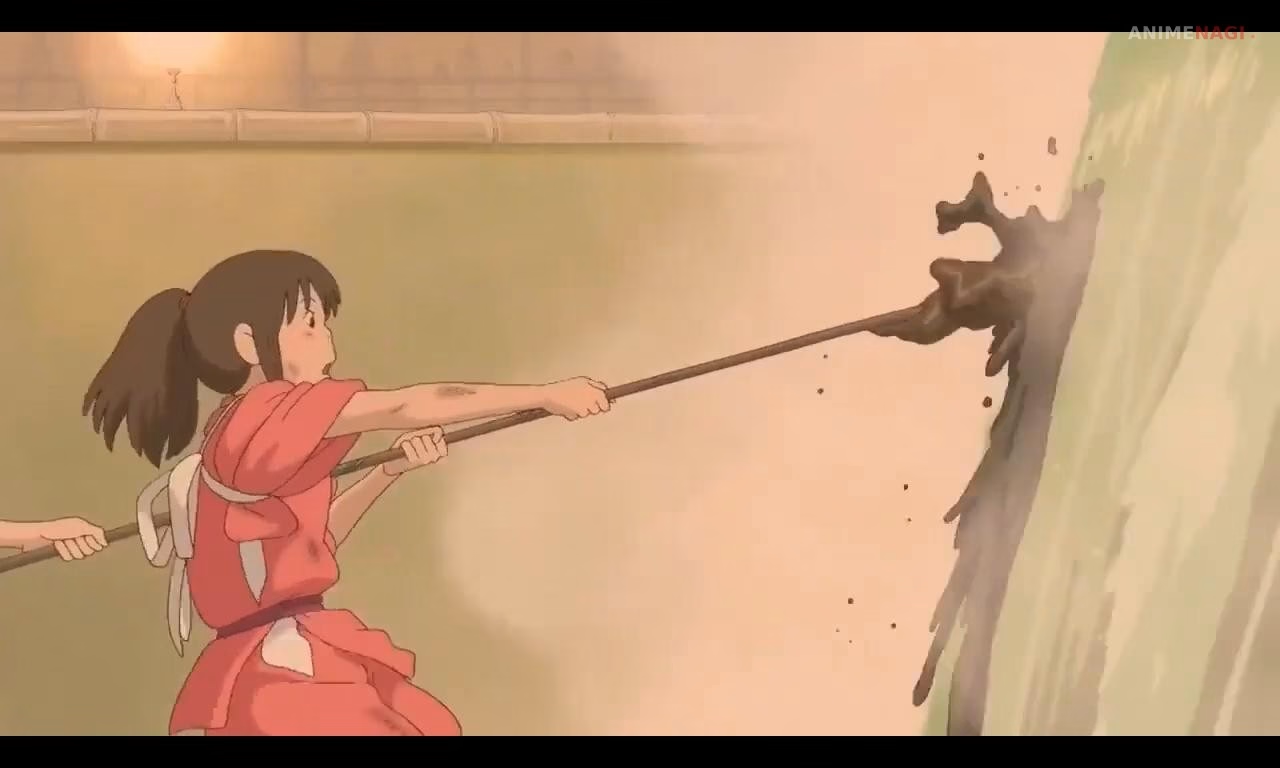
More than anything else, Spirited Away is a coming-of-age story disguised as fantasy.
Miyazaki specifically wanted to create a story for ordinary young girls, steering emotional uncertainty and personal growth.
The spirit world functions almost like an emotional trial, separating childhood dependence from emotional independence. Chihiro learns responsibility, compassion, courage, and self-reliance through hardship rather than magical destiny.
Importantly, the film never transforms her into a superhero. She remains an ordinary child who succeeds because of empathy, persistence, and emotional honesty.
That grounded humanity is what makes her transformation feel so powerful.
Why Spirited Away’s Ending Remains So Powerful
The ending of Spirited Away continues resonating decades later because it respects emotional complexity.
Rather than explaining every mystery directly, Miyazaki trusts viewers to interpret symbolism and emotional meaning themselves. The film leaves room for ambiguity while still delivering a deeply satisfying emotional conclusion.
Chihiro’s journey works universally because nearly everyone experiences similar emotional transitions while growing up. Fear of change, loss of identity, uncertainty about the future, and the struggle to remain compassionate are not fantasy concepts. They are human experiences.
The final image of Chihiro walking away from the spirit world captures this perfectly. She cannot stay in childhood forever, and she cannot fully return to who she was before.
Instead, she moves forward carrying invisible emotional growth with her. That quiet transformation, more than any magical event, is the true meaning behind Spirited Away’s ending.
Ultimately, Spirited Away’s ending also works because it mirrors the way real-life transitions often happen without clear closure or dramatic resolution. Chihiro does not receive a grand farewell or definitive answers about the spirit world, and that ambiguity reflects how childhood experiences fade into memory over time.
The film suggests that growth is not about holding onto every detail but about internalizing the lessons learned along the way. Even if Chihiro forgets specific events, her courage, empathy, and independence remain part of who she becomes. This subtle approach allows the ending to feel personal, as viewers can project their own experiences of change, loss, and growth onto Chihiro’s journey.