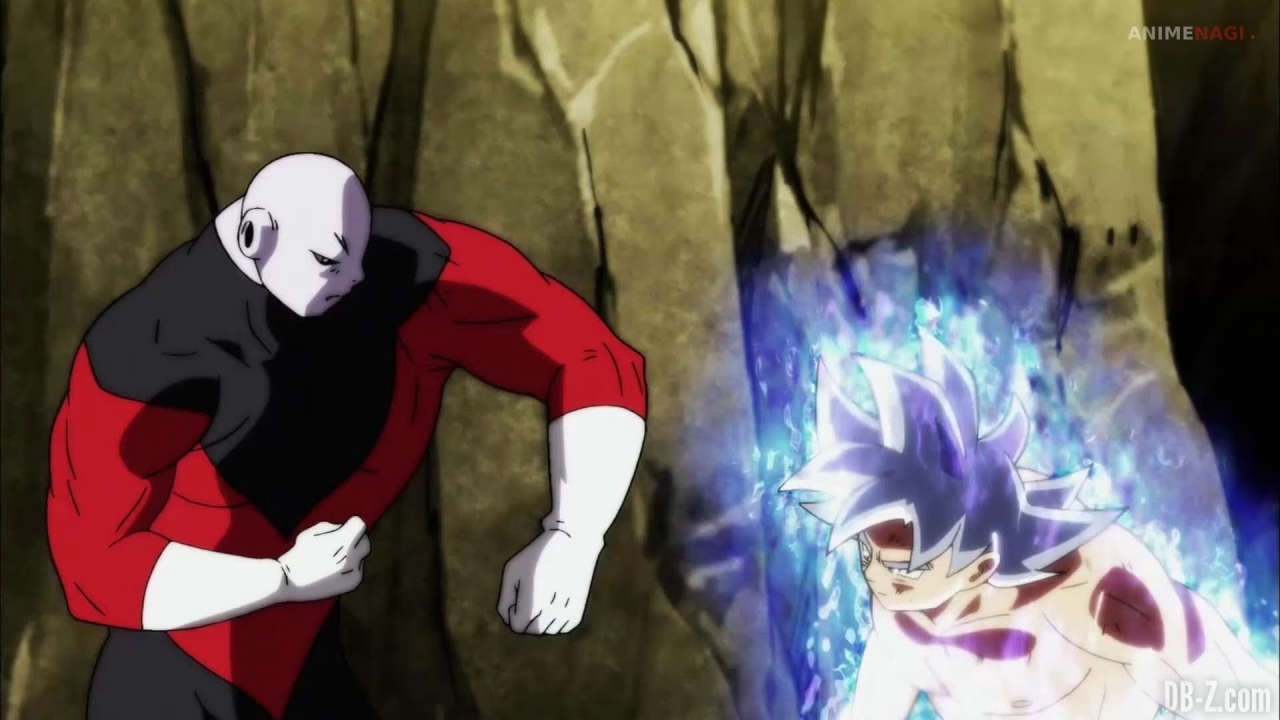
When Dragon Ball Super aired its final episode in March 2018, many fans assumed a new season would arrive shortly afterward. The Tournament of Power had become one of the franchise’s biggest events, introducing Ultra Instinct, Jiren, and a multiverse-scale conflict that attracted global attention. However, years passed without a direct continuation of the television series, leaving fans wondering why the anime stopped despite Dragon Ball remaining one of the most profitable anime franchises in the world.
The situation is more complicated than a simple cancellation. Dragon Ball Super was never officially canceled by Toei Animation. Instead, the series concluded with Episode 131, and the companies involved shifted their focus toward movies and other Dragon Ball projects. At the same time, the manga continued producing entirely new story arcs that anime-only viewers never got to experience. Understanding why the anime ended requires looking at production schedules, source material, broadcasting decisions, and the franchise’s long-term strategy.
Dragon Ball Super Officially Ended in March 2018
Dragon Ball Super aired from July 2015 to March 25, 2018, ending with Episode 131 and the conclusion of the Tournament of Power. At the time, Fuji TV announced that there were no plans to continue the series immediately after its conclusion. The show’s broadcast slot was also replaced by another program, signaling the end of its weekly television run.
Importantly, the ending was designed to feel like a stopping point rather than a permanent conclusion. Goku and Vegeta continued training, Frieza returned to life, and several mysteries involving the multiverse remained unresolved. This left plenty of room for future stories while allowing the anime to pause without feeling incomplete.
Because of this, many fans viewed the finale as the end of a chapter rather than the end of Dragon Ball Super itself.
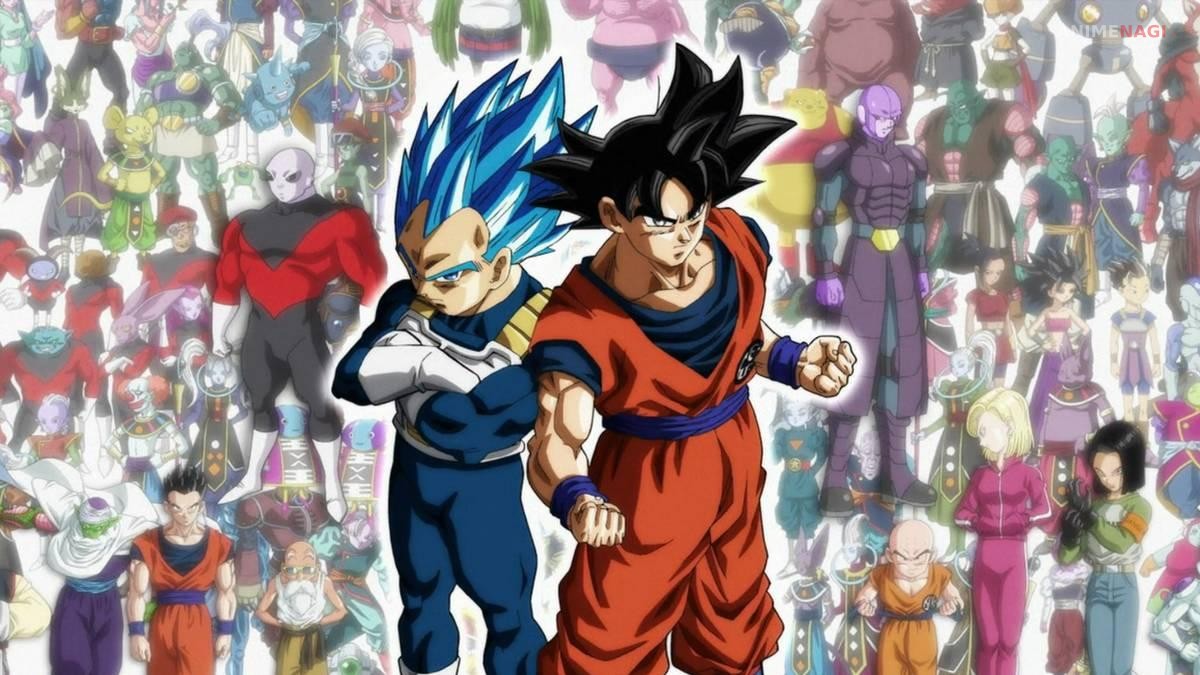
Lack of Source Material Was One Major Factor
One of the most commonly cited reasons for the anime’s pause was the limited amount of source material available after the Tournament of Power. Unlike many anime adaptations, Dragon Ball Super’s anime and manga were developed simultaneously from story concepts provided by Akira Toriyama.
After the Tournament of Power ended, the manga moved into entirely new arcs such as the Galactic Patrol Prisoner Saga featuring Moro and the Granolah the Survivor Saga. However, these stories were still being serialized monthly, meaning there was not a large backlog of completed material available for a long-running weekly anime adaptation.
Allowing the manga to move further ahead gave Toei Animation more flexibility if and when it decided to adapt those storylines.
Toei Animation Shifted Focus to Movies
Another important reason was the franchise’s growing focus on theatrical releases. Shortly after the anime ended, Toei released the highly successful Dragon Ball Super: Broly in 2018. The film became one of the most successful entries in franchise history and demonstrated that Dragon Ball could thrive through major movie events rather than a weekly television schedule.
The strategy continued with Dragon Ball Super: Super Hero in 2022. Both films expanded the Dragon Ball universe while generating substantial box-office revenue and global attention.
From a business perspective, producing blockbuster films allowed the franchise to remain active without committing to the demanding schedule of a weekly anime series.
Production and Scheduling Decisions Also Played a Role
The original Dragon Ball Super anime faced criticism during its early episodes for inconsistent animation quality and tight production schedules. While the series improved significantly during later arcs, particularly the Tournament of Power, maintaining that level of output every week remained challenging.
Ending the series after a major climax gave Toei Animation an opportunity to reorganize resources and pursue different projects. Over the years, the company also invested in other Dragon Ball productions, including movies and later the anime project Dragon Ball Daima.
This suggests that the decision was not solely about story content but also about production priorities and long-term franchise planning.
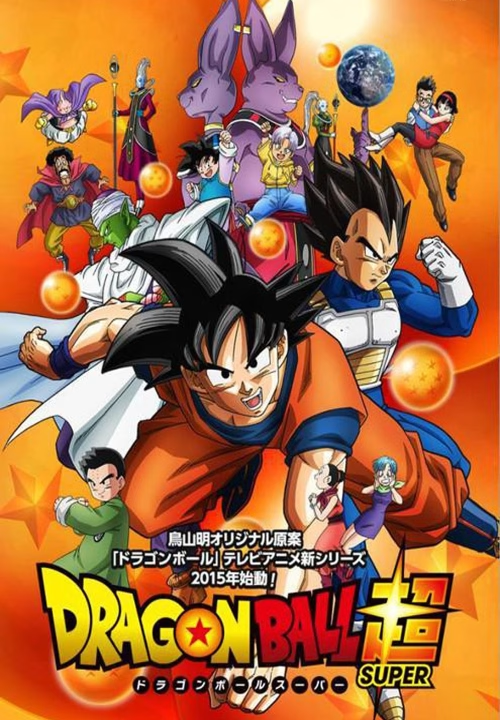
| Date Aired (Start) | July 5, 2015 |
|---|---|
| Studio | Toei Animation |
| Director | Kimitoshi Chioka |