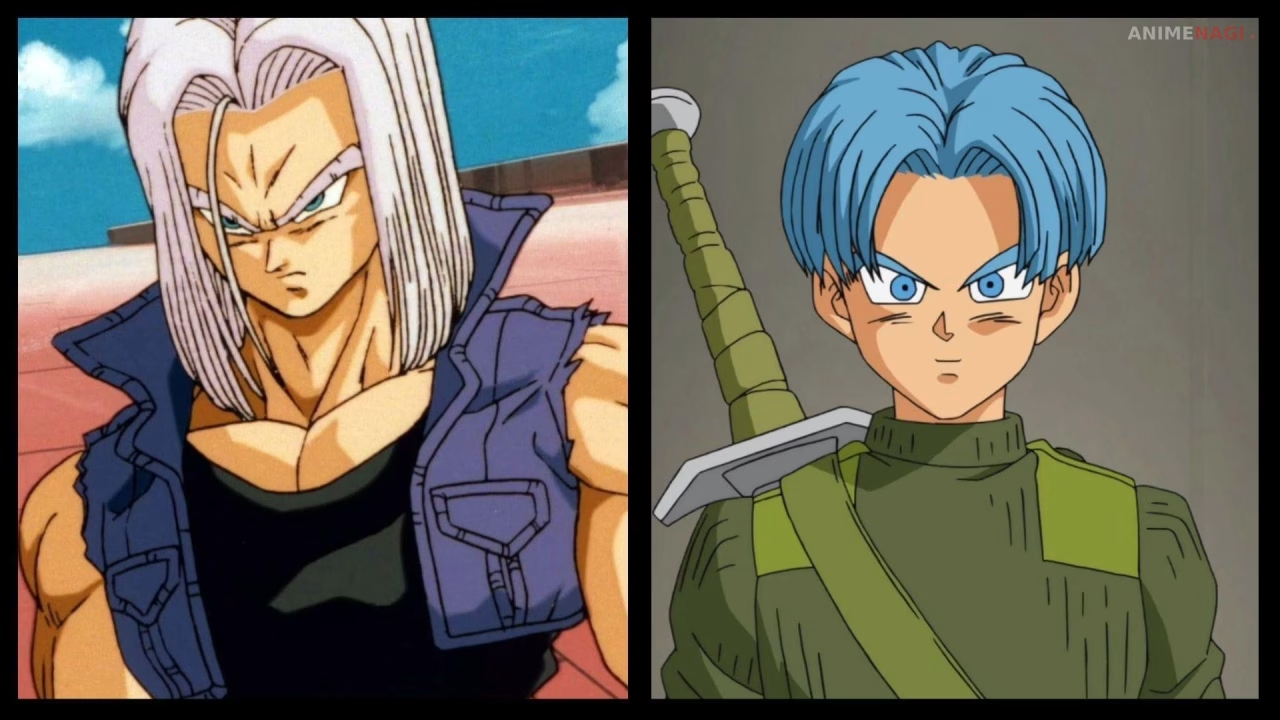
One of the strangest continuity debates in the Dragon Ball franchise has nothing to do with power levels, timelines, or transformations. Instead, it revolves around something surprisingly simple: Trunks’ hair color. Fans who watched Dragon Ball Z remember Future Trunks with iconic lavender or purple hair, while Dragon Ball Super suddenly changed his appearance to blue. At the same time, Kid Trunks continued having purple hair, making the situation even more confusing.
This inconsistency sparked years of discussion among Dragon Ball fans because the series never directly explains the change within the story itself. Some viewers assumed it was connected to Saiyan genetics, alternate timelines, or aging. Others believed it was simply an animation mistake or redesign choice.
The real explanation is a mix of manga inconsistencies, anime adaptation decisions, Akira Toriyama’s relaxed approach to color continuity, and later attempts to align Trunks more closely with Bulma. Once the franchise’s design history is examined carefully, the confusion becomes much easier to understand.
Here’s a full breakdown of why Trunks’ hair color changes in Dragon Ball, how Bulma’s design caused the inconsistency, why Dragon Ball Super altered Future Trunks’ appearance, and whether there is any actual in-universe explanation behind it.
Trunks Originally Had Purple Hair in Dragon Ball Z
When Future Trunks first appeared during the Android Saga in Dragon Ball Z, his hair was clearly lavender or light purple. This version of the character quickly became iconic because of his futuristic outfit, sword, and Super Saiyan transformation.
For many longtime fans, purple-haired Trunks became the “default” version of the character. Kid Trunks later appeared with similar purple hair, reinforcing the idea that this was simply his natural appearance.
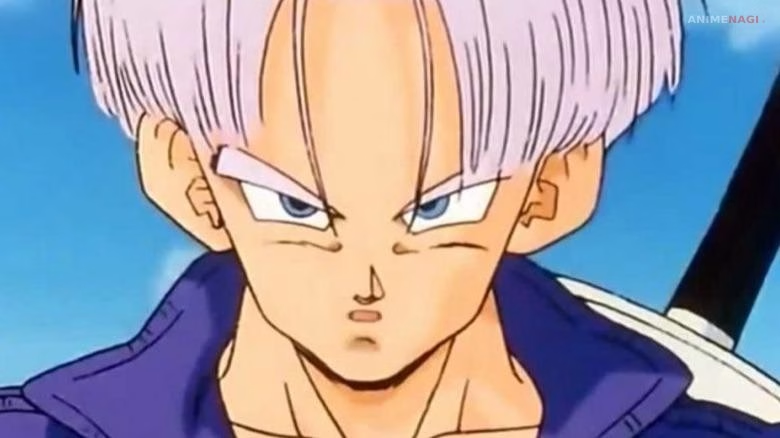
The purple hair also helped visually connect Trunks to Bulma in the manga. While anime viewers mostly remember Bulma with turquoise-blue hair, Akira Toriyama often colored Bulma’s hair differently in manga illustrations. In several manga appearances, Bulma’s hair leaned more toward purple or violet tones. Because of this, Trunks’ original purple hair actually made sense within the manga’s visual style.
Bulma’s Hair Color Was Never Fully Consistent
The biggest reason Trunks’ hair color became confusing is that Bulma’s hair color itself was inconsistent for decades.
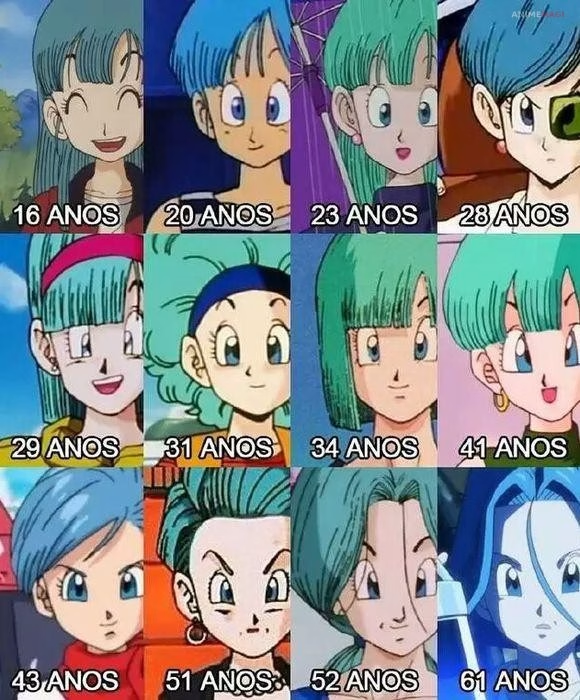
In the Dragon Ball anime, Bulma is usually depicted with bright turquoise or blue hair. However, in parts of the manga and various color illustrations by Akira Toriyama, her hair often appeared purple, violet, or lavender instead.
Toriyama was famously relaxed about visual consistency, especially regarding hair colors and clothing designs. In interviews, he even admitted that he was not particularly strict about these details and sometimes changed colors simply based on preference or aesthetics.
As a result, Dragon Ball developed a strange situation where Bulma’s “official” hair color depended heavily on whether fans looked at the manga, anime, movies, or promotional artwork.
This inconsistency eventually affected Trunks as well.
Why Future Trunks’ Hair Became Blue in Dragon Ball Super
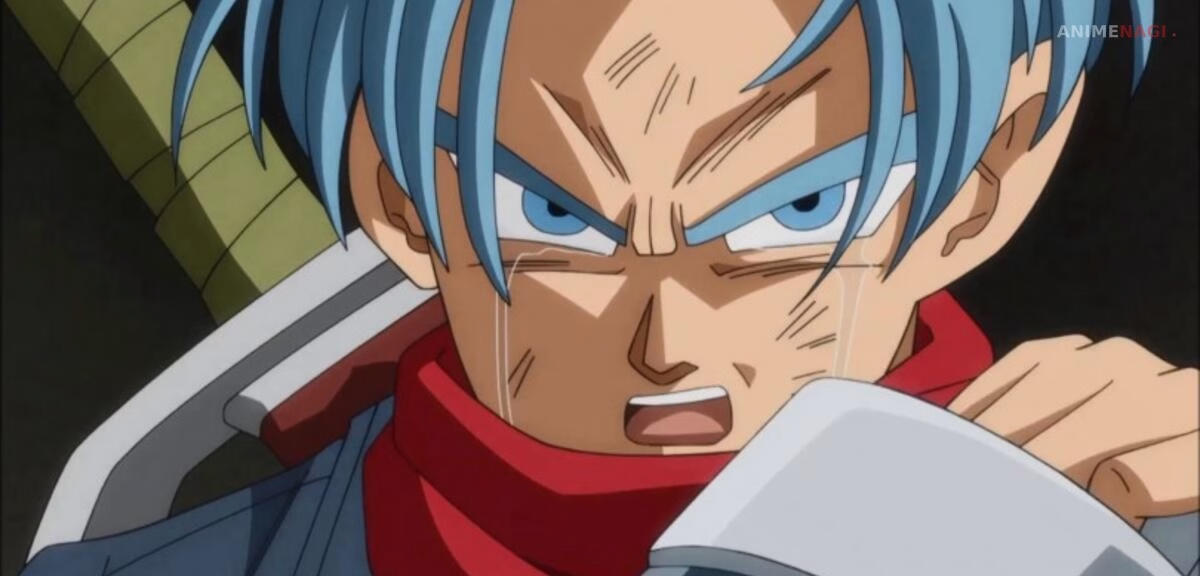
The major change happened during Dragon Ball Super’s Future Trunks Saga. When Future Trunks returned, his hair was no longer purple. Instead, it became fully blue, closely matching modern depictions of Bulma.
This redesign immediately divided fans because Kid Trunks still retained purple hair at the same time. As a result, the franchise suddenly had two versions of Trunks with different hair colors existing simultaneously.
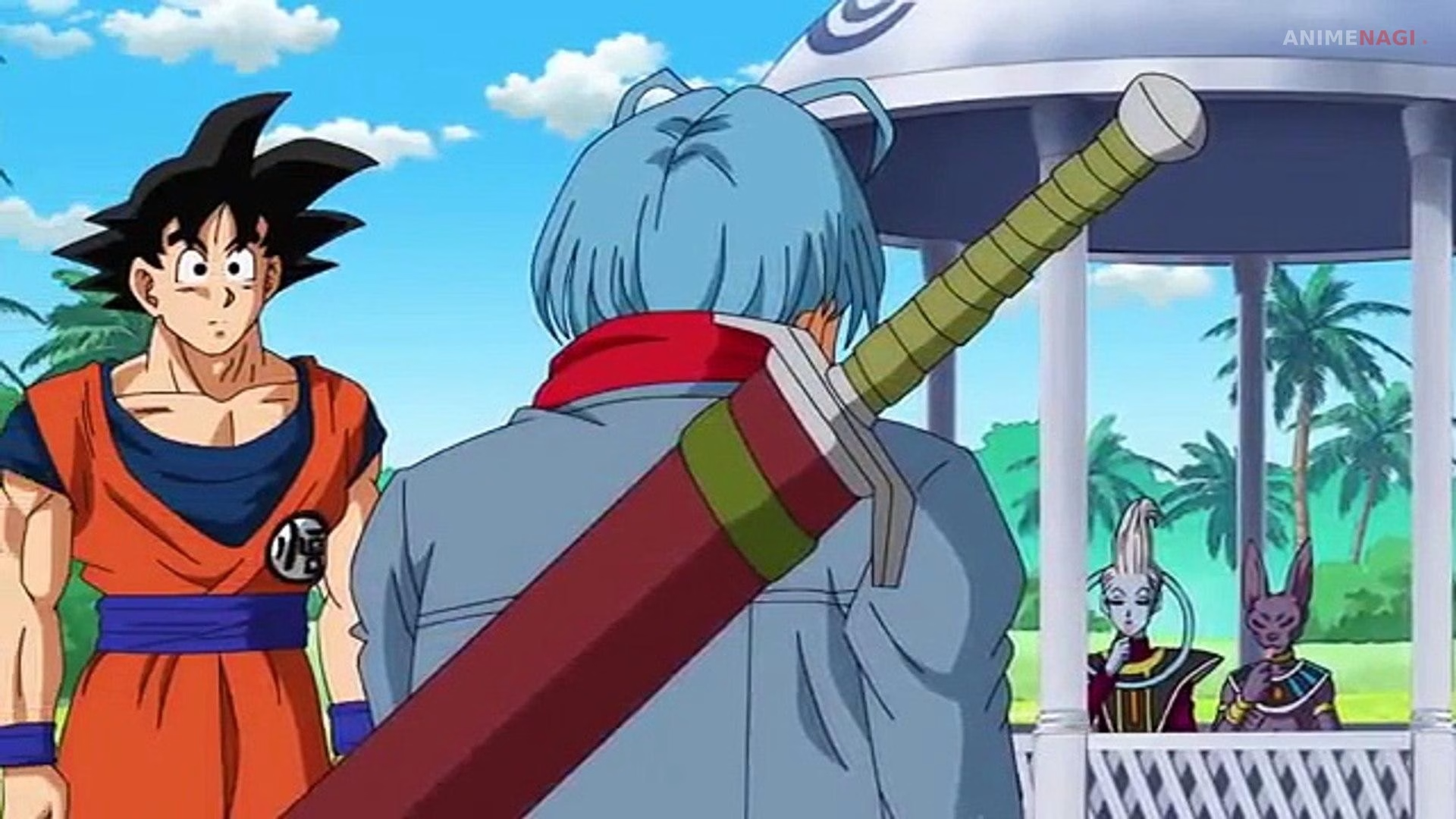
The most widely accepted explanation is that Dragon Ball Super wanted Future Trunks to visually resemble Bulma more accurately according to Toriyama’s later color preferences. By the time Super was produced, Bulma’s blue hair had become more standardized in modern Dragon Ball media.
Rather than keeping Future Trunks purple, the production team adjusted his appearance to align him with contemporary Bulma designs.
However, this created a continuity issue because Kid Trunks was left unchanged.
Akira Toriyama’s Design Philosophy Played a Huge Role
A major reason these inconsistencies exist at all is Akira Toriyama’s creative style.
Unlike some creators who maintain extremely rigid visual continuity, Toriyama often prioritized what looked visually appealing in the moment. Hair colors, outfits, and even character details sometimes shifted between manga covers, anime adaptations, and promotional artwork.
Toriyama himself admitted in interviews that he was not highly concerned with maintaining strict hair color consistency. He even joked that he was unsure what Bulma’s “natural” hair color actually was.
Because of this relaxed approach, Dragon Ball’s visual continuity occasionally became messy compared to other long-running franchises.
Trunks’ hair color change is arguably the most famous example of that issue.
Why Kid Trunks Still Has Purple Hair
One of the biggest complaints from fans is not simply that Future Trunks became blue-haired. It is that Kid Trunks remained purple afterward.
If the franchise truly intended to retcon Trunks’ hair color entirely, many fans expected Kid Trunks to change as well. Instead, Dragon Ball Super kept both versions visually different.
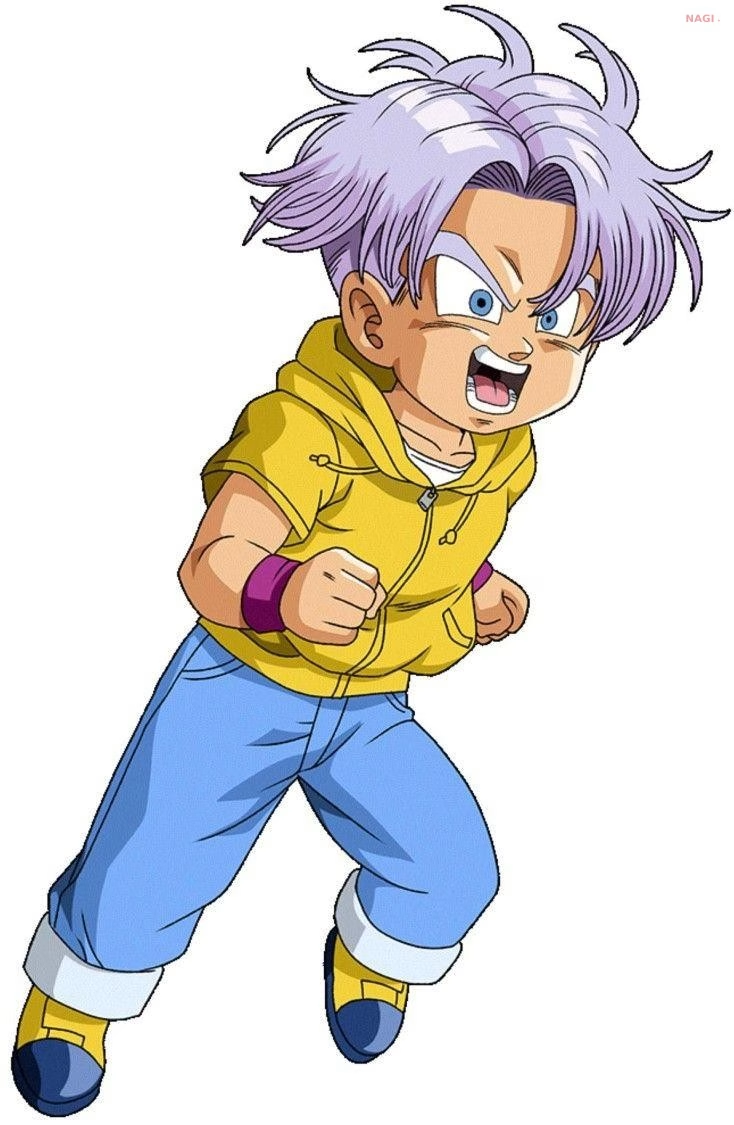
This inconsistency makes the redesign feel less like a deliberate lore decision and more like a production-level aesthetic adjustment. It also confused viewers trying to understand whether timeline differences somehow altered Trunks’ genetics or appearance.
In reality, there is no confirmed in-universe explanation. The color difference mainly exists because the franchise updated Future Trunks’ design without fully redesigning Kid Trunks.
As a result, both versions now coexist awkwardly within Dragon Ball continuity.
Some Fans Believe the Anime Caused the Problem
Another important factor is the long-running difference between Dragon Ball manga colors and anime colors.
Several fans argue that the anime originally created the inconsistency by standardizing Bulma’s hair as turquoise-blue while Toriyama’s manga illustrations sometimes leaned purple.
Under this interpretation, Future Trunks’ purple hair originally matched the manga version of Bulma more closely than the anime version did. Dragon Ball Super later attempted to “correct” this by giving Trunks blue hair instead.
However, because fans spent decades associating Trunks with purple hair through Dragon Ball Z, the redesign felt jarring even if it technically aligned better with modern Bulma artwork.
This explains why the debate remains controversial despite the relatively small visual change.
Is There an In-Universe Explanation?
Dragon Ball itself never provides an official story-based explanation for the hair color shift.
There are no scenes suggesting Trunks dyed his hair, experienced genetic changes, or developed different traits because of timeline alterations. The change simply appears visually without much acknowledgment.
Some fans have attempted to create headcanon explanations. One popular theory suggests Saiyan-human hybrids may experience slight appearance differences across timelines. Another theory argues Bulma’s hair color naturally shifts with age, meaning Future Trunks inherited different shades at different points in life.
However, none of these ideas are confirmed within canon.
The simplest explanation remains the most accurate: the redesign happened for aesthetic and production reasons rather than narrative ones.
Why Fans Prefer Purple-Haired Trunks
Despite Dragon Ball Super’s redesign, many fans still strongly prefer Trunks with purple hair.
Part of this comes from nostalgia. Future Trunks’ original Dragon Ball Z appearance became one of the franchise’s most iconic character designs. His lavender hair contrasted perfectly against his Capsule Corp jacket and sword-wielding style.
The purple hair also gave Trunks a visually unique identity compared to other Saiyans. Since most Saiyan characters have black hair, Trunks immediately stood out visually because of his mixed human heritage.
For many viewers, the blue redesign feels less distinctive and removes part of what made Future Trunks visually memorable in the first place.
This emotional attachment explains why the debate still appears regularly across Dragon Ball communities years later.
The Manga and Anime Continue Handling Colors Differently
Dragon Ball’s visual continuity has always been somewhat flexible across different media versions.
Anime adaptations, manga illustrations, movies, games, and promotional artwork sometimes depict characters differently. Hairstyles, clothing colors, and even transformation details occasionally vary depending on the project.
This is not unique to Trunks. Bulma’s appearance changed repeatedly throughout Dragon Ball history, and other characters also experienced smaller visual inconsistencies over time.
However, Trunks’ redesign attracted much more attention because his hair color was such a defining part of his identity.
The combination of nostalgia and sudden redesign made the inconsistency far more noticeable than other Dragon Ball visual changes.
Why Dragon Ball Super Wanted a More Consistent Bulma Connection
One likely reason behind the redesign is visual family consistency.
Dragon Ball Super heavily emphasizes Future Trunks’ emotional relationship with Bulma during the Future Trunks Saga. Since Bulma’s modern design consistently used blue hair, giving Future Trunks matching hair visually reinforced their family connection.
This may have seemed especially important for newer viewers unfamiliar with older Dragon Ball Z designs. Matching colors immediately communicate the relationship between characters visually.
Unfortunately, because Kid Trunks remained purple-haired, the attempt at consistency ended up creating another inconsistency instead.
This awkward middle ground is why fans still debate the redesign today.
Trunks’ Hair Color Reflects Dragon Ball’s Loose Continuity Style
In many ways, the entire hair color debate reflects Dragon Ball’s broader creative philosophy.
Dragon Ball has always prioritized energy, emotion, humor, and spectacle over strict continuity precision. Toriyama frequently changed designs, forgot details, and adjusted concepts depending on what felt exciting or visually effective at the time.
This flexible approach helped Dragon Ball remain creative and unpredictable, but it also produced occasional continuity oddities like Trunks’ changing hair color.
For some fans, these inconsistencies are frustrating. For others, they are simply part of Dragon Ball’s charm.
Either way, the franchise’s relaxed attitude toward visual details explains why something as basic as hair color became surprisingly complicated.
| Date Aired (Start) | February 26, 1986 |
|---|---|
| Studio | Toei Animation |
| Director | Daisuke Nishio |