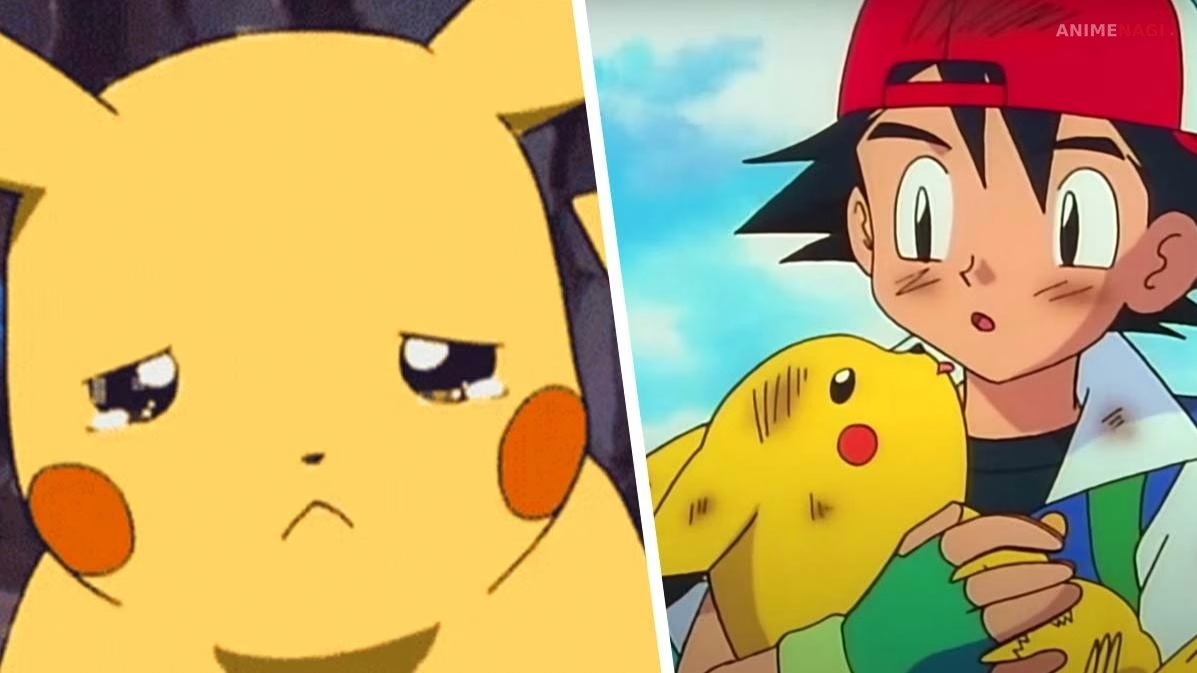
For more than two decades, Ash Ketchum was the face of the Pokémon anime. From his first journey through Kanto to becoming the strongest trainer in the world, Ash’s adventure defined an entire generation of anime fans. When The Pokémon Company announced that Ash and Pikachu would leave the series, many viewers expected a dramatic finale filled with massive battles, emotional goodbyes, or a definitive conclusion to his dream of becoming a Pokémon Master.
Instead, the anime delivered something quieter and more personal. Ash’s final story focused less on trophies and more on the meaning of his journey itself. Through the 11-episode miniseries Pokémon: To Be a Pokémon Master, the anime reflected on Ash’s growth, his bond with Pokémon, and the ideals that guided him since episode one. Rather than ending his story completely, the series chose to show that Ash’s adventure is still continuing somewhere beyond the screen.
Here’s how Ash’s final journey ends in Pokémon, what the finale really means, and why the conclusion divided yet deeply moved longtime fans.
Why Ash Left the Pokémon Anime
Ash’s departure came shortly after his biggest victory in the franchise. During Pokémon Ultimate Journeys: The Series, Ash defeated Leon and won the World Coronation Series, officially becoming the strongest trainer in the world. For a character who spent years losing Pokémon Leagues and learning from failure, this moment represented the peak of his competitive journey.
After that achievement, the anime faced an important question: where could Ash’s story go next? The writers chose not to endlessly repeat the same formula. Instead, they created a final mini-series titled Pokémon: To Be a Pokémon Master, which served as an epilogue to his long-running adventure.
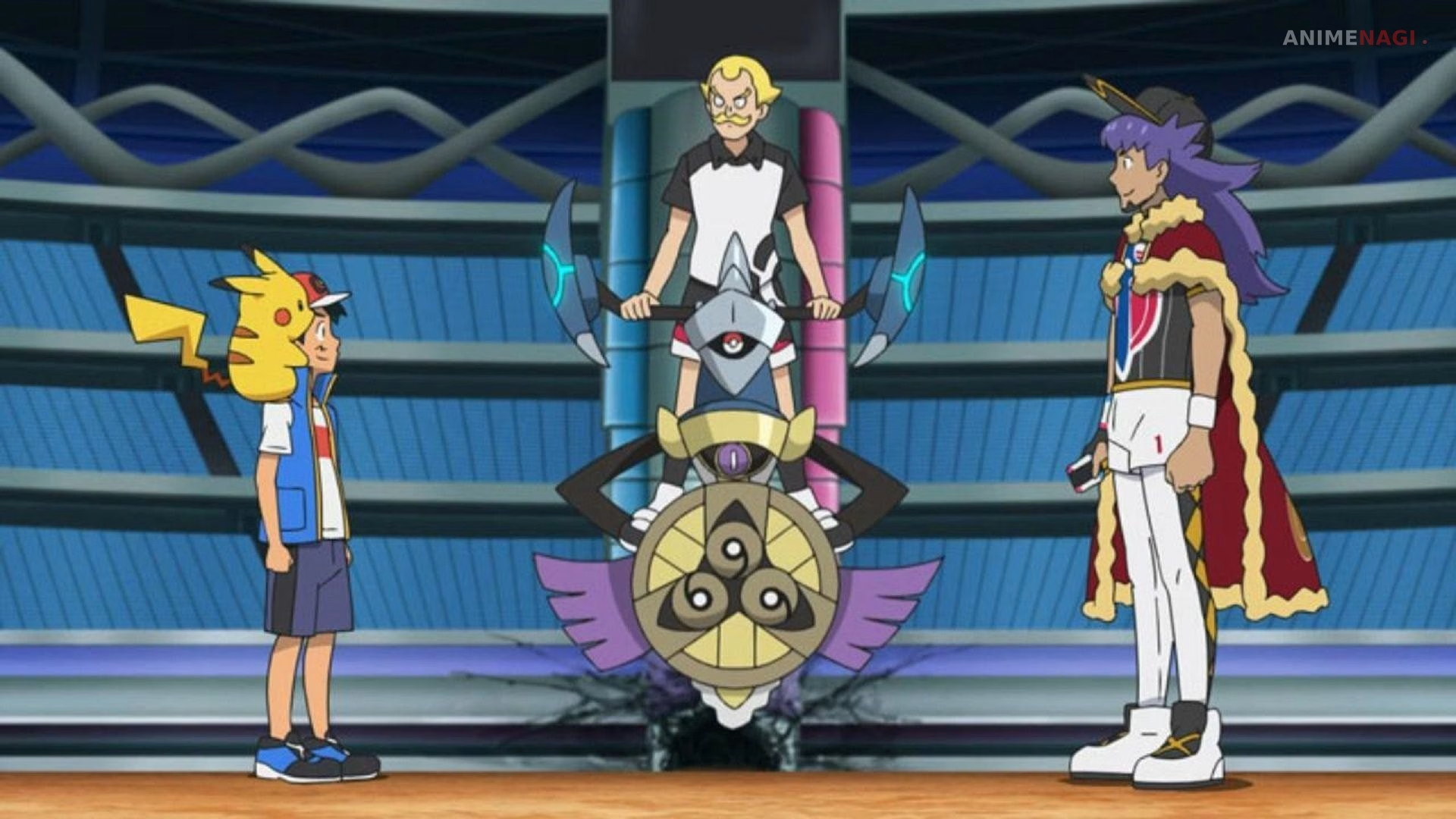
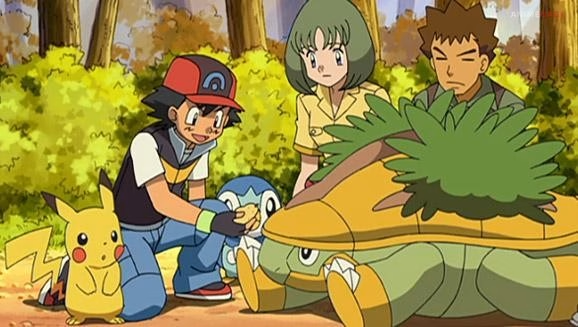
The series was intentionally nostalgic. It brought back classic companions like Misty and Brock, featured older Pokémon from previous seasons, and returned to the adventurous tone of the original anime. Instead of escalating toward another tournament, the episodes focused on smaller encounters and character moments that reminded fans why Ash became beloved in the first place.
The Real Purpose of Pokémon: To Be a Pokémon Master
Many viewers initially assumed the title meant Ash would finally achieve the title of Pokémon Master by the end of the series. However, the anime took a very different approach. The story was less about Ash reaching a destination and more about understanding what his dream truly means.
Throughout the mini-series, Ash continues doing what he has always done. He helps injured Pokémon, protects wild creatures, travels with friends, and explores new places simply because he loves adventure. The episodes repeatedly show that becoming champion did not fundamentally change him. Even after defeating Leon, Ash still sees himself as a challenger rather than someone who has completed his journey.
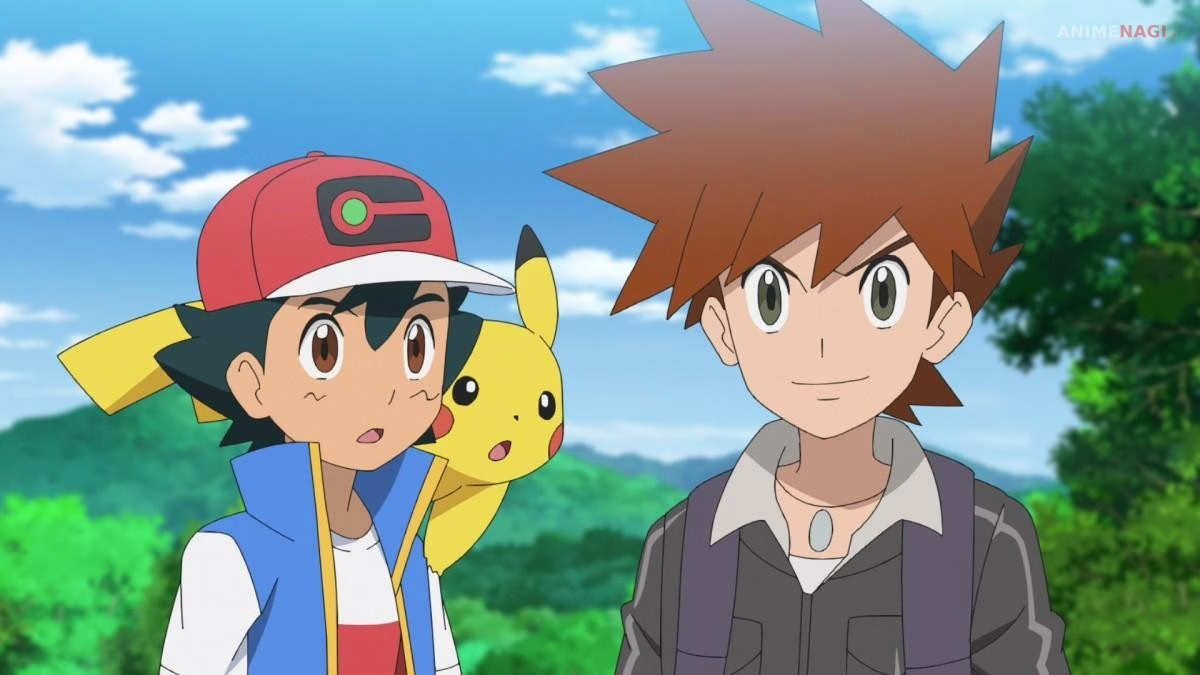
This becomes especially important in the final episode when Gary Oak asks Ash a simple question: has becoming world champion brought him any closer to becoming a Pokémon Master?
Ash struggles to answer because, deep down, he realizes his dream was never about rankings or titles alone.
How Ash Defines a Pokémon Master
The most important moment in Ash’s farewell happens during the final episode, “The Rainbow and the Pokémon Master!” While sheltering from the rain with Pikachu and several Pokémon, Ash reflects on his journey and finally understands what being a Pokémon Master means to him.
Ash concludes that a Pokémon Master is someone who becomes friends with all Pokémon in the world. It is a simple answer, but it perfectly matches his character. Since the beginning of the anime, Ash’s greatest strength was never strategy or power alone. His real gift was connecting with Pokémon emotionally, even those others feared or misunderstood.
This definition also explains why the anime did not end with Ash “completing” his dream. Befriending every Pokémon is impossible to fully achieve because the world is always expanding and new adventures always exist. The goal itself is endless.
That idea is the core message of Ash’s ending. His journey was never supposed to stop after winning a championship. The adventure continues because curiosity, friendship, and discovery never truly end.
Why the Ending Feels Open-Ended
Some fans expected the finale to show an adult Ash, reveal his future family, or provide a definitive epilogue. The anime intentionally avoided that. Instead, the final scenes show Ash and Pikachu continuing to travel together, ready for more adventures beyond what viewers can see.
This open-ended conclusion reflects how Pokémon has always treated Ash’s story. For 25 years, Ash represented constant movement and exploration. Locking him into a final destination would have contradicted the spirit of the character.
The anime also avoided dramatic farewells between Ash and Pikachu. Many fans feared the series would separate them emotionally, but the finale reaffirmed that they remain together. Under the rainbow, Ash asks Pikachu to stay by his side until he becomes a Pokémon Master, and Pikachu happily agrees.
That scene matters because it reinforces the central relationship of the franchise. No matter how many regions Ash explored or companions he met, Pikachu remained his closest partner. Ending the series with them still together felt more authentic than forcing a tragic goodbye.
The Symbolism Behind the Rainbow
The rainbow imagery in the finale carries major symbolic weight for longtime Pokémon fans. In the very first episode of the anime, Ash sees Ho-Oh flying across a rainbow shortly after beginning his adventure. That moment inspired his dream and became one of the franchise’s most iconic scenes.
The final episode deliberately mirrors that imagery. After the rain clears, a rainbow appears again while Ash reflects on his journey and future.
The callback creates a circular structure to Ash’s story. His adventure began with wonder and possibility, and it ends with the same feeling. Rather than closing a book completely, the rainbow suggests that there are still endless roads ahead for him and Pikachu.
It is also symbolic of hope and continuity. Even though Ash leaves the anime as the main protagonist, his world and adventures still exist. Fans are simply no longer following every step of the journey.
The Return of Classic Characters and Pokémon
One reason Ash’s final episodes resonated with longtime viewers was the return of familiar faces from earlier generations. Misty and Brock once again travel beside Ash, recreating the dynamic that introduced millions of fans to Pokémon in the late 1990s.
The mini-series also brought back several of Ash’s older Pokémon, including Pidgeot. That reunion was particularly emotional because Ash originally released Pidgeot during the original series with a promise that he would return someday. The finale finally fulfilled that long-forgotten promise.
These returning characters were not included merely for fan service. They reminded viewers of how far Ash had come across different regions and generations. Every companion and Pokémon represented a chapter of his growth.
The anime essentially treated Ash’s farewell as a celebration of the entire Pokémon legacy rather than focusing on a single climactic battle.
Why Fans Were Divided on Ash’s Ending
Ash’s farewell received mixed reactions from fans. Some viewers loved the emotional simplicity and thematic consistency of the finale. Others felt disappointed because they expected bigger revelations or a more definitive conclusion.
Critics argued that the mini-series contained too many standalone adventures instead of building toward a larger narrative payoff. Some also wanted Ash to explicitly become a Pokémon Master, settle down, or pass the torch more directly.
However, supporters of the ending believed the quieter approach matched Ash’s personality perfectly. Ash was never driven by fame or status. He loved traveling, meeting Pokémon, and helping others. Defining his dream through friendship rather than victory aligned with the themes the anime had built for decades.
The divided response ultimately comes from differing expectations. Some fans wanted closure in a traditional storytelling sense. The anime instead prioritized emotional continuity and thematic honesty.
How the Pokémon Anime Moves Forward After Ash
Following Ash’s departure, the Pokémon anime transitioned to Pokémon Horizons: The Series, which introduced new protagonists Liko and Roy.
This marked the franchise’s first major protagonist change in over 25 years. While the new series explores different themes and storytelling styles, Ash’s influence still shapes the Pokémon universe. His accomplishments remain part of the anime’s history, especially his status as world champion.
The transition was risky because Ash had become synonymous with Pokémon itself. Yet the franchise likely understood that continuing indefinitely with the same formula could eventually weaken the character’s legacy.
By ending Ash’s role after he achieved his greatest victory, the anime preserved his identity as an eternal adventurer rather than allowing the story to stagnate.
What Ash’s Ending Really Means
At its heart, Ash’s ending is about accepting that some dreams are meant to inspire lifelong journeys rather than definitive conclusions. The anime deliberately rejects the idea that success is measured only through titles, trophies, or final destinations.
Ash already proved his strength by becoming world champion. The finale instead asks a deeper question: what kind of person does he want to be? His answer is simple but meaningful. He wants to connect with Pokémon everywhere he goes and continue exploring the world with Pikachu beside him.
That philosophy explains why the final shot does not show Ash retiring or disappearing. He keeps walking forward because adventure itself is the point.
For longtime fans, the ending works less as a farewell and more as a reminder of why Ash mattered in the first place. He represented optimism, curiosity, and the belief that every new encounter could become the start of another journey. After 25 years, the Pokémon anime did not end Ash’s story with a grand fina