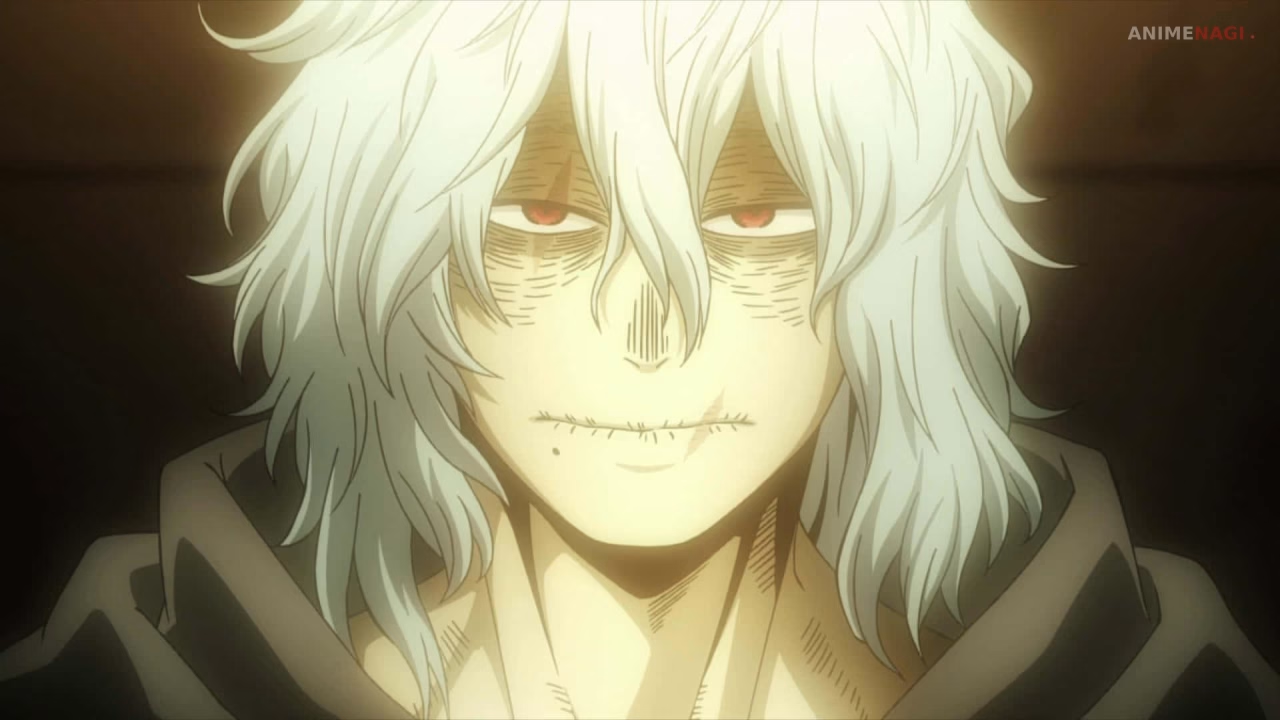
Tomura Shigaraki is one of the most complex and terrifying villains in modern anime, but he did not start that way. When he first appeared in My Hero Academia, he came across as unstable, immature, and far from the mastermind-level antagonists fans expected. Over time, however, his character evolved dramatically, both in terms of power and personality, turning him into the central threat of the series.
What makes Shigaraki stand out is how his journey mirrors the failures of the world around him. His destructive abilities grow alongside his emotional development, creating a villain whose strength is deeply tied to his trauma. From his tragic childhood as Tenko Shimura to becoming the successor of All For One, Shigaraki’s evolution is one of the most layered arcs in shonen anime.
Understanding Shigaraki means looking beyond his powers and exploring the pain, manipulation, and growth that shaped him into a symbol of chaos.
Who Is Tomura Shigaraki in My Hero Academia?
Tomura Shigaraki is introduced as the leader of the League of Villains during the U.S.J. attack arc, but his initial portrayal is intentionally misleading. He lacks composure, throws emotional outbursts, and appears far less strategic than traditional anime villains. His obsessive scratching and unpredictable behavior make him feel more like a broken individual than a calculated threat.
This early characterization is not a flaw but a deliberate setup for his long-term development. Shigaraki is not meant to start as a fully formed antagonist but to grow into one over time. His early failures and frustrations are essential to his transformation into a more dangerous and capable leader.
His true identity as Tenko Shimura adds another layer of depth to his character. As the grandson of Nana Shimura, a former wielder of One For All, Shigaraki represents a tragic inversion of hero legacy. Instead of inheriting heroism, he becomes the successor to its greatest enemy, creating one of the most ironic and emotionally charged backstories in the series.
Shigaraki’s Tragic Past and the Birth of His Hatred
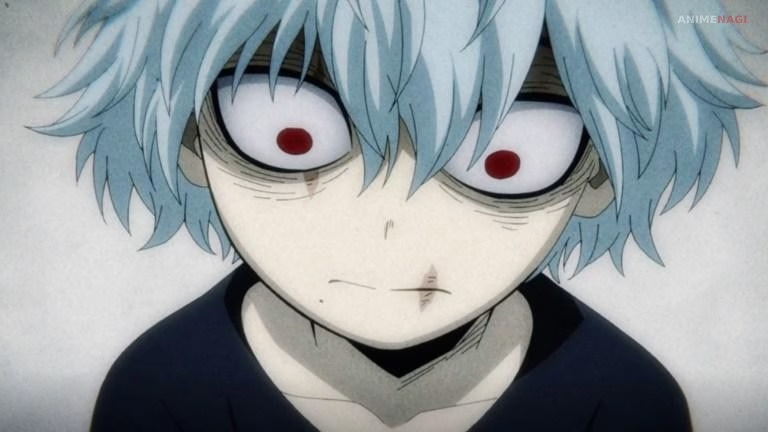
Shigaraki’s backstory is one of the darkest elements in My Hero Academia, and it explains the foundation of his hatred. As Tenko Shimura, he grew up in a household where his father strictly forbade any admiration of heroes. This repression created a deep emotional conflict, especially since Tenko secretly idolized heroes like All Might.
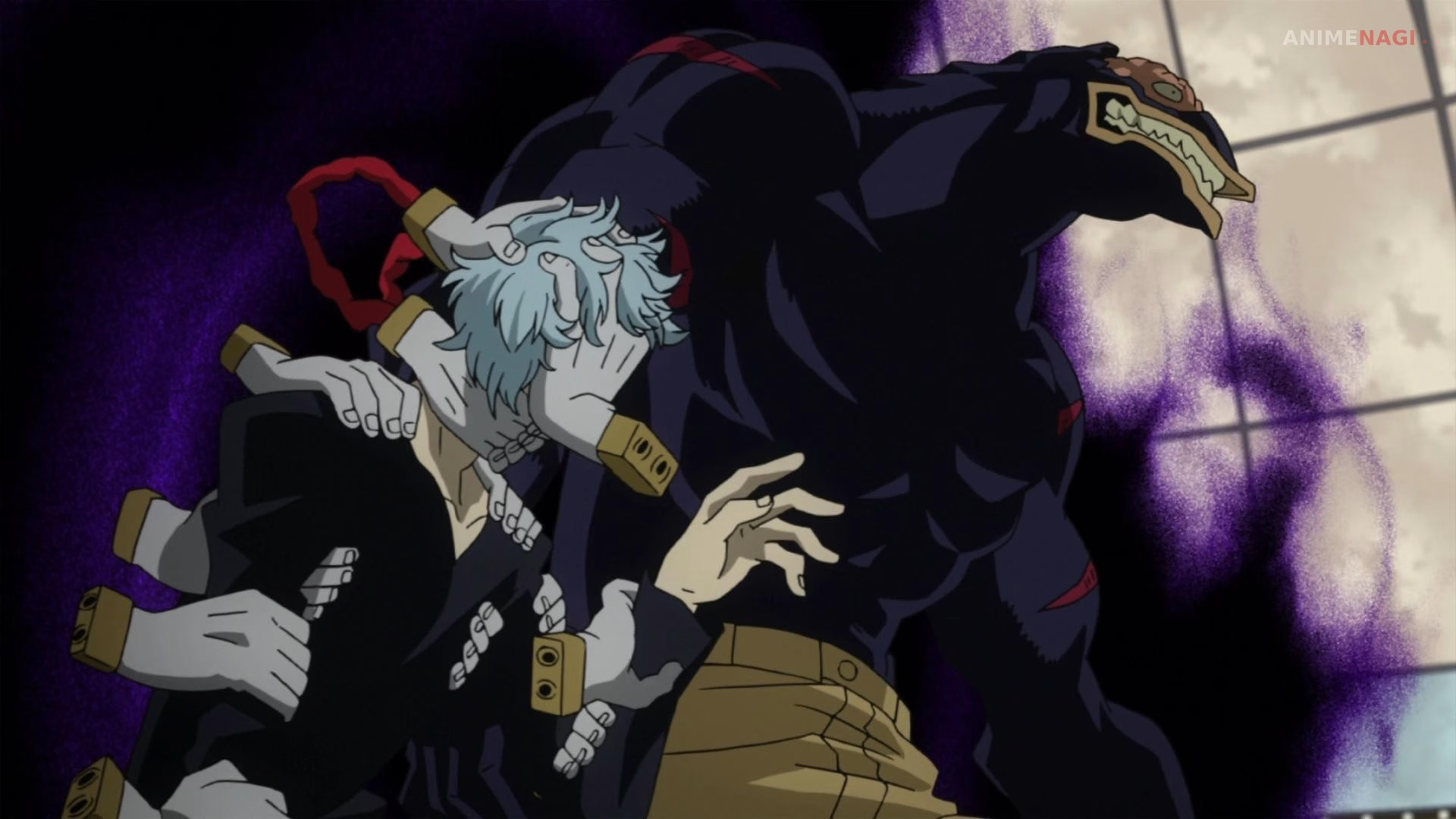
The breaking point came when his Quirk, Decay, manifested uncontrollably. In a traumatic chain reaction, Tenko accidentally killed his entire family, starting with the family dog and ending with his parents. The event shattered his mental state, leaving him alone, terrified, and completely broken.
What makes this moment even more impactful is what happened afterward. As Tenko wandered the streets in distress, no one stepped in to help him. Civilians assumed a hero would eventually take responsibility, which never happened. This moment highlights one of the series’ central criticisms, showing how society’s reliance on heroes can lead to dangerous neglect.
All For One eventually found Tenko and took him in, but this was not an act of kindness. He manipulated Tenko’s trauma, reshaped his identity, and gave him the name Tomura Shigaraki. From that point forward, Shigaraki’s hatred was cultivated and directed toward destroying the very society that failed him.
Shigaraki’s Decay Quirk and How It Works
Shigaraki’s primary ability is the Decay Quirk, which allows him to disintegrate anything he touches with all five fingers. The effect spreads rapidly across the target, reducing it to dust in seconds. This makes physical contact with Shigaraki extremely dangerous, as even a single mistake can be fatal.
In the early stages of the series, Decay has clear limitations. Shigaraki needs all five fingers to activate it properly, and its destructive range is relatively contained. Because of this, he relies on ambush tactics and close-range combat to maximize its effectiveness.
As the story progresses, however, his Quirk evolves significantly. During the Meta Liberation Army arc, Shigaraki unlocks the true potential of Decay after confronting his suppressed memories. This awakening allows him to use the ability without full-hand contact, and the destruction begins to spread across entire surfaces.
The change transforms Decay from a dangerous close-range ability into a large-scale destructive force. Entire buildings and landscapes can collapse in seconds, turning Shigaraki into a walking catastrophe rather than just a powerful villain.
Why Shigaraki’s Powers Become So Overwhelming
Shigaraki’s power is not just strong, it is scalable in a way that makes it uniquely terrifying. As his emotional state stabilizes and he accepts his identity, his control over Decay improves dramatically. This connection between emotional growth and physical power is a key aspect of his character.
During later arcs, Shigaraki’s Decay spreads through the ground and connected objects, allowing him to destroy entire cities in moments. The ability no longer feels like a standard Quirk but more like a natural disaster. Heroes cannot simply block or counter it easily because it affects everything in its path.
The visual representation of Decay also adds to its impact. Buildings crumble into dust, environments collapse instantly, and the destruction spreads like a chain reaction. This makes every battle involving Shigaraki feel high-stakes and unpredictable.
Another reason his powers feel overwhelming is the lack of traditional limits. Unlike many characters who rely on stamina or technique, Shigaraki’s growth removes restrictions rather than adding them. This constant escalation keeps him ahead of most opponents and reinforces his role as the ultimate threat.
Shigaraki’s Evolution From Immature Villain to Leader
One of the most compelling aspects of Shigaraki’s character is his gradual development into a true leader. At the start of the series, he lacks direction and struggles to command respect. Even his own allies question his abilities and motivations.
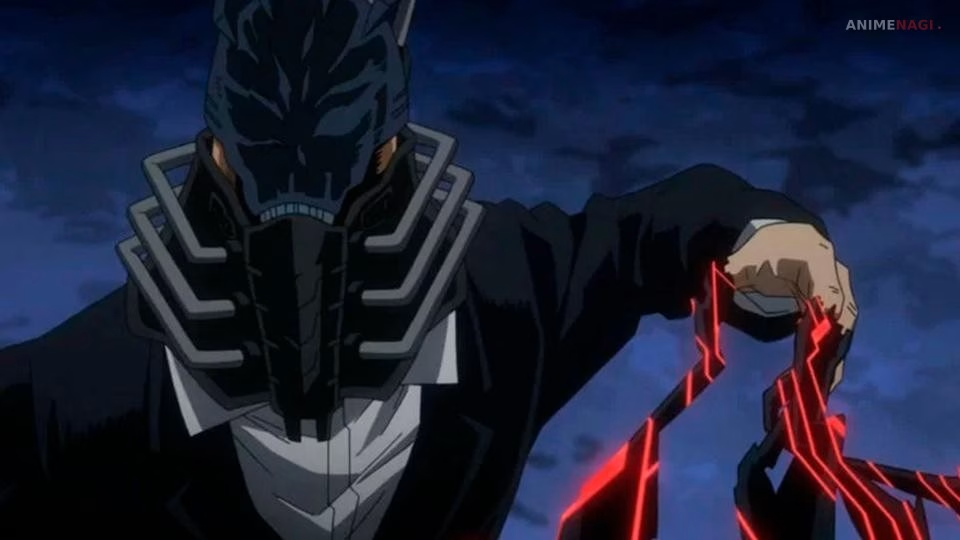
Over time, repeated failures force him to grow. He begins to understand the importance of trust, loyalty, and strategy, especially as the League of Villains faces stronger enemies. His relationships with characters like Twice, Toga, and Spinner become more meaningful, showing a shift from selfishness to leadership.
The turning point comes during his conflict with the Meta Liberation Army. Instead of relying on external validation, Shigaraki fully embraces his desire to destroy Hero Society. This acceptance brings clarity to his actions and transforms him into a more focused and confident leader.
By the time he emerges from this arc, Shigaraki is no longer an unstable follower. He becomes a symbol of destruction that others willingly follow, marking his transition into the primary antagonist of the series.
The Dark Truth Behind All For One’s Influence
Shigaraki’s relationship with All For One is far more complex than a simple mentor-student dynamic. While All For One initially appears to guide and support him, the truth is much darker. He sees Shigaraki not as a person but as a vessel for his own power and legacy.
All For One carefully manipulates Shigaraki’s life, ensuring that his hatred grows in a controlled direction. Every aspect of Shigaraki’s identity is shaped to make him the perfect successor. This includes emotional conditioning, strategic grooming, and even physical enhancement.
As the story progresses, it becomes clear that Shigaraki is not fully in control of his own destiny. All For One’s influence extends deep into his mind and body, creating an internal struggle for dominance. This conflict becomes one of the central themes in the later arcs.
Rather than simply becoming stronger, Shigaraki’s journey shifts toward reclaiming his identity. His evolution is no longer just about power but about breaking free from manipulation and defining his own purpose.
Shigaraki’s Enhanced Abilities Beyond Decay
After undergoing extensive modifications, Shigaraki gains abilities that go far beyond his original Quirk. His body is enhanced to handle immense stress, allowing him to fight at levels comparable to top-tier heroes. He gains increased strength, speed, durability, and regeneration, making him extremely difficult to defeat.
These enhancements turn him into a nearly unstoppable force. Even without relying on Decay, Shigaraki can overpower skilled fighters through sheer physical capability. This makes him dangerous in both close combat and large-scale battles.
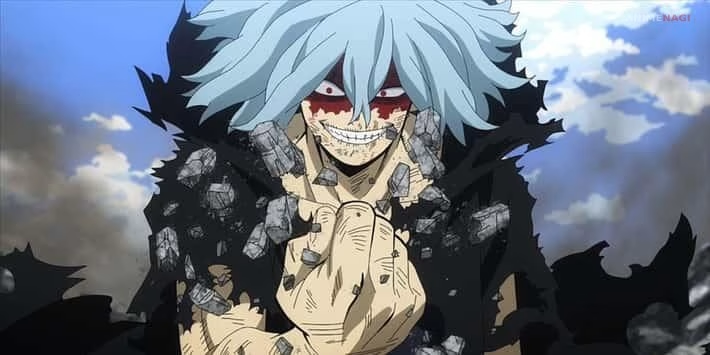
However, these upgrades come with consequences. His body and mind become unstable, especially as All For One’s presence grows stronger within him. The power he gains also increases the risk of losing control over himself.
This balance between strength and instability adds tension to his character. Shigaraki is not just becoming stronger, he is constantly at risk of losing his identity in the process.
Why Shigaraki Stands Out as a Modern Anime Villain
Shigaraki stands out because he is not defined by a single trait or motivation. He is a mix of tragedy, rage, and growth, making him feel more human than many traditional villains. His actions are extreme, but his origins are grounded in emotional reality.
The series does not excuse his crimes, but it does explore the circumstances that led to them. This creates a layered character who is both terrifying and sympathetic. Viewers are forced to question whether someone like Shigaraki could have been saved under different circumstances.
Another reason he resonates is his connection to the series’ themes. Shigaraki represents the flaws within hero society, showing that even a world filled with heroes can fail its most vulnerable individuals. His existence challenges the idea that heroes alone can create a perfect society.
This thematic depth elevates him beyond a standard antagonist. He becomes a reflection of the world he seeks to destroy.
Shigaraki and Deku: The Emotional Core of the Final Conflict
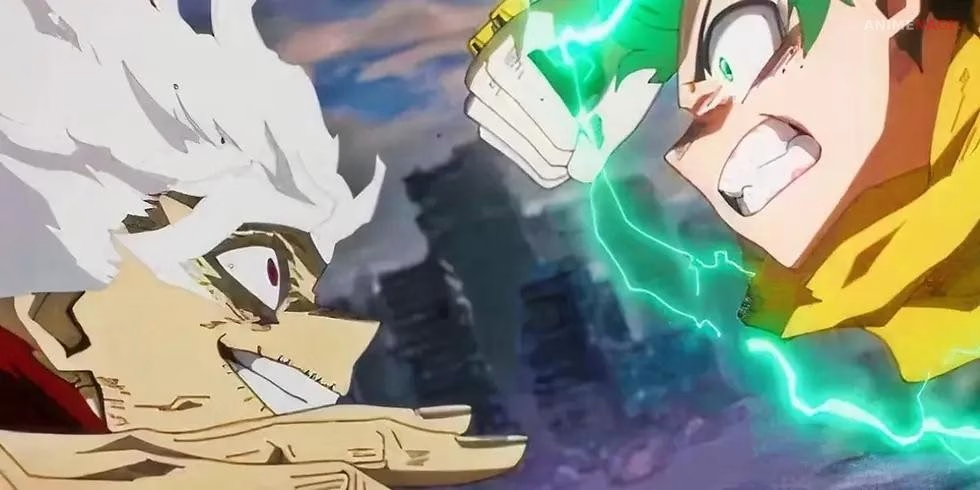
The relationship between Shigaraki and Izuku Midoriya adds another layer to his character. Unlike traditional rivalries, their conflict is not purely ideological. Instead, it revolves around understanding and responsibility.
Deku begins to see Shigaraki as more than just an enemy. He recognizes the pain and neglect that shaped him, leading to a more complex emotional dynamic. This perspective shifts the focus from simply defeating the villain to understanding what created him.
Shigaraki, meanwhile, becomes increasingly aware of how his life was manipulated. This realization creates internal conflict, as he struggles between his own desires and the influence of All For One.
Their interactions highlight one of the series’ central questions. Can a hero truly save someone who has already fallen so far, or is destruction the only possible outcome?
Tomura Shigaraki’s journey in My Hero Academia is one of the most detailed and emotionally driven villain arcs in modern anime. His transformation from Tenko Shimura into a symbol of destruction is shaped by trauma, societal failure, and manipulation.
His Decay Quirk evolves alongside his character, turning him into a force capable of reshaping entire battlefields. At the same time, his internal struggle with identity and control adds depth to his story. Shigaraki is not just a villain to be defeated, he is a character defined by everything that went wrong before he became one.
That combination of power, tragedy, and growth is what makes Shigaraki such a memorable antagonist. He is not simply the enemy of the heroes but a reflection of the world they failed to protect, making his presence one of the most impactful elements of My Hero Academia.
Shigaraki’s role also becomes increasingly symbolic as the story progresses, especially during large-scale conflicts like the Paranormal Liberation War. At this stage, he is no longer just an individual villain leading a group, but a force that represents the collapse of order within hero society.
His presence alone creates fear among both civilians and professional heroes, showing how far he has come from the unstable figure introduced early in the series. This transformation reinforces the idea that villains are not born fully formed but shaped through experience, trauma, and environment.
Another key aspect of Shigaraki’s evolution is how he contrasts with other villains in the series. While characters like Stain follow strict ideologies and All For One operates through calculated control, Shigaraki represents pure, unfiltered destruction driven by emotion.
This makes him unpredictable and harder to counter, as he does not follow traditional logic or long-term planning in the same way. His actions are guided by instinct and accumulated resentment, which gives his character a raw intensity that stands out even among powerful antagonists.