Even though Dragon Ball Super ended its original television run in 2018, the franchise’s story has continued expanding through the manga, movies, and newer Dragon Ball projects. Because of that, many fans still wonder why the anime has not fully returned despite having multiple major story arcs already available for adaptation. The answer is more complicated than simply “there is no content left.”
Since the Tournament of Power arc ended, the Dragon Ball Super manga has introduced entirely new sagas featuring powerful villains, major character development, and transformations that anime-only viewers have never seen. Characters like Moro, Granolah, Gas, and Black Frieza have already reshaped the power hierarchy of the franchise. At the same time, the manga expanded storylines tied to Broly, Gohan Beast, Orange Piccolo, and Ultra Ego Vegeta.
Let’s break down why Dragon Ball Super still has major arcs left to adapt, what those arcs contain, and why the future of the anime remains one of the biggest topics in the Dragon Ball community.
Why Dragon Ball Super Ended Despite Continuing Manga Content
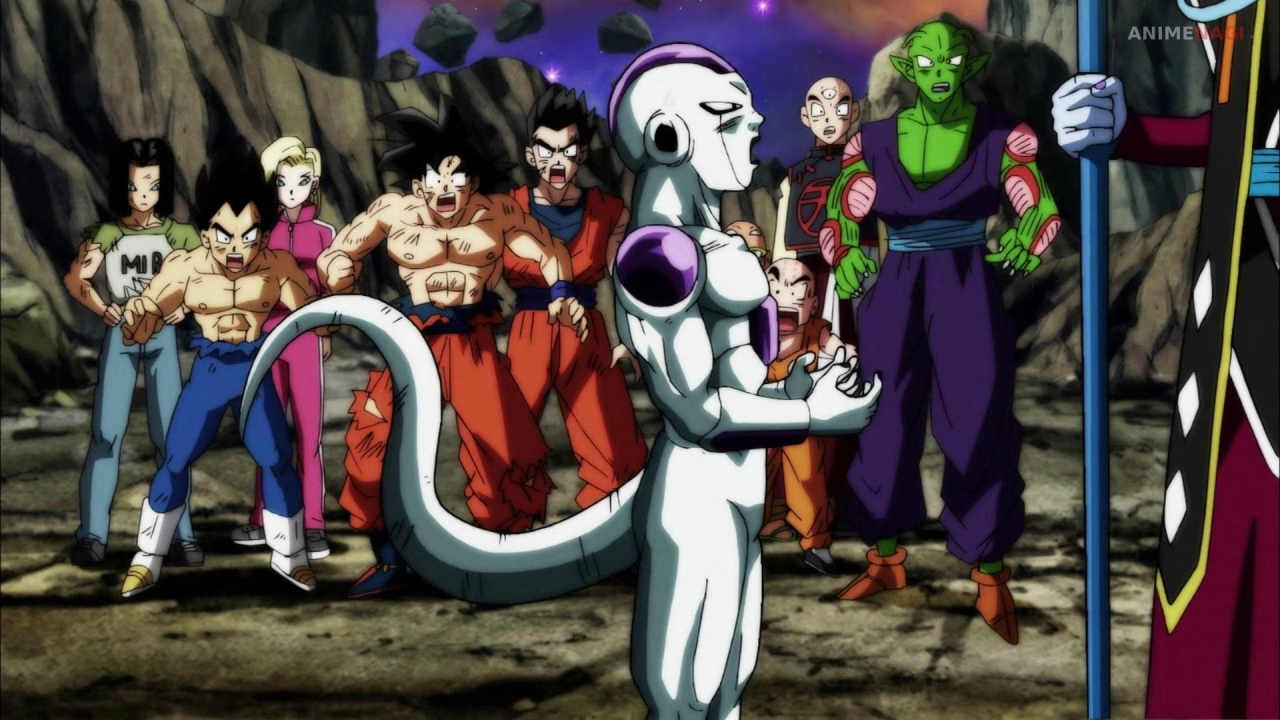
The original Dragon Ball Super concluded in March 2018 after 131 episodes. The anime ended with the Tournament of Power arc, where Universe 7 defeated Jiren and survived universal erasure. At the time, many fans assumed the series would quickly continue because the Dragon Ball franchise remained extremely successful worldwide.
However, instead of continuing immediately, Toei Animation shifted focus toward theatrical films. This led to the release of Dragon Ball Super: Broly in 2018 and Dragon Ball Super: Super Hero in 2022. Both movies expanded the Super timeline while introducing important character developments and transformations.
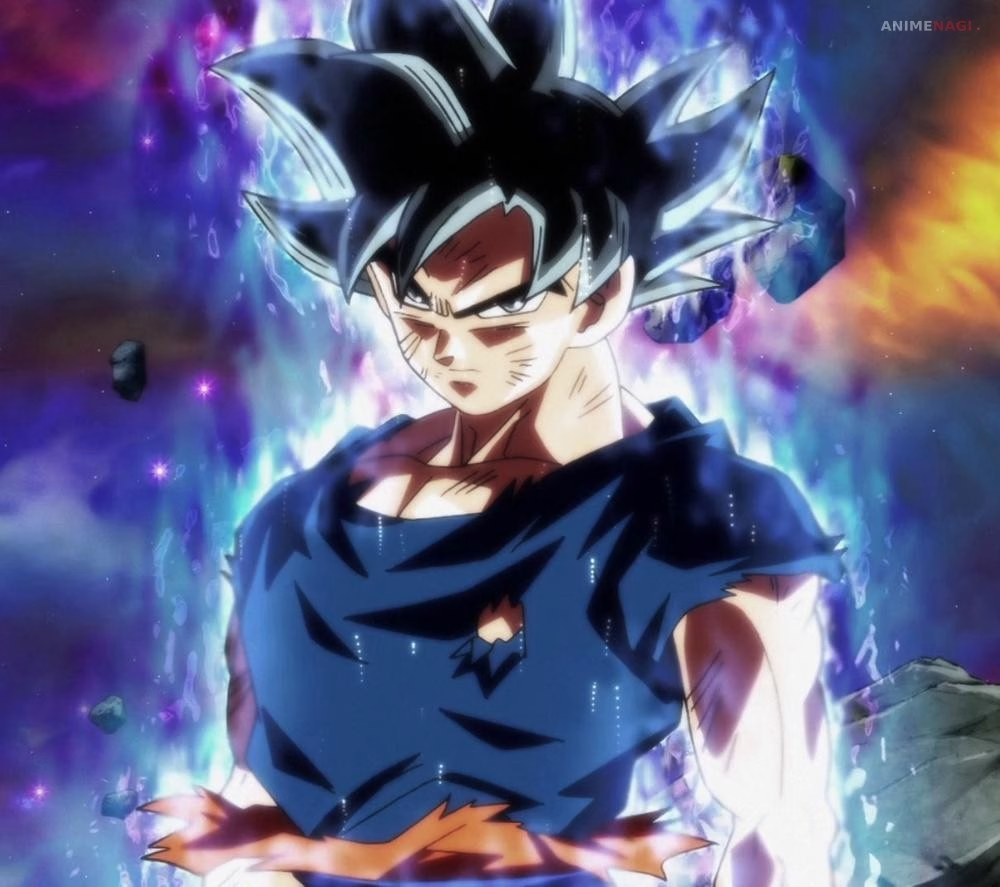
Meanwhile, the manga continued moving far beyond the anime’s ending point. Toyotarou and Akira Toriyama developed entirely new arcs featuring original villains and concepts never adapted into animation. These storylines significantly expanded Dragon Ball Super’s mythology and power scaling.
Because the anime paused while the manga kept progressing, a large gap eventually formed between anime content and manga-exclusive material. That gap is now large enough to support multiple anime seasons or long-running arcs.
The Moro Arc: Dragon Ball Super’s First Major Unadapted Saga
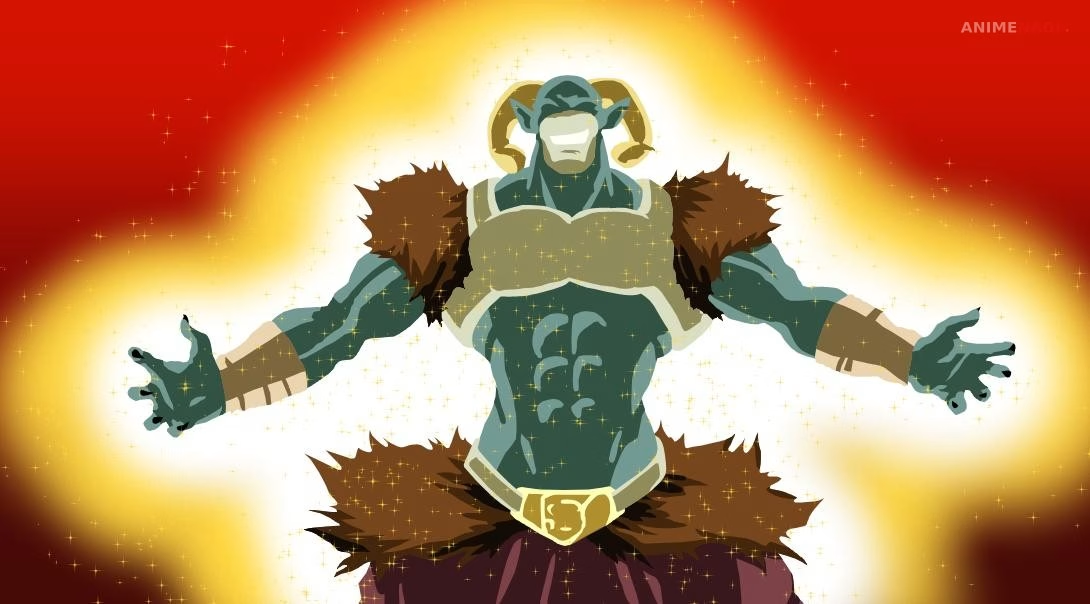
The first major arc waiting for anime adaptation is the Galactic Patrol Prisoner Saga, commonly known as the Moro Arc.
This storyline begins shortly after the Tournament of Power and introduces Moro, an ancient magic user who escaped from Galactic Patrol imprisonment after millions of years. Unlike previous Dragon Ball villains focused mainly on brute strength, Moro relies heavily on magic and energy absorption abilities. His powers allow him to drain life energy from planets and opponents alike, making him one of the franchise’s most dangerous enemies.
The Moro Arc is especially important because it gives major development to both Goku and Vegeta. Goku continues mastering Ultra Instinct under Merus, an Angel trainee connected to the Galactic Patrol. Vegeta, meanwhile, travels to Planet Yardrat and learns Forced Spirit Fission, a technique capable of separating absorbed energy and fusion states.
The arc also introduces darker themes than many earlier Dragon Ball storylines. Entire planets are drained of life, large-scale casualties occur, and the Galactic Patrol becomes central to the conflict. Moro himself feels more like a classic demonic villain compared to modern Dragon Ball antagonists.
Many fans consider the Moro Arc one of the strongest post-Tournament of Power storylines because it combines classic Dragon Ball adventure elements with modern god-tier battles. Its anime adaptation has therefore become one of the most requested projects in the fandom.
The Granolah Arc Expands Saiyan History and Power Scaling
After the Moro Arc, the manga moves into the Granolah the Survivor Saga, another massive storyline still absent from the anime.
The arc centers around Granolah, the last survivor of the Cerealian race, whose people were massacred decades earlier during Saiyan and Frieza Force attacks. Consumed by revenge, Granolah uses the Cerealian Dragon Balls to become the strongest warrior in the universe at the cost of drastically shortening his lifespan.
This storyline becomes incredibly important for Saiyan lore because it reveals new details about Bardock, Goku’s father. Unlike earlier portrayals that focused mostly on Bardock’s rebellion against Frieza, the Granolah Arc shows him protecting innocent civilians and acting with unexpected compassion.
The arc also introduces the Heeters, a manipulative criminal organization attempting to control the galaxy from behind the scenes. Their schemes eventually lead to the rise of Gas, another extremely powerful warrior enhanced through Dragon Ball wishes.
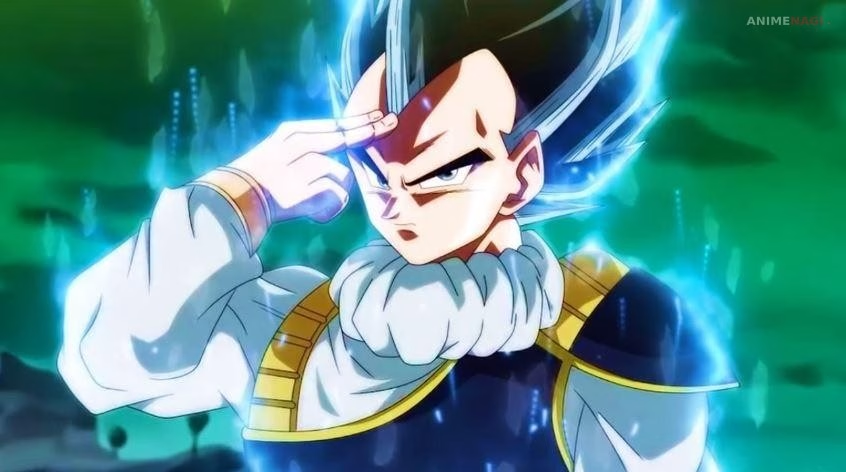
Perhaps the biggest reason fans want this arc animated is because it introduces Ultra Ego Vegeta. This transformation represents Vegeta embracing destruction energy associated with the Gods of Destruction. Unlike Ultra Instinct’s calm precision, Ultra Ego grows stronger through battle damage and aggression.
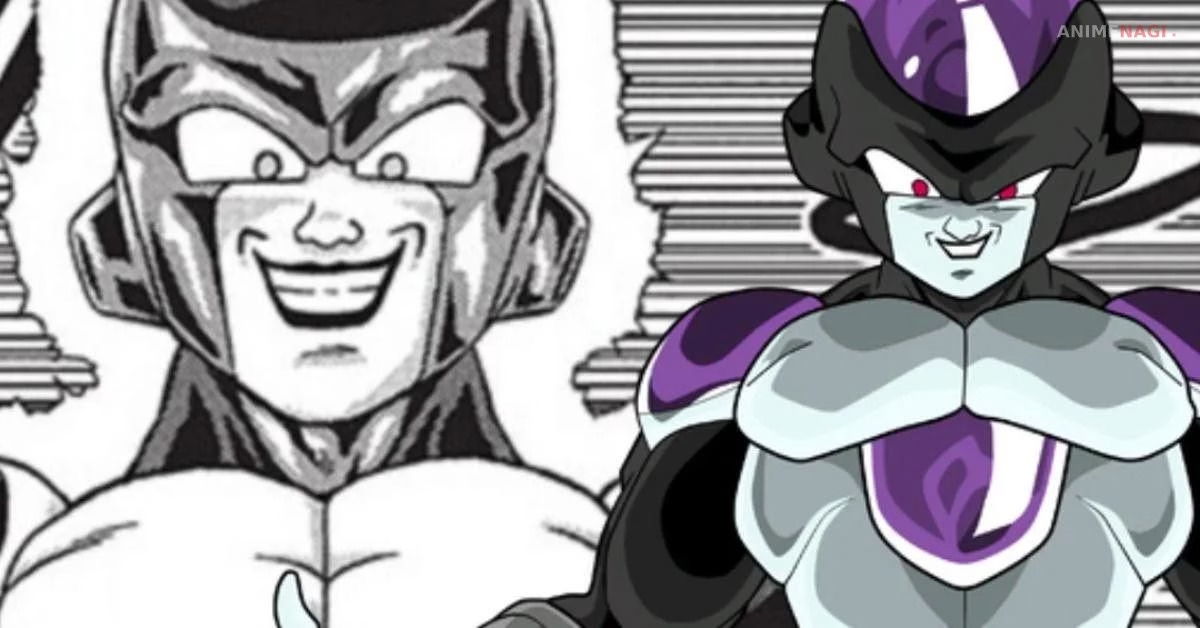
The arc concludes with one of the franchise’s biggest recent reveals: Black Frieza. After training for years inside a Hyperbolic Time Chamber-like environment, Frieza returns with a terrifying new form powerful enough to defeat Goku and Vegeta instantly.
Dragon Ball Super: Super Hero Adds More Anime Material
Even though Dragon Ball Super: Super Hero already exists, the manga adaptation expanded the storyline significantly.
The manga version includes prequel chapters focused on Goten and Trunks acting as superhero-style vigilantes before the movie’s main events. It also adds more scenes involving Dr. Hedo, Red Ribbon Army remnants, and character interactions absent from the film.
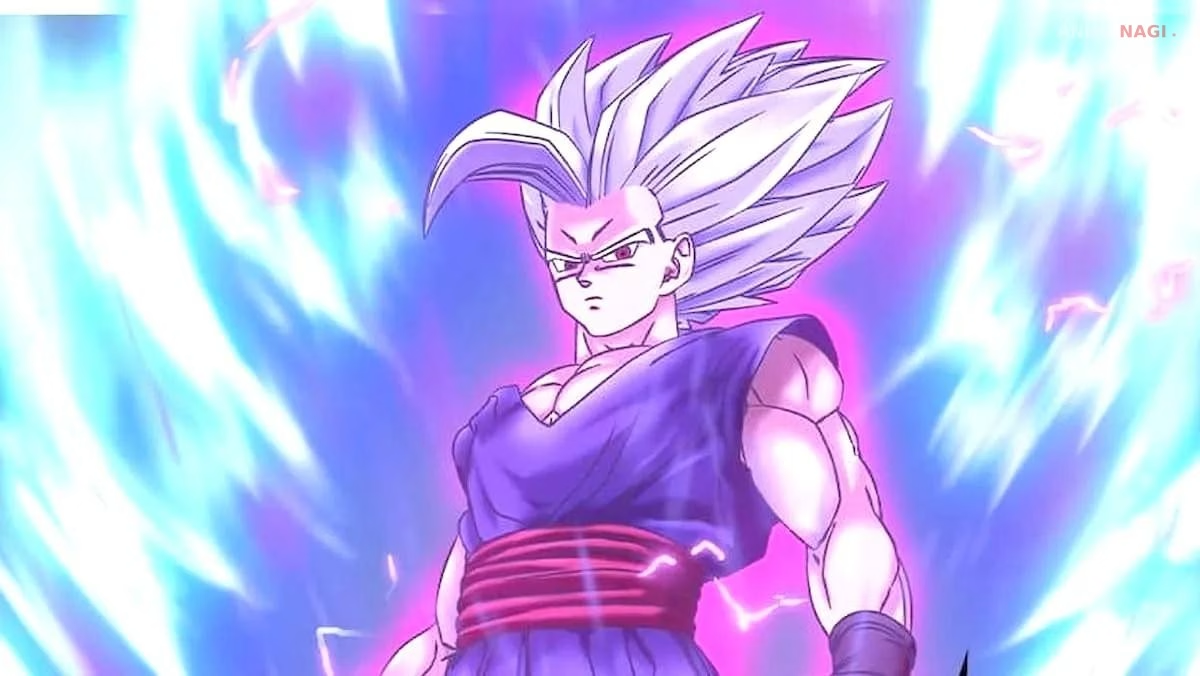
Most importantly, the Super Hero storyline introduces two major transformations: Gohan Beast and Orange Piccolo. These forms instantly became some of the most discussed power-ups in modern Dragon Ball because they pushed Gohan and Piccolo back into top-tier relevance.
An episodic anime adaptation could expand these events further by adding more training scenes, character moments, and battles. Since the Dragon Ball Super anime originally adapted films like Battle of Gods and Resurrection F into longer arcs, many fans believe the same could happen with Super Hero eventually.
The existence of these expanded manga chapters means the anime still has additional material available even for stories already partially adapted through films.
Black Frieza May Be Setting Up Dragon Ball Super’s Biggest Future Arc
One reason fans remain extremely interested in Dragon Ball Super’s return is because the manga has clearly started building toward a larger conflict involving Frieza.
Black Frieza’s appearance at the end of the Granolah Arc completely changes the franchise’s power structure. After training in secret for ten years inside a special chamber, Frieza becomes strong enough to defeat both Ultra Instinct Goku and Ultra Ego Vegeta effortlessly.
This moment immediately established Frieza as the franchise’s biggest active threat once again. Unlike earlier versions of Frieza driven mainly by arrogance, Black Frieza appears calmer, more strategic, and potentially far more dangerous politically.
The manga strongly implies that Goku and Vegeta are still far below Frieza’s current level. This creates a major unresolved storyline that feels destined for future anime adaptation.
At the same time, Broly’s continued training with Goku, Vegeta, Beerus, and Whis suggests he may become increasingly important in future arcs. The franchise appears to be slowly building a larger roster of god-level fighters capable of confronting future threats.
Because these plotlines remain unresolved, many fans believe Dragon Ball Super’s story is nowhere near finished.
Production Delays and the Future of the Anime
One major factor affecting Dragon Ball Super’s future has been production timing and franchise restructuring.
After Akira Toriyama’s passing in 2024, the manga entered an indefinite hiatus while Toyotarou and the editorial team reassessed the series’ future direction. Reports later suggested the manga may continue in 2026, though official details remain limited.
At the same time, multiple reports and announcements have suggested that Dragon Ball Super anime projects are actively in development. Several recent articles and fan discussions reference plans involving the Galactic Patrol storyline, though official release timelines remain uncertain.
Another reason for the delay may involve production expectations. Dragon Ball Super’s return would likely be one of the biggest anime events in the industry, meaning Toei Animation may want significantly higher production quality and better scheduling than the original weekly run received.
The success of films like Broly also demonstrated how well Dragon Ball performs with cinematic animation quality. Fans now expect future Dragon Ball projects to maintain a much higher visual standard than some earlier Super episodes.
Why Dragon Ball Super’s Story Is Far From Over
Despite years of waiting, Dragon Ball Super still has enormous amounts of story left to adapt. The Moro Arc, Granolah Arc, expanded Super Hero material, and unresolved Black Frieza storyline together contain enough content for multiple major anime sagas. These arcs also introduce some of the franchise’s biggest modern developments, including Ultra Ego Vegeta, Black Frieza, Gohan Beast, and deeper Saiyan history.
More importantly, these stories continue evolving Dragon Ball beyond simple tournament battles. The manga explores galactic politics, divine training, ancient history, magical abilities, and the emotional legacy of the Saiyan race in ways the anime has not yet covered.
The franchise itself also remains commercially massive worldwide, making a long-term continuation highly likely eventually. Even with production delays and uncertainty following Toriyama’s passing, Dragon Ball Super still possesses one of the largest pools of unadapted high-profile material in modern anime.
For anime-only fans, the biggest Dragon Ball Super battles and transformations may still be ahead rather than behind.
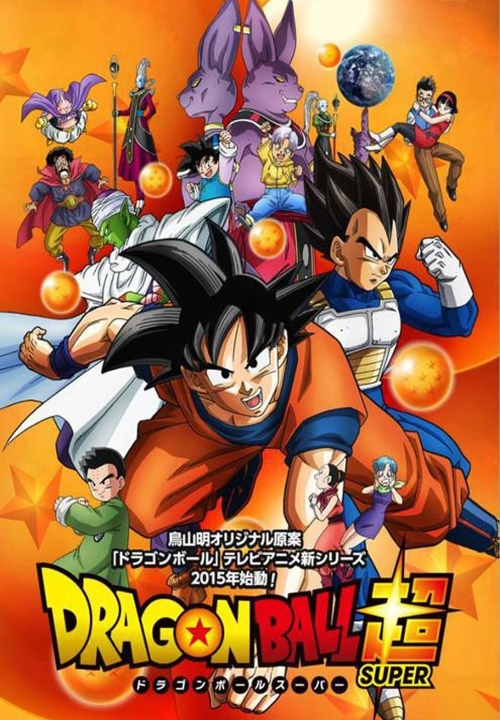
| Date Aired (Start) | July 5, 2015 |
|---|---|
| Studio | Toei Animation |
| Director | Kimitoshi Chioka |