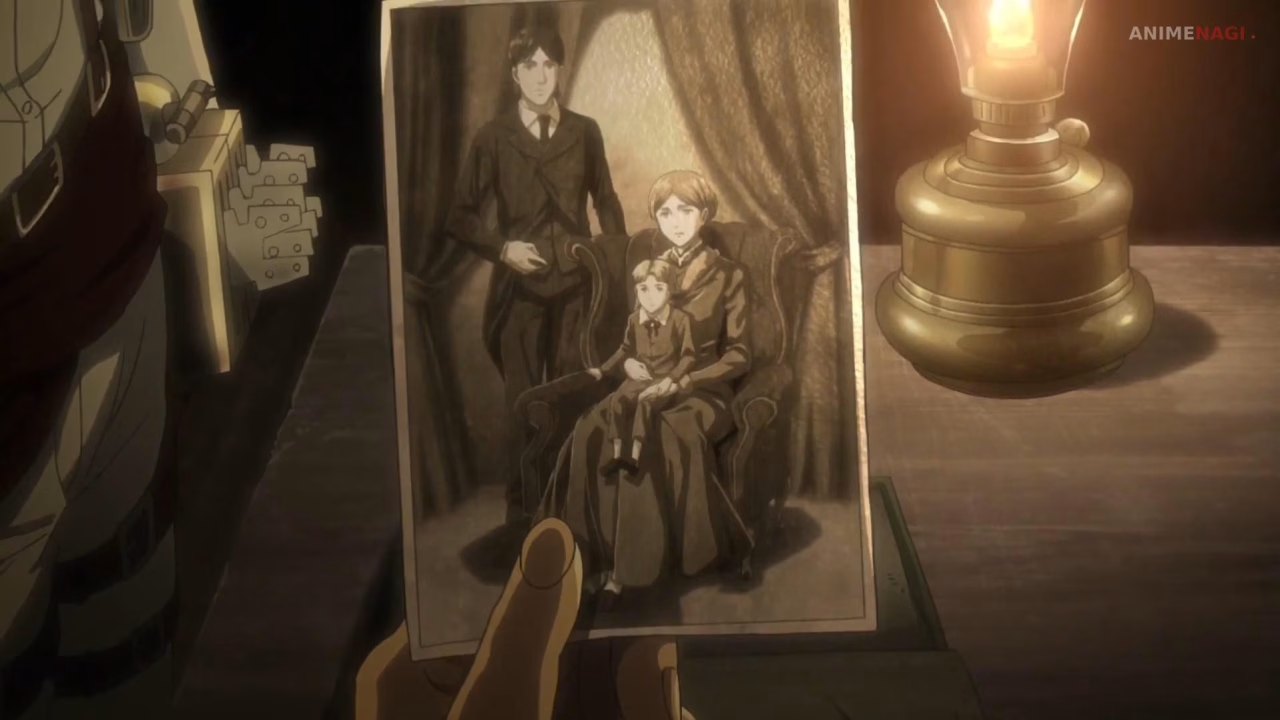
Few characters in Attack on Titan changed the course of the story as dramatically as Grisha Yeager. At first, Grisha appeared to be little more than Eren’s mysterious father with hidden knowledge about the Titans and the basement beneath their home. However, as the series progressed, Hajime Isayama slowly revealed that Grisha’s past was deeply connected to Marley, the Eldian conflict, and the tragic cycle of hatred that defined the world of Attack on Titan.
His childhood in Marley exposed him to racism, oppression, and violence from an early age. Those experiences eventually pushed him toward the Eldian Restorationists, shaped his relationship with his first son Zeke, and ultimately influenced Eren’s future in devastating ways. Grisha’s story is not simply a backstory. It is one of the emotional foundations of Attack on Titan’s larger themes about freedom, revenge, and inherited trauma.
By the time the truth about Marley was revealed, it became clear that Grisha Yeager’s life had quietly driven many of the series’ biggest events from the very beginning.
Grisha Yeager’s Childhood in Marley Explained
Grisha Yeager was born in the Liberio Internment Zone, a segregated district in Marley where Eldians were forced to live under strict control. Eldians were treated as descendants of “devils” because of the crimes committed by the ancient Eldian Empire centuries earlier. Marley used propaganda, discrimination, and fear to keep Eldians oppressed and politically powerless.
From childhood, Grisha experienced this discrimination firsthand. Eldians were required to wear armbands identifying their race and were forbidden from leaving designated areas without permission. Marleyan authorities constantly reminded them that they were inferior and dangerous. This environment created deep anger and frustration within Grisha, especially after the death of his younger sister, Faye.
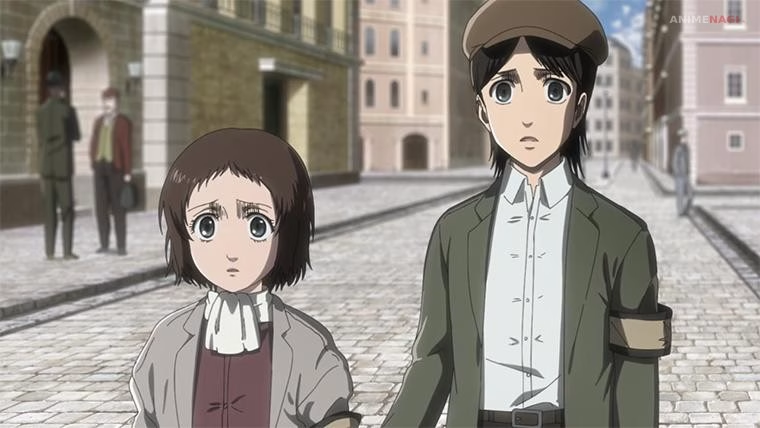
One of the most tragic moments in Grisha’s life occurred when he and Faye secretly left the internment zone to see a blimp. They were caught by Marleyan officers and sent home separately. Later, Grisha learned that Faye had been brutally murdered by the authorities. Marley covered up the crime by claiming she had been killed in an accident by wild dogs.
This incident completely changed Grisha’s worldview. Until then, he had only experienced Marley’s oppression indirectly. Faye’s death made him realize how little value Marley placed on Eldian lives. The event became the emotional catalyst for his hatred of Marley’s system and his eventual involvement in revolutionary movements.
Years later, Grisha’s father revealed the truth about Faye’s murder and introduced him to the history Marley had hidden from Eldians. This included the existence of the Eldian Empire, the power of the Titans, and the possibility that Marley’s version of history was manipulated propaganda. That revelation pushed Grisha toward radical change.
The Eldian Restorationists and Grisha’s Mission
As Grisha grew older, he joined the Eldian Restorationists, a secret revolutionary group determined to restore Eldia’s former power and overthrow Marley’s oppression. The organization believed Marley had twisted history to justify centuries of abuse against Eldians. Their goal was to reclaim the Founding Titan and restore freedom to their people.
During this period, Grisha met Dina Fritz, a woman of royal blood descended from the Fritz family. Their relationship was politically significant because royal blood was essential for unlocking the full power of the Founding Titan. Together, they had a son, Zeke Yeager.
The Restorationists developed a dangerous plan involving Zeke. They hoped he would become a Warrior candidate within Marley’s military and eventually help the Eldian cause from the inside. However, this decision revealed one of Grisha’s greatest flaws as a father. Instead of treating Zeke like a child, Grisha treated him as a political tool for the revolution.
Zeke struggled under the pressure placed on him by both his parents and Marley’s expectations. He was constantly forced to balance loyalty to his family with fear of Marleyan punishment. Eventually, Zeke betrayed his parents and reported the Restorationists to Marleyan authorities.
This betrayal destroyed Grisha’s life. The Restorationists were arrested, tortured, and sentenced to exile on Paradis Island, where Eldians were transformed into Pure Titans as punishment. Marley used this horrific practice to terrorize Eldians and maintain control through fear. Grisha’s revolutionary dream appeared completely broken at that moment.
How Eren Kruger Changed Grisha’s Fate
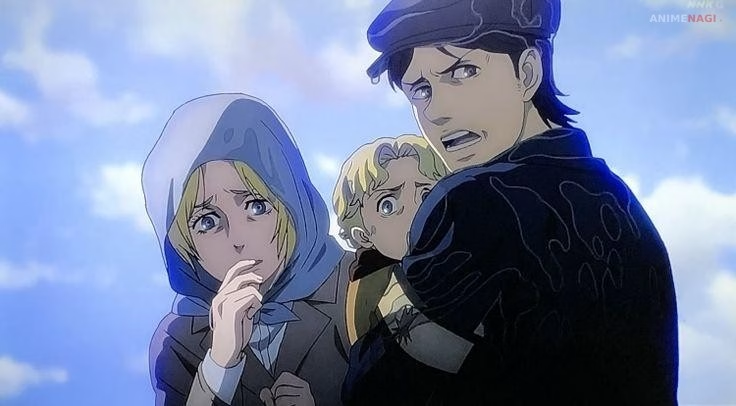
Just before Grisha was transformed into a Titan on Paradis Island, the truth about “The Owl” was finally revealed. Eren Kruger, a Marleyan officer secretly working against Marley, exposed himself as a spy who had infiltrated the government for years. He possessed the Attack Titan and had secretly guided the Restorationists from the shadows.
Kruger saved Grisha and entrusted him with the power of the Attack Titan. Before dying, he gave Grisha a mission that would shape the future of the entire series: infiltrate the Walls, steal the Founding Titan, and restore freedom to Eldians.
This moment introduced one of Attack on Titan’s central ideas. The Attack Titan constantly moves forward in pursuit of freedom. Kruger even hinted at future events by mysteriously mentioning Mikasa and Armin before they were born, foreshadowing the strange time-related powers later revealed in the series.
After arriving on Paradis Island, Grisha eventually built a new life within the Walls. He married Carla Yeager and became the father of Eren Yeager. For a while, Grisha appeared to abandon the extreme ideological pressure that had damaged his relationship with Zeke. However, the mission given to him by Kruger never disappeared.
Why Grisha Stole the Founding Titan
One of the most surprising revelations in Attack on Titan was that Grisha massacred the Reiss family and stole the Founding Titan. At first, this act seemed completely out of character for someone who had tried rebuilding his life peacefully inside the Walls. Later chapters revealed the horrifying truth behind that decision.
During the fall of Wall Maria, Grisha begged Frieda Reiss and the royal family to use the Founding Titan’s power to stop the Titans from invading the Walls. However, because of King Fritz’s ideology and vow to renounce war, Frieda refused to act. She believed Eldians deserved punishment for the sins of their ancestors.
Grisha initially hesitated to kill the Reiss family. However, the story later revealed that Eren himself influenced Grisha through the Attack Titan’s future memory abilities. Eren pushed his father into carrying out the massacre because it was necessary for the future he had already seen.
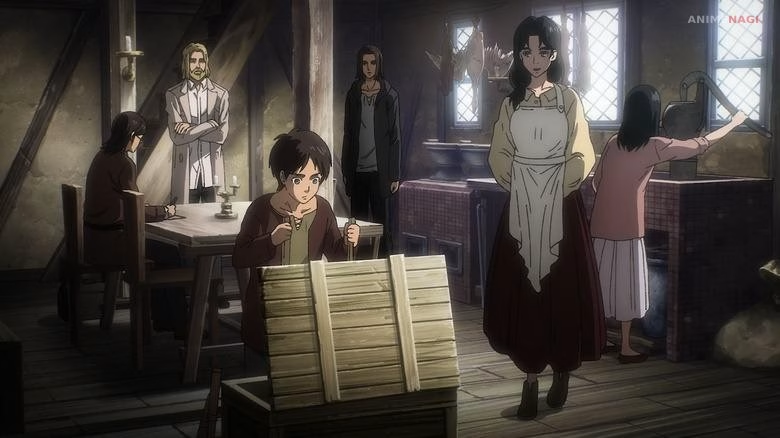
This revelation completely changed how fans viewed Grisha. He was not simply manipulating future events himself. In many ways, he also became a victim of Eren’s influence and the terrifying time loop created by the Attack Titan.
After stealing the Founding Titan, Grisha passed both the Attack Titan and Founding Titan to young Eren by allowing himself to be eaten. This decision ultimately set the entire story in motion.
Grisha’s Relationship With Zeke and Eren
One of the most emotionally powerful aspects of Grisha’s story is the contrast between how he treated Zeke and Eren.
With Zeke, Grisha acted like a revolutionary first and a father second. He burdened his son with impossible expectations and used him as part of the Restorationists’ political plans. This emotional neglect deeply affected Zeke and contributed to his eventual betrayal.
With Eren, Grisha initially tried to be a better parent. He gave Eren more freedom and avoided forcing revolutionary ideology onto him during childhood. Ironically, Eren still inherited Grisha’s hatred for oppression after witnessing his mother’s death and learning the truth about the outside world.
The later “Paths” scenes between Grisha and Zeke became some of the series’ most heartbreaking moments. After seeing the future Eren planned, Grisha expressed horror and regret. He embraced Zeke, apologized for being a poor father, and begged him to stop Eren.
This reconciliation changed the way many fans viewed Grisha. Earlier in the story, he seemed manipulative and ruthless. Later revelations showed that he was also a broken man trapped by trauma, ideology, and forces larger than himself.
His failures as a parent became one of Attack on Titan’s clearest examples of how cycles of pain are passed from one generation to another.
Marley’s Role in Creating Grisha Yeager
Grisha’s story also revealed one of Attack on Titan’s biggest themes: oppressive systems create more violence. Marley’s cruelty did not eliminate rebellion. Instead, it created people like Grisha, who became increasingly radicalized after years of abuse and loss.
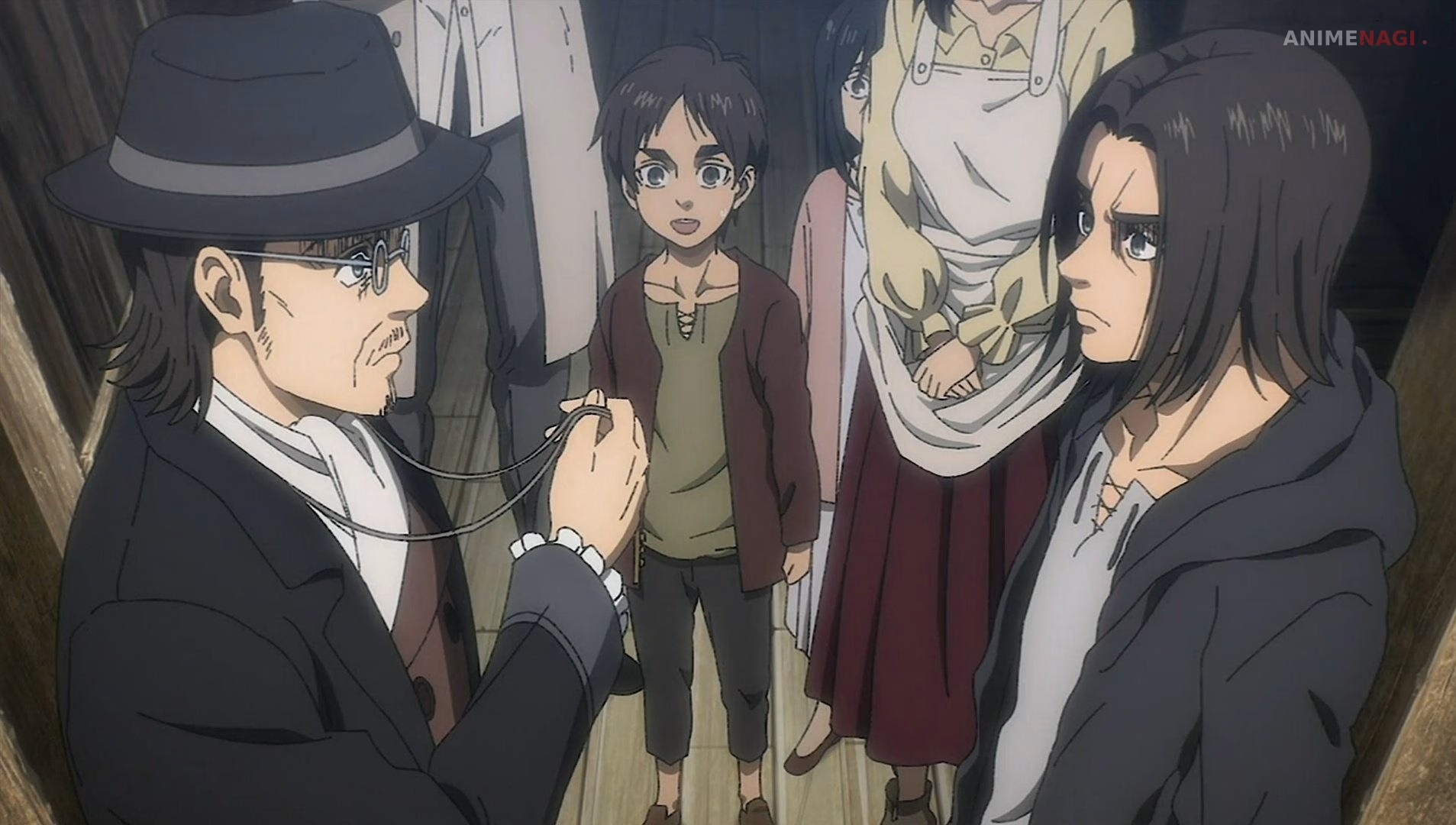
The Liberio Internment Zone symbolized how deeply hatred and propaganda shaped the world outside the Walls. Marley taught generations of Eldians to hate themselves while simultaneously exploiting them as weapons through the Warrior program.
This environment shaped nearly every major character connected to Marley, including Zeke, Reiner, Annie, and even Eren later in the story. Grisha represented the beginning of that cycle within the Yeager family.
What makes Grisha especially tragic is that he genuinely wanted freedom for his people. However, his obsession with achieving that goal damaged the people closest to him and indirectly contributed to future catastrophes. Attack on Titan consistently blurred the line between hero and villain, and Grisha embodied that complexity perfectly.
Why Grisha Yeager Remains One of Attack on Titan’s Most Important Characters
By the end of Attack on Titan, Grisha Yeager became far more than a mysterious father figure. His life connected nearly every major conflict in the series, including Marley’s oppression, the history of Eldia, the Founding Titan, the Attack Titan, Zeke’s ideology, and Eren’s eventual transformation.
His childhood trauma in Marley created the revolutionary mindset that shaped his entire life. His mistakes with Zeke influenced one of the series’ most tragic antagonists. His decision to entrust Eren with the Titans ultimately changed the fate of the world.
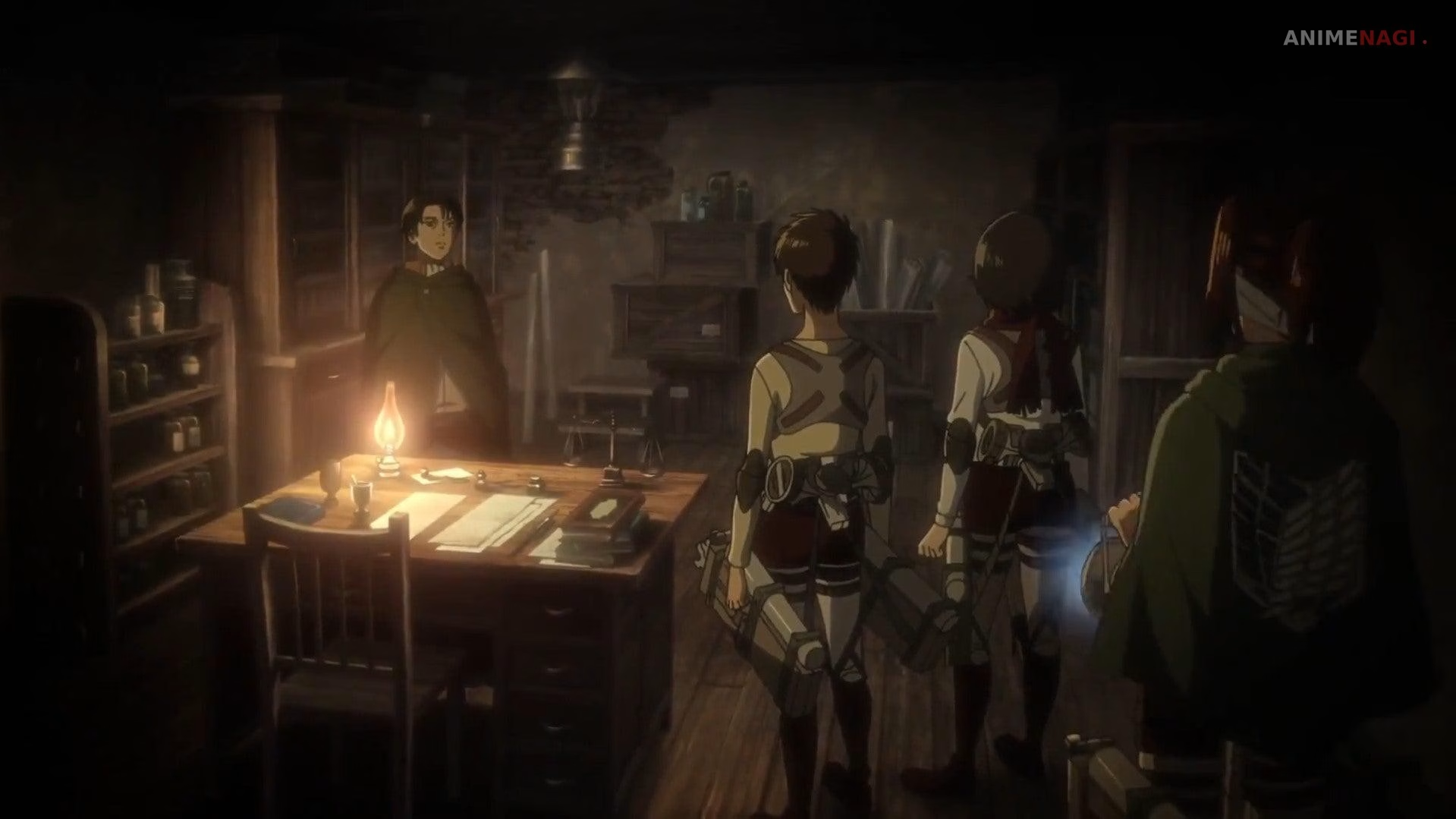
At the same time, Grisha remained deeply human. He was intelligent and determined, but also flawed, emotional, and vulnerable to manipulation. That complexity is one reason his story resonates so strongly with fans.
Attack on Titan repeatedly explored how hatred passes through generations, and Grisha stood at the center of that cycle. His story showed how trauma, oppression, and ideology can shape people into both victims and perpetrators at the same time. In many ways, understanding Grisha Yeager is essential to understanding Attack on Titan itself.