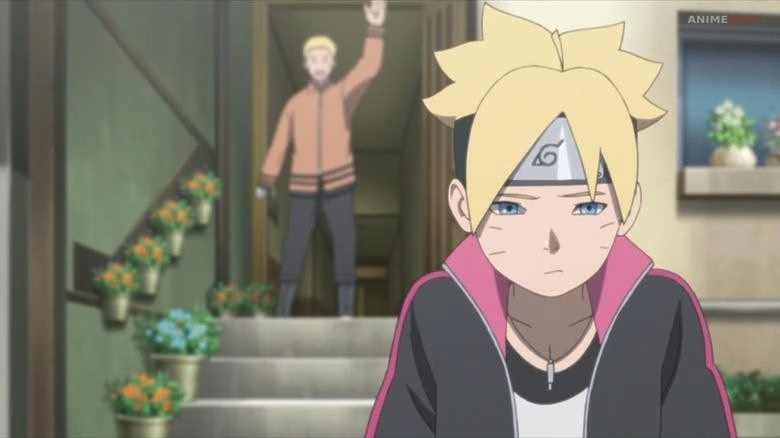
When Masashi Kishimoto ended Naruto and Naruto: Shippuden, many fans believed the franchise had reached its natural conclusion. Naruto Uzumaki had achieved his dream of becoming Hokage, the Fourth Great Ninja War had ended, and most major character arcs were resolved, leading to the peaceful transition after the Fourth Great Ninja War. However, the popularity of the franchise and the growing interest in the next generation eventually led to the creation of Boruto: Naruto Next Generations.
Rather than simply extending Naruto’s story endlessly, Kishimoto approached Boruto with a very different philosophy. His goal was not to recreate Naruto’s journey but to show how the ninja world evolved after peace was achieved. Boruto introduced modern technology, a younger generation of shinobi, and new emotional conflicts centered around family, legacy, and identity.
Kishimoto initially stepped back from full serialization duties, allowing longtime collaborator Mikio Ikemoto and writer Ukyo Kodachi to lead the manga. However, his creative supervision and later return as writer demonstrated that Boruto still represented an important continuation of the Naruto universe. Over time, it became clear that Kishimoto’s broader vision for Boruto was about preserving Naruto’s legacy while also ensuring the franchise could move forward with a new identity.
Kishimoto originally believed Naruto’s story was complete
Following the conclusion of Naruto in 2014, Kishimoto openly admitted that he considered the story finished. Multiple interviews over the years revealed that the creator felt emotionally and physically exhausted after spending more than 15 years working on the manga. He originally had little interest in immediately continuing the franchise because Naruto’s character arc had already reached its conclusion.
Despite that, Shueisha strongly supported continuing the Naruto universe because of the franchise’s enormous popularity worldwide. Instead of personally drawing another long-running sequel manga himself, Kishimoto proposed a different solution. He suggested that his longtime assistant, Mikio Ikemoto, should become the main illustrator for Boruto. Ikemoto had worked alongside Kishimoto for years during Naruto’s serialization, making him one of the few artists deeply familiar with the franchise’s visual identity.
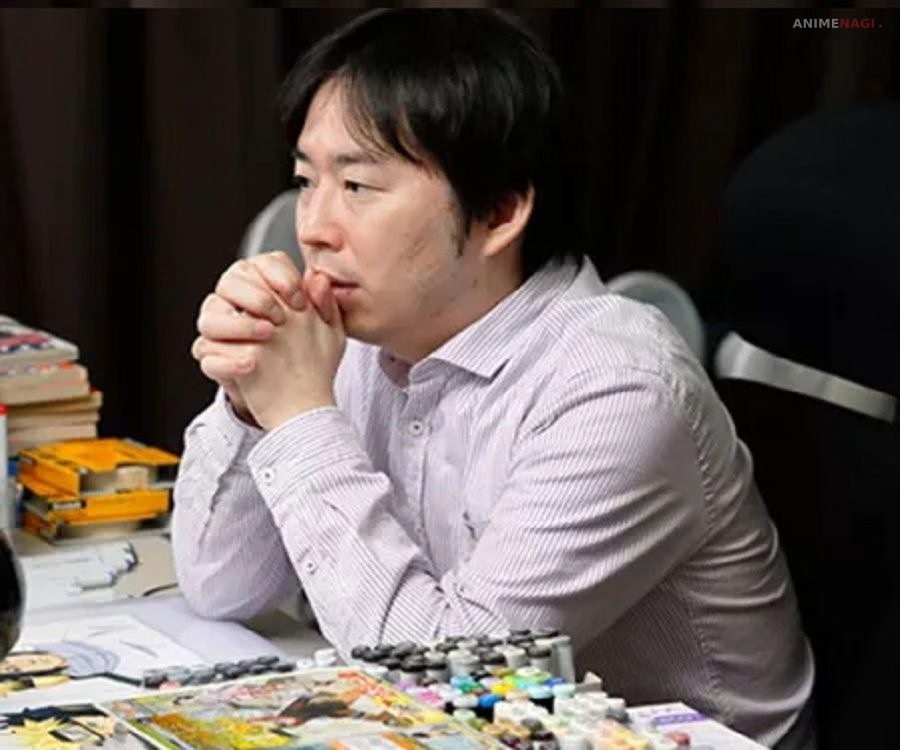
Kishimoto later explained that he trusted Ikemoto completely and would not have agreed to Boruto without him taking over the project. This decision showed that Kishimoto viewed Boruto less as a direct personal continuation and more as a carefully supervised passing of the torch to the next creative generation.
That creative handoff became one of the defining aspects of Boruto’s production. While Kishimoto remained involved as supervisor and eventually returned to writing duties later in the manga, the sequel series was intentionally designed to feel different from Naruto.
Boruto was designed to explore a peaceful ninja era
One of Kishimoto’s biggest creative goals with Boruto was showing what happened after the endless wars of Naruto finally ended. In the original series, Naruto and his generation grew up during violent conflicts, political instability, and constant battles between villages. Boruto’s generation inherited a far more peaceful world.
This shift dramatically changed the tone of the story. Instead of focusing immediately on survival and warfare, Boruto explored themes of generational disconnect, technological progress, and the pressure of living under famous parents. According to official interviews and production discussions, the creators intentionally wanted Boruto to feel different from Naruto rather than repeating the same underdog storyline.
Boruto himself represents this thematic change perfectly. Unlike Naruto, who desperately wanted acknowledgment from others, Boruto already lives with privilege and recognition because he is the Hokage’s son. His emotional struggles are more personal and family-oriented rather than rooted in loneliness.
Kishimoto especially focused on the father-son relationship between Naruto and Boruto during Boruto: Naruto the Movie. The creator later explained that many aspects of their relationship were inspired by his own experiences balancing work and family life while serializing Naruto.
This emotional focus helped distinguish Boruto from Naruto early on. Instead of another story about an outcast ninja trying to earn recognition, Boruto became a story about a child struggling under the weight of legacy and expectations.
Technology and modernization became central themes
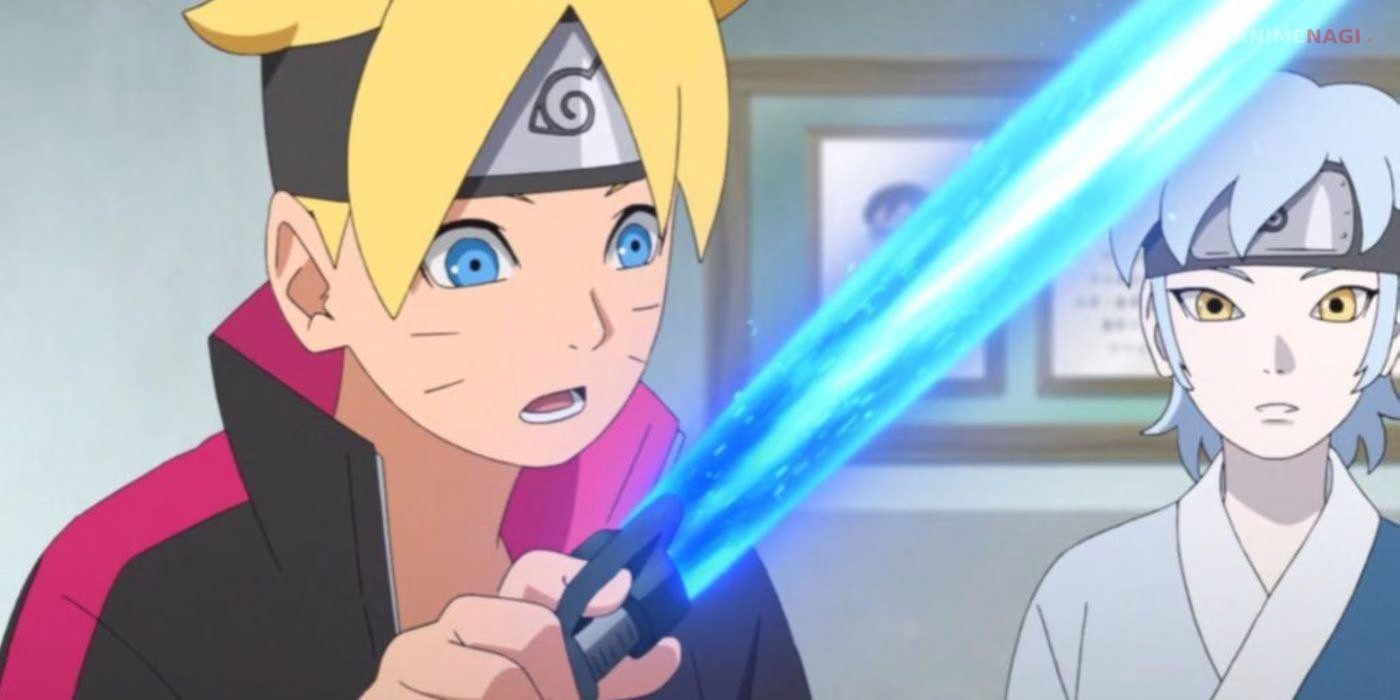
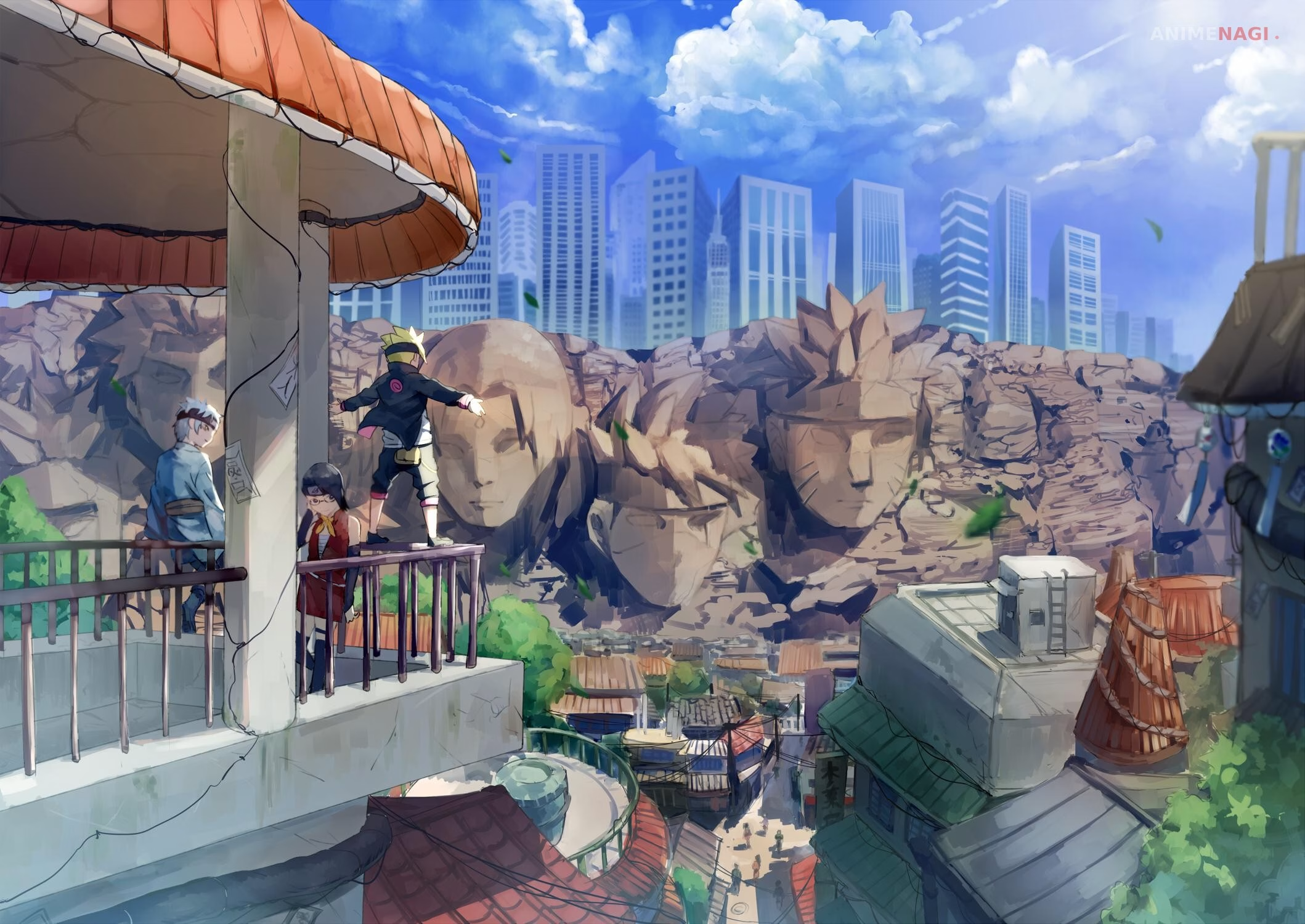
Another major part of Kishimoto’s vision for Boruto involved modernization. The Naruto world originally relied heavily on traditional ninja systems, manual communication, and ancient techniques. Boruto introduced scientific ninja tools, advanced communication systems, modern cities, and new forms of combat technology.
This modernization divided some fans initially because the original Naruto aesthetic was rooted heavily in traditional shinobi culture. However, the creative team believed the world logically needed to evolve after decades of peace and development. Writer Ukyo Kodachi even stated that the series intentionally blended traditional ninja themes with science fiction influences.
The inclusion of scientific ninja tools was especially important because it reinforced Boruto’s larger themes about shortcuts, progress, and changing values. Younger characters increasingly relied on technology while older shinobi represented traditional ideals of hard work and discipline.
Kishimoto’s involvement ensured that modernization never completely erased the emotional heart of the franchise. Even as the setting became more futuristic, Boruto still focused heavily on emotional bonds, mentorship, sacrifice, and perseverance. Those core Naruto themes remained central to the sequel.
The modernization also allowed the franchise to appeal to newer audiences growing up in a more technologically connected world. Rather than keeping the ninja universe frozen in time, Boruto showed how societies evolve after long periods of stability.
Passing the spotlight to the next generation
Kishimoto understood that Boruto could not succeed if Naruto remained the center of every storyline. One of the sequel’s most important goals was gradually shifting attention toward younger characters like Boruto, Sarada, Mitsuki, and Kawaki.
This transition was difficult because Naruto and Sasuke remained extremely popular with longtime fans. However, the sequel constantly emphasized that a new era had begun. The title itself, Boruto: Naruto Next Generations, directly highlighted that the franchise was now focused on the children of the original heroes.
Characters like Sarada Uchiha became especially important because they carried forward themes from earlier Naruto storylines while also adding new emotional complexity. Kishimoto’s earlier spin-off manga Naruto: The Seventh Hokage and the Scarlet Spring already explored Sarada’s emotional relationship with her parents and her dream of becoming Hokage. Kishimoto later revealed that family bonds became one of the central themes he wanted to emphasize in this stage of the franchise.
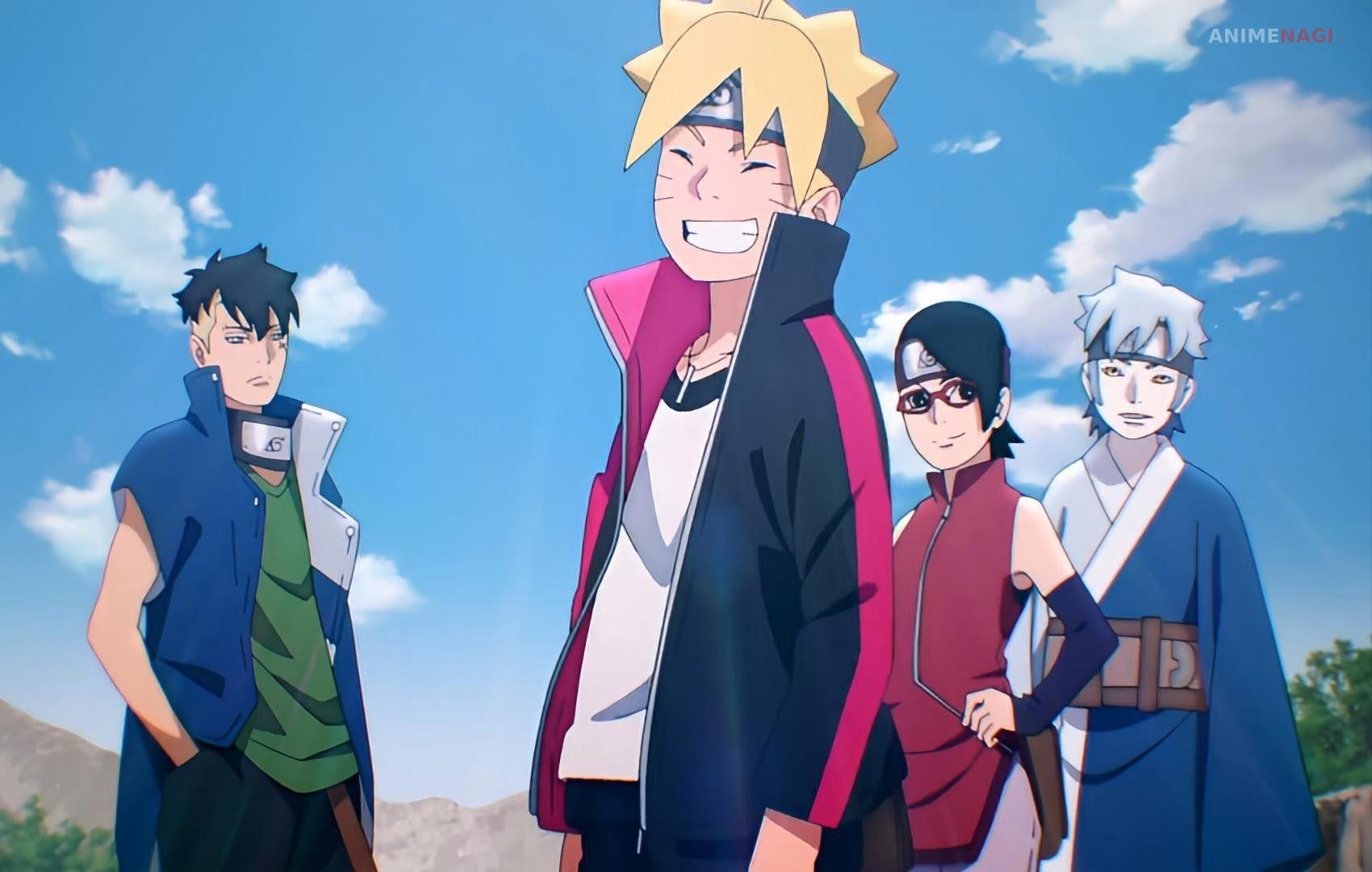
The newer generation also allowed Boruto to explore different personalities and emotional conflicts. Boruto was more rebellious and naturally talented than Naruto. Sarada combined Sakura’s intelligence with Sasuke’s ambition. Mitsuki introduced themes involving identity and artificial creation.
By shifting the emotional focus toward younger shinobi, Kishimoto ensured that the franchise could continue evolving instead of endlessly relying on nostalgia.
Kishimoto’s return changed Boruto’s direction
Although Kishimoto initially supervised Boruto from a distance, he officially returned as the manga’s writer in 2020 following Ukyo Kodachi’s departure. This decision immediately sparked major fan discussion because many readers believed the series’ tone and pacing might change significantly under Kishimoto’s direct involvement.
Kishimoto’s return coincided with some of Boruto’s biggest story developments, including major battles involving Naruto, Sasuke, Isshiki Otsutsuki, and Kawaki. The manga became darker and more emotionally intense during this period, with stronger emphasis on sacrifice and irreversible consequences.
However, Kishimoto later clarified in newer interviews that Mikio Ikemoto still remained heavily responsible for the series’ creative direction and visual storytelling. In fact, Kishimoto openly stated that Boruto should primarily be viewed as Ikemoto’s manga rather than his own.
That statement reflects Kishimoto’s broader philosophy toward Boruto. Rather than tightly controlling every aspect of the sequel, he wanted the newer creative team to expand the universe in fresh directions while preserving the emotional core of Naruto.
Why Boruto exists beyond simple nostalgia
Many anime sequels rely heavily on nostalgia without offering meaningful new ideas. Kishimoto appeared aware of this risk from the beginning. Boruto therefore focused heavily on themes that Naruto itself could not fully explore.
The sequel examines what happens after heroes achieve peace. It explores how children deal with inherited expectations from legendary parents. It also questions whether traditional systems can survive in rapidly modernizing societies.
Boruto additionally reflects Kishimoto’s own evolution as a storyteller. During Naruto’s serialization, he often struggled with balancing enormous casts, escalating power systems, and increasingly complex world-building. Later interviews revealed that maintaining narrative momentum after the Pain arc became especially challenging for him creatively.
Boruto’s structure feels more controlled and character-focused partly because of those lessons. The sequel often emphasizes smaller emotional relationships and long-term psychological conflict rather than nonstop escalation.
Even controversial decisions in Boruto usually connect back to Kishimoto’s broader goal of pushing the franchise into a new era instead of preserving Naruto unchanged forever.
Kishimoto’s long-term legacy through Boruto
Whether fans fully embrace Boruto or not, the series clearly represents Kishimoto’s attempt to ensure Naruto’s universe could survive beyond a single generation. Instead of endlessly extending Naruto’s personal journey, Boruto explores how peace, technology, and legacy reshape the ninja world over time.
Kishimoto’s biggest contribution to Boruto may not be specific story arcs or battles. It may be his willingness to let newer creators expand the universe while still preserving the emotional themes that made Naruto globally successful. Family, perseverance, mentorship, and emotional connection continue defining the franchise even as its world changes dramatically.
That balance between continuity and evolution explains why Boruto remains such an important part of Naruto’s legacy. The sequel was never intended to simply replace Naruto. Instead, it was designed to show how one generation’s victories create both opportunities and burdens for the next generation that follows.