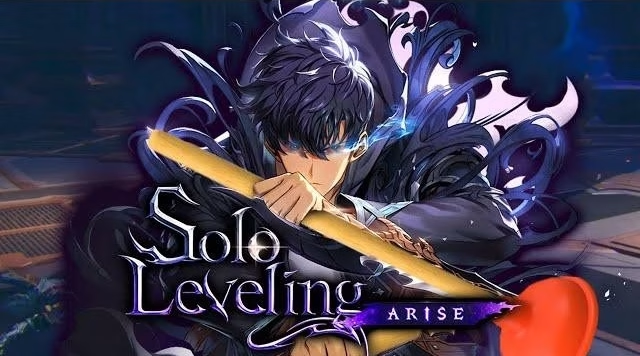
Since the explosive popularity of the Solo Leveling manhwa and anime, fans have been waiting for a game adaptation capable of capturing Sung Jinwoo’s journey from the weakest hunter to one of the strongest beings in existence. Solo Leveling: ARISE attempts to deliver exactly that experience through flashy action combat, cinematic cutscenes, RPG progression systems, and character collection mechanics inspired by the original series.
Developed by Netmarble, the game launched with massive attention from anime and manhwa fans worldwide. Its high production values, anime-style visuals, and faithful adaptation of iconic story moments immediately helped it stand out among mobile and PC action RPGs.
However, despite its strong presentation and satisfying combat system, Solo Leveling: ARISE also faces criticism regarding grinding, monetization, repetitive content loops, and aggressive gacha mechanics. Some players consider it one of the better anime game adaptations in recent years, while others believe its live-service structure prevents it from reaching its full potential.
The truth lies somewhere in the middle. Solo Leveling: ARISE succeeds remarkably well at recreating Jinwoo’s power fantasy, but whether it is truly worth playing depends heavily on what players expect from the experience.
Here’s a full review of Solo Leveling: ARISE, including its gameplay systems, combat mechanics, visuals, progression, monetization, strengths, weaknesses, and whether the game is worth your time in 2026.
Solo Leveling: ARISE Understands the Core Appeal of the Series
The biggest strength of Solo Leveling: ARISE is that it understands why fans love Solo Leveling in the first place.
At its core, the series is about progression, power growth, stylish combat, and the emotional satisfaction of watching Jinwoo become overwhelmingly powerful. The game focuses heavily on recreating that exact feeling.
From the moment players begin unlocking stronger skills, weapons, and shadow abilities, the game constantly reinforces the fantasy of becoming stronger through relentless leveling. Combat encounters become faster, flashier, and more destructive as progression continues.
This design philosophy is the reason many fans immediately connect with the game despite its flaws. It genuinely feels rewarding to watch Jinwoo evolve over time.
The Combat System Is the Game’s Biggest Strength
The combat system is easily the strongest part of Solo Leveling: ARISE.
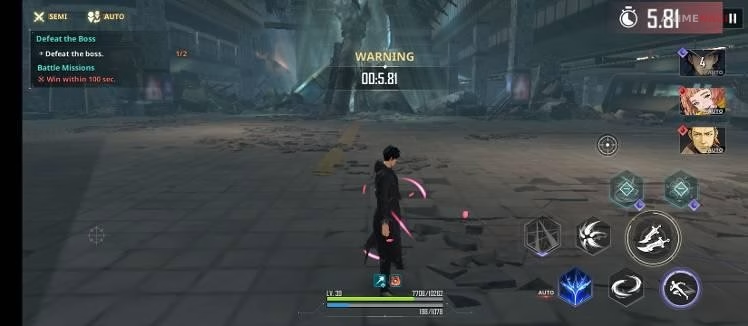
Unlike many anime-based mobile games that rely heavily on automated gameplay or simplistic mechanics, ARISE features active real-time combat focused on dodging, combos, timing, and skill management.
Players control Jinwoo directly while chaining together attacks, weapon skills, dodge counters, quick-time events, and ultimate abilities. Combat feels fast, flashy, and responsive, especially during boss fights.
The dodge-and-counter system adds genuine engagement because successful timing rewards aggressive playstyles. This prevents combat from becoming purely mindless button-mashing, even though repetitive grinding eventually becomes noticeable later in the game.
The Animation and Visual Effects Are Surprisingly Impressive
One area where Solo Leveling: ARISE clearly excels is presentation.
The game recreates iconic scenes from the manhwa and anime with cinematic cutscenes, dynamic camera work, and flashy visual effects. Jinwoo’s abilities look powerful and stylish, especially during high-level encounters involving shadow summons and ultimate attacks.
The art direction remains highly faithful to the original source material. Character models, attack animations, and visual effects all capture the sleek aesthetic fans associate with Solo Leveling.
Several reviewers specifically praised the game’s presentation quality, arguing that it successfully makes players feel like they are controlling Jinwoo directly.
Progression Systems Successfully Recreate Jinwoo’s Growth
The progression system is another major reason the game initially feels addictive.
Like the original story, the game constantly rewards players with stronger abilities, better weapons, upgraded stats, artifacts, and new combat options. Jinwoo’s growth feels tangible throughout the experience.
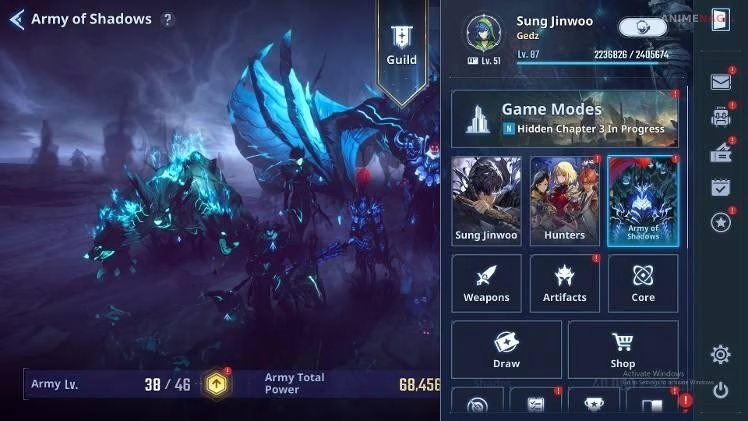
Players can customize builds through weapons, skills, artifacts, blessings, and stat allocation systems. This flexibility helps combat remain engaging because different setups significantly affect gameplay flow.
The shadow army system also adds excitement for longtime fans. Unlocking and upgrading shadows creates a strong sense of progression tied directly to the core fantasy of the series.
The Story Adaptation Is Faithful but Sometimes Uneven
One of the game’s biggest selling points is its adaptation of Solo Leveling’s original storyline.
The game retells major arcs from the manhwa while expanding certain scenes through voiced dialogue, cinematics, and additional interactions. Fans of the anime and webtoon will recognize many iconic moments immediately.
However, pacing can feel inconsistent depending on how quickly players progress. Some emotional story beats lose impact because the game structure constantly pushes players toward repetitive side activities and resource farming between chapters.
Despite this issue, the adaptation generally remains faithful enough to satisfy fans wanting to relive Jinwoo’s journey interactively. The story presentation is especially strong during major boss fights and dramatic awakening moments.
The Gacha System Is the Most Divisive Part of the Game
The biggest criticism surrounding Solo Leveling: ARISE involves its monetization structure.
Like many free-to-play mobile RPGs, the game heavily relies on gacha mechanics for acquiring characters, weapons, upgrades, and progression resources. While players can technically enjoy much of the content for free, the game frequently encourages spending through multiple currencies, passes, bundles, and premium systems.

Several players and reviewers specifically criticized how aggressively monetization systems appear throughout menus and progression loops. Some fans argue the game becomes increasingly grind-heavy unless players spend money to accelerate progression.
This issue does not completely ruin the experience, but it undeniably affects long-term enjoyment for many players.
Grinding Eventually Becomes Repetitive
Another common criticism involves repetitive endgame grinding.
Early progression feels exciting because players constantly unlock new mechanics, abilities, and story content. However, later stages often revolve around repeating the same dungeons, gates, and upgrade loops for resources.
This repetition is common within live-service RPGs, but Solo Leveling: ARISE occasionally pushes the grind too aggressively. Some players report hitting progression walls where advancement slows dramatically without heavy time investment.
The issue becomes especially noticeable after the excitement of the early story chapters begins fading. At that point, the gameplay loop depends heavily on whether players genuinely enjoy repeated combat farming.
Free-to-Play Players Can Still Enjoy the Game
Despite monetization criticism, many players still argue the game remains playable without spending money.
Several community discussions describe the gacha system as relatively generous during early progression, especially compared to some competing mobile RPGs. Players receive a steady flow of summon currency through missions, events, and story completion.
However, the experience changes depending on player expectations. Casual players focused mainly on story content may enjoy the game comfortably without major spending. Competitive players chasing optimal builds or leaderboard performance may feel pressured toward purchases.
The game, therefore, sits in an awkward middle ground where it is technically free-to-play friendly but still clearly designed around monetized progression systems.
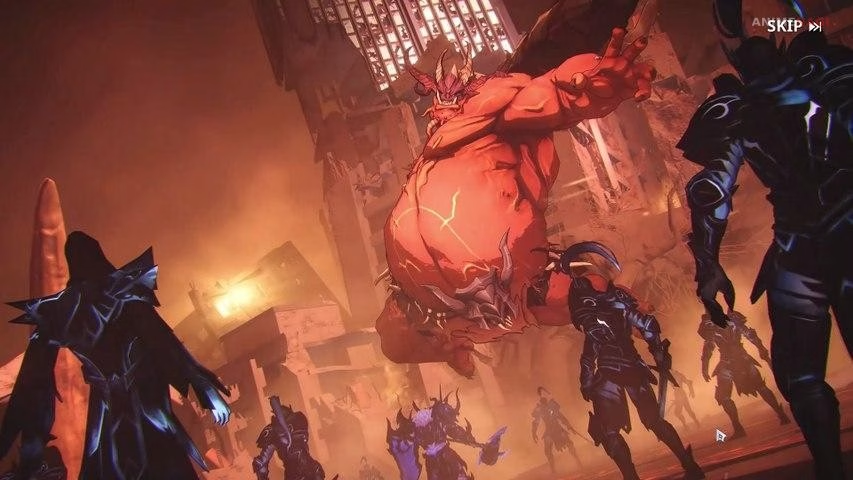
The Boss Fights Are Genuinely Fun
One area where ARISE consistently succeeds is boss encounters.
Major fights against iconic enemies capture the intensity fans expect from Solo Leveling. Bosses often require movement, timing, dodging, and ability management rather than simple stat-checking.
These encounters showcase the combat system at its best because they emphasize momentum and reaction speed. Combining dodges, shadow summons, weapon swaps, and ultimate attacks creates exciting combat flow during high-pressure moments.
The visual spectacle also helps enormously. Several boss battles feel almost like playable anime episodes because of the dramatic animations and effects.
The PC Version Feels Better Than Mobile
Although designed primarily as a mobile game, Solo Leveling: ARISE generally feels smoother on PC.
The larger screen, higher framerate, and improved controls make combat more enjoyable and visually impressive. Complex fights especially benefit from keyboard and controller support.
That said, some players still reported optimization issues, loading problems, crashes, and interface frustrations depending on hardware configuration.
The UI also occasionally feels cluttered because of the game’s many progression systems and monetization menus. This is one area where its mobile origins remain obvious even on PC.
Solo Leveling Fans Will Enjoy the Game More Than Casual Players
Whether the game feels worth playing depends heavily on familiarity with the franchise.
Fans of Solo Leveling are much more likely to enjoy the experience because the game successfully recreates Jinwoo’s growth fantasy and iconic moments. Seeing beloved characters, bosses, and scenes adapted interactively adds emotional value for existing fans.
Casual players without attachment to the series may appreciate the flashy combat initially but could lose interest once repetitive grinding and monetization systems become more noticeable.
This difference explains why community reactions remain mixed. Fans often focus on faithful adaptation and exciting combat, while critics focus more heavily on progression structure and monetization.
The Game Feels Best in Short Sessions
One interesting aspect of Solo Leveling: ARISE is that it works surprisingly well in shorter play sessions.
The fast combat, clear progression rewards, and mission-based structure make it easy to enjoy casually for brief periods. Completing dungeons, upgrading gear, and progressing story chapters can feel satisfying in bursts.
However, playing for extremely long sessions sometimes exposes the repetitive structure more clearly. Grinding loops, menu navigation, and resource farming become increasingly noticeable over time.
This pacing issue is common in mobile-inspired RPGs, and ARISE struggles with it occasionally despite its strong combat foundation.
Is Solo Leveling: ARISE Worth Playing?
Solo Leveling: ARISE is absolutely worth trying for fans of the anime and manhwa, especially because the core gameplay genuinely captures the feeling of becoming Sung Jinwoo. The combat is flashy, responsive, and visually impressive, while the progression systems recreate the addictive power-growth fantasy that made Solo Leveling so popular globally.
At the same time, the game is held back by repetitive grinding, aggressive monetization systems, and some live-service frustrations that prevent it from reaching the level of top-tier action RPGs. Long-term enjoyment depends heavily on tolerance for gacha mechanics and repetitive progression loops.
For casual players and Solo Leveling fans, the game offers enough exciting combat and faithful adaptation to remain entertaining. Competitive players or people expecting a polished premium RPG experience may feel more disappointed over time.
Ultimately, Solo Leveling: ARISE succeeds most when it focuses on what the franchise does best: making players feel powerful, stylish, and constantly hungry for the next level-up.