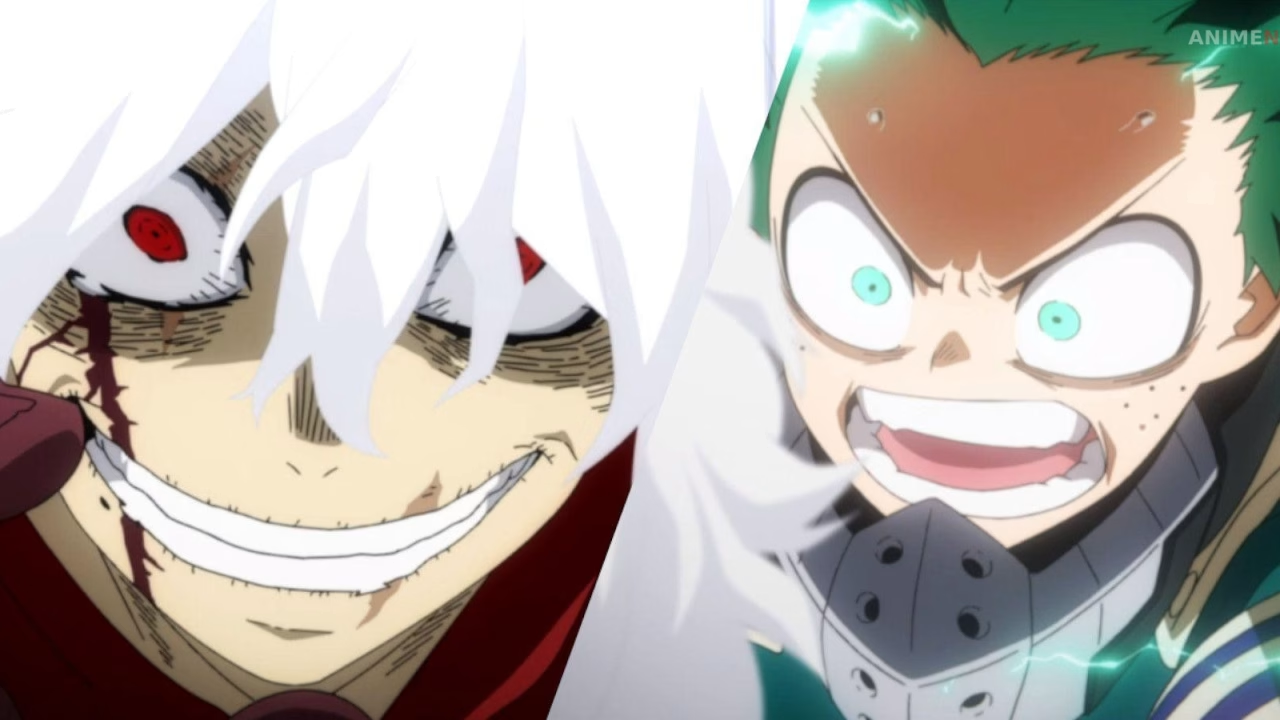
The Final War arc of My Hero Academia delivers one of its most intense moments when Tomura Shigaraki begins breaking free from the heroes’ carefully constructed trap at U.A. High. This battle represents the culmination of Shigaraki’s evolution into a near-unstoppable force, blending his own power with that of All For One. Fans have been particularly interested in how the heroes’ elaborate plan fails and why Shigaraki manages to overpower such a coordinated effort.
The U.A. battlefield was designed as a floating fortress specifically to counter Shigaraki’s Decay ability. However, despite these precautions, Shigaraki’s raw strength, adaptability, and overwhelming presence push the heroes to their limits. Understanding how he breaks free requires a closer look at the heroes’ strategy, his enhanced abilities, and the turning point that shifts the battle in his favor.
The Heroes’ Plan to Contain Shigaraki
The heroes enter the battle with a highly strategic approach. Knowing that Shigaraki’s Decay can destroy entire cities, they isolate him inside a specialized U.A. arena designed to neutralize ground-based destruction. This floating battlefield prevents his Decay from spreading uncontrollably.
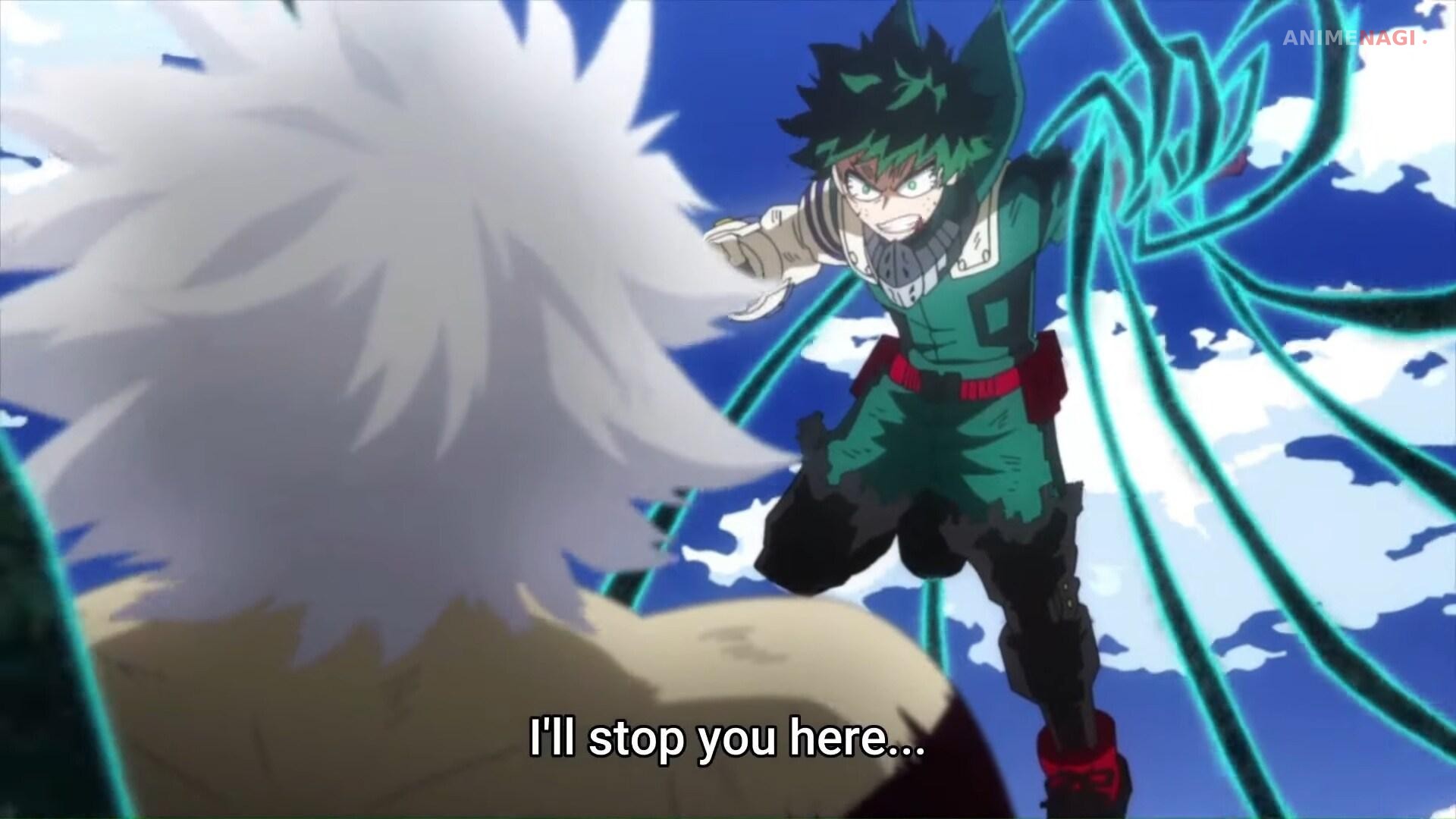
Key fighters, including Izuku Midoriya and top pro heroes, coordinate their attacks to overwhelm Shigaraki. The goal is not just to defeat him but to contain him long enough to prevent widespread destruction. Every move is calculated to limit his mobility and power.
Initially, the plan works to some extent. Shigaraki is restricted and forced to fight within the heroes’ controlled environment. However, this advantage does not last long as his true strength begins to emerge.
Shigaraki at this stage is no longer the same villain from earlier arcs. His body has been modified to withstand immense damage, granting him superhuman durability and regeneration. Even without relying heavily on Decay, his physical strength alone becomes a massive threat.
What makes him even more dangerous is his fusion with All For One’s consciousness. This creates internal conflict but also gives him access to multiple abilities and strategic thinking. The combination makes him unpredictable and difficult to counter.
As the battle progresses, Shigaraki adapts to the heroes’ tactics. He begins to exploit weaknesses in their coordination, showing that brute force is not his only advantage. This evolution is the key factor that allows him to start breaking free.
The Breaking Point at U.A.
The turning point comes when Shigaraki overwhelms the heroes through sheer endurance and relentless attacks. Despite being targeted by multiple fighters, he continues to push forward without slowing down. His ability to tank damage shocks even the most experienced heroes.
At the same time, cracks begin to appear in the heroes’ strategy. The longer the fight continues, the harder it becomes to maintain coordination. Shigaraki takes advantage of this, creating openings that allow him to destabilize the battlefield.
His partial liberation is not a single moment but a gradual shift. Each breakthrough weakens the heroes’ control until their plan begins to collapse. This is when the battle transitions from controlled combat to chaotic survival.
Why the Heroes Struggle to Stop Him
One of the main reasons Shigaraki breaks free is the sheer gap in power. Even with preparation and teamwork, the heroes are facing an opponent who has surpassed normal limits. His regeneration and endurance make it nearly impossible to bring him down quickly.
Another factor is psychological pressure. Fighting someone as overwhelming as Shigaraki creates fear and uncertainty, even among top heroes. This affects their decision-making and coordination during critical moments.
Additionally, the presence of All For One’s influence complicates the situation. Shigaraki is not just fighting physically but also battling for control of his own body. This duality adds unpredictability, making it harder for the heroes to anticipate his actions.