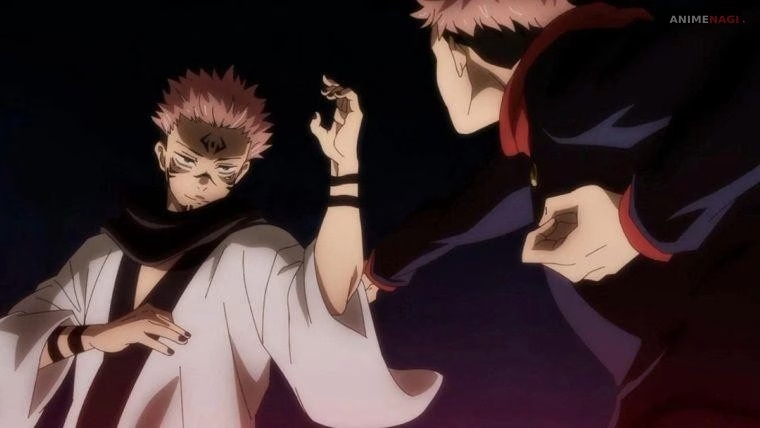
Jujutsu Kaisen became one of the defining dark fantasy manga of modern shonen through its brutal battles, tragic character deaths, and morally complex storytelling. Created by Gege Akutami, the series constantly challenged traditional battle shonen expectations by showing that strength alone could not protect people from suffering, loss, or emotional trauma. Because of that, anticipation surrounding the manga’s ending became enormous as fans waited to see how Yuji Itadori’s journey would conclude.
The final chapters focus heavily on the aftermath of the Shinjuku Showdown and the defeat of Ryomen Sukuna, the King of Curses. However, the ending is not simply about who survives or dies. Instead, it explores themes of humanity, legacy, emotional connection, and whether people can continue living meaningfully after unimaginable tragedy.
Let’s break down how Jujutsu Kaisen ends, what happens to the major characters, and what the conclusion ultimately means for the story’s central themes. Spoiler Alert: Information in this article is based on the manga’s final chapters, official summaries, and post-ending discussions surrounding Chapter 271 and the epilogue content.
How Sukuna Is Finally Defeated
The final battle against Ryomen Sukuna becomes the emotional and physical climax of the entire series. After the deaths and sacrifices of numerous sorcerers, Yuji Itadori eventually confronts Sukuna directly during the closing stages of the Shinjuku Showdown Arc.
Unlike earlier fights centered purely on power escalation, Yuji’s final confrontation with Sukuna focuses heavily on ideology and humanity. Yuji repeatedly rejects Sukuna’s worldview, which treats human life as meaningless and disposable. Throughout the series, Sukuna represents pure selfishness and domination, while Yuji continues struggling to preserve compassion even after witnessing constant death.
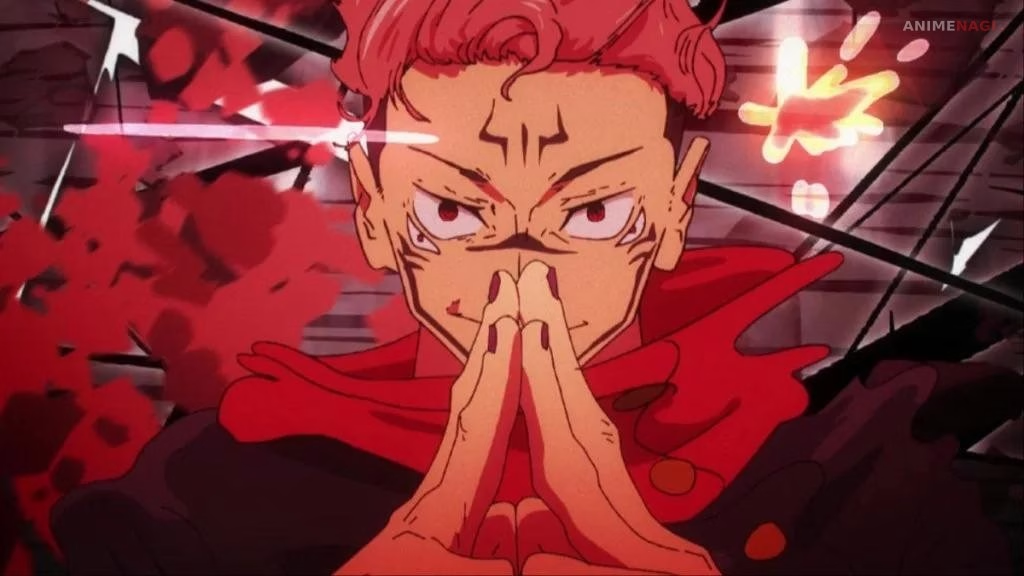
According to ending summaries and Chapter 271 discussions, Yuji ultimately defeats Sukuna after offering him one final chance at mercy before finishing the battle permanently. The victory is significant because Yuji does not defeat Sukuna through hatred alone, but through his refusal to abandon his humanity despite everything he endured.
The ending also emphasizes teamwork rather than individual heroism. Multiple sorcerers contribute to weakening Sukuna throughout the Shinjuku battle, reinforcing one of the manga’s recurring themes: no single person can carry the burden alone forever.
What Happens to Yuji Itadori
Yuji Itadori survives the events of the manga and continues living as a jujutsu sorcerer after Sukuna’s defeat. This outcome is important because Yuji’s journey consistently revolved around questions of death, purpose, and what it means to save people.
At the beginning of the story, Yuji accepted the possibility that he would eventually die after consuming Sukuna’s finger. He viewed himself as someone whose role was simply to ensure others received a “proper death.” However, the ending shifts his perspective significantly. Rather than becoming consumed entirely by sacrifice, Yuji learns to continue living while carrying the memories of those he lost.
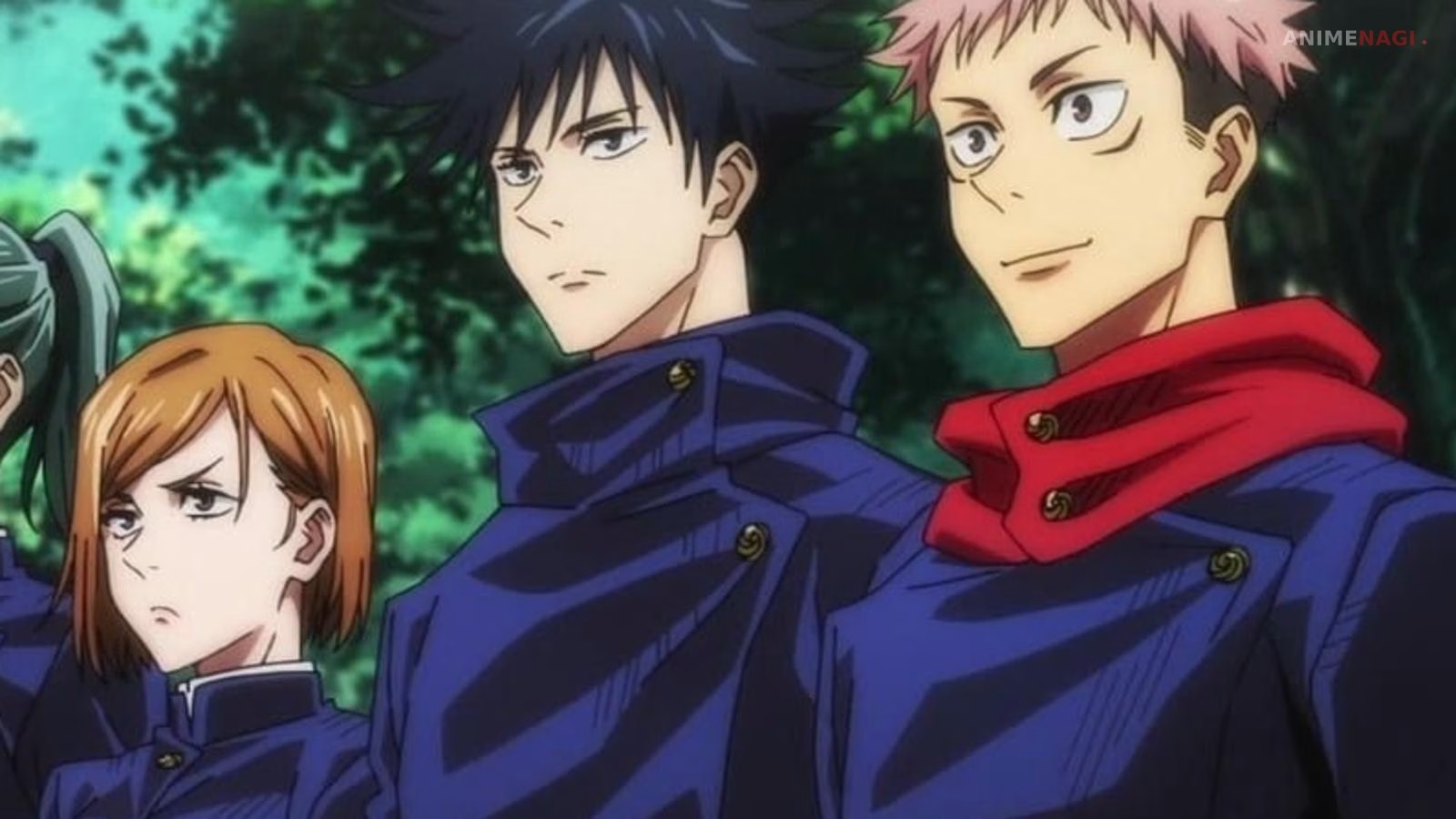
Chapter 271 shows Yuji working alongside Megumi and Nobara again during a smaller-scale mission, echoing the early structure of the series. This return to a more grounded mission format symbolizes emotional recovery after the chaos of the Shinjuku battle.
The ending also highlights Yuji’s emotional maturity. He no longer behaves like the inexperienced teenager from the beginning of the manga. Instead, he carries the emotional weight of the entire conflict while still choosing to help others.
Importantly, Yuji does not become isolated or emotionally detached like several older sorcerers in the series. That distinction reinforces the idea that he successfully avoided repeating the emotional failures of previous generations.
Megumi and Nobara’s Ending Explained
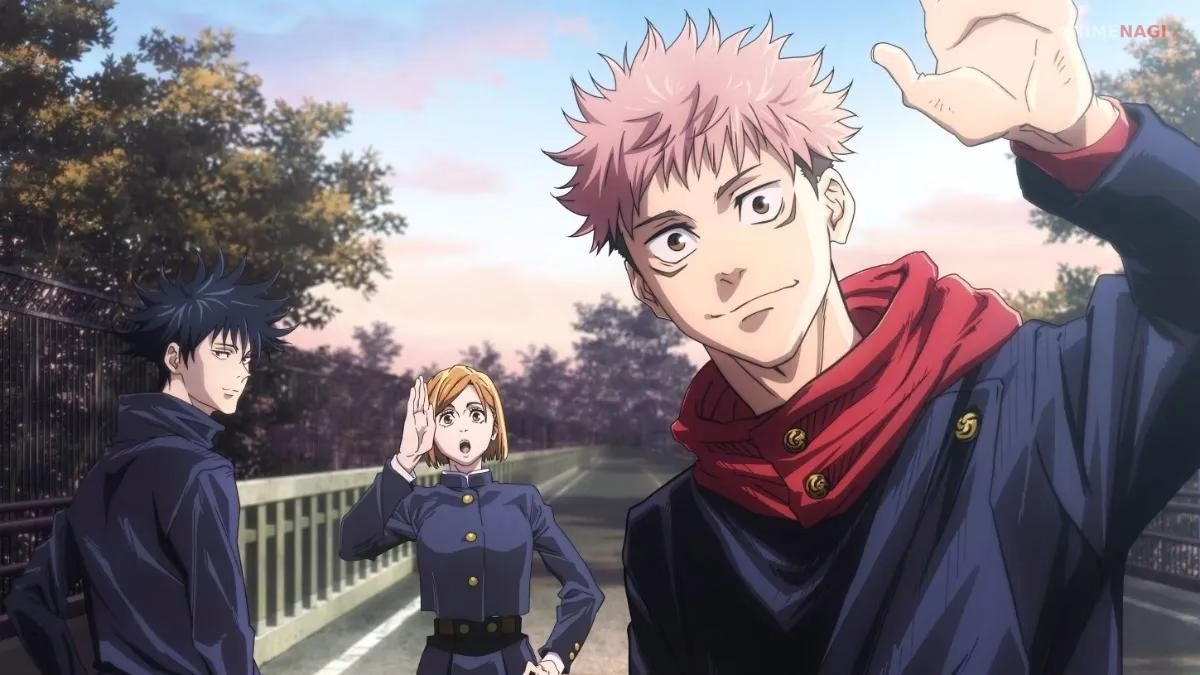
One of the biggest questions surrounding the manga’s conclusion involved Megumi Fushiguro and Nobara Kugisaki.
Megumi survives despite enduring possession by Sukuna for a major portion of the final arc. His survival is emotionally significant because Sukuna’s control over his body caused enormous destruction and indirectly contributed to several major deaths. After being freed, Megumi appears emotionally exhausted but alive, continuing his role as a sorcerer alongside Yuji and Nobara.
The manga also confirms Nobara’s return during the final battle. Her reappearance became one of the most discussed moments in the fandom because her fate had remained ambiguous for years after the Shibuya Incident. Nobara contributes during the fight against Sukuna and later reunites with Yuji and Megumi in the final chapter.
This reunion intentionally mirrors the trio’s early dynamic from the beginning of the series. After years of trauma, death, and separation, the ending restores a version of the original team structure. However, the tone is far more bittersweet because the characters are now emotionally changed by everything they experienced.
The return of the trio therefore symbolizes survival rather than innocence. They reconnect, but they cannot return to the simpler lives they once had.
What Happens to Gojo?
Satoru Gojo remains dead by the end of the manga. Gojo’s death during his battle against Sukuna became one of the most controversial moments in the entire series. Many fans expected him to return later because of his overwhelming popularity and central role within the story. However, the manga ultimately keeps his death permanent.
The ending instead focuses on Gojo’s legacy rather than resurrection. Chapter 271 references the idea that Gojo’s dream has finally been achieved because a new generation of capable sorcerers now exists to protect the jujutsu world.
This is important because Gojo’s character arc always centered around reforming the corrupt jujutsu system through education and mentorship. He believed raising stronger and more emotionally healthy sorcerers was the only way to change society long term.
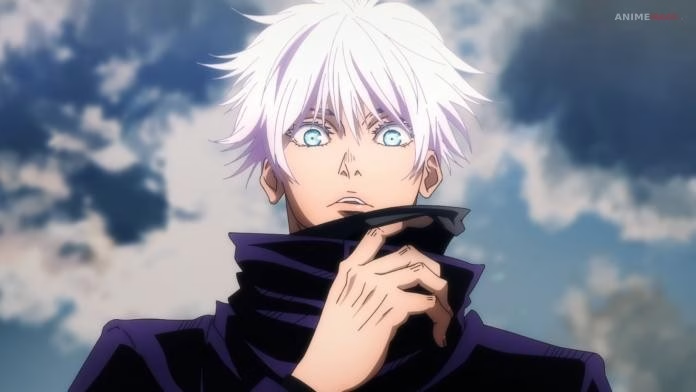
Even though Gojo dies, the survival and growth of Yuji, Yuta, Maki, Megumi, and others prove that his influence succeeded. The ending therefore frames Gojo less as a tragic failure and more as someone whose ideals survived through the next generation.
That thematic choice aligns closely with Jujutsu Kaisen’s recurring focus on inherited will and generational change.
The Collapse of the Old Jujutsu System
Another major part of the ending involves the destruction of the old jujutsu power structure. By the conclusion of the manga, the major sorcerer clans and traditional leadership systems have largely collapsed. Reports discussing the ending note that the three major jujutsu families are effectively destroyed through internal conflict, violence, and the chaos caused by Kenjaku and Sukuna.
This collapse is symbolically important because the older jujutsu society was consistently portrayed as deeply flawed. Corrupt leadership, rigid hierarchy, and emotional detachment repeatedly created suffering throughout the story.
The younger generation surviving the conflict therefore represents more than physical victory. It symbolizes the possibility of rebuilding the jujutsu world differently from previous generations.
Gojo’s long-term goal was never simply defeating curses. He wanted systemic change, and the ending strongly implies that the old structure’s destruction creates space for that transformation to finally happen.
Rather than restoring the old order, the manga leaves the future uncertain but open to change.
Sukuna’s Final Moments and What They Mean
One of the most interesting aspects of the ending is how it handles Sukuna emotionally. According to ending analyses and summaries, Sukuna reflects on his life after defeat and briefly considers the possibility that he may have chosen a different path if given another chance. This moment does not redeem him completely, but it humanizes him slightly in his final scenes.
Throughout the manga, Sukuna rejects emotional attachment, compassion, and human connection entirely. His ideology revolves around domination and personal desire. By the end, however, the narrative subtly suggests that his emptiness may have originated from isolation and emotional detachment rather than pure evil alone.
This interpretation mirrors several themes present throughout Jujutsu Kaisen. Many characters suffer because they cannot form healthy emotional bonds or process trauma properly. Sukuna represents the extreme endpoint of that emotional isolation.
Importantly, the story does not excuse his actions. Instead, it frames him as someone who ultimately failed to understand the value of connection until it was too late.
That nuance is part of what makes the ending more reflective than purely triumphant.
Why the Ending Divided Fans
The ending of Jujutsu Kaisen generated mixed reactions online almost immediately. Some fans praised the conclusion for remaining emotionally grounded and consistent with the manga’s darker themes. Others criticized pacing issues, unresolved plot points, and the handling of certain characters, especially after the intense expectations surrounding the Shinjuku Showdown.
One major criticism involved the speed of the final chapters. Several readers felt the ending moved too quickly through important aftermath events and emotional resolutions. Others wanted deeper exploration of the jujutsu world after Sukuna’s defeat.
At the same time, many fans appreciated that the manga avoided a completely cheerful or simplistic conclusion. Jujutsu Kaisen consistently emphasized the emotional cost of violence, and the ending preserves that tone rather than reversing it suddenly.
The divided reaction reflects how emotionally invested the fandom became over the series’ run. Because Jujutsu Kaisen built such a passionate audience, expectations for the ending became almost impossible to satisfy universally.
What the Ending of Jujutsu Kaisen Really Means
Ultimately, the ending of Jujutsu Kaisen is less about victory and more about continuation. The story concludes with the younger generation still moving forward despite enormous loss. Sukuna is defeated, the old jujutsu system collapses, and the surviving characters continue living while carrying the emotional weight of everyone they lost along the way.
Yuji’s final development especially reinforces the manga’s core message. Instead of becoming consumed entirely by death and suffering, he learns to keep living meaningfully alongside others. That choice directly opposes Sukuna’s philosophy of selfish isolation.
The final chapter returning to a smaller mission with Yuji, Megumi, and Nobara symbolizes that life continues even after catastrophic events. The world is still dangerous, curses still exist, and emotional scars remain, but the characters continue moving forward together.