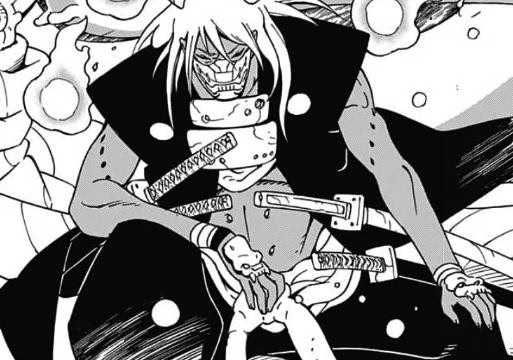

The ending of Platinum End is one of the most debated conclusions in modern manga. Created by Tsugumi Ohba and Takeshi Obata, the series starts as a high-stakes survival game where 13 chosen humans compete to become the next God. However, unlike traditional battle-based narratives, Platinum End gradually shifts into a philosophical exploration of life, purpose, and the nature of existence.
By the final arc, the story moves away from action and focuses almost entirely on existential questions. What is the purpose of God? Does life have inherent meaning? Should humanity even continue to exist? These questions drive the narrative toward a conclusion that feels intentionally uncomfortable.
The ending surprised many readers because it refuses to follow the expected path. There is no heroic victory, no triumphant resolution, and no clear sense of hope. Instead, the story delivers a bleak yet thought-provoking conclusion that forces readers to confront difficult ideas.
Let’s break down the Platinum End ending in detail, including who becomes God, why everything ends, and what the story is really trying to say.
Who Becomes God and Why It Matters
The final decision in Platinum End is surprisingly quiet compared to the chaos that came before it. After multiple candidates either die or withdraw, Shuji Nakaumi is chosen as the new God.
This choice is crucial to understanding the ending. Nakaumi is not a typical protagonist or even a strong contender throughout the story. He is introspective, withdrawn, and deeply disillusioned with life. Unlike other candidates who seek justice, happiness, or control, Nakaumi questions whether existence itself has any value.

Characters like Mirai Kakehashi actively reject the role of God. Mirai believes that becoming God is not necessary to live a meaningful life. He chooses to remain human, valuing personal happiness and relationships over absolute power.
This contrast sets up the core conflict of the ending. The system chooses someone who lacks belief in life’s value, rather than someone who wants to protect it. This decision highlights a flaw in the selection process and sets the stage for what follows.
One of the most important revelations in the ending is the true nature of God. In Platinum End, God is not a traditional omnipotent being with personal desires or emotions. Instead, God functions as a fundamental pillar of existence.
The series reveals that God is essentially the core that sustains reality. Without God, the structure of the universe cannot exist. This reframes the entire competition. The candidates are not just competing for power but for the responsibility of maintaining existence itself.
The angels, who guide the candidates, are also part of this system. They are not purely benevolent beings but facilitators of a process designed to ensure continuity. Their role is to observe, guide, and ultimately select a new God.
However, the angels have limitations. They cannot override the will of the chosen God. This detail becomes critical in understanding why the ending unfolds the way it does.
Why Nakaumi Chooses to End Everything
After becoming God, Nakaumi makes a decision that defines the entire ending. He chooses to end his own existence. This action triggers the collapse of everything, including humanity, the angels, and the universe itself.
To understand this choice, it is important to look at Nakaumi’s mindset. Throughout the story, he struggles with the idea of meaning. He does not see life as inherently valuable and questions whether existence is worth continuing.
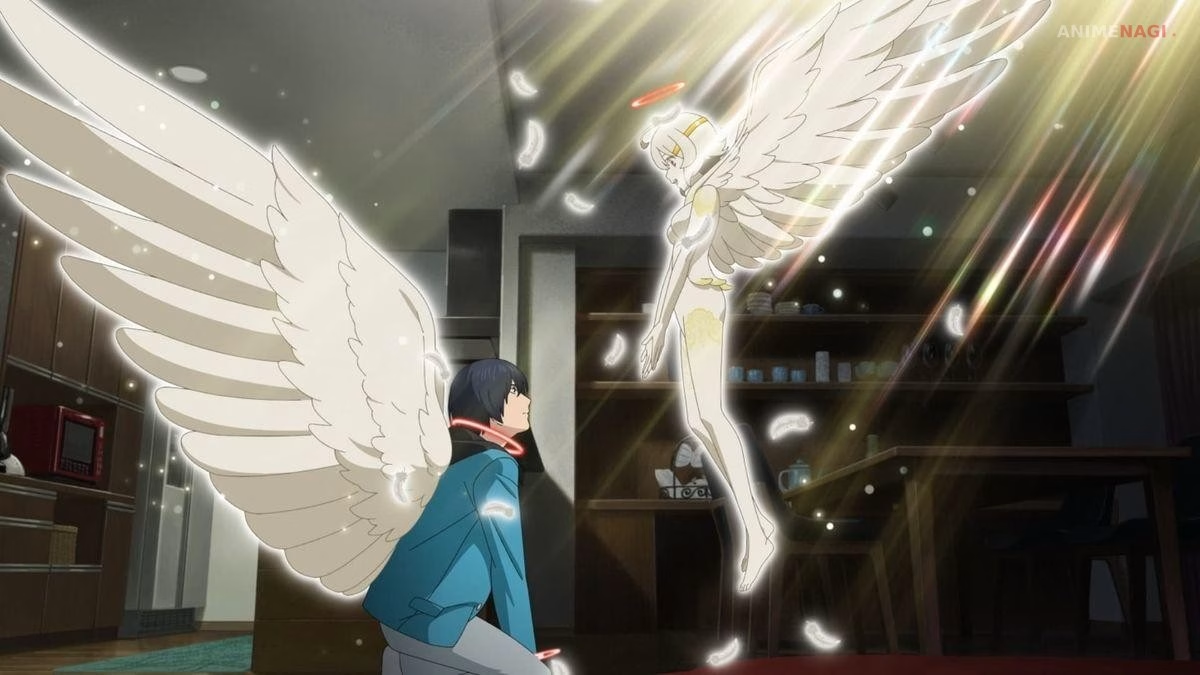
Becoming God does not change this perspective. Instead, it reinforces it. Given ultimate power and responsibility, Nakaumi concludes that the best solution is to end everything rather than perpetuate what he sees as a meaningless cycle.
This decision reflects one of the central themes of Platinum End. The story explores the idea that absolute freedom includes the freedom to choose destruction. Nakaumi is not controlled or influenced at this point. His decision is entirely his own.
The result is total annihilation. Without God, reality itself ceases to exist. The story ends with nothing remaining, leaving readers with a stark and unsettling conclusion.
The Contrast Between Mirai and Nakaumi
The ending gains deeper meaning when viewed through the contrast between Nakaumi and Mirai. These two characters represent opposing philosophies.
Mirai believes in finding happiness in simple, human experiences. He values relationships, love, and personal growth. For him, life does not need a grand purpose to be meaningful.
Nakaumi, on the other hand, represents existential doubt. He questions the value of existence itself and ultimately concludes that it has none.
The story does not explicitly state which perspective is correct. Instead, it presents both viewpoints and allows the reader to interpret the outcome. Nakaumi’s decision may be seen as tragic, but it is also consistent with his beliefs.
This contrast is what makes the ending impactful. It is not just about destruction but about the clash of two fundamentally different ways of viewing life.
Another key aspect of the ending is the role of free will. The system that selects God is designed to ensure continuity, but it relies entirely on the choices of the selected individual.

This creates a fundamental flaw. If the chosen God does not believe in existence, the system has no way to correct that. The angels can guide candidates, but they cannot control them.
Nakaumi’s decision exposes this flaw. The system assumes that the chosen God will want to preserve existence, but it does not account for the possibility that they might choose otherwise.
This idea ties into the broader theme of free will. The story suggests that true freedom includes the ability to make destructive choices. It challenges the notion that power and responsibility will always lead to positive outcomes.
What the Ending Really Means
The ending of Platinum End is intentionally ambiguous and open to interpretation. It does not provide a clear moral or resolution. Instead, it presents a scenario that forces readers to think about the nature of existence.
One possible interpretation is that the story is a critique of nihilism. Nakaumi’s perspective leads to total destruction, suggesting that a lack of belief in meaning can have devastating consequences.
Another interpretation is that the story highlights the importance of individual perspective. Mirai’s choice to live and find happiness contrasts with Nakaumi’s decision, showing that meaning is subjective.
The ending may also be seen as a reflection of real-world philosophical debates. It raises questions about whether life has inherent value or if meaning is something humans create for themselves.
Rather than answering these questions, the story leaves them unresolved. This is what makes the ending so divisive and memorable.