
Food Wars Season 4, officially known as Shokugeki no Soma: The Fourth Plate, marks one of the most decisive turning points in the entire series. While earlier seasons focused heavily on cooking competitions, rivalries, and personal growth, Season 4 shifts the narrative into a full-scale institutional battle. The conflict between the rebellious students and the authoritarian Central organization reaches its climax, transforming the story into something far more intense and high-stakes.
At the center of this arc is Soma Yukihira’s challenge against Totsuki Academy’s Elite Ten Council, which has been reshaped under Azami Nakiri’s control. This season pushes every major character into situations where their cooking skills are not just about proving talent, but about survival within the academy. According to coverage and fan analysis, the Central arc represents the peak of structured competition in the series before the story takes a more experimental direction later.
Understanding Season 4 means looking at how the story, characters, and power dynamics evolved compared to earlier arcs. It is not just a continuation, but a major transformation of what Food Wars is trying to say about creativity, authority, and culinary identity.
What Happens in Season 4: The Central Arc Conclusion
Season 4 continues directly from the Central arc introduced in Season 3. The story focuses on the Rebels, led by Soma Yukihira, as they challenge the Elite Ten Council through a series of team shokugeki battles. These matches are structured as high-stakes culinary duels where losing can result in expulsion from Totsuki Academy.
The arc builds toward the Regiment de Cuisine, a large-scale team battle between the Rebels and Central’s Elite Ten members. This format raises the stakes significantly compared to traditional one-on-one shokugeki, as every match directly impacts the outcome of the entire conflict. According to series summaries, the Regiment de Cuisine becomes the defining event of Season 4 and one of the most intense cooking battles in the franchise.
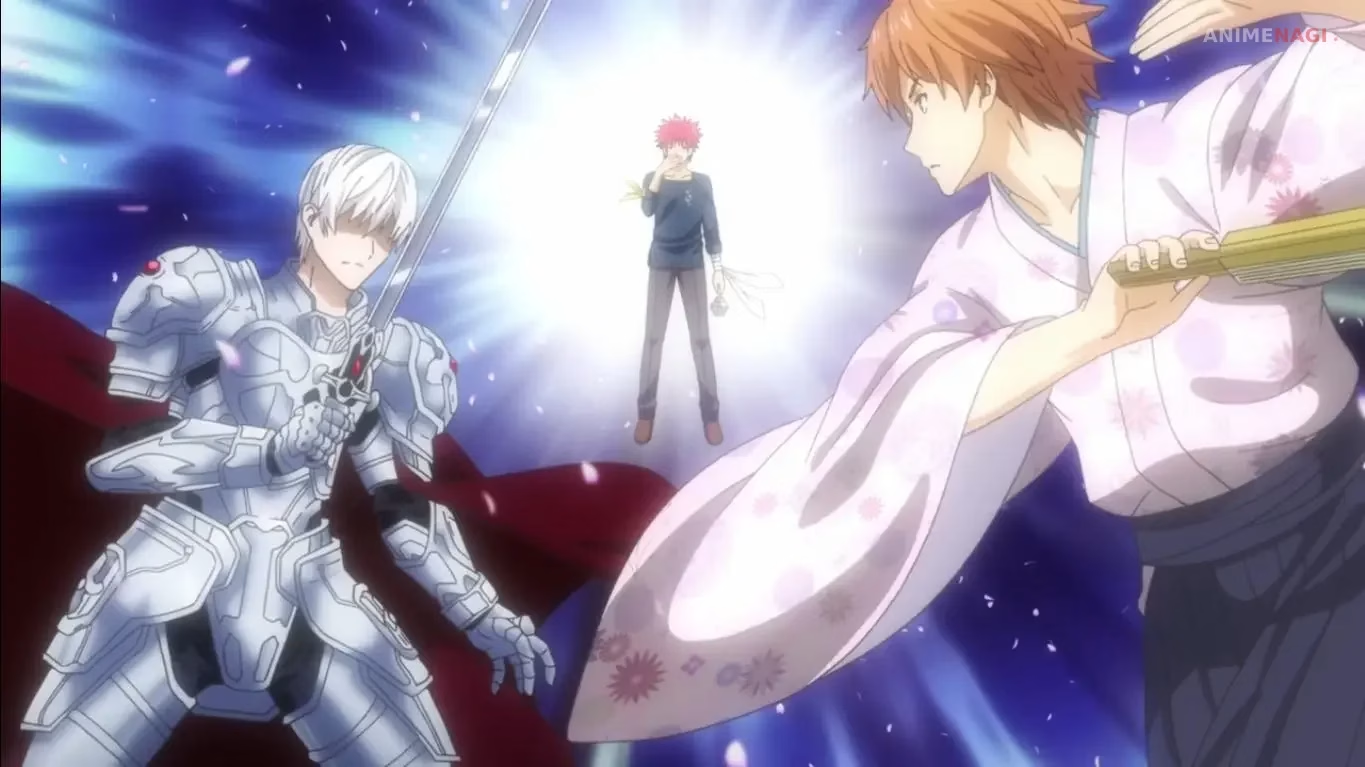
Throughout these battles, characters are forced to refine their cooking styles while also adapting to team-based strategies. This combination of individual creativity and coordinated effort creates a unique competitive dynamic that sets Season 4 apart from earlier arcs. By the end of the season, the Central organization’s control over Totsuki begins to collapse, marking a major turning point in the academy’s future.
Season 4 represents a major leap in Soma Yukihira’s development as a chef. While earlier seasons showed his raw talent and creativity, this arc forces him to compete against the absolute best students in Totsuki Academy.
His battles against Elite Ten members push him to refine his techniques and expand his culinary understanding. Instead of relying purely on instinct, Soma begins incorporating more precise strategies and deeper knowledge of ingredients. This shift reflects his growth from a talented underdog into a serious contender within the academy’s top ranks.
One of the most important aspects of Soma’s development is his ability to remain unpredictable. Even when facing opponents with more formal training, he continues to experiment with unconventional combinations and bold presentation styles. This willingness to take risks becomes one of his greatest strengths during the Regiment de Cuisine.
Season 4 ultimately positions Soma as someone capable of challenging the highest level of culinary excellence at Totsuki.
Erina Nakiri’s Leadership Defines the Arc
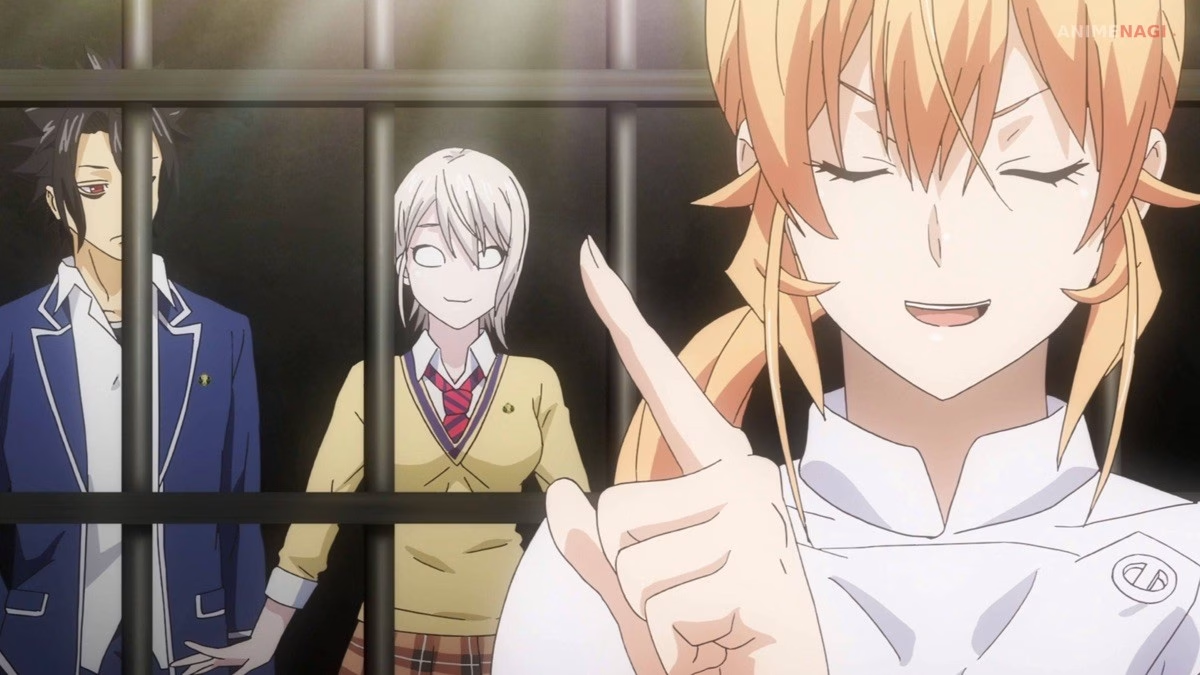
Another major change in Season 4 is the evolution of Erina Nakiri. Earlier in the series, Erina struggled with the pressure of her family’s expectations and her father’s control. The Central arc forces her to confront these issues directly and step into a leadership role.

As the Rebels’ figurehead, Erina becomes responsible for guiding the group both strategically and emotionally. Her growth is not just about improving her cooking, but about gaining the confidence to oppose Azami Nakiri’s authoritarian vision for Totsuki.
Erina’s leadership also symbolizes the broader theme of the arc. The conflict is not just about winning cooking battles, but about defending creative freedom against rigid control. By standing against her father, Erina represents a new direction for the academy. This character development becomes one of the emotional cores of Season 4 and plays a key role in the arc’s resolution.
Season 4 transforms the Elite Ten Council into full-fledged antagonists. Under Central’s control, these top-ranked chefs enforce strict rules that limit creativity and prioritize conformity. This shift changes the tone of the series, making the conflict feel more serious and ideological.
Characters like Tsukasa Eishi and Rindo Kobayashi represent the peak of culinary skill within the academy. Their presence raises the level of competition significantly, forcing the Rebels to perform at their absolute best. According to analysis from anime coverage, these battles showcase some of the most technically advanced cooking in the series.
At the same time, the Elite Ten are not purely villainous. Many of them genuinely believe in Central’s vision of creating a more structured culinary system. This nuance adds depth to the conflict and prevents it from becoming overly simplistic. Their role in Season 4 highlights the tension between tradition and innovation that defines the series.
How the Regiment de Cuisine Changed the Series
The introduction of the Regiment de Cuisine is one of the most significant changes in Season 4. Unlike previous shokugeki battles, this format emphasizes teamwork and strategy alongside individual skill. Each match contributes to the outcome, creating a sense of continuity and escalating tension.
This structure allows multiple characters to shine within a single arc. Instead of focusing only on Soma, the series highlights the growth of the entire Rebel group. This broader focus helps expand the scope of the story while maintaining strong character development.
The team-based format also reflects the real-world dynamics of professional kitchens, where collaboration is essential. By incorporating this element, Season 4 adds a layer of realism to its competitive cooking framework. Overall, the Regiment de Cuisine represents a major evolution in how Food Wars presents its culinary battles.
What Changed in Shokugeki no Soma After Season 4
By the end of Season 4, Totsuki Academy undergoes a significant transformation. Central’s influence is removed, and the academy returns to a more open and creative environment. This change resets the power structure and allows characters to explore new directions in their culinary journeys.
However, this shift also marks the end of one phase of the series. The Central arc provided a clear overarching conflict that unified the story. After its conclusion, the narrative moves toward new challenges that take a different approach to storytelling.
Many fans consider Season 4 to be the peak of the series’ structured competition. According to discussions and reviews, the arc delivers some of the most satisfying character payoffs and high-stakes battles in Food Wars. At the same time, it sets expectations for future arcs that become harder to meet due to the scale and intensity of this storyline.
Why Season 4 Is One of Food Wars’ Most Important Arcs
Season 4 stands out as one of the most important parts of Shokugeki no Soma because it brings together the series’ core themes in a single, high-stakes conflict. It explores the balance between creativity and control, individual talent and teamwork, and tradition versus innovation.
The arc also delivers major character development for Soma, Erina, and the supporting cast. Each character is pushed to their limits, resulting in growth that feels earned and meaningful. This level of development is one reason why the season remains memorable for many fans.
Most importantly, Season 4 redefines what Food Wars can be as a story. It proves that the series can handle large-scale conflicts and complex themes while still delivering exciting and visually engaging cooking battles.
That combination of storytelling, character growth, and competitive intensity is why Food Wars Season 4 continues to be seen as a defining moment in the franchise.