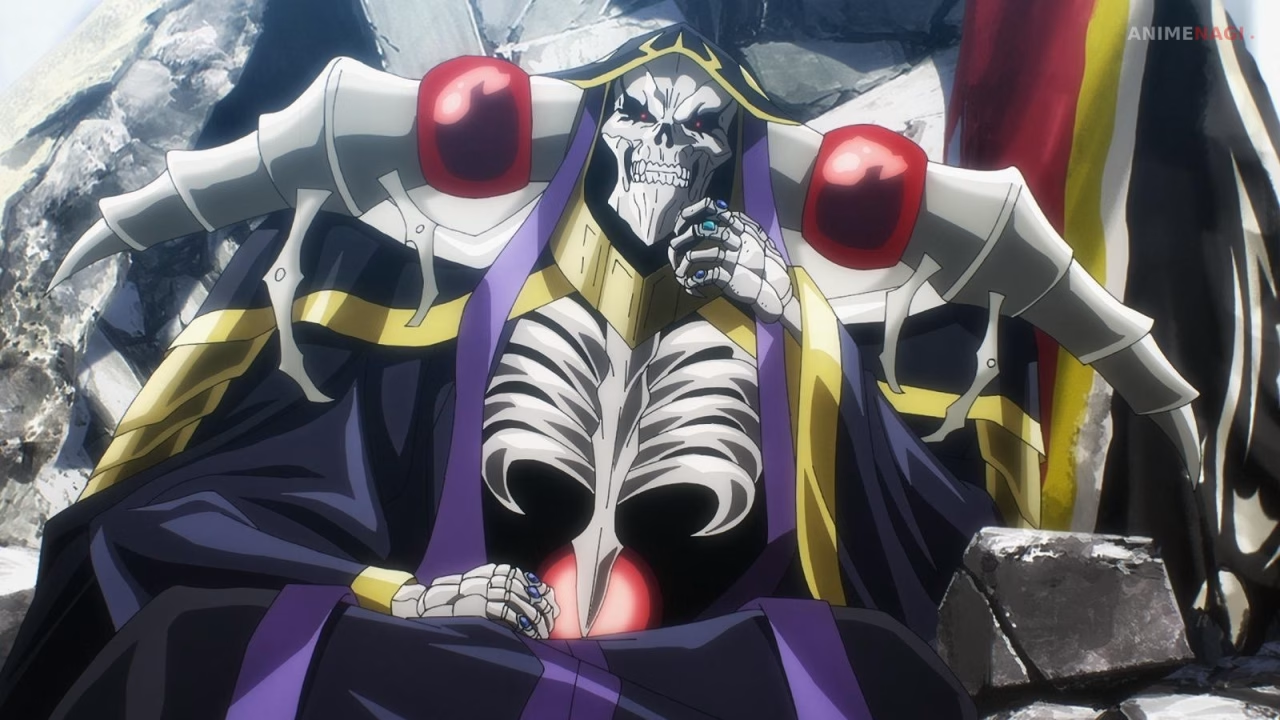
Overlord Season 4 marked one of the most important turning points in the franchise. Unlike previous seasons that focused heavily on battles and displays of overwhelming power, this installment shifted toward politics, diplomacy, nation-building, and the terrifying consequences of Ainz Ooal Gown’s growing influence. The season follows the Sorcerer Kingdom as it expands its reach across the New World while neighboring nations struggle to understand whether Ainz is a benevolent ruler or an unstoppable conqueror.
The anime adaptation covered major events from the Overlord light novels, focusing primarily on the Sorcerer Kingdom’s political growth, the Dwarven Kingdom storyline, and the devastating conflict with the Re-Estize Kingdom. The season also continued one of the series’ most fascinating themes: Ainz often achieves world-changing victories despite frequently being unsure of what he is doing. His subordinates constantly interpret his accidental actions as signs of genius, leading Nazarick further down the path of conquest.
Let’s break down everything that happened in Overlord Season 4 and explain its ending.
Why Ainz Wants to Build the Sorcerer Kingdom
At the beginning of Season 4, Ainz finds himself struggling with the responsibilities of ruling a nation. After establishing the Sorcerer Kingdom at the end of Season 3, he realizes that governing people is far more difficult than defeating enemies in battle. While Demiurge and Albedo continue developing long-term strategies for expansion, Ainz secretly worries that he lacks the leadership skills expected from a ruler.
Despite those concerns, Ainz has a genuine goal. He wants to create a nation where different races can coexist peacefully under his rule. This vision partly comes from his memories of former guild members and his hope that someone from Yggdrasil may eventually discover his kingdom. The Sorcerer Kingdom is intended to become a symbol powerful enough to attract attention across the world.
The problem is that Ainz’s followers often misunderstand his intentions. Whenever he makes an offhand comment, Nazarick’s guardians interpret it as part of a grand master plan. As a result, even peaceful objectives frequently evolve into aggressive expansion campaigns that increase the Sorcerer Kingdom’s dominance.

The Baharuth Empire Becomes a Puppet State
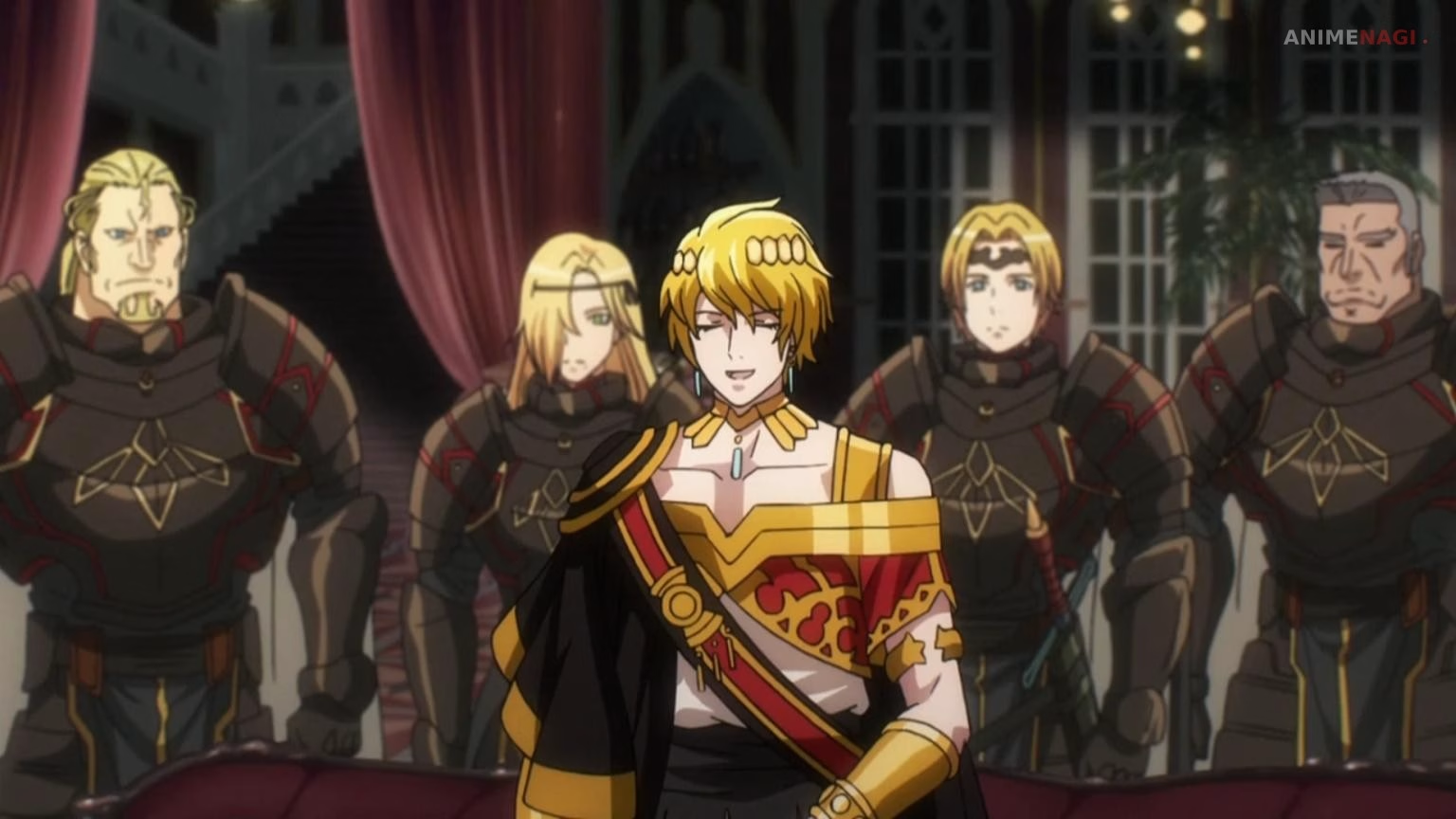
One of the earliest developments in Season 4 involves the Baharuth Empire and Emperor Jircniv Rune Farlord El Nix. By this point, Jircniv fully understands that opposing Ainz is hopeless. Earlier seasons already demonstrated Nazarick’s overwhelming military superiority, and the emperor knows his nation cannot survive a direct confrontation.
Season 4 shows Jircniv living under constant stress as he attempts to navigate his relationship with the Sorcerer Kingdom. Every interaction with Ainz feels like a life-or-death political negotiation. Ironically, many of Jircniv’s fears come from overestimating Ainz’s intentions. While Ainz is often improvising, outsiders assume every action has a hidden strategic purpose.
The empire eventually submits itself as a vassal state. This allows Ainz to expand his influence without launching a costly invasion. It also demonstrates one of Nazarick’s preferred methods of conquest. If a nation willingly accepts Sorcerer Kingdom rule, it can avoid the destruction that usually follows resistance.
The Dwarven Kingdom Arc Explained
The middle portion of Overlord Season 4 focuses on Ainz’s expedition to the Dwarven Kingdom. This storyline initially appears disconnected from the larger political conflicts, but it plays a major role in Nazarick’s economic and military development.
Ainz learns about ancient rune technology, a crafting method that has been largely forgotten. Believing the technology may have practical applications, he travels to the Dwarven Kingdom and offers assistance. The dwarves are facing extinction after being displaced by invading Quagoa and threatened by powerful Frost Dragons.
Rather than simply sending troops, Ainz personally becomes involved in the conflict. This allows him to investigate the situation while simultaneously strengthening diplomatic relations. His intervention quickly changes the balance of power because none of the local factions possess anything close to Nazarick’s military strength.
The arc highlights an important aspect of Ainz’s character. While he is capable of horrific violence, he often prefers mutually beneficial arrangements when possible. Instead of conquering the dwarves outright, he offers protection and partnership. In return, the Sorcerer Kingdom gains access to valuable resources and skilled craftsmen.
The victory also sends another message to surrounding nations. Cooperation with Nazarick can bring prosperity and security. Resistance usually leads to annihilation.
Why Rune Technology Matters
The focus on rune technology may seem unusual compared to the series’ larger conflicts, but it serves an important purpose. Ainz recognizes that relying solely on Nazarick’s existing magical resources could become a weakness in the future. Developing alternative technologies creates opportunities for long-term growth.
The dwarves represent something Nazarick lacks: centuries of specialized craftsmanship and knowledge. By integrating these talents into the Sorcerer Kingdom, Ainz expands his nation’s capabilities beyond simple military dominance.
This storyline reinforces a recurring theme throughout Season 4. Ainz is no longer acting solely as an adventurer or guild leader. He is gradually becoming the ruler of a growing civilization. Every alliance, trade agreement, and technological discovery contributes to Nazarick’s future strength.
At the same time, neighboring countries become increasingly alarmed. Every successful diplomatic venture makes the Sorcerer Kingdom more powerful and more difficult to oppose.
What Caused the Re-Estize Kingdom War?
The most important storyline in Overlord Season 4 involves the downfall of the Re-Estize Kingdom. This conflict becomes the centerpiece of the season’s final episodes and delivers some of the series’ most tragic moments.
The war begins after a noble named Philip commits a disastrous act by attacking grain shipments belonging to the Sorcerer Kingdom. Philip believes he can gain political influence through his actions, but he completely misjudges the situation. His reckless decision gives Nazarick the justification it needs to respond aggressively.
From a diplomatic perspective, the attack is treated as a direct insult against the Sorcerer Kingdom. While some leaders within Re-Estize understand the danger, internal corruption and political incompetence prevent an effective response. The kingdom’s leadership is divided, weak, and unable to address the growing crisis.
For Nazarick, the incident becomes an opportunity to make an example of a nation that failed to respect its authority. What begins as a political dispute quickly transforms into a campaign of total destruction.
Why Ainz Destroys the Kingdom
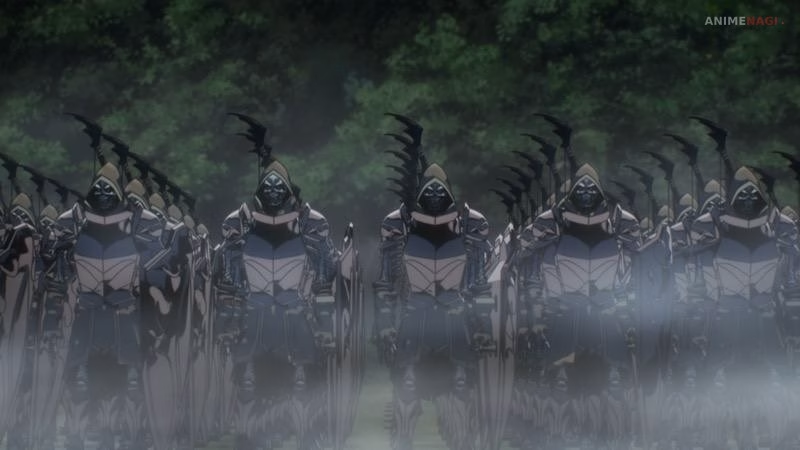
One of the biggest questions viewers ask after finishing Season 4 is why Ainz chooses such an extreme response. Destroying an entire kingdom appears excessive compared to the original offense.
The answer lies partly in Nazarick’s philosophy of deterrence. Demiurge and Albedo believe overwhelming retaliation will discourage future resistance. If other nations witness the consequences of challenging the Sorcerer Kingdom, they will be more likely to submit peacefully.
Ainz himself is not always comfortable with the brutality of these plans. However, he often goes along with them because he trusts his subordinates’ judgment and wants to maintain the image of an infallible ruler. This creates one of the series’ darkest dynamics. Ainz frequently becomes trapped by expectations he never intended to create.
The destruction of Re-Estize, therefore, serves both practical and symbolic purposes. It eliminates a politically unstable neighbor while demonstrating the terrifying power of Nazarick to the rest of the world.
The Deaths of Zanac and Brain Unglaus
Season 4 includes several emotional character moments during the fall of Re-Estize. Among the most significant is the fate of Prince Zanac.
Unlike many nobles within the kingdom, Zanac eventually matures into a competent leader. He recognizes the hopelessness of the situation and attempts to protect his people. His conversation with Ainz reveals mutual respect between two leaders facing impossible circumstances.
Unfortunately, Zanac never receives the opportunity to save his nation. Corrupt nobles murder him in a desperate attempt to earn Nazarick’s favor. Their plan fails immediately, and the act only highlights the kingdom’s moral collapse. Many fans viewed Zanac as one of the season’s most tragic figures because he finally became the ruler his country needed just as everything fell apart.
Brain Unglaus also receives a memorable conclusion. Having spent much of the series pursuing strength, Brain chooses to make a final stand against Nazarick’s advance. He knows victory is impossible, yet he fights to protect his homeland and preserve his dignity.
His last battle symbolizes the end of an era. Human warriors who once represented the world’s strongest fighters are now insignificant compared to Nazarick’s monsters.
Renner’s Surprising Betrayal Explained

Another major revelation involves Princess Renner. For years, she appeared to be a compassionate royal dedicated to helping her people. Season 4 finally exposes her true nature.
Renner has always been an extraordinary genius who viewed most people as insignificant. Her only genuine emotional attachment is Climb. Everything she does is ultimately designed to secure a future where she can remain with him forever.
To achieve that goal, she secretly collaborates with Nazarick. In exchange for her loyalty, she receives the opportunity to abandon her human identity and stay beside Climb under Nazarick’s protection.
This twist recontextualizes many of her earlier actions. What seemed like selfless kindness often concealed deeper personal motivations. Renner becomes one of Overlord’s most unsettling characters because her cheerful personality hides an incredibly calculating mind.
Overlord Season 4 Ending Explained
The season concludes with the complete destruction of the Re-Estize Kingdom. Nazarick’s forces overwhelm any remaining resistance, and the Sorcerer Kingdom emerges stronger than ever.
For Ainz, the victory represents another step toward global dominance. More importantly, it reinforces his reputation as an unstoppable ruler whose power surpasses anything the New World can challenge. Nations that once considered resisting Nazarick now understand the consequences of doing so.
The ending also emphasizes how isolated Ainz has become. Although he possesses immense power and countless loyal followers, he continues to struggle with uncertainty and loneliness. Many of his greatest achievements occur because others misinterpret his intentions rather than because of deliberate planning.
At the same time, Nazarick’s influence continues spreading across the continent. Former enemies become allies, independent nations become vassals, and potential threats disappear one by one. The balance of power has shifted so dramatically that few forces remain capable of opposing the Sorcerer Kingdom.
How Season 4 Connects to the Sacred Kingdom Story
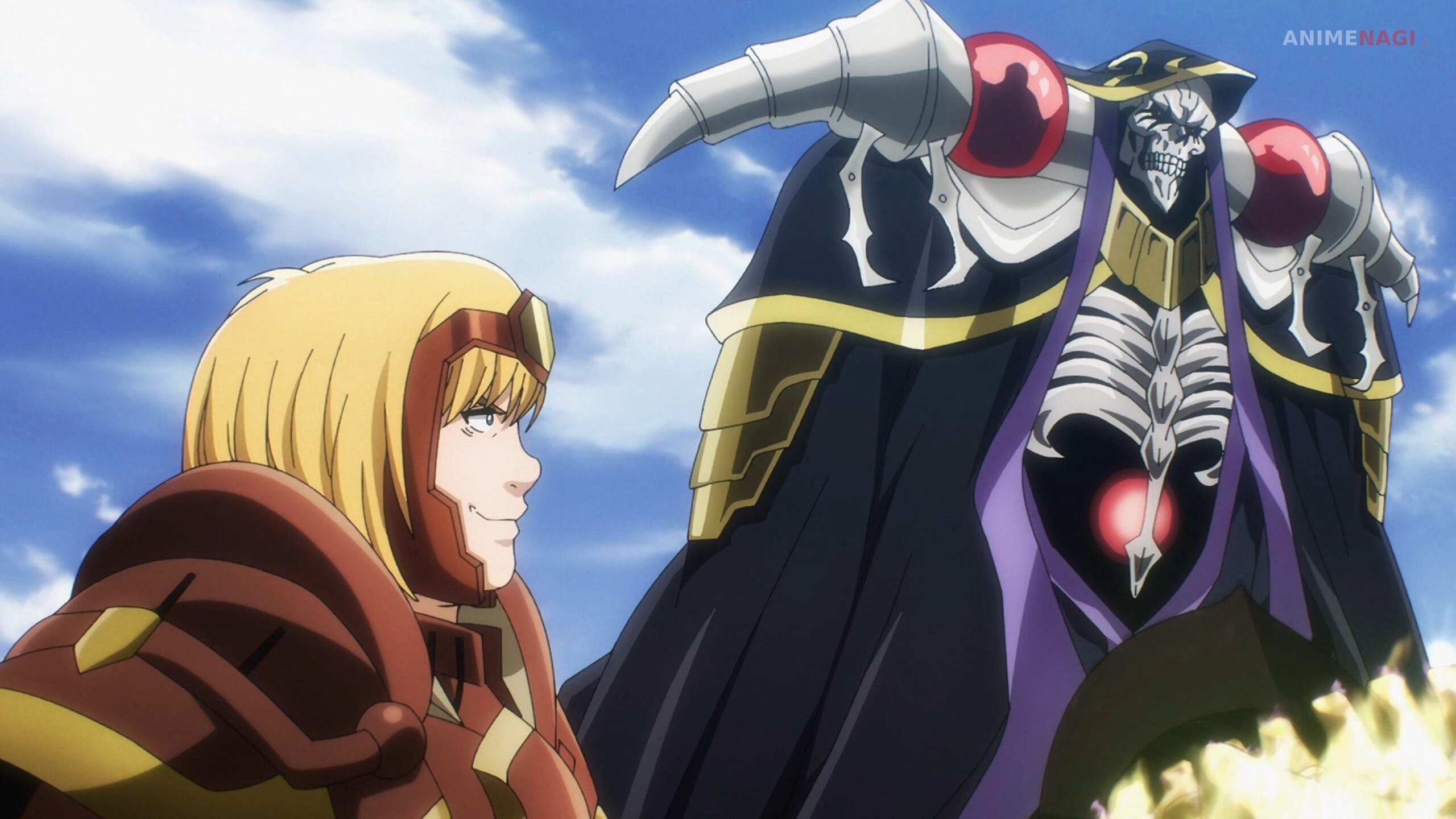
Some viewers noticed that certain light novel storylines were not adapted during Season 4. That is because the anime skipped material that was later adapted in Overlord: The Sacred Kingdom. The film covers the Holy Kingdom storyline and bridges important events occurring alongside the season’s main narrative.
Season 4 primarily adapts material from light novel volumes 10, 11, and 14, while the Holy Kingdom arc from volumes 12 and 13 was reserved for the movie adaptation. This explains why some narrative transitions feel unusual compared to earlier seasons.
The Sacred Kingdom storyline further expands Ainz’s influence and continues exploring how the world reacts to the growing power of Nazarick. It also pushes the series closer to its eventual endgame.
Overlord Season 4 is less about traditional hero-versus-villain storytelling and more about watching a fantasy world’s political order collapse under the weight of an unstoppable force. The season explores diplomacy, leadership, loyalty, and the consequences of absolute power while continuing Ainz’s transformation from trapped gamer to legendary ruler.
The Dwarven Kingdom arc demonstrates how Nazarick can build alliances through cooperation, while the destruction of Re-Estize shows what happens when diplomacy fails. Together, these storylines reveal the dual nature of Ainz’s empire. It can offer prosperity and protection, but it can also erase entire nations without hesitation.
By the end of Season 4, the Sorcerer Kingdom stands stronger than ever. Yet the biggest question remains unchanged. Is Ainz truly building a peaceful utopia, or is he unknowingly becoming the greatest threat the New World has ever faced?
Another key takeaway from Overlord Season 4 is how the world itself begins to psychologically shift in response to Ainz’s actions. Rulers and citizens alike no longer see the Sorcerer Kingdom as just another political power but as an inevitable force that cannot be resisted through conventional means.
This growing fear plays directly into Nazarick’s long-term advantage, as many nations begin to consider submission before conflict even arises. At the same time, this fear-based stability raises deeper questions about whether peace achieved through absolute dominance can truly last, especially when built on terror rather than trust.