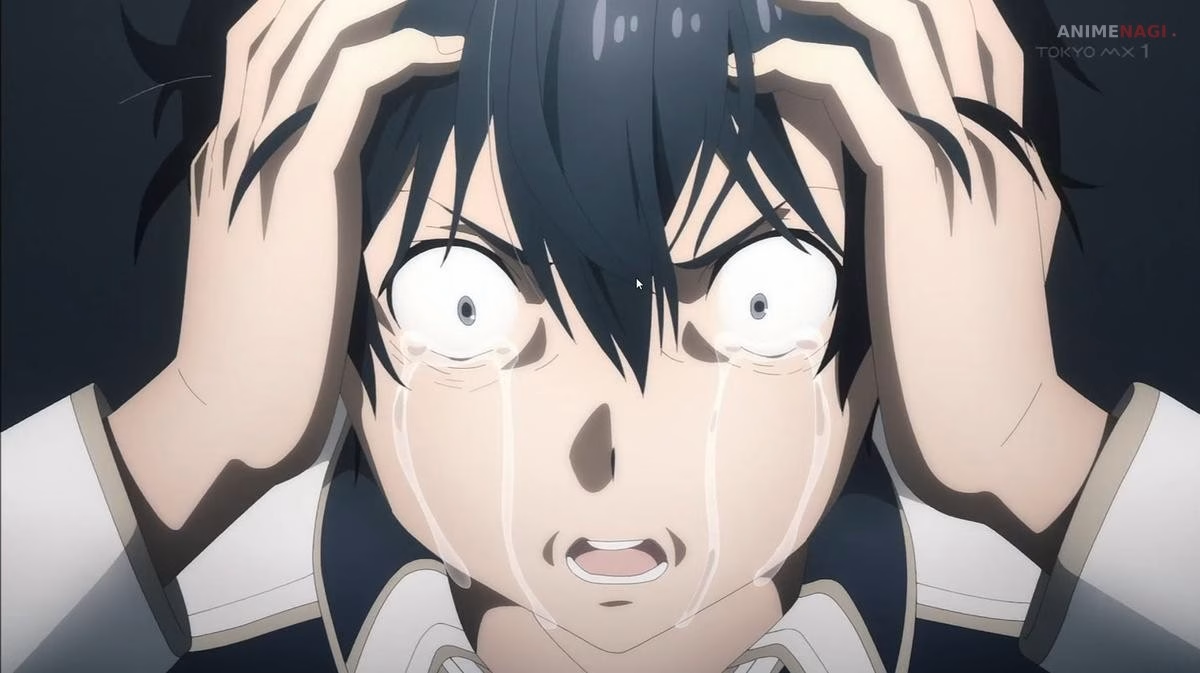
One of the most stunning moments in the entire Sword Art Online franchise happened during the Alicization arc when Kirito mentally collapsed after witnessing Eugeo’s death. For many viewers, the scene completely changed the tone of the series. Kirito, who had spent years surviving death games, defeating powerful enemies, and protecting his friends, suddenly became emotionally broken and almost completely unresponsive.
The moment stood out because Sword Art Online had rarely portrayed Kirito as psychologically powerless for such a long period. Earlier arcs showed him struggling with trauma and survivor’s guilt, but Alicization pushed those emotions further than ever before. Instead of overcoming pain through determination alone, Kirito finally reached a breaking point where his accumulated trauma overwhelmed him completely.
His mental breakdown also became one of the most important turning points in Alicization’s story. It forced characters like Asuna, Alice, and the Underworld inhabitants to fight without relying on Kirito as the central hero. More importantly, the breakdown revealed how deeply the events of Sword Art Online, Gun Gale Online, and Alicization had damaged him psychologically.
Let’s break down what caused Kirito’s collapse, why Eugeo’s death affected him so severely, and how Alicization used the moment to transform both Kirito and the series itself.
What Happened to Kirito in Alicization?
Kirito’s breakdown happened near the end of the first major phase of Alicization during the battle against Administrator, the ruler of the Human Empire. After a long and brutal confrontation, Eugeo sacrificed himself to defeat Administrator and save Kirito, Alice, and the Underworld. According to official summaries of Sword Art Online: Alicization, Eugeo’s death became the emotional trigger that shattered Kirito mentally. However, Eugeo’s death alone was not the only reason for his collapse.
Immediately afterward, an attack in the real world damaged the Soul Translator system connected to Kirito’s Fluctlight, the digital representation of his soul. The overload severely injured his consciousness and left him trapped in a catatonic state inside the Underworld.
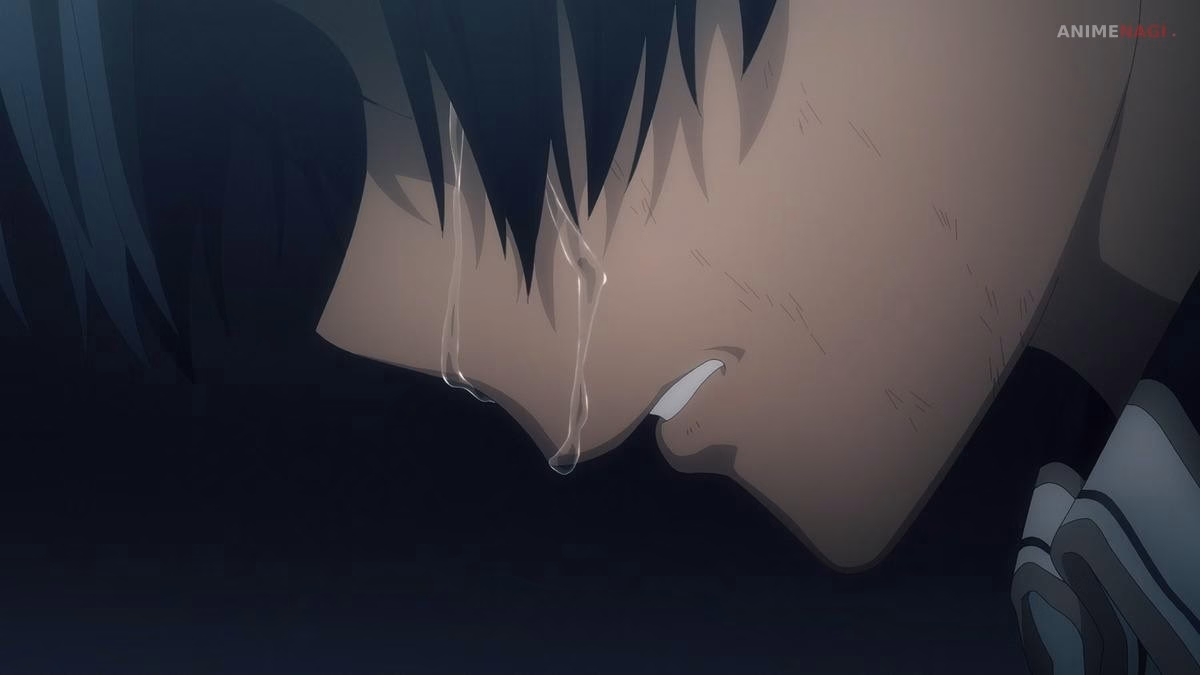
This combination of technological damage and emotional trauma created the perfect psychological breaking point. Kirito was not simply unconscious. His mind had effectively stopped functioning properly because he subconsciously rejected reality after losing Eugeo.
The anime visually represented this state by showing Kirito unable to respond emotionally or verbally. He could barely move, speak, or react to the people around him. For a character who usually carried the narrative through confidence and action, the contrast was devastating.
The breakdown also lasted far longer than many fans expected. Instead of recovering quickly, Kirito remained mentally shattered through a large portion of the War of Underworld arc, fundamentally changing the story’s structure.
Why Eugeo’s Death Destroyed Kirito Emotionally
Eugeo’s death hit Kirito harder than many previous losses because of what Eugeo represented emotionally.
Unlike most relationships Kirito formed inside virtual worlds, his bond with Eugeo developed over years within the Underworld. Due to the accelerated fluctlight time system, Kirito essentially lived an entirely separate life alongside Eugeo and Alice. The friendship became more emotionally grounded and personal than many of his earlier partnerships.
Eugeo also symbolized innocence and humanity within Alicization. While Kirito carried years of trauma from surviving death games, Eugeo initially viewed the world with curiosity and sincerity. Their relationship allowed Kirito to reconnect with a simpler and more hopeful version of himself.
When Eugeo sacrificed himself, Kirito blamed himself immediately. This reaction aligned with Kirito’s long history of survivor’s guilt throughout the franchise. According to character analyses and official summaries discussing Kirito, he consistently struggles with guilt tied to the deaths of people he could not save.
The Alicization arc intensified those feelings because Kirito believed he had dragged Eugeo into a conflict far beyond his understanding. Even though Eugeo willingly chose to fight, Kirito internalized the loss as another personal failure.
The emotional impact was further amplified because Eugeo died directly in front of him. The scene forced Kirito to witness the destruction of someone who had become like a brother. Unlike earlier tragedies in Sword Art Online, there was no emotional distance or delayed realization. The loss happened immediately and violently.
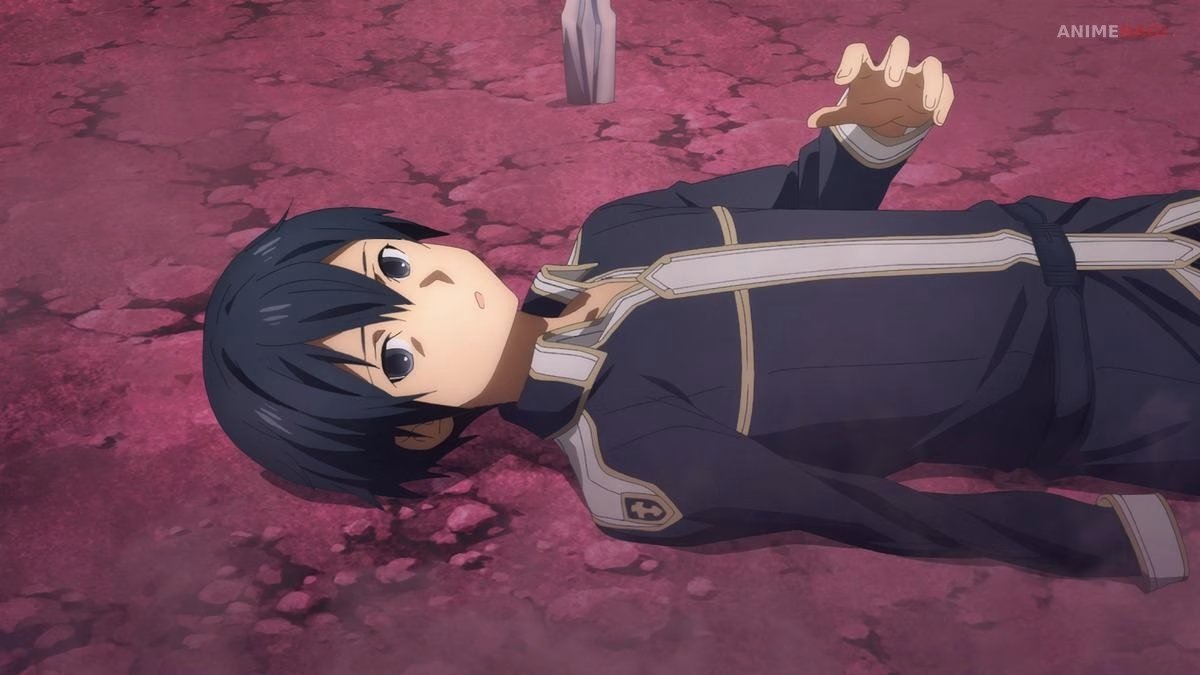
For Kirito, Eugeo’s death represented the collapse of the peaceful life he briefly believed he could protect inside the Underworld.
The Breakdown Was Connected to Kirito’s Past Trauma
Kirito’s collapse in Alicization did not happen in isolation. The series had been building toward this psychological breaking point for years.
Since the original Sword Art Online arc, Kirito has repeatedly experienced traumatic events involving death, responsibility, and survival. He watched players die during SAO, blamed himself for the Moonlit Black Cats tragedy, confronted murderers in Gun Gale Online, and constantly carried the pressure of protecting others.
Earlier arcs often showed hints of emotional damage beneath his calm exterior. However, Kirito usually pushed forward through action and responsibility instead of properly processing his trauma. Alicization finally removed his ability to keep functioning through sheer willpower.
The Underworld itself also intensified emotional experiences because the Soul Translator technology interacted directly with the soul rather than traditional sensory simulation. According to official Alicization descriptions, the Underworld used Fluctlight technology to create fully realistic human consciousness.
As a result, Kirito’s experiences there felt psychologically real in a way earlier virtual worlds did not. His friendships, memories, and grief carried the emotional weight of actual lived experiences rather than game interactions.
When Eugeo died, all of Kirito’s unresolved trauma resurfaced simultaneously. The anime repeatedly hints that his mind simply could not carry the emotional burden anymore.
This aspect of Alicization is important because it reframes Kirito’s character. Instead of portraying him as an invincible hero, the story acknowledges the long-term psychological consequences of everything he endured since SAO began.
Why Kirito Stayed Catatonic for So Long
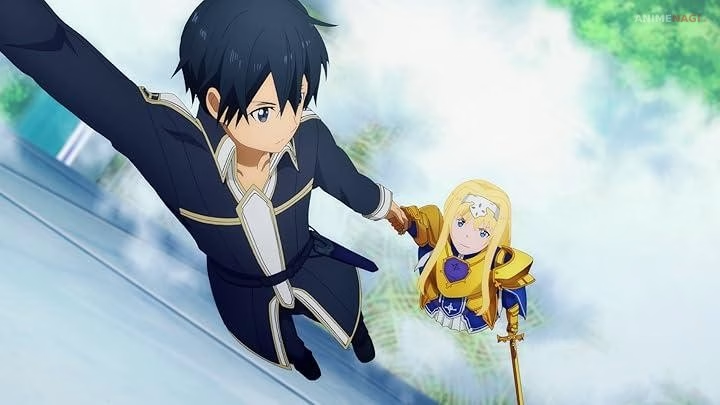
Many viewers were surprised by how long Kirito remained mentally incapacitated during the War of Underworld. Instead of recovering after a few episodes, he stayed almost entirely unresponsive for a major portion of the arc. Narratively, this decision served several purposes.
First, it shifted the focus toward other characters. Alice, Asuna, Sinon, and the Underworld fighters were forced to take active roles without depending on Kirito to solve every conflict. This expanded the scale of Alicization and allowed supporting characters to develop independently.
Second, the prolonged breakdown emphasized that psychological trauma cannot always be resolved instantly. Sword Art Online had often been criticized for resolving emotional conflicts too quickly in earlier arcs. Alicization approached Kirito’s mental collapse more seriously by showing that recovery required time, emotional support, and confrontation with his guilt.
The anime visually reinforced this by portraying Kirito almost like an empty shell. He reacted weakly to voices and memories but remained trapped within his own mind.
Asuna’s arrival became especially important because she represented Kirito’s strongest emotional connection to reality. Her presence reminded viewers that fragments of his true self still remained despite the damage.
The prolonged catatonic state also increased tension within the War of Underworld arc. The heroes were essentially fighting a massive war while their strongest fighter remained unable to act.
How Kirito Finally Recovered
Kirito’s recovery finally happened during the climax of War of Underworld when memories, emotional connections, and outside support helped rebuild his shattered consciousness.
The turning point came when voices from the people he cared about reached him emotionally. Eugeo’s memory also played a critical role in helping Kirito confront his guilt rather than continue escaping from it.
Instead of simply “powering up,” Kirito’s recovery symbolized acceptance. He finally stopped viewing himself solely as someone responsible for every tragedy around him. That emotional shift allowed him to reconnect with his identity and purpose.
The scene worked because the story treated recovery as emotional healing rather than a sudden magical fix. Kirito regained strength only after acknowledging both his pain and the people still fighting beside him.
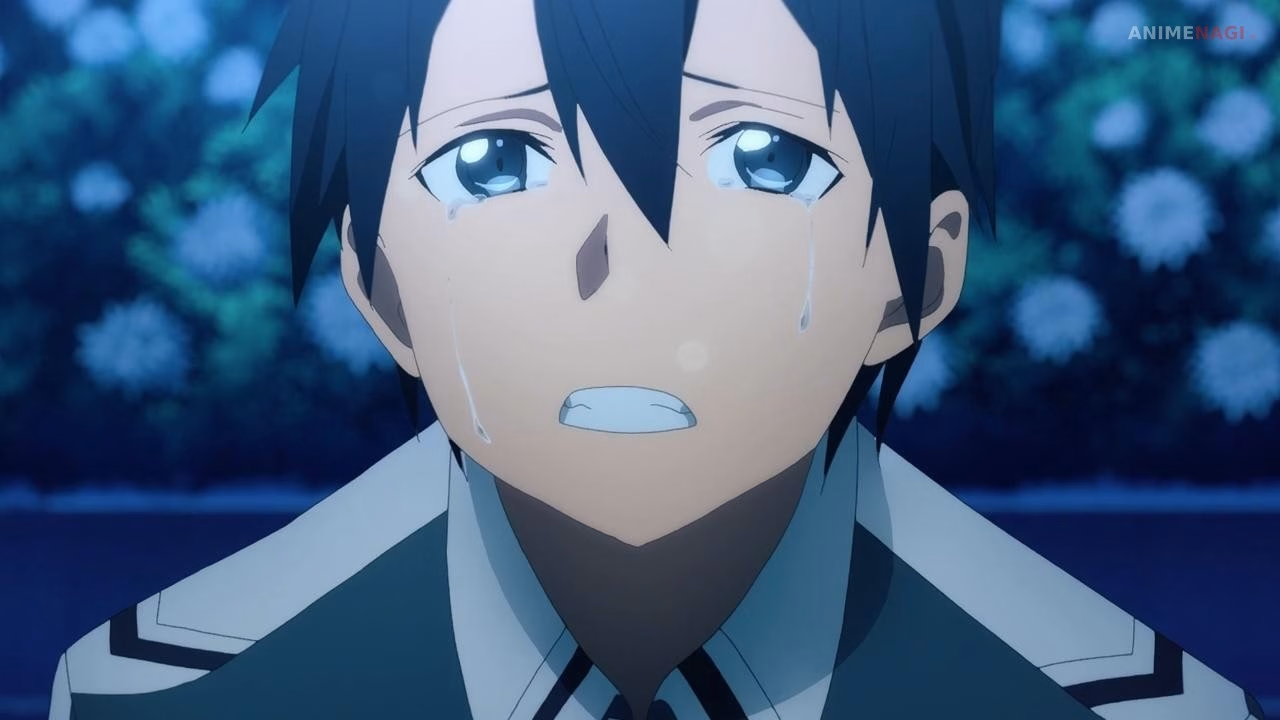
His return also carried enormous narrative payoff because the audience had spent so long watching the world continue without him. When Kirito finally reentered the battle, the moment felt genuinely earned.
Why Kirito’s Breakdown Changed Sword Art Online
Kirito’s mental breakdown became one of the most important moments in Sword Art Online because it fundamentally changed how the series portrayed him.
For years, critics often viewed Kirito as overly capable and emotionally invincible compared to other anime protagonists. Alicization challenged that perception directly by showing the long-term consequences of trauma and survivor’s guilt.
The breakdown also deepened the emotional themes of the franchise. Instead of focusing only on action and virtual-world mechanics, Alicization explored identity, psychological damage, grief, and recovery in far greater detail.
More importantly, the arc humanized Kirito in a way earlier seasons rarely attempted. His collapse proved that even someone who repeatedly saves others can eventually break under emotional pressure.
That vulnerability ultimately made his recovery more meaningful. Kirito did not return stronger because he ignored his pain. He recovered because he finally accepted help from the people who cared about him.
Another key aspect of Kirito’s breakdown is how it reframes strength within Sword Art Online. Up until Alicization, strength was often defined through combat ability, quick thinking, and the will to keep fighting. However, Kirito’s collapse shows that emotional endurance is just as important, if not more.
Despite being one of the strongest fighters in the series, he is ultimately defeated by his own unresolved trauma rather than any enemy. This shift in perspective adds depth to the narrative by highlighting that true growth comes from confronting pain instead of suppressing it, making Kirito’s eventual recovery far more meaningful and grounded.