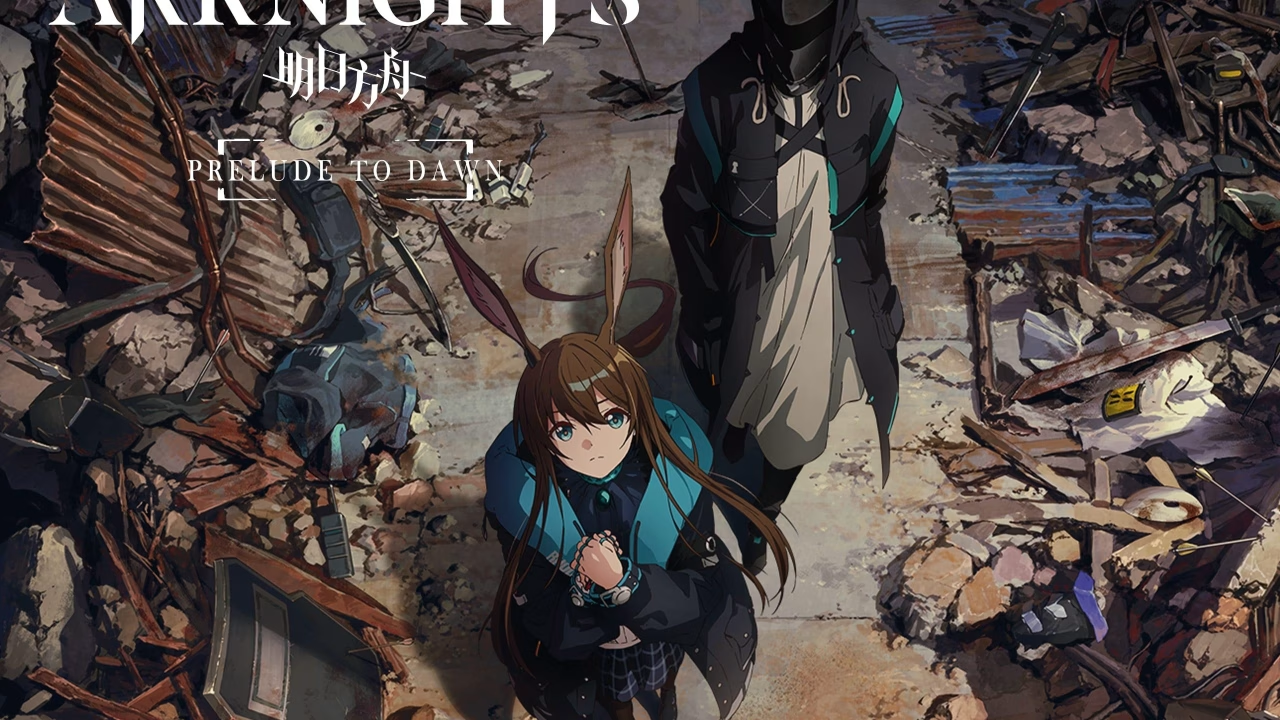
Arknights: Prelude to Dawn is far more than a standard action anime based on a mobile game. While many viewers initially approached the series expecting simple tactical battles and futuristic warfare, the anime quickly revealed itself as a darker and more emotionally layered story centered around disease, discrimination, political instability, and survival. Adapted from the massively popular Arknights mobile game developed by Hypergryph, the anime serves as the beginning of the franchise’s larger narrative known as the Reunion Arc.
The story follows Rhodes Island, a pharmaceutical and paramilitary organization, trying to help people infected by a deadly disease called Oripathy. At the same time, they become trapped in a violent conflict against Reunion, a militant movement made up largely of infected individuals who have suffered years of oppression. Through characters like Amiya, the Doctor, Talulah, and Ch’en, the anime explores morally gray conflicts where no side is completely innocent.
Understanding Prelude to Dawn requires understanding the world of Terra itself. The anime throws viewers directly into a politically unstable setting filled with catastrophe storms, mobile cities, infected discrimination, and supernatural energy called Arts. Rather than explaining everything immediately, the series slowly reveals how Terra functions while the characters struggle to survive escalating violence.
The story begins with the Doctor awakening in Chernobog
The anime starts inside the Ursus city of Chernobog, where Rhodes Island launches a dangerous rescue mission to retrieve an important strategist known simply as the Doctor. The Doctor had previously entered cryogenic sleep inside a mysterious underground structure called the Sarcophagus. However, by the time Rhodes Island arrives, Chernobog has already fallen into chaos due to a violent uprising organized by Reunion.
When Amiya and the Rhode Island operators awaken the Doctor, they discover the protagonist has complete amnesia. The Doctor remembers almost nothing about their past, identity, or strategic knowledge. This narrative device also allows new viewers to learn about Terra alongside the protagonist instead of being overwhelmed by lore immediately.
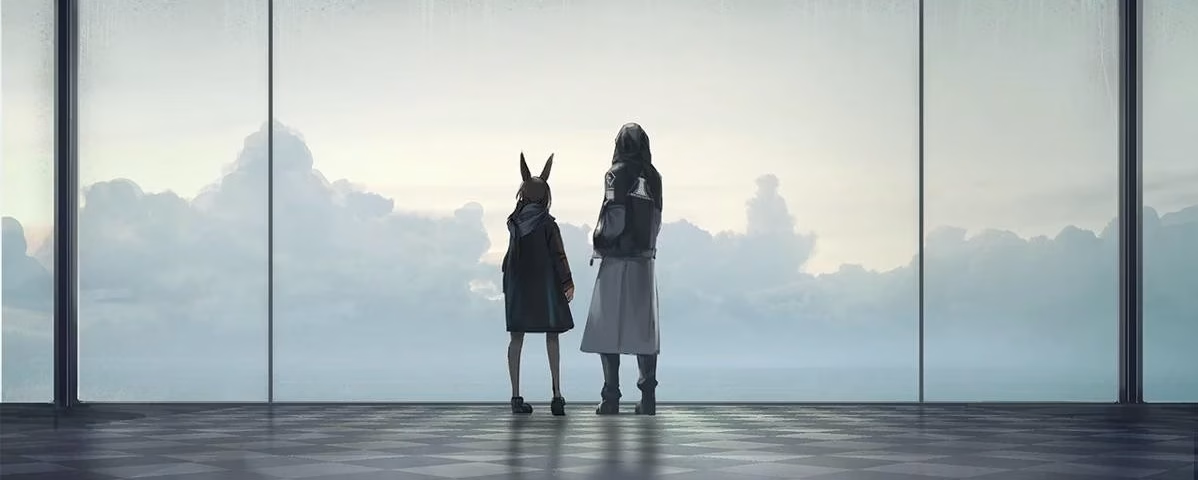
The rescue quickly turns dangerous because Reunion militants are already attacking the city during an incoming Catastrophe. Rhodes Island must escort the Doctor through collapsing streets, riots, and armed conflict while trying to escape before the city is destroyed completely.
This opening establishes the anime’s darker tone immediately. Unlike many fantasy action series, Prelude to Dawn focuses heavily on civilian suffering, fear, and social collapse during crisis situations.
Terra is a dystopian world built around Originium
The world of Terra functions very differently from a normal fantasy or sci-fi setting. One of the most important concepts in Arknights lore is Originium, a mysterious crystal-like mineral spread across the planet through catastrophic natural disasters known as Catastrophes. Originium powers much of Terra’s technology and energy systems, making it economically essential despite its dangers.
However, exposure to Originium also causes a deadly disease called Oripathy. Individuals infected with Oripathy gradually develop crystal growths across their bodies while their condition worsens over time. Although the disease is not easily transmitted through normal contact, fear and misinformation caused governments and societies across Terra to discriminate heavily against infected people.
This discrimination became one of the franchise’s central themes. Infected citizens are often isolated, denied rights, forced into slums, or treated like dangerous contaminants. Many lose jobs, homes, and legal protections simply because they carry Oripathy.
The anime repeatedly emphasizes that the infected are victims of systemic oppression rather than monsters. This social tension drives nearly every major conflict throughout Prelude to Dawn.
The setting therefore, feels politically grounded despite its futuristic fantasy elements.
Rhodes Island is trying to save the infected
At the center of the story is Rhodes Island, the organization Amiya and the Doctor belong to. Although Rhodes Island operates like a military force during battles, its primary purpose is medical and humanitarian. The group researches treatments for Oripathy while also protecting infected people from persecution across Terra.
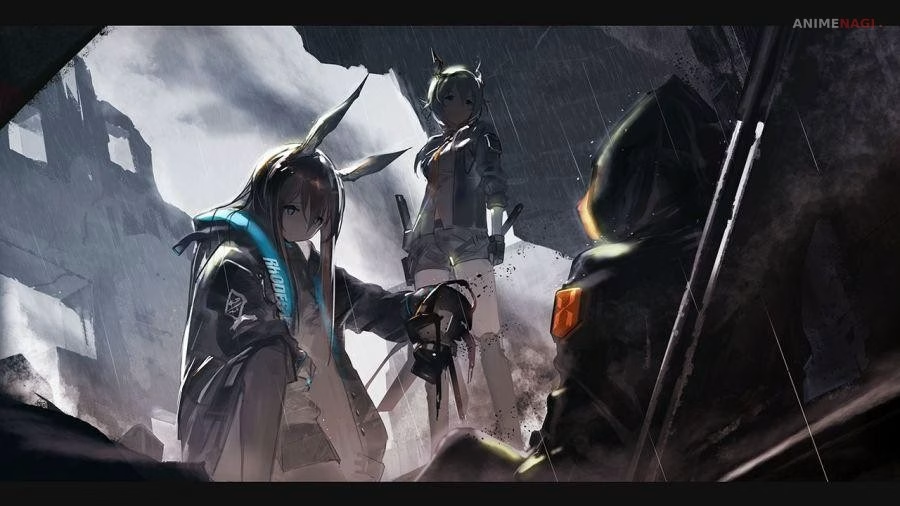
Rhodes Island itself originated from an earlier organization called Babel following the Kazdel civil conflict. After Babel collapsed, survivors, including Kal’tsit, reorganized into Rhodes Island Pharmaceutical Company. The organization now travels Terra aboard a massive mobile landship functioning as both headquarters and mobile city.
Amiya acts as Rhodes Island’s young leader and emotional center. Despite her age, she carries enormous responsibility and strongly believes coexistence between infected and non-infected people is possible. Kal’tsit, meanwhile, handles much of the organization’s strategic and medical leadership behind the scenes.
The Doctor becomes critically important because they previously worked on research connected to Oripathy treatment before losing their memories. Even with amnesia, the Doctor remains an extraordinary battlefield strategist capable of coordinating Rhodes Island operators effectively.
Unlike Reunion, Rhodes Island rejects terrorism and seeks peaceful reform whenever possible.
Reunion is not purely evil despite being the main enemy
One reason Prelude to Dawn stands out is that Reunion is more complicated than a standard villain faction. On the surface, Reunion appears to be a dangerous terrorist movement attacking cities and destabilizing governments. However, the anime gradually reveals that many Reunion members joined because they suffered horrific abuse and discrimination as infected individuals.
The movement originally began as a shelter and activist organization for persecuted infected people. Under Talulah’s leadership, Reunion initially sought liberation and equality for infected citizens across Terra. Over time, however, the organization became increasingly radicalized and violent.
Characters like Skullshatterer, Mephisto, Faust, and FrostNova demonstrate how different forms of suffering shaped Reunion members emotionally. Many lost families, homes, or futures due to systemic oppression. This makes the conflict morally uncomfortable because viewers understand why Reunion exists even when the organization commits atrocities.
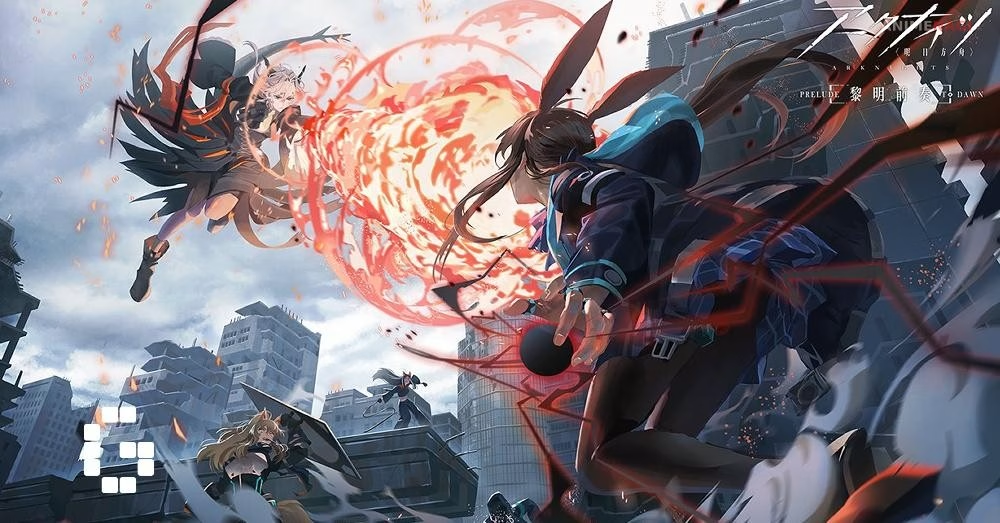
Talulah herself becomes one of the anime’s most mysterious figures. Her overwhelming power and ideological influence drive much of the story, yet the anime deliberately hides important details about her past initially.
This moral complexity gives Prelude to Dawn far more emotional depth than many game adaptations.
Amiya represents the anime’s core philosophy
Although the series contains large-scale battles and political conflict, Amiya remains the emotional heart of the story.
Amiya strongly believes infected and non-infected people can coexist peacefully despite overwhelming evidence of hatred and violence around her. Throughout the anime, she repeatedly tries to save civilians, negotiate peacefully, and avoid unnecessary killing, even when Reunion attacks Rhodes Island directly.
This idealism creates some of the anime’s most painful moments. Amiya constantly encounters situations where compassion alone cannot prevent tragedy. The deaths of characters like Skullshatterer and Misha affect her deeply because they force her to confront the harsh realities of Terra.
Her internal conflict becomes especially important during the Lungmen storyline. Amiya wants to preserve her humanity and kindness, but the escalating violence forces her into increasingly brutal decisions.
The Doctor repeatedly supports Amiya emotionally during these moments, reinforcing Rhodes Island’s hope-driven philosophy despite the bleak world surrounding them.
This emotional focus helps separate Arknights from purely action-focused dystopian anime.
Lungmen becomes the next major battlefield
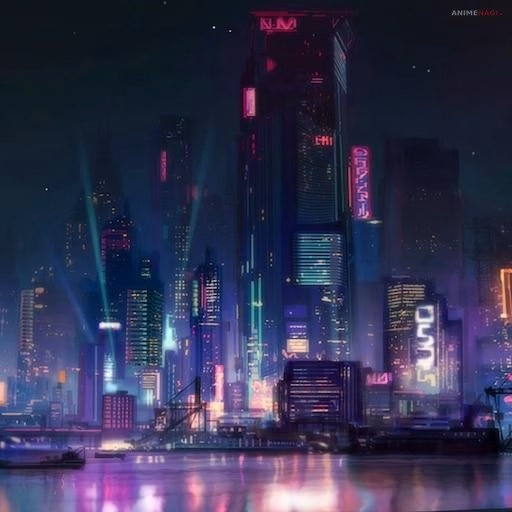
After escaping Chernobog, Rhodes Island travels to Lungmen, a powerful mobile city ruled by Wei Yenwu. Lungmen is politically important because Reunion appears to be targeting the city next after their uprising in Ursus.
The Lungmen arc expands the worldbuilding significantly. Unlike collapsing Chernobog, Lungmen initially appears stable and prosperous. However, the city also maintains strict anti-infection policies that worsen social tensions inside poorer districts.
Rhodes Island forms an uneasy alliance with Lungmen’s Guard Department, led by Ch’en and Hoshiguma. Although both sides cooperate against Reunion, disagreements constantly emerge regarding how infected citizens should be treated. Ch’en especially struggles between her duty as a law enforcement officer and her complicated feelings about Reunion’s motivations.
This political tension becomes central to the anime’s themes. Even societies trying to maintain order contribute indirectly to the anger fueling Reunion’s rise.
The Lungmen storyline, therefore, shifts the anime from simple survival into broader political and ideological conflict.
The anime focuses heavily on tragedy and moral ambiguity
One of the defining characteristics of Prelude to Dawn is its refusal to portray conflict in simplistic terms.
Characters repeatedly face impossible choices where no outcome feels completely right. Reunion members commit horrifying acts, yet many are also victims of discrimination themselves. Rhodes Island wants peace, but its operators still fight and kill during battles. Governments maintain order, yet their oppressive policies helped create the crisis initially.
The Misha and Skullshatterer storyline represents this perfectly. Both siblings suffered because of the infected crisis, and their tragic fates reveal how Terra destroys ordinary lives regardless of ideology. Amiya’s inability to save them emotionally devastates her because it challenges her belief that compassion alone can resolve systemic suffering.
Even secondary antagonists receive emotional context and humanizing moments. The anime consistently emphasizes how cycles of hatred and fear push people toward extremism.
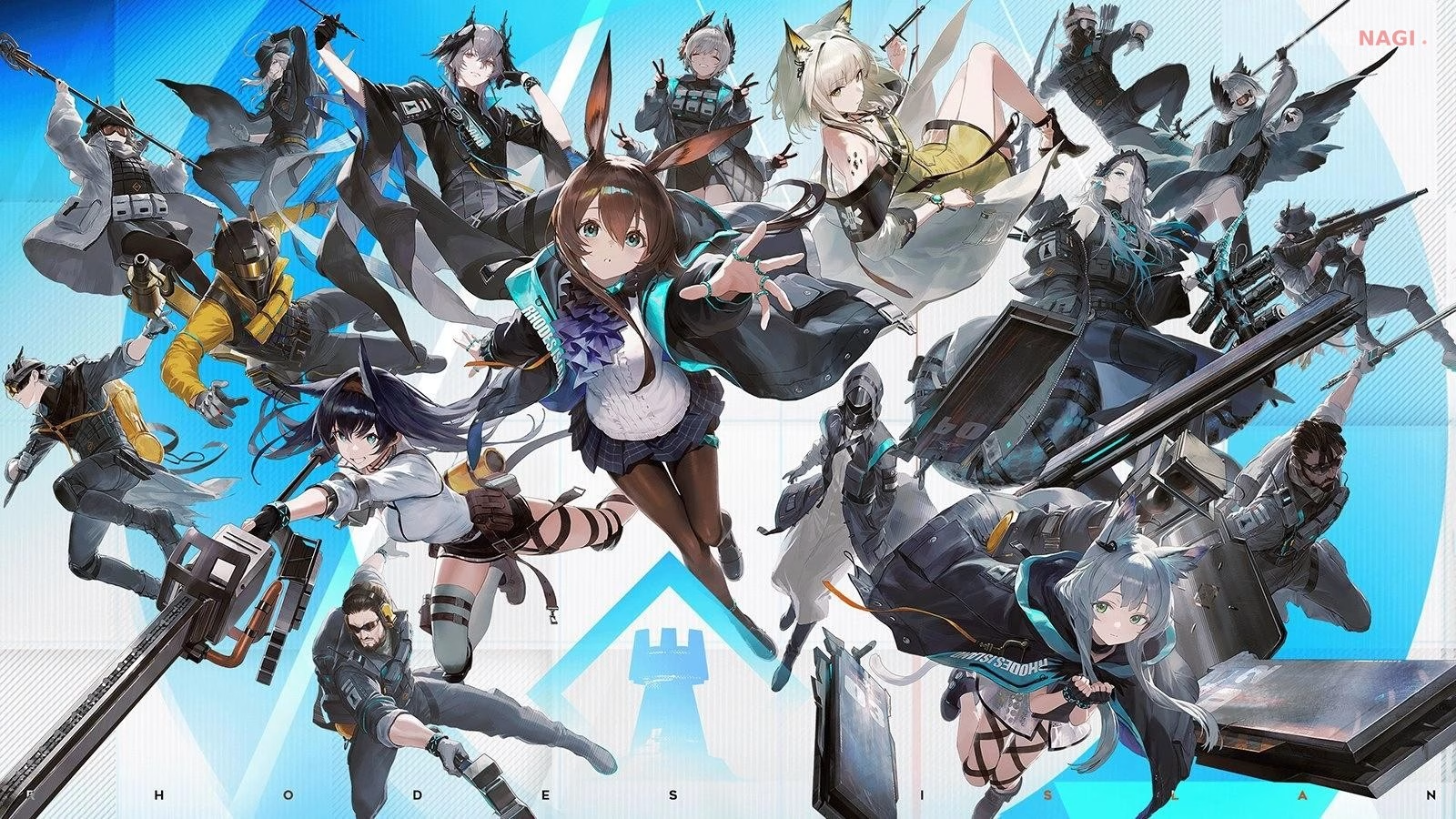
This moral ambiguity is one reason many viewers connected strongly with the story despite its dense lore.
The series treats political violence and discrimination with unusual seriousness for a game adaptation.
Arts function as Terra’s supernatural power system
Alongside its political themes, Arknights also contains a unique supernatural system called Arts.
Arts are abilities powered through Originium energy. Different characters use Arts in different ways depending on their training, race, and combat specialization. Some manipulate fire, ice, electricity, or explosions, while others enhance physical combat or provide support abilities.
Importantly, infected individuals can often use Arts more naturally because Originium already exists inside their bodies. However, doing so accelerates the spread of Oripathy and shortens their lifespan. This creates another tragic layer within the worldbuilding because power comes at a severe personal cost.
Talulah’s overwhelming fire Arts demonstrate this system dramatically during the anime. FrostNova’s ice-based powers later expand the scale of what Arts users can accomplish during battle.
Unlike many fantasy anime power systems, Arts feel closely tied to the world’s political and medical themes rather than existing separately from them.
That integration makes Terra feel internally consistent and believable despite its complexity.