Few anime series have influenced modern anime culture as deeply as The Melancholy of Haruhi Suzumiya. When it premiered in 2006, the series immediately stood out because it refused to follow normal storytelling rules. Instead of presenting a straightforward high school story, it mixed science fiction, supernatural mystery, existential themes, and comedy in a way that constantly surprised viewers. Even years later, the anime remains one of the most discussed and analyzed series in the medium.
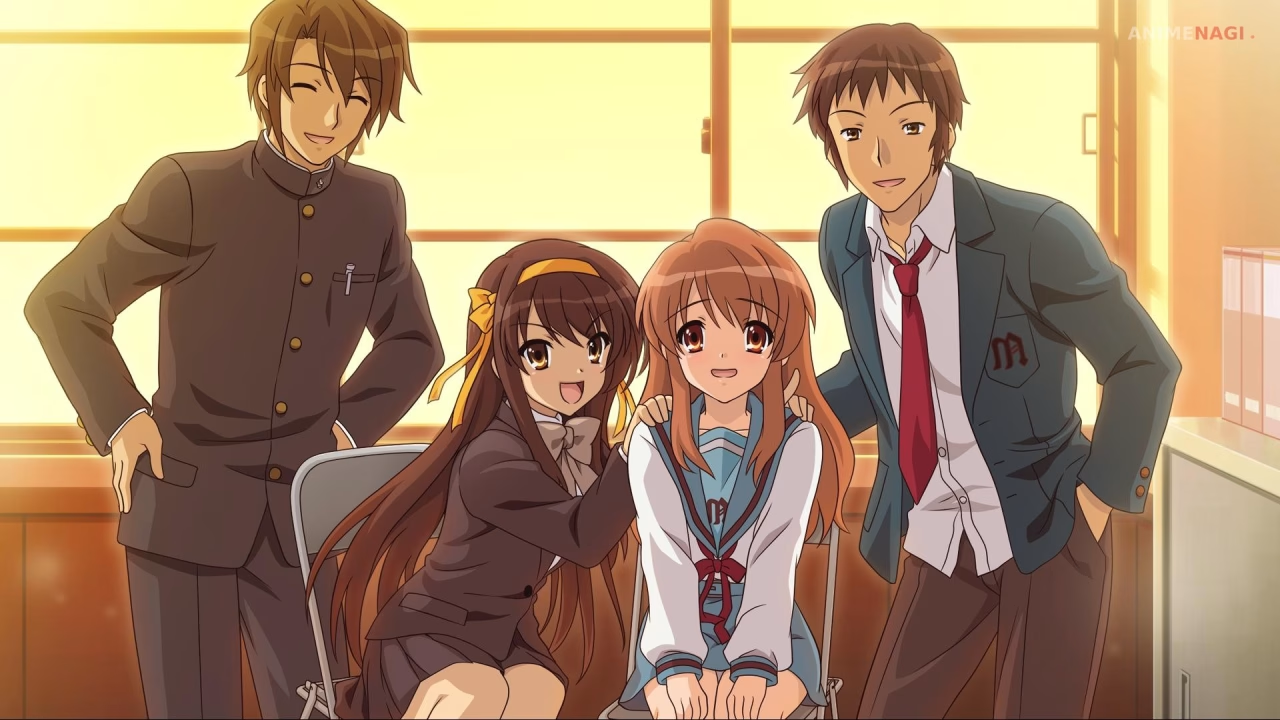
Part of what makes The Melancholy of Haruhi Suzumiya so unique is how experimental it feels without losing emotional connection to its characters. The anime constantly plays with structure, perspective, and audience expectations. At the center of everything is Haruhi Suzumiya herself, a character whose personality drives both the narrative and the reality of the world around her. Around her is the SOS Brigade, a group of characters who secretly represent aliens, time travelers, and espers hiding behind an ordinary school setting.
The series also became famous for controversial and ambitious creative decisions, especially the nonlinear broadcast order and the Endless Eight arc. These risks divided audiences but also helped the anime become culturally iconic. Understanding why Haruhi Suzumiya feels so different requires looking at the storytelling choices and themes that separate it from most anime released before or after it.
The nonlinear broadcast order changed how viewers experienced the story
One of the most unusual aspects of The Melancholy of Haruhi Suzumiya was its original broadcast structure. Instead of airing episodes in chronological order, the 2006 anime deliberately rearranged events into a nonlinear sequence. This meant viewers experienced the story almost like a puzzle, gradually piecing together timelines and character developments themselves.
The decision immediately made the anime feel unpredictable. Emotional scenes, comedic episodes, and major plot revelations appeared out of order, creating a unique rhythm that constantly kept audiences uncertain about what would happen next. Even the episode previews joked about the confusing structure, with Haruhi and Kyon giving different episode numbers based on chronological and broadcast order.
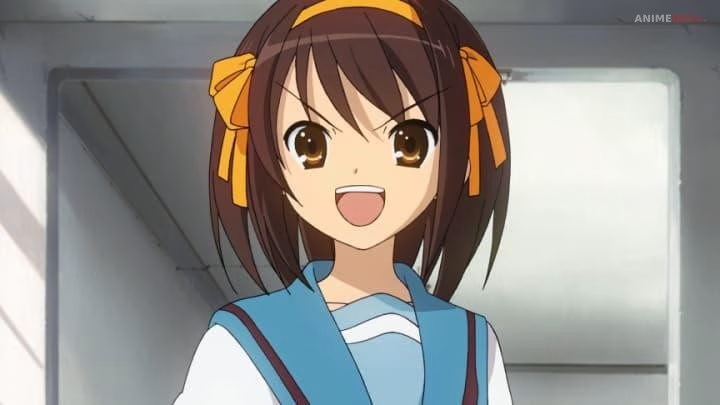
This format also reinforced the personality of the series itself. Haruhi is chaotic, impulsive, and obsessed with the extraordinary, so the storytelling mirrors her worldview. Instead of a traditional progression, the anime feels spontaneous and constantly shifting, much like Haruhi’s own behavior.
The nonlinear order eventually became one of the anime’s defining features. While later releases allowed viewers to watch the story chronologically, many fans still believe the original broadcast order creates a more memorable and experimental experience.
Haruhi herself is unlike most anime protagonists
Another reason the anime feels so unique is because of Haruhi Suzumiya as a character. Unlike traditional protagonists designed to be easily likable or relatable, Haruhi is intentionally difficult, unpredictable, and emotionally complicated. She is brilliant and charismatic, but also selfish, obsessive, and emotionally immature in ways that often create conflict.
What makes Haruhi fascinating is that she unknowingly possesses the power to alter reality itself. If she becomes too bored, frustrated, or emotionally unstable, the universe literally changes around her subconsciously. However, Haruhi herself remains unaware of these abilities throughout most of the story.
This creates a strange dynamic where the supporting cast constantly works to keep Haruhi emotionally satisfied in order to prevent reality from collapsing. The stakes are therefore hidden beneath ordinary school activities and comedy. Something as small as Haruhi becoming bored can potentially destroy the world.
The series also explores Haruhi psychologically rather than treating her simply as a quirky anime girl. Much of her behavior comes from loneliness and disappointment with how ordinary life feels to her. She desperately wants the world to contain something extraordinary, unaware that she herself is the extraordinary element she seeks.
Kyon’s narration completely changes the tone of the anime
While Haruhi drives the plot, the anime is actually experienced primarily through Kyon’s perspective. This narrative choice is one of the series’ smartest creative decisions because Kyon acts as the audience’s emotional anchor within an increasingly bizarre world.
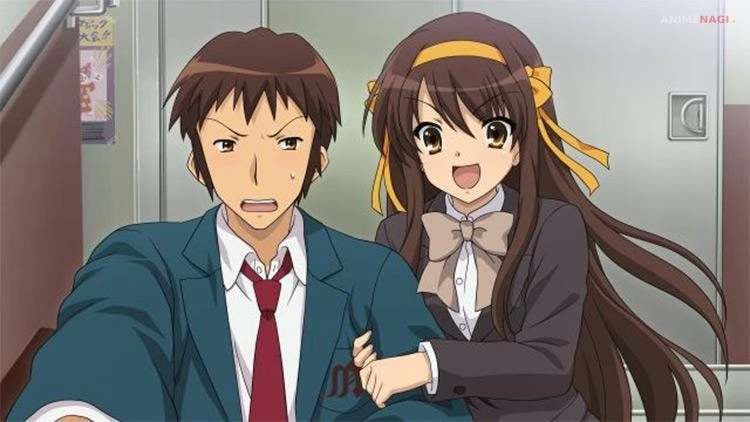
Kyon constantly comments on events through sarcastic internal monologues, giving the anime a dry and self-aware tone. Without his narration, many scenes could feel overwhelmingly chaotic or absurd. Instead, his grounded reactions balance Haruhi’s unpredictable personality and make the story easier to connect with emotionally.
His perspective also creates ambiguity about the world itself. Since viewers only fully understand events through Kyon’s observations, the supernatural elements often feel mysterious even when dramatic things happen openly. This gives the series a more intimate atmosphere compared to larger-scale fantasy anime.
Kyon’s relationship with Haruhi is especially important because he simultaneously criticizes and admires her. He often complains about the trouble she causes, but he is also drawn toward her energy and refusal to accept ordinary life. This emotional contradiction gives the anime much of its depth.
The dialogue-heavy storytelling style later influenced many character-driven anime series that blended comedy with introspective narration.
The Endless Eight arc became one of anime’s boldest experiments
No discussion about The Melancholy of Haruhi Suzumiya is complete without mentioning the infamous Endless Eight arc. During this storyline, the SOS Brigade becomes trapped in a time loop repeating the final weeks of summer vacation thousands of times. The anime adaptation portrays this by airing eight separate episodes covering nearly identical events with subtle differences.
The decision was extremely controversial because viewers essentially watched variations of the same episode repeatedly for almost two months. However, this repetition was intentional. The anime wanted audiences to experience the same frustration, exhaustion, and sense of endless repetition that the characters themselves were trapped inside.
Despite criticism, the arc remains one of the boldest storytelling experiments in television anime. Every episode featured newly animated scenes, different camera work, alternate clothing designs, and subtle tonal changes rather than simply reusing footage.
The Endless Eight arc also deepened Yuki Nagato’s character significantly. Since she remembers every loop completely, the audience gradually understands the emotional burden she has carried for centuries worth of repeated time. This becomes especially important later in The Disappearance of Haruhi Suzumiya.
Even today, Endless Eight remains one of anime’s most debated creative risks because it prioritized artistic intention over audience comfort.
The anime blends genres in a way that still feels fresh
Another major reason the anime feels unique is how naturally it blends completely different genres together. At first glance, the series appears to be a school comedy. However, it constantly shifts between science fiction, romance, slice-of-life storytelling, existential mystery, and even psychological drama.
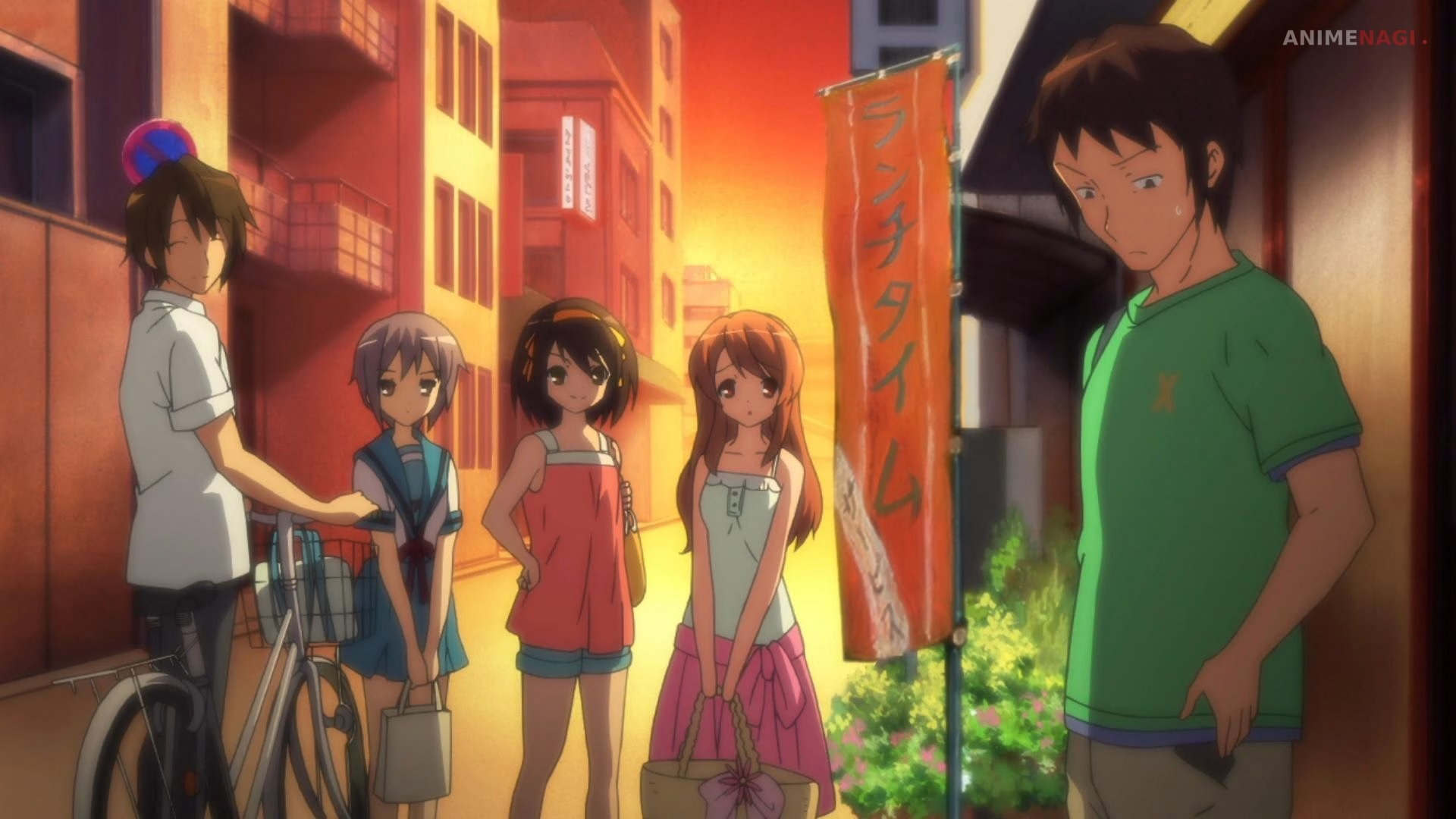
The SOS Brigade itself reflects this genre mixture perfectly. Mikuru is a time traveler, Yuki is an alien interface, and Koizumi is an esper fighting reality distortions. Yet much of the anime still focuses on ordinary school activities like festivals, baseball games, and summer homework.
This contrast creates an unusual atmosphere where the mundane and supernatural coexist constantly. The anime never fully separates normal life from cosmic-level stakes. Instead, both elements blend together naturally within everyday conversations and interactions.
Kyoto Animation’s presentation style also strengthens this uniqueness. The studio used cinematic framing, expressive body language, and detailed animation to lift scenes that could otherwise feel simple. Even casual conversations often feel visually dynamic because of the directing choices.
The result is an anime that feels impossible to categorize neatly. It constantly changes tone without losing its identity.
The series influenced anime culture far beyond its original release
The influence of The Melancholy of Haruhi Suzumiya extends far beyond the anime itself. During the mid-2000s, the series became a massive cultural phenomenon within anime fandom. The ending dance sequence for “Hare Hare Yukai” became especially iconic, inspiring countless parodies, cosplay performances, and online recreations.
The anime also helped popularize self-aware dialogue and meta-style storytelling within modern anime. Many later series adopted similar blends of genre parody, introspective narration, and character-driven comedy. The success of Haruhi proved that audiences were interested in anime, willing to experiment structurally and narratively.
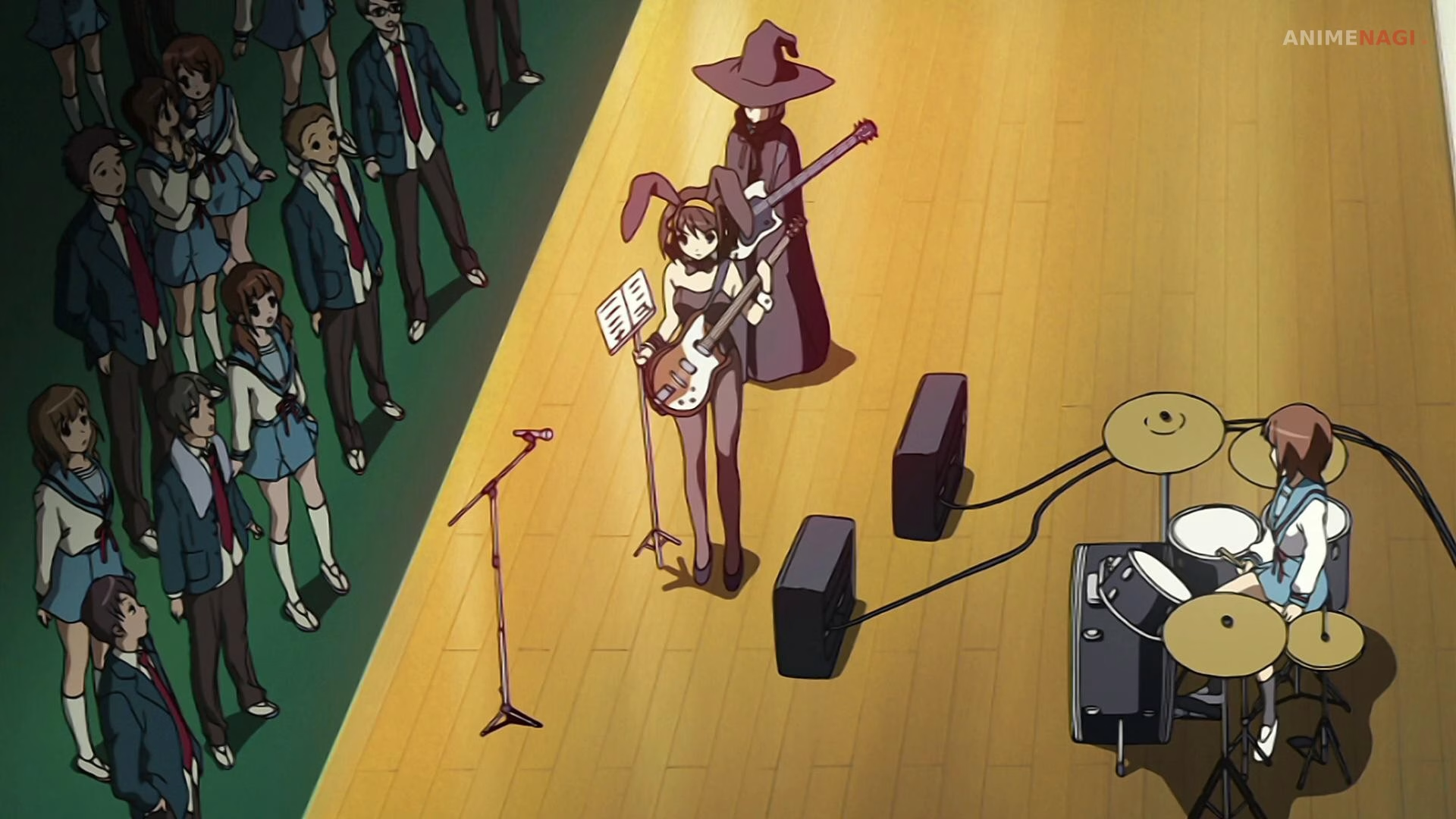
Kyoto Animation’s work on the series also raised expectations for television anime production quality. The expressive animation, detailed direction, and emotional subtlety became hallmarks of the studio afterward.
Perhaps most importantly, the anime demonstrated how strongly presentation affects storytelling. Simple scenes became memorable because of pacing, framing, and dialogue delivery rather than action alone.
Even nearly two decades later, many modern anime still carry visible influence from Haruhi Suzumiya’s storytelling style and presentation techniques.
Why The Melancholy of Haruhi Suzumiya still stands out today
What ultimately makes The Melancholy of Haruhi Suzumiya so unique is that it constantly balances contradiction successfully. It is both absurd and emotionally sincere. It feels experimental while still remaining character-focused. It combines cosmic science fiction concepts with ordinary teenage frustrations naturally.
The anime also trusts its audience more than many series do. It rarely explains everything immediately and often allows viewers to interpret emotional meaning themselves. Whether through nonlinear storytelling, Endless Eight’s repetition, or Kyon’s reflective narration, the series expects patience and attention from its audience.
At the center of everything is Haruhi herself, a character driven by dissatisfaction with ordinary life. That emotional idea resonates strongly because the anime itself refuses to be ordinary. Nearly every major creative choice pushes against traditional storytelling expectations in some way.
That is why The Melancholy of Haruhi Suzumiya remains influential years later. It is not simply remembered for being strange or experimental. It is remembered because those experiments were tied directly to the themes, characters, and emotional identity of the series itself.