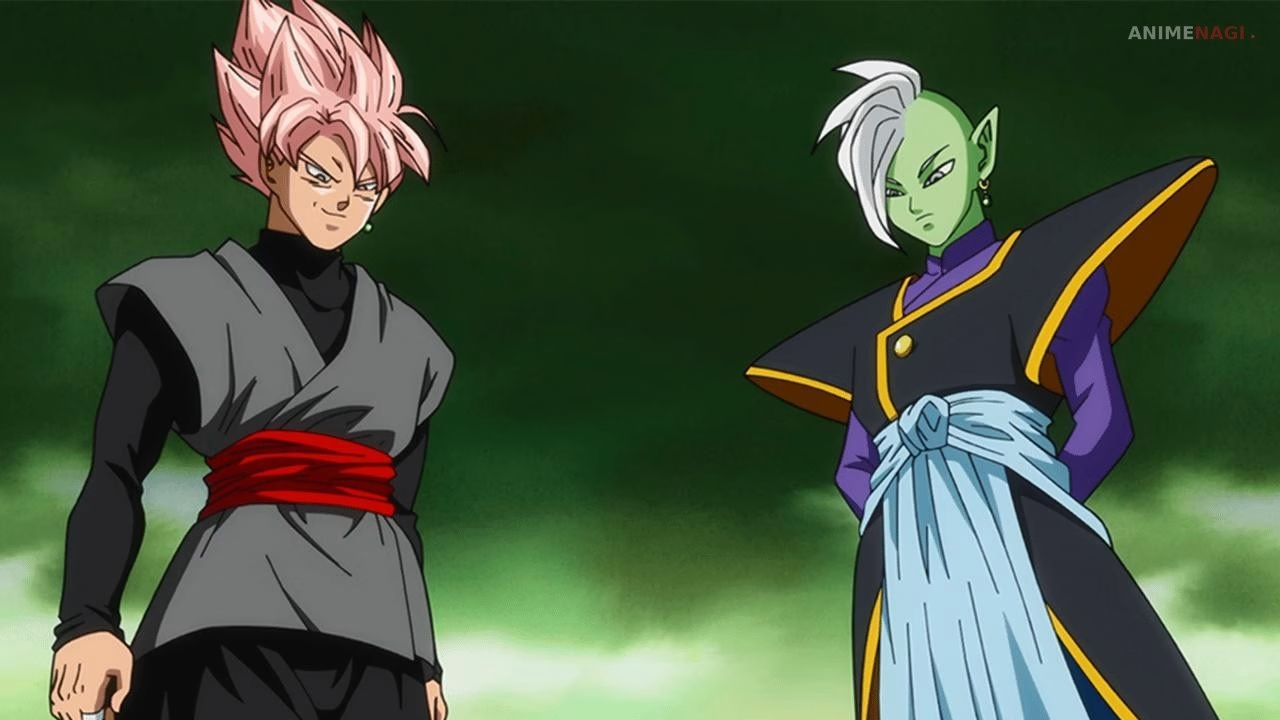
The return of Future Trunks in Dragon Ball Super brought one of the most surprising twists in the franchise’s history: Goku appearing as a villain. Known as Goku Black, this mysterious figure devastated Trunks’ timeline, raising one question that shook fans worldwide. How could Goku, the symbol of hope, become evil?
The Future Trunks arc, also known as the Goku Black Saga, takes a darker and more complex approach compared to previous Dragon Ball storylines. It blends time travel, divine conflict, and philosophical themes, making it one of the most layered arcs in the series. At its core, the arc is not about Goku turning evil but about identity, justice, and the misuse of power.
Let’s break down why “evil Goku” exists, who Goku Black really is, and how Future Trunks’ return reshaped Dragon Ball Super.
The Return of Future Trunks: A Timeline in Crisis
Future Trunks returns in a far worse state than when fans last saw him in Dragon Ball Z. His timeline, once saved from Androids and Cell, has fallen into chaos again. This time, the threat is far more terrifying.
A mysterious figure who looks exactly like Goku is hunting down survivors and destroying what little hope remains. Known as Goku Black, this enemy is stronger, more ruthless, and seemingly unstoppable. Trunks, despite his growth, cannot defeat him.
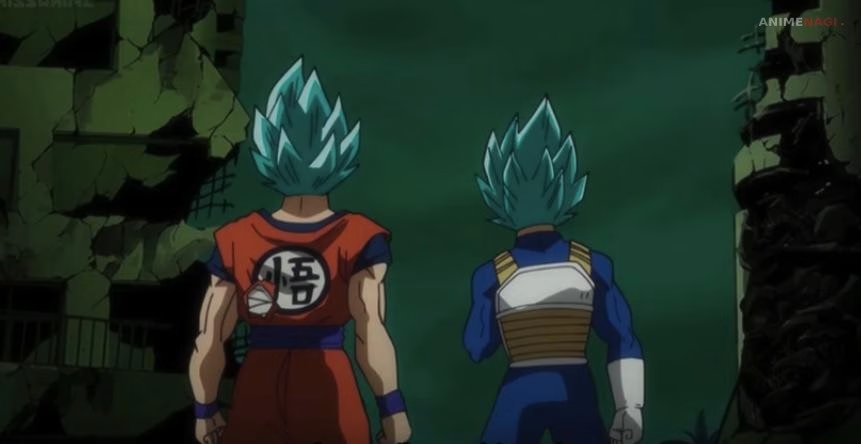
This bleak setting immediately sets the tone for the arc. Unlike traditional Dragon Ball conflicts, where heroes eventually gain the upper hand, this story begins with total despair. Trunks is forced to travel back in time once again, seeking help from Goku and Vegeta.
His return reconnects past and future timelines, setting the stage for one of the most complex arcs in the franchise.
The biggest mystery of the arc revolves around Goku Black’s identity. Despite his appearance, he is not actually Goku. The truth is far more disturbing.
Goku Black is Zamasu, a Kai-in-training from Universe 10. Using the Super Dragon Balls, Zamasu swaps bodies with Goku, effectively stealing his power and physical form. This allows him to become “Goku Black,” combining divine ideology with Saiyan strength.
Zamasu’s motivation is rooted in his belief that mortals are inherently flawed and destructive. He sees himself as a bringer of justice, aiming to eliminate all mortal life to create a perfect universe. This ideology, known as the “Zero Mortals Plan,” drives his actions.
What makes Goku Black so compelling is this twisted sense of righteousness. He is not evil in the traditional sense. Instead, he believes he is saving the universe, which makes him even more dangerous.
Zamasu’s Philosophy: The True Core of the Arc
At its heart, the Future Trunks arc is driven by Zamasu’s philosophy. Unlike previous villains who sought power or destruction, Zamasu is motivated by ideology. He believes that mortals misuse the gifts given to them by the gods.
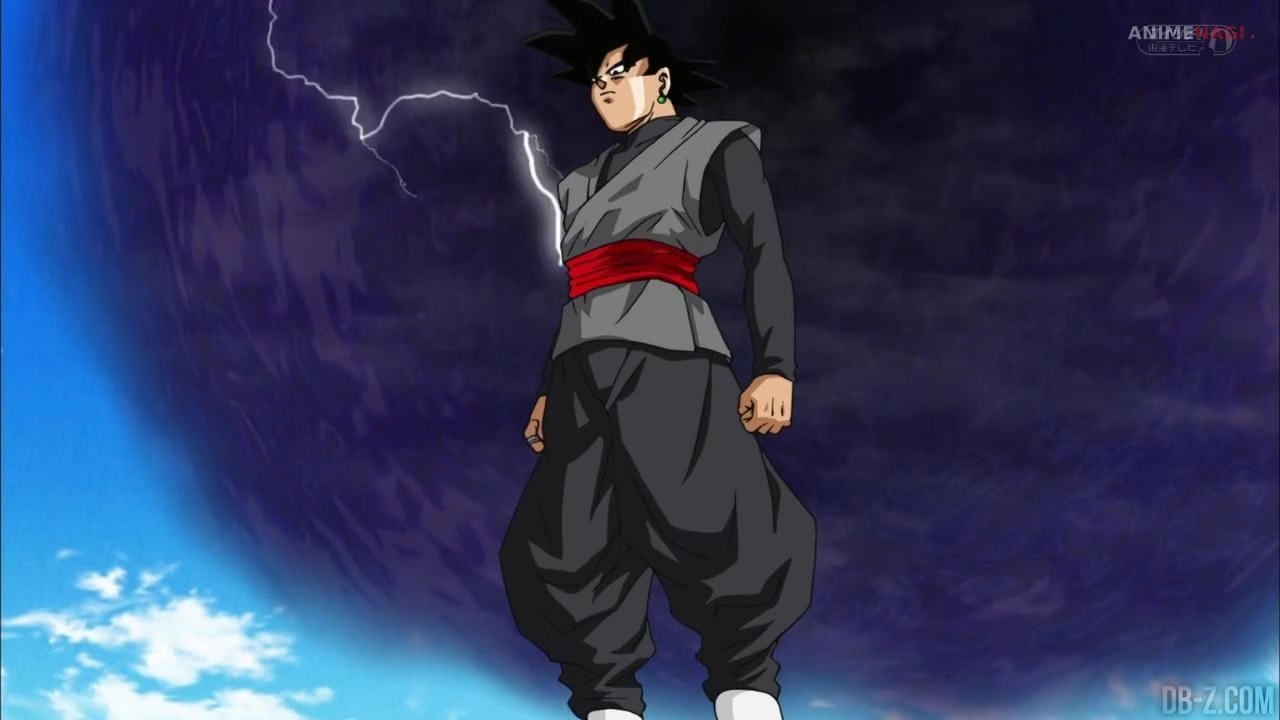
His encounters with Goku play a crucial role in shaping this belief. After witnessing Goku’s strength and carefree attitude, Zamasu becomes convinced that mortals are unworthy of existence. In his eyes, even someone as pure-hearted as Goku represents a flawed system.
This philosophical conflict elevates the arc beyond typical Dragon Ball storytelling. It creates a battle not just of strength but of ideas. Goku and his allies fight to protect life, while Zamasu fights to erase it entirely.
The contrast between these perspectives adds depth to the narrative, making the arc more than just another fight against a powerful enemy.
The Role of Future Trunks: Hope in a Broken World
While Goku and Vegeta play major roles, the emotional core of the arc remains with Future Trunks. His journey represents resilience and hope in the face of overwhelming despair.
Trunks has already endured immense loss, yet he continues to fight for his world. His determination contrasts sharply with Zamasu’s nihilistic beliefs. Where Zamasu sees corruption, Trunks sees people worth saving.
One of the most powerful moments in the arc is Trunks’ transformation, fueled by rage and hope. His ability to stand against divine enemies highlights the strength of human will, a recurring theme in Dragon Ball.
Trunks’ role ensures that the story remains grounded. Despite the involvement of gods and cosmic powers, the arc never loses sight of the human element.
The Final Battle and Its Controversial Ending
The climax of the arc delivers intense battles, including the fusion of Goku and Vegeta into Vegito Blue and the emergence of Fused Zamasu. These moments showcase the highest levels of power seen in the series up to that point.
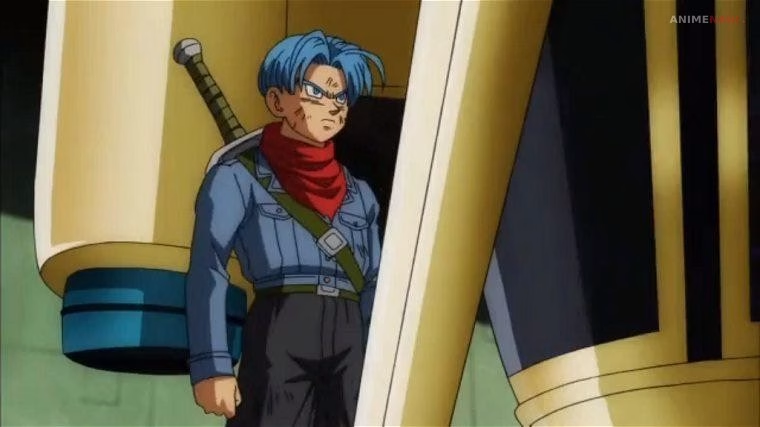
However, the resolution takes a surprising turn. Zamasu becomes an unstoppable force, merging with reality itself. Unable to defeat him through conventional means, Goku summons Zeno, the Omni-King.
Zeno erases the entire timeline, eliminating Zamasu but also destroying Trunks’ universe. This ending is one of the most controversial in Dragon Ball history. While it resolves the conflict, it comes at the cost of everything Trunks fought to protect.
Some fans appreciate the boldness of this conclusion, while others feel it undermines the arc’s emotional buildup. Regardless, it leaves a lasting impact on the series.
Why the Goku Black Arc Stands Out in Dragon Ball Super
The Future Trunks arc stands out because it pushes Dragon Ball into darker territory. It explores themes rarely seen in the franchise, including morality, justice, and existential conflict.
The introduction of Goku Black challenges the idea of absolute good and evil. By using Goku’s image as a villain, the arc forces viewers to confront uncomfortable questions about power and identity.
Additionally, the arc expands the Dragon Ball universe by introducing gods, alternate timelines, and multiversal stakes. This adds complexity to the story while maintaining its core appeal.
Despite its flaws, particularly in pacing and ending, the Goku Black Saga remains one of the most memorable arcs in Dragon Ball Super.
The question of why Goku turns evil in Dragon Ball Super has a complex answer. Goku himself never becomes evil. Instead, his body is taken over by Zamasu, whose twisted ideology drives the conflict.
The Future Trunks arc succeeds because it combines intense action with deeper storytelling. It challenges characters and viewers alike, presenting a narrative that is both thrilling and thought-provoking.
For fans, it represents a bold evolution of the Dragon Ball formula. Even with its controversial ending, the arc leaves a lasting impression, proving that the series can still surprise and innovate.
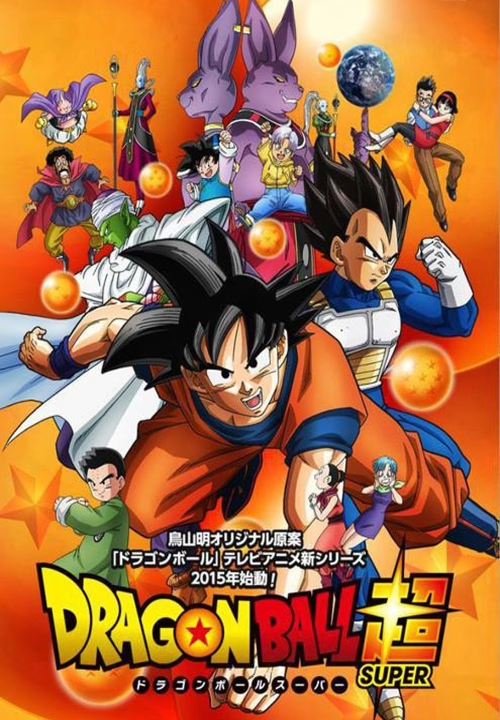
| Date Aired (Start) | July 5, 2015 |
|---|---|
| Studio | Toei Animation |
| Director | Kimitoshi Chioka |