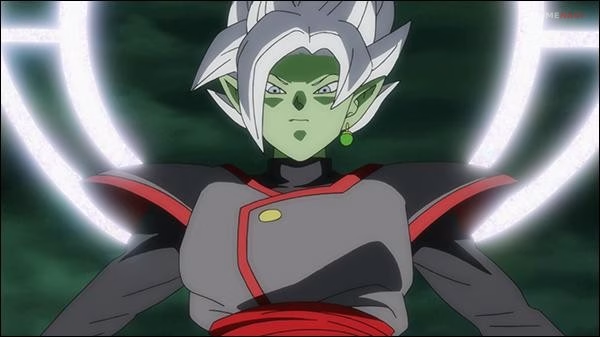
Dragon Ball Super introduced one of its most philosophical villains through Zamasu, a character driven not by conquest but by a twisted sense of divine justice. Unlike traditional Dragon Ball antagonists, Zamasu believed he was morally right, viewing mortals as a flawed existence that corrupted the universe. This belief led to the creation of the “Zero Mortals Plan,” one of the most extreme ideologies in the franchise.
However, the ending of the Future Trunks arc sparked a major fan theory that continues to circulate today. Some fans believe Zamasu, especially in his Infinite Zamasu form, evolved into something far greater than a typical villain. The idea that he became an “evil Omni King” or reached a level comparable to Zeno has remained a popular discussion point.
Let’s break down the theory, the evidence behind it, and whether it actually holds up within Dragon Ball Super canon.
Who Is Zamasu and What Makes Him Different?
Zamasu begins as an apprentice Supreme Kai from Universe 10, trained under Gowasu. At first glance, he appears calm, disciplined, and aligned with divine responsibility, but subtle hints reveal his growing dissatisfaction with mortals. After observing human violence and moral failure, he begins questioning why gods should protect beings he sees as inherently flawed.
This philosophical conflict evolves into a dangerous belief system. Zamasu concludes that mortals are the root cause of universal imbalance, leading him to justify their complete eradication. His ideology is not impulsive, but rather a calculated conclusion based on his warped interpretation of justice.
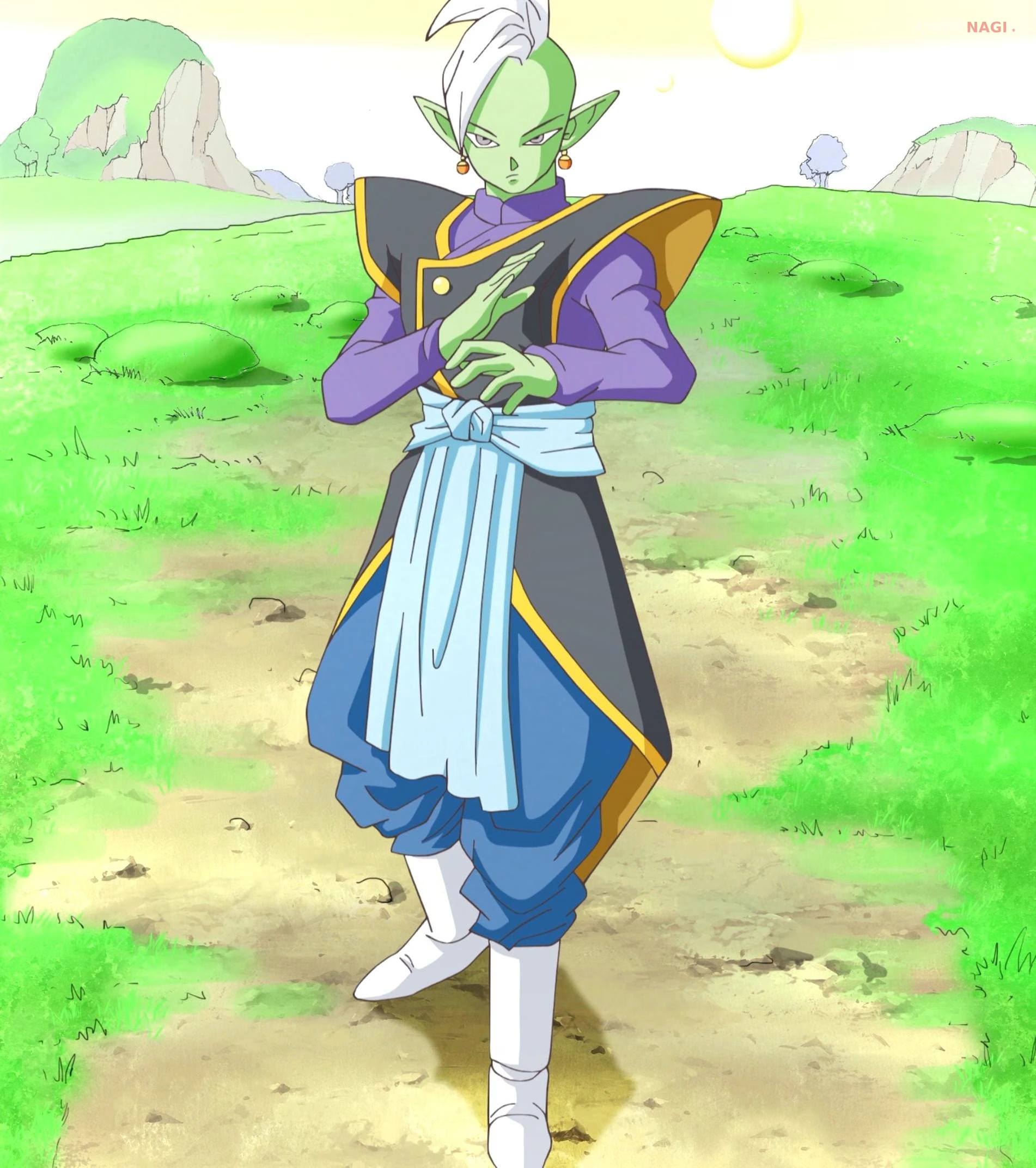
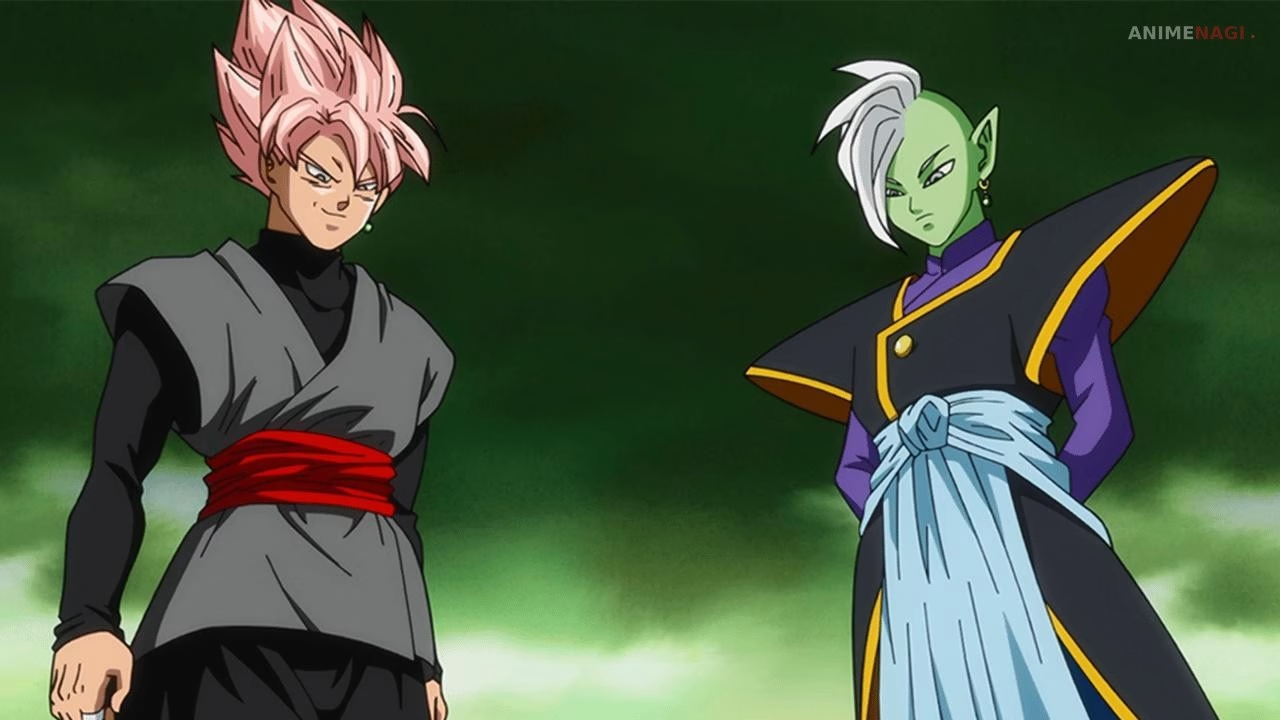
To execute his plan, Zamasu kills Gowasu, uses the Super Dragon Balls to steal Goku’s body, and becomes Goku Black. He later allies with his future immortal self, eventually fusing into Merged Zamasu. This combination of divine power, Saiyan growth, and immortality creates one of the most dangerous beings in the series.
What makes Zamasu unique is that he never sees himself as evil. He believes his actions are righteous, which makes his transformation far more unsettling than typical villains driven by power alone.
What Is Infinite Zamasu?
After taking critical damage during his battle with Vegito Blue and Future Trunks, Merged Zamasu becomes unstable. His immortality clashes with his damaged fused body, causing his form to break down rather than regenerate normally. Instead of dying, he transforms into Infinite Zamasu, a state where his consciousness spreads across reality itself.
In this form, Zamasu is no longer confined to a physical body. His presence begins merging with the sky, the environment, and eventually the entire timeline. His face appears across the universe, and his voice echoes everywhere, suggesting he is becoming one with existence itself.
This transformation is what sparked the Evil Omni King theory. The sheer scale of Infinite Zamasu’s existence appears far beyond anything previously shown in Dragon Ball. He is not just a powerful being anymore, but a reality-spanning entity that cannot be fought through conventional means.
However, it is important to understand that this transformation is not portrayed as controlled evolution. Instead, it is depicted as instability, where Zamasu’s corrupted fusion causes him to lose form while spreading uncontrollably.
What Is the Evil Omni King Zamasu Theory?
The Evil Omni King theory suggests that Infinite Zamasu transcended his original limitations and became something similar to the Omni King. Some versions claim he reached a level of omnipresence, while others argue he could have eventually replaced or rivaled Zeno if left unchecked.
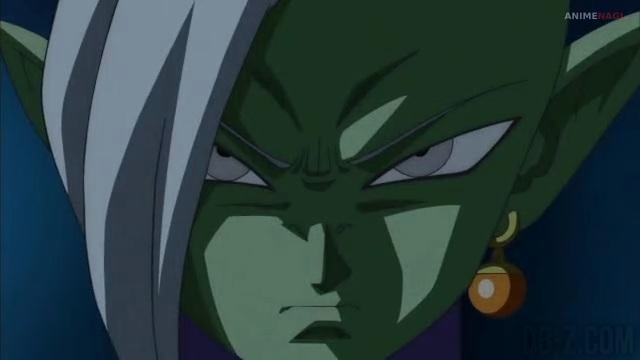
The theory mainly comes from the visual and conceptual similarities between Infinite Zamasu and higher cosmic entities. Since Zamasu spreads across reality and cannot be defeated physically, fans interpret this as a form of omniversal existence. This idea is reinforced by the fact that even Goku, Vegeta, and Trunks cannot stop him through direct combat.
Another factor is how the situation is resolved. Goku summons Future Zeno, who erases the entire timeline to eliminate Zamasu. This drastic solution makes it seem as if Zamasu had become too powerful for normal divine intervention, which fuels the belief that he had reached a level close to the Omni King.
Additionally, fans often compare Zamasu’s god complex to Zeno’s detached authority. Both characters operate on absolute judgment, but while Zeno acts with childlike neutrality, Zamasu is driven by ideology and hatred. This contrast leads to speculation about a “corrupted Omni King” concept.
Why Fans Connect Zamasu to Zeno
The connection between Zamasu and Zeno is largely based on scale and narrative impact. Zeno is established as the highest authority in the multiverse, capable of erasing entire realities instantly. When Infinite Zamasu begins merging with the timeline, it creates a situation that feels equally cosmic in scale.
Fans interpret the need for Zeno’s intervention as evidence that Zamasu had reached an unprecedented level of threat. No other villain forced the complete erasure of a timeline, which makes this moment stand out dramatically within the series. This uniqueness contributes heavily to the theory’s popularity.
Another reason the theory persists is the ambiguity surrounding Infinite Zamasu’s limits. The anime does not clearly define what he could have become if left unchecked, leaving room for speculation. His form feels abstract and unfinished, which encourages fans to imagine a potential evolution into something even greater. However, these connections are mostly thematic rather than factual. The series does not directly link Zamasu’s transformation to Zeno’s power or role within the multiverse hierarchy.
Does the Theory Hold Up in Canon?
From a strict canon perspective, the Evil Omni King Zamasu theory does not hold up. The most important point is that Zeno erases Infinite Zamasu effortlessly. The scene is not portrayed as a struggle between equals, but rather as a demonstration of Zeno’s absolute authority. Zamasu does not resist or survive the erasure, which clearly establishes the power gap between them.
Additionally, Infinite Zamasu is described as an unstable mutation rather than a perfected form. His spread across reality is uncontrolled and chaotic, suggesting he is losing structure rather than ascending to a higher state. This directly contradicts the idea of him becoming a true Omni King equivalent.
The manga version further weakens the theory. Instead of merging with reality, Zamasu multiplies endlessly through regeneration, creating countless copies rather than a singular omniversal presence. This portrayal emphasizes instability rather than transcendence.
Dragon Ball Super consistently presents Zeno as a unique being with no equal. There is no indication that another character can evolve into his role through power or transformation. This makes the idea of Zamasu becoming an Omni King highly unlikely within established canon.
What Infinite Zamasu Actually Represents
Rather than becoming an Omni King-level entity, Infinite Zamasu represents the ultimate consequence of corrupted divinity. His transformation shows what happens when a god abandons balance and becomes consumed by ideology. Instead of protecting the universe, he attempts to overwrite it entirely with his version of justice.
Throughout the arc, Zamasu’s belief system becomes increasingly extreme. What begins as criticism of mortal flaws turns into complete dehumanization, where he views all life as disposable. This progression highlights the dangers of absolute power combined with rigid ideology.
Infinite Zamasu visually reinforces this theme by spreading uncontrollably across reality. His loss of physical form symbolizes the loss of identity and purpose, turning him into a force of destruction rather than a conscious ruler. This interpretation aligns more closely with the narrative than the idea of him becoming an Omni King.
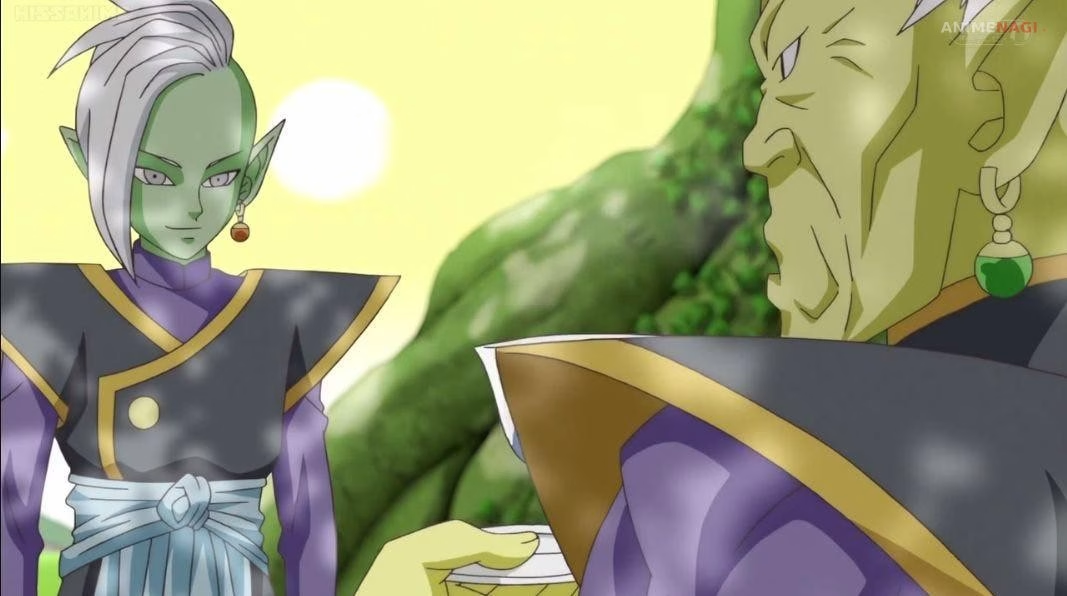
In many ways, Zamasu serves as a warning about divine arrogance. His fall demonstrates that even gods can become dangerous when they lose empathy and perspective.
Why the Theory Is Still Popular
Despite lacking strong canon support, the Evil Omni King theory remains widely discussed among fans. One reason is the uniqueness of Zamasu’s final form, which feels fundamentally different from traditional Dragon Ball transformations. His abstract, reality-spanning presence invites speculation about higher levels of existence.
Another factor is the unresolved feeling of the arc’s ending. The destruction of Future Trunks’ timeline creates a bittersweet conclusion, leaving fans questioning what might have happened if Zamasu had continued evolving. This uncertainty naturally leads to more elaborate theories.
The theory also reflects broader fan interest in the multiverse structure of Dragon Ball Super. As the series introduces more cosmic elements, audiences become more curious about the limits of divine power and the possibility of new god-level threats.
Additionally, comparisons between Zamasu and Zeno create an interesting narrative contrast. One represents chaotic justice driven by ideology, while the other represents absolute authority without emotional bias. This contrast fuels ongoing discussions about what true divine power should look like.
Zamasu’s True Role in Dragon Ball Super
Ultimately, Zamasu is not meant to become an Omni King replacement or equal. His true role is to challenge the moral structure of the Dragon Ball universe and question the responsibility of gods. Through his actions, the series explores how power can be corrupted when it is guided by rigid ideology rather than empathy.
Zamasu’s story stands out because he believes he is right until the very end. Unlike other villains who seek domination, he seeks purification, which makes his actions feel more disturbing and complex. His ideology forces both characters and viewers to confront uncomfortable questions about justice, power, and morality.
The Evil Omni King theory remains an interesting piece of fan speculation, especially because of how visually and conceptually unique Infinite Zamasu is. However, when examined through canon evidence, it becomes clear that Zamasu never truly reaches the level of the Omni King. Instead, he serves as one of Dragon Ball Super’s most powerful examples of how even gods can fall when their sense of justice becomes absolute.
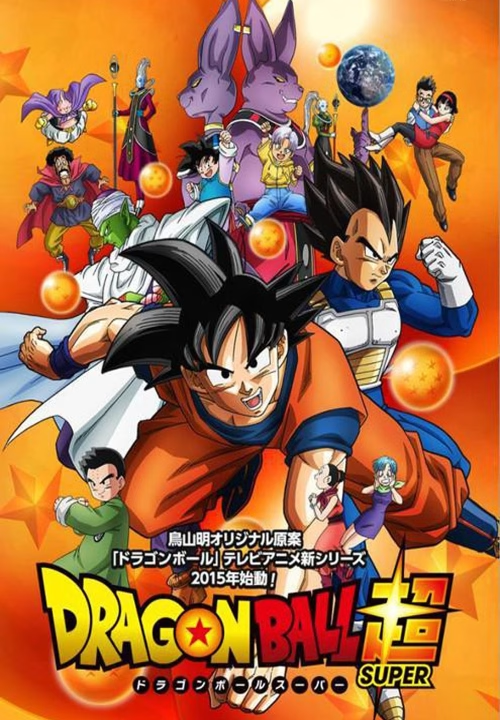
| Date Aired (Start) | July 5, 2015 |
|---|---|
| Studio | Toei Animation |
| Director | Kimitoshi Chioka |