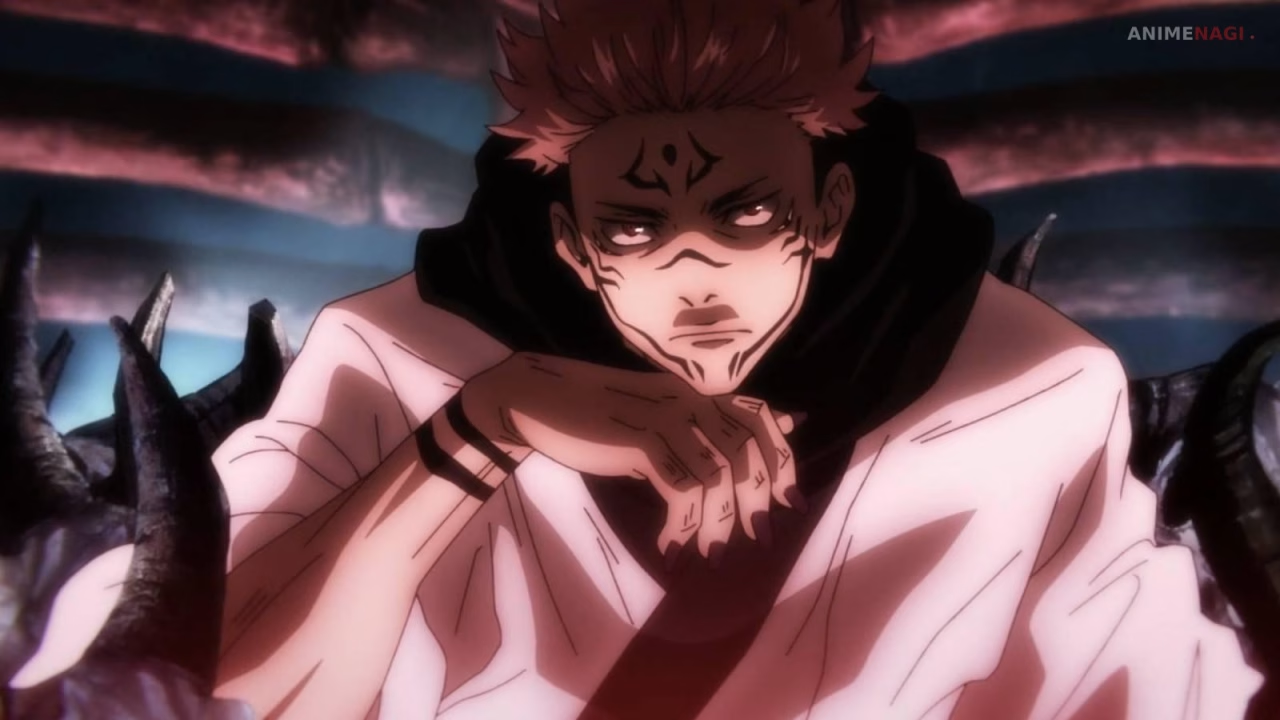
Few anime villains in recent years have become as iconic as Jujutsu Kaisen’s Ryomen Sukuna. Known as the King of Curses, Sukuna dominates the story through overwhelming power, terrifying charisma, and brutal unpredictability. While many viewers initially assumed Sukuna was an entirely original creation by Gege Akutami, the character actually has deep roots in Japanese mythology and historical folklore dating back centuries.
The real Ryomen Sukuna appears in ancient Japanese texts and legends, where he is portrayed as a mysterious warrior or demon-like figure with two faces and four arms. Over time, these stories evolved differently depending on the region telling them. Some legends described Sukuna as a violent monster who opposed imperial authority, while others worshiped him as a heroic protector and even a local deity.
Gege Akutami borrowed heavily from these conflicting myths while reimagining Sukuna for Jujutsu Kaisen. The anime version combines folklore, Buddhist symbolism, historical mythology, and modern horror storytelling into one of shonen anime’s most complex antagonists. Understanding the real legends behind Sukuna reveals why the character feels so unique compared to traditional anime villains.
The real Ryomen Sukuna comes from ancient Japanese folklore
The earliest references to Ryomen Sukuna appear in the Nihon Shoki, also known as The Chronicles of Japan. Completed in 720 CE, the text is one of Japan’s oldest historical and mythological records. According to these stories, Ryomen Sukuna was an unusual being who possessed two faces and four arms, making him appear almost supernatural.
The Nihon Shoki describes Sukuna as incredibly powerful and physically abnormal. He reportedly carried multiple weapons at once and possessed superhuman strength. The text portrays him as a dangerous enemy of the Yamato imperial court, accusing him of violence, rebellion, and causing destruction throughout the region.

However, later regional folklore complicated this image significantly. In some parts of Japan, especially the Hida region in modern Gifu Prefecture, Sukuna became remembered not as a monster but as a heroic warrior and protector. Certain stories even claimed he helped local communities, introduced Buddhism, and built temples.
This contradiction became one of the most important inspirations for Jujutsu Kaisen. Just like the mythological figure, the anime’s Sukuna exists somewhere between human, demon, god, and disaster depending on who describes him.
The meaning behind the name “Ryomen Sukuna”
The name “Ryomen Sukuna” itself carries major symbolic meaning connected directly to Japanese mythology. The word “Ryomen” roughly translates to “two-faced” or “two-sided.” This references the creature’s famous dual-faced appearance in folklore.
In mythology, Sukuna’s two faces represented his abnormal and terrifying nature. Some interpretations viewed this literally as a monster with two faces positioned on opposite sides of the head. Other scholars and fans interpret the phrase symbolically, suggesting it reflects Sukuna’s dual reputation as both villain and protector.
Gege Akutami uses this symbolism cleverly in Jujutsu Kaisen. Anime Sukuna is literally dual-natured because he exists inside Yuji Itadori’s body while also maintaining his own identity and consciousness. At the same time, Sukuna constantly displays contradictory qualities throughout the series. He behaves like a cruel sadist yet occasionally follows strange personal principles and displays selective interest in certain individuals.
The duality extends further into how characters perceive him. Some fear him as the ultimate evil, while others view him almost like a divine force of nature beyond ordinary morality. This reflects the same conflicting reputation found in ancient Japanese legends.
Sukuna’s four arms and monstrous body come directly from mythology
One of the clearest mythological inspirations behind Sukuna is his physical design. The legendary Ryomen Sukuna from folklore was described as having multiple limbs and abnormal anatomy. Ancient stories specifically mention four arms, four legs, or dual-faced features depending on the version being told.
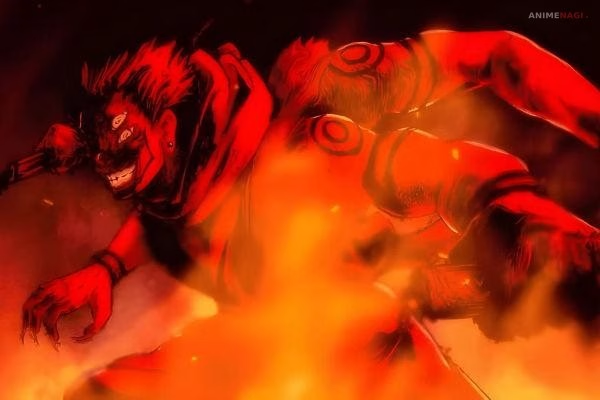
Jujutsu Kaisen adapts this imagery almost directly. Sukuna’s true form features multiple arms, additional eyes, and a monstrous body that appears far more demonic than human. The anime emphasizes this especially during flashbacks to the Heian Era, where Sukuna’s original appearance resembles an ancient supernatural deity rather than a normal sorcerer.
This design also connects heavily to Buddhist and Shinto imagery. In Japanese religious art, divine or wrathful beings often possess multiple arms to symbolize overwhelming power and transcendence. Certain Buddhist guardian deities and demons are portrayed similarly.
Gege Akutami combines these influences carefully. Sukuna’s appearance feels horrifying, but it also carries the visual presence of a godlike figure. That mixture makes him feel fundamentally different from ordinary anime villains because he resembles a mythological calamity rather than simply a powerful fighter.
The result is a character design deeply rooted in Japanese spiritual iconography.
Sukuna’s Heian Era origins are historically important
Another major mythological inspiration comes from Sukuna’s connection to Japan’s Heian Era. In Jujutsu Kaisen, Sukuna is described as the strongest sorcerer from the Heian Period, often called the Golden Age of Jujutsu Sorcery.
Historically, the Heian Era was one of Japan’s most culturally significant periods. Lasting from 794 to 1185, it became associated with aristocratic culture, spiritual beliefs, folklore development, and supernatural stories involving demons and curses. Many famous Japanese ghost tales and yokai legends originate from this era.
Setting Sukuna’s origin during the Heian Period was therefore extremely deliberate. The era already carries strong associations with mysticism, spiritual corruption, and supernatural fear within Japanese culture. By placing Sukuna there, Gege Akutami connects him directly to one of Japan’s most mythologized historical periods.
This also explains why Sukuna feels ancient and legendary compared to modern curses in the series. He is not simply another cursed spirit. He represents an older, almost mythological force born from the darkest parts of Japan’s supernatural history.
The Heian setting gives Sukuna historical weight beyond ordinary anime worldbuilding.

Some legends portray Sukuna as a hero rather than a demon
One of the most fascinating aspects of the real Ryomen Sukuna mythology is that not every legend treated him as evil. While imperial records portrayed Sukuna as a violent rebel and monster, regional stories in Hida Province often described him positively.
Some legends claimed Sukuna protected local villages, promoted agriculture, fought evil creatures, and even helped spread Buddhism throughout the region. Certain temples in Japan still contain statues and folklore connected to Sukuna today.
This contradiction likely reflects political history. Several historians and folklore discussions suggest the Yamato government may have demonized regional leaders who resisted imperial authority. Over time, official records labeled Sukuna a monster, while local populations preserved more heroic interpretations.
Gege Akutami appears to use this ambiguity intentionally in Jujutsu Kaisen. Although anime Sukuna is unquestionably brutal, the story repeatedly hints that history surrounding him may not be entirely accurate or complete. Characters describe him differently depending on their perspective, and the manga gradually reveals more complexity behind his reputation.
This morally uncertain portrayal mirrors how mythology treated the real Sukuna centuries ago.
Buddhist symbolism heavily influences Sukuna’s abilities
Buddhist imagery plays a massive role in Sukuna’s design, powers, and symbolism throughout Jujutsu Kaisen. His Domain Expansion, “Malevolent Shrine,” resembles a corrupted Buddhist temple surrounded by death and destruction.
The shrine imagery reflects both religious architecture and cursed spirituality. In Buddhism, temples often symbolize enlightenment, discipline, and spiritual order. Sukuna’s version twists these ideas into something terrifying and violent. Instead of salvation, his shrine represents slaughter and domination.
Some fans and analysts also connect Sukuna visually to wrathful Buddhist deities such as Yama or Yamantaka. These figures often appear monstrous, multi-armed, and frightening despite serving spiritual purposes within Buddhist tradition.
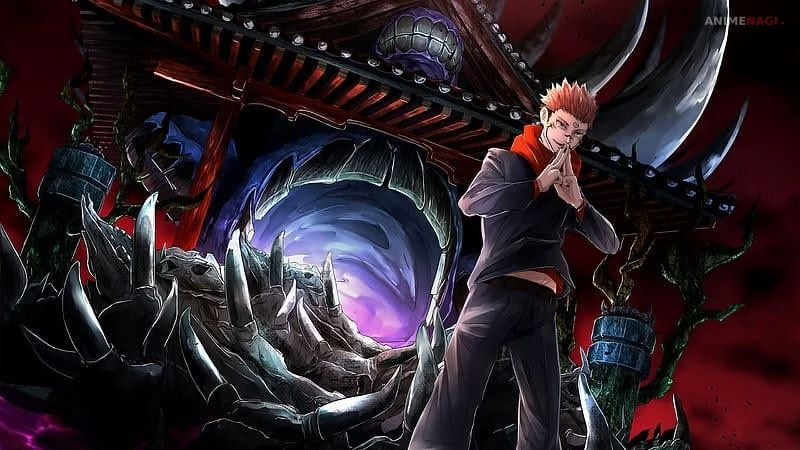
Even Sukuna’s fighting style contains symbolic references. Online mythology discussions have pointed out that techniques like Cleave and Dismantle resemble ceremonial or culinary blades associated with shrine kitchens and ritual preparation.
These influences give Sukuna a uniquely Japanese mythological identity. Rather than drawing mainly from Western demon tropes, Gege Akutami built the character using specifically Japanese religious and folkloric symbolism.
Sukuna’s role as a “walking disaster” mirrors mythological yokai
Gege Akutami once described Sukuna as “less of a sorcerer and more of a walking disaster.” That description reflects traditional Japanese yokai and demon mythology closely.
In Japanese folklore, certain supernatural beings are not simply evil individuals but natural calamities embodying fear, death, and chaos itself. These creatures often represent uncontrollable disasters rather than morally understandable villains.
Sukuna functions similarly throughout Jujutsu Kaisen. His presence alone destabilizes the world around him. Characters fear him not merely because he is powerful but because he feels fundamentally beyond human morality and social order.
This aligns strongly with how ancient records described the real Ryomen Sukuna. Imperial texts portrayed him almost like a force of destruction threatening civilization itself.
The anime modernizes this concept through cursed energy and jujutsu sorcery, but the mythological core remains the same. Sukuna is terrifying because he resembles an unstoppable ancient catastrophe wearing human form.
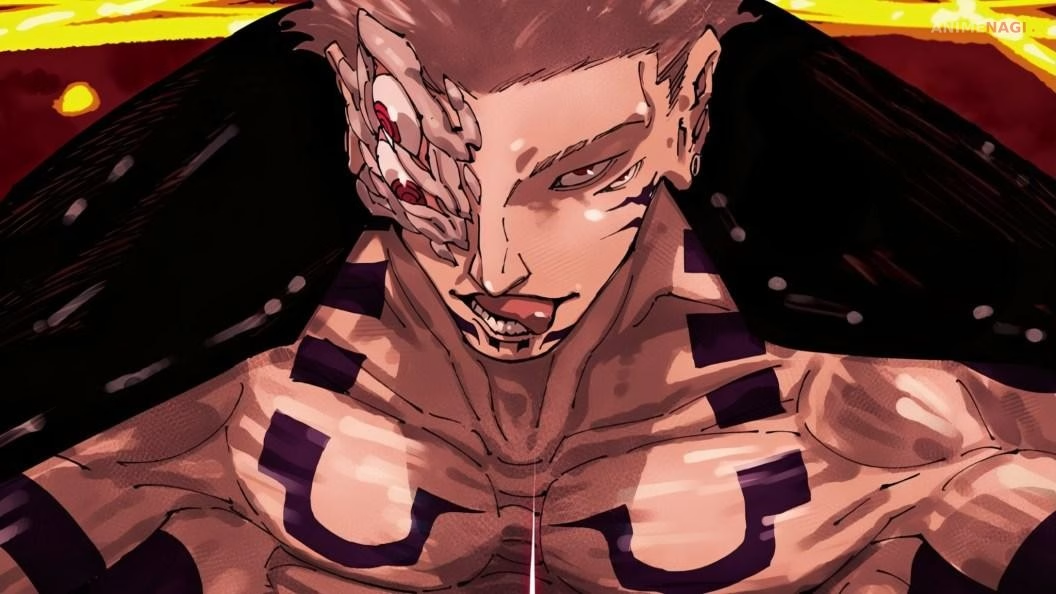
That mythological framing helps explain why he dominates the atmosphere of the series so completely.
Yuji and Sukuna’s relationship also reflects mythological duality
Another important mythological influence appears through Sukuna’s relationship with Yuji Itadori. Much like traditional Japanese folklore involving possession or spiritual coexistence, Yuji becomes the vessel containing an ancient supernatural force.
This creates constant tension between humanity and monstrosity inside one body. Yuji represents compassion, self-sacrifice, and morality, while Sukuna represents selfishness, violence, and domination.
The dynamic reflects older Japanese spiritual stories involving humans housing dangerous spirits or demons. However, Gege Akutami modernizes the concept through psychological conflict and action storytelling.
Importantly, Sukuna never behaves like a simple “inner demon” archetype common in shonen anime. Instead of eventually becoming friendly or cooperative, he remains terrifyingly independent and hostile. This makes him feel closer to mythological entities from folklore, which often resisted human control entirely. That unpredictability is part of why Sukuna feels so unique compared to many modern anime antagonists.