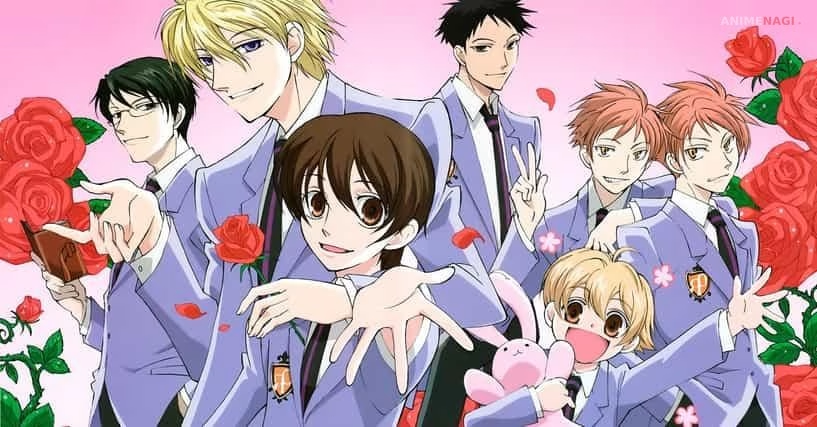
Ouran High School Host Club Season 1 remains one of the most beloved anime series in the romantic comedy genre. Originally released in 2006, the anime quickly gained popularity for its unique take on shojo tropes, blending humor, parody, and heartfelt storytelling. Even years after its release, the series continues to attract new audiences while maintaining a strong reputation among longtime fans.
The story follows Haruhi Fujioka, a scholarship student at the prestigious Ouran Academy, who accidentally becomes involved with the school’s eccentric Host Club. This setup leads to a mix of comedic misunderstandings and emotional character development. What sets the series apart is how it cleverly satirizes common anime and romance clichés while still delivering genuine emotional moments.
Season 1 successfully balances lighthearted comedy with deeper themes such as identity, class differences, and personal growth. A closer look at its characters, storytelling, and themes reveals why it remains a standout anime in the shojo genre.
Story Overview and Core Premise
The premise of Ouran High School Host Club is simple yet highly effective. Haruhi Fujioka, a practical and academically focused student, breaks an expensive vase belonging to the Host Club. Unable to repay the debt, she is forced to work for the club by entertaining female clients.
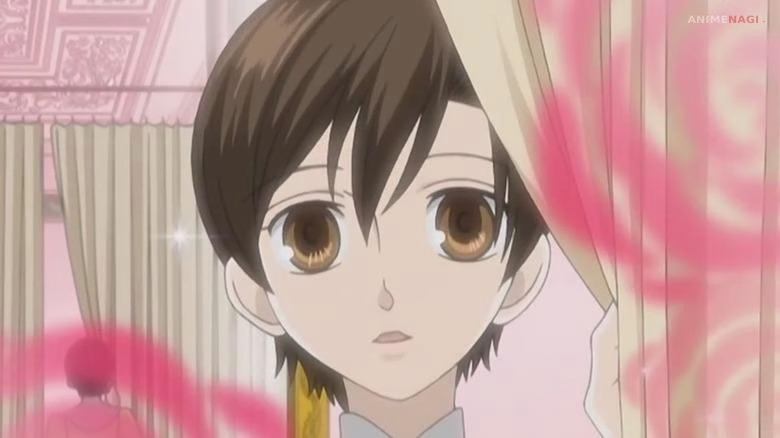
The twist lies in Haruhi being mistaken for a boy due to her short hair and androgynous appearance. This misunderstanding becomes a central comedic element while also exploring themes of identity. As Haruhi continues working at the club, she forms relationships with its members, each of whom represents a different romantic archetype.
The episodic structure allows the show to explore a variety of scenarios, from comedic skits to emotional backstories. While the series maintains a light tone, it gradually builds deeper connections between characters, especially between Haruhi and Tamaki Suoh.
This balance between humor and emotional storytelling is one of the key strengths of the season. It ensures that the narrative remains engaging without becoming repetitive.
Characters That Drive the Series
One of the biggest reasons for the anime’s success is its memorable cast of characters. Each member of the Host Club brings a distinct personality, creating dynamic interactions that keep the story entertaining.
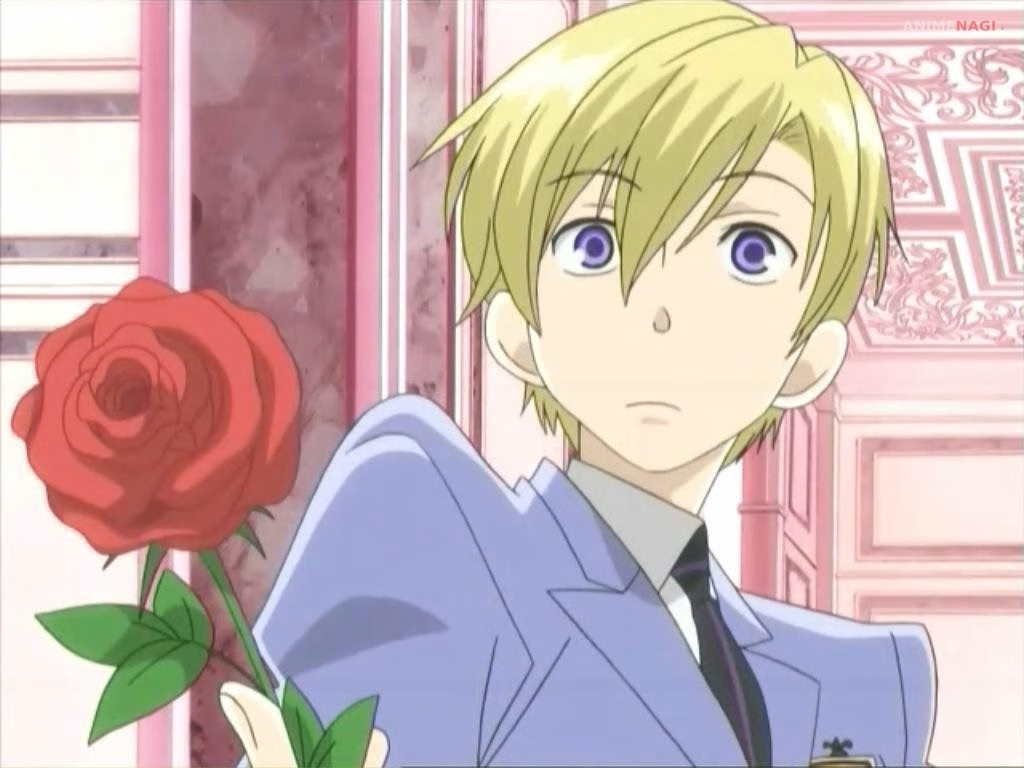
Tamaki Suoh, the club’s charismatic leader, initially appears as an over-the-top prince-type character. However, as the series progresses, his emotional depth and vulnerability become more apparent. His growing affection for Haruhi adds a romantic layer to the story.
Kyoya Ootori serves as the strategic and calculating vice president. His pragmatic approach contrasts with Tamaki’s emotional nature, creating a balanced dynamic within the group. Meanwhile, the Hitachiin twins, Hikaru and Kaoru, provide both comedic relief and surprising emotional depth.
Mitsukuni “Honey” Haninozuka and Takashi “Mori” Morinozuka round out the group with their contrasting personalities. Honey’s childlike demeanor and Mori’s quiet strength add variety to the character dynamics.
At the center of it all is Haruhi, whose grounded personality anchors the story. Her perspective allows the audience to navigate the absurd world of the Host Club while also challenging its norms.
A Clever Parody of Shojo Tropes
Ouran High School Host Club distinguishes itself through its self-awareness. The series actively parodies common shojo and romance tropes, often exaggerating them for comedic effect. This approach not only creates humor but also critiques the genre.
Each Host Club member embodies a specific archetype, such as the “prince,” “cool type,” or “mischievous twins.” The show frequently breaks the fourth wall to highlight these stereotypes, making the audience part of the joke.
Despite its parody elements, the series never feels dismissive of the genre. Instead, it celebrates these tropes while offering a fresh perspective. This balance allows it to appeal to both fans of traditional romance anime and those looking for something different.
The humor is further enhanced by visual gags, exaggerated reactions, and playful storytelling techniques. These elements contribute to the show’s distinctive style and lasting appeal.
Themes of Identity and Gender
One of the most compelling aspects of Season 1 is its exploration of identity and gender roles. Haruhi’s androgynous appearance challenges traditional expectations, allowing the series to address these topics in a subtle yet impactful way.
Haruhi’s attitude toward gender is straightforward and practical. She often states that she does not care whether she is perceived as a boy or a girl, emphasizing individuality over societal labels. This perspective adds depth to her character and sets her apart from typical shojo protagonists.
The series also uses humor to highlight the absurdity of rigid gender roles. By placing Haruhi in situations where she must navigate these expectations, the show encourages viewers to question them.
These themes remain relevant even today, contributing to the anime’s enduring popularity. They add a layer of meaning that goes beyond its comedic surface.
Emotional Moments Beneath the Comedy
While Ouran High School Host Club is primarily known for its humor, it also delivers several emotionally impactful moments. These scenes often focus on the characters’ backstories and personal struggles.
Tamaki’s family issues, the twins’ fear of being misunderstood, and Kyoya’s pressure to meet expectations all add depth to the narrative. These elements ensure that the characters feel multidimensional rather than one-dimensional caricatures.
Haruhi’s interactions with each character help reveal these hidden layers. Her straightforward nature allows her to connect with others in a genuine way, often bringing out their vulnerabilities.
These emotional moments are carefully balanced with the show’s comedic tone. This prevents the story from becoming overly dramatic while still allowing for meaningful character development.
Animation, Music, and Presentation
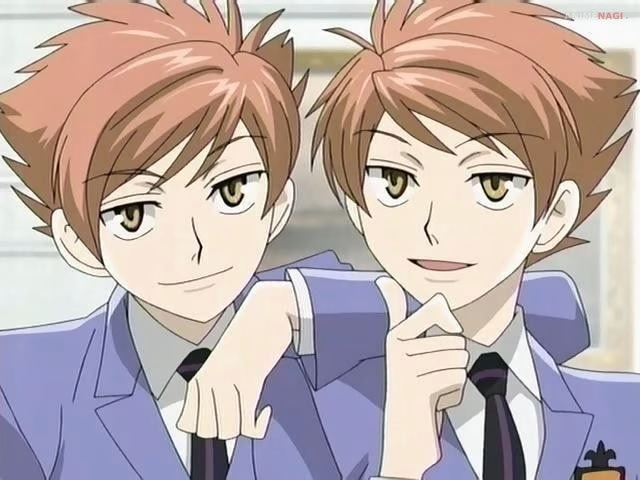
The animation quality of Season 1, produced by Studio Bones, remains impressive even by modern standards. The vibrant color palette and expressive character designs contribute to the show’s lively atmosphere.
The series makes effective use of visual humor, including exaggerated facial expressions and stylized backgrounds. These elements enhance the comedic impact of many scenes.
The soundtrack also plays a significant role in setting the tone. The opening theme, “Sakura Kiss,” is upbeat and memorable, perfectly capturing the series’ playful spirit. Meanwhile, the ending theme provides a softer, more reflective contrast.
Voice acting further elevates the characters, with performances that capture both comedic timing and emotional depth. Together, these elements create a polished and engaging viewing experience.
Strengths and Minor Weaknesses
Ouran High School Host Club Season 1 excels in several areas, particularly its writing, characters, and humor. Its ability to blend parody with genuine storytelling makes it stand out from other anime in the genre.
The pacing is generally consistent, with each episode offering a mix of comedy and character development. The episodic structure allows for variety while maintaining a cohesive narrative.
However, one of the most commonly noted drawbacks is the lack of a definitive conclusion. Since the anime does not fully adapt the manga, some storylines remain unresolved. This can leave viewers wanting more.
Despite this, the season still provides a satisfying experience. Its focus on character relationships ensures that it feels complete even without a traditional ending.
Why Season 1 Still Holds Up Today
Years after its release, Ouran High School Host Club Season 1 continues to resonate with audiences. Its humor, themes, and characters remain relevant, making it accessible to both new viewers and longtime fans.
The series’s approach to parody and self-awareness feels ahead of its time. Many modern anime have adopted similar techniques, but Ouran remains one of the earliest and most effective examples.
Its exploration of identity and social expectations also contributes to its lasting appeal. These themes are handled in a way that feels natural rather than forced, allowing them to resonate with a wide audience.
The show’s ability to balance comedy with emotional storytelling ensures that it remains engaging from start to finish. This combination is a key factor in its enduring popularity.
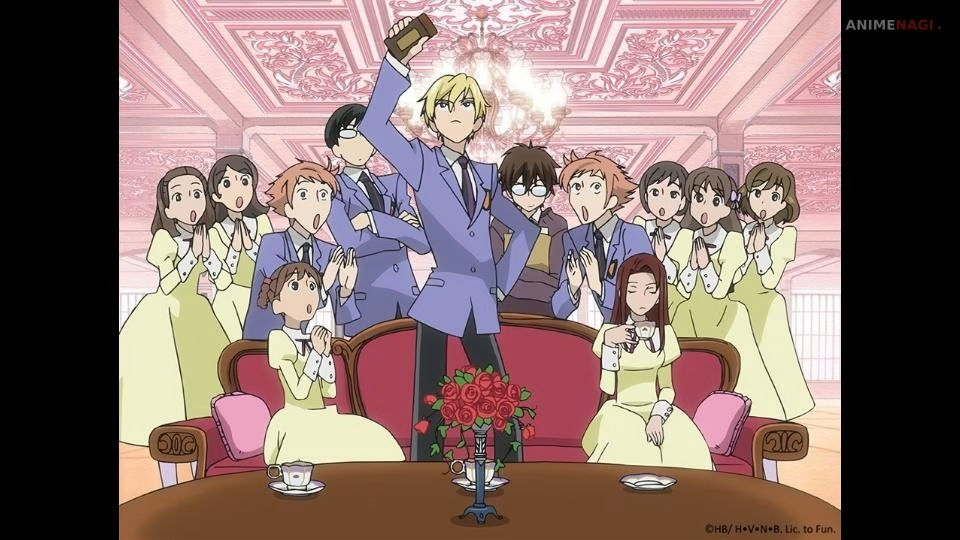
The chemistry between the Host Club members also plays a huge role in keeping the series engaging across all episodes. Their interactions feel natural despite the exaggerated personalities, and the humor often comes from how these contrasting traits collide in different situations.
Whether it is Tamaki’s dramatic reactions or the twins’ playful manipulation, the group dynamic constantly evolves. This makes even filler-style episodes feel purposeful because they contribute to relationship building. As a result, viewers stay invested not just in the story but in how these characters grow together over time.
Another aspect that deserves recognition is how accessible the series is for new anime viewers. Unlike many romance anime that rely heavily on genre familiarity, Ouran High School Host Club introduces its tropes in a way that feels welcoming and easy to understand.
The comedic framing helps simplify complex emotional moments without reducing their impact. This makes the series an excellent entry point into shojo anime while still offering enough depth for experienced viewers. Its ability to appeal to such a wide audience is a major reason it continues to be recommended years after its release.
Ouran High School Host Club Season 1 is a standout anime that successfully combines humor, romance, and social commentary. Its memorable characters, clever writing, and engaging themes make it a must-watch for fans of the genre.
The series excels at both entertaining and thought-provoking storytelling. While it may not have a complete ending, its strengths far outweigh this limitation.
For viewers looking for a romantic comedy with depth and originality, this anime delivers on all fronts. Its timeless appeal ensures that it remains a favorite among anime enthusiasts.
The Good
- Memorable and well-developed characters
- Unique blend of parody and genuine romance
- Strong humor with emotional depth
- Timeless themes of identity and individuality
The Bad
- Lack of a complete ending
- Some episodic plots feel repetitive