If you spend enough time in anime or manga communities, you will constantly hear fans talk about “arcs.” People discuss the “Chunin Exams Arc” in Naruto, the “Marineford Arc” in One Piece, or the “Soul Society Arc” in Bleach as if everyone automatically understands the term. For new anime fans, however, the meaning of “arc” can feel confusing at first.
In simple terms, an arc is a specific section of a story that focuses on a major conflict, goal, or event. Anime and manga often divide long stories into multiple arcs, each with its own beginning, buildup, climax, and resolution. These arcs help organize the narrative and make large series easier to follow.
Understanding arcs is important because they shape how anime stories are structured. They influence pacing, character development, emotional moments, and even how fans rank their favorite parts of a series. Here is a simple breakdown of what anime arcs are, why they matter, and how they work in popular series.
What Is an Arc in Anime and Manga?
A story arc is a connected section of a narrative that focuses on a particular storyline or conflict. In anime and manga, an arc usually contains a clear beginning, middle, and ending while still contributing to the larger overall story.
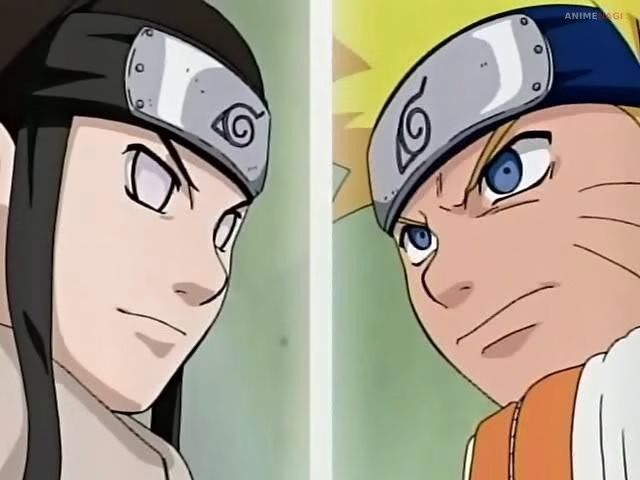
For example, in Naruto, the Chunin Exams Arc focuses mainly on the ninja exams, new rivals, and Orochimaru’s attack on the Hidden Leaf Village. Once those events are resolved, the series moves into another arc with a different focus and storyline.
Think of arcs as chapters within a much bigger journey. Each arc tells its own smaller story while helping move the main plot forward. Some arcs are short and last only a few episodes, while others can continue for dozens or even hundreds of episodes in extremely long anime series.
Anime fans often use arcs as a way to organize discussion. Instead of talking about every single episode individually, viewers group episodes together based on the storyline they belong to. That is why fans frequently rank or compare arcs rather than entire anime series.
Why Anime Uses Story Arcs So Often
Anime and manga frequently use arc-based storytelling because many series run for years with long ongoing narratives. Dividing the story into arcs helps creators structure major events more clearly and maintain audience engagement over time.
Each arc usually introduces a new challenge, villain, location, or emotional conflict. This creates a sense of progression without needing to restart the entire story every season. Popular long-running anime like One Piece, Bleach, Dragon Ball, and Fairy Tail rely heavily on this format.
Arcs also help pacing. Instead of one giant uninterrupted narrative, the story moves through smaller segments with their own climaxes and resolutions. This gives viewers satisfying milestones while still building toward larger long-term goals.
Another reason arcs matter is character development. Major arcs often change the protagonist emotionally or mentally. For example, the Marineford Arc in One Piece dramatically changes Luffy’s maturity and worldview after major losses and battles.
Different Types of Anime Arcs Explained
Not all arcs serve the same purpose in anime and manga. Some focus mainly on action, while others prioritize emotional growth, worldbuilding, or side characters. Understanding the different types of arcs helps explain why anime storytelling can feel so varied.
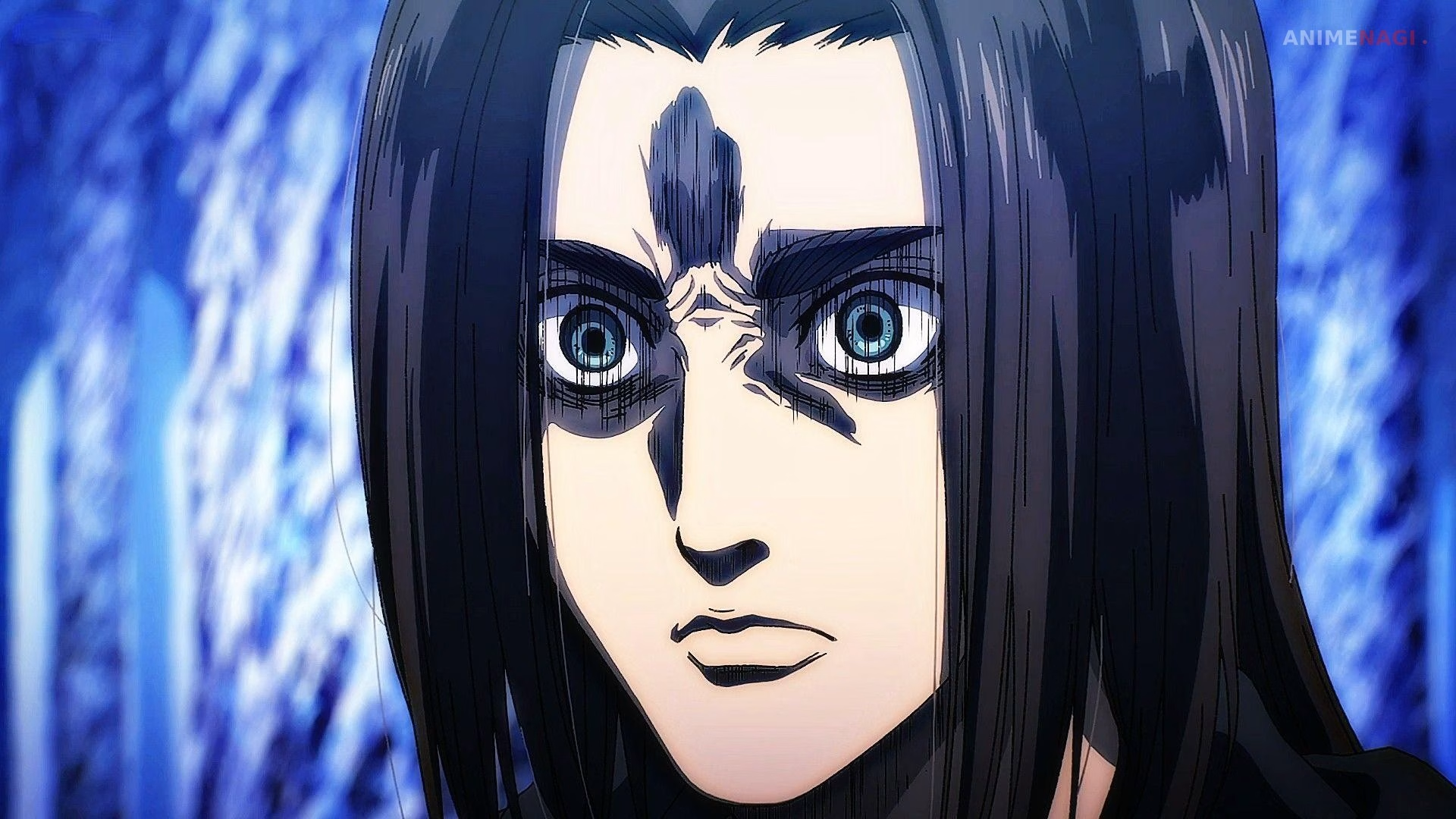
The most common type is the story arc. This is the main narrative section centered around a major conflict or objective. Examples include the Pain Assault Arc in Naruto or the Cell Saga in Dragon Ball Z. These arcs usually push the central plot forward significantly.
Another important type is the character arc. This focuses more on how a specific character changes emotionally or psychologically during the story. A character arc may overlap with larger story arcs but specifically highlights personal growth or transformation.
Anime also uses filler arcs, especially in adaptations based on manga. A filler arc contains anime-original content that was not part of the original manga storyline. Studios often create filler arcs when the anime catches up too closely to the manga source material.
Finally, some long series organize arcs into larger “sagas.” A saga is a collection of multiple arcs connected by one larger narrative objective. In One Piece, for example, several arcs together form the Water 7 Saga or the Wano Saga.
How Long Can an Anime Arc Be?
Anime arcs can vary massively in length depending on the series and storytelling style. Some arcs last only a few episodes, while others continue for years in both anime and manga formats.
Shorter anime often contain only one or two arcs total because the entire series tells one continuous story. For example, many 12-episode seasonal anime structure their entire narrative as a single arc with one main conflict from beginning to end.
Long-running shonen anime work very differently. A single arc in One Piece or Naruto can last dozens of episodes and introduce multiple battles, emotional twists, and supporting characters. The Dressrosa Arc in One Piece, for instance, became famous for its extremely long runtime.
The length of an arc usually depends on the complexity of the conflict being explored. Tournament arcs, war arcs, rescue arcs, and training arcs all require different amounts of time to fully develop.
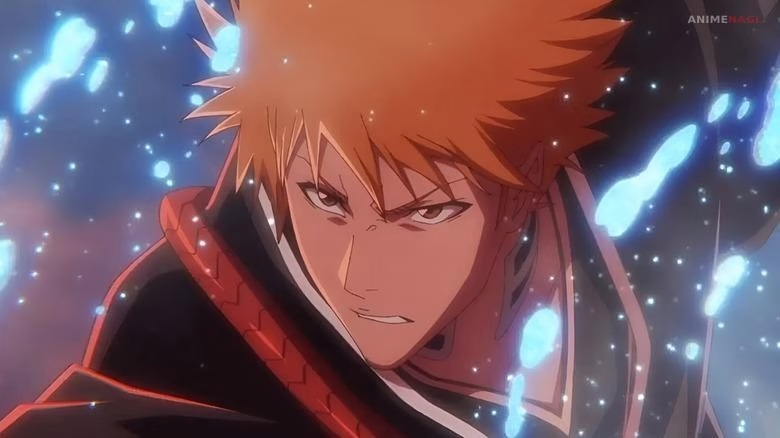
This flexibility is one reason anime storytelling feels unique compared to many Western television series. Arcs allow creators to expand important moments without needing to compress every storyline into a strict seasonal format.
Examples of Famous Anime Arcs
Some anime arcs become so popular that fans treat them almost like separate stories. These arcs often define an entire franchise and attract new viewers to the series.
The Chunin Exams Arc from Naruto remains one of the most iconic tournament arcs in anime history because it introduced major rivals, showcased unique ninja abilities, and expanded the world significantly. Many fans still consider it one of the strongest parts of the series.
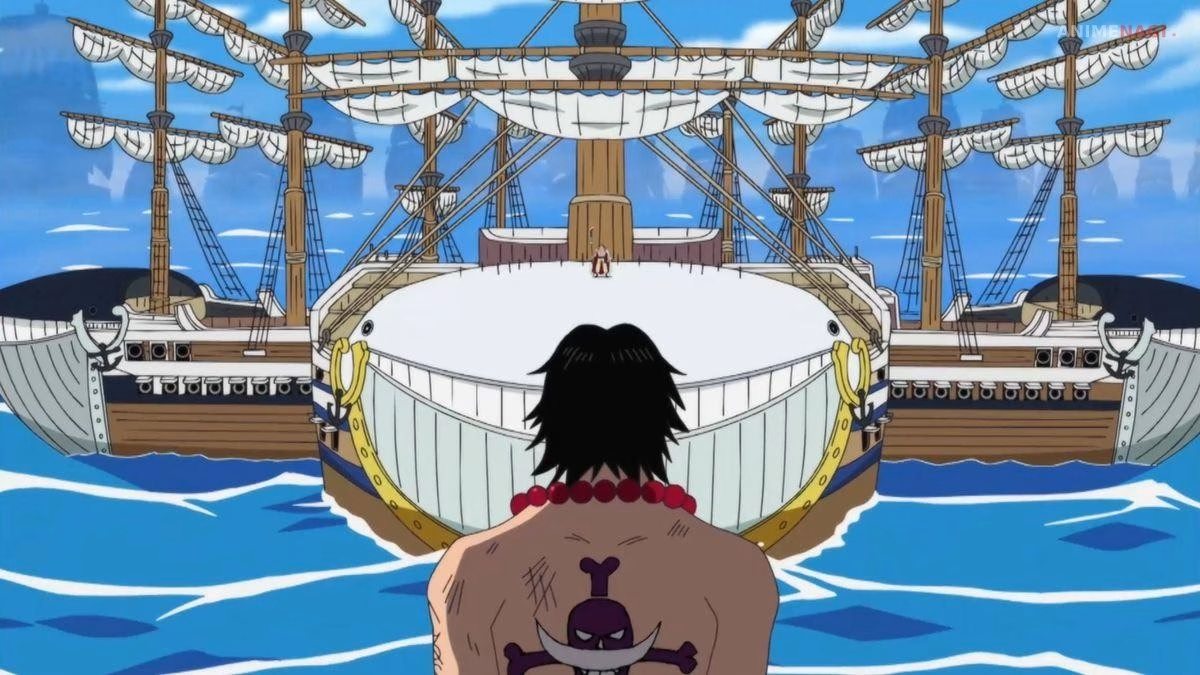
In One Piece, the Marineford Arc is widely praised for its emotional intensity and large-scale war between pirates and the Marines. The arc dramatically changed the direction of the story and affected nearly every major character.
Attack on Titan’s Return to Shiganshina Arc also became highly respected because it delivered major revelations about the Titans and humanity’s past. The arc combined action, emotional sacrifice, and long-awaited answers that reshaped the entire series.
Even shorter anime use memorable arcs effectively. Demon Slayer’s Entertainment District Arc became popular due to its animation quality, character development, and intense battles against Upper Rank demons.
Arc vs Saga vs Season: What’s the Difference?
New anime fans often confuse arcs, sagas, and seasons because all three terms organize storytelling differently. However, they are not the same thing.
An arc refers specifically to a storyline or narrative conflict. It focuses on what happens within the story itself. A saga is a larger collection of connected arcs that together form one broader narrative objective.
A season, however, is usually a production or release term rather than a storytelling term. Anime seasons are divided based on broadcasting schedules and business decisions, not necessarily by story structure. One arc can sometimes span multiple seasons, while a single season can contain multiple arcs.
For example, the Chimera Ant Arc in Hunter x Hunter stretches across many episodes within the anime adaptation. Meanwhile, shorter seasonal anime may complete an entire story arc in just one season.
Understanding this difference helps viewers follow anime discussions more easily, especially when fans debate their favorite arcs or compare pacing between series.