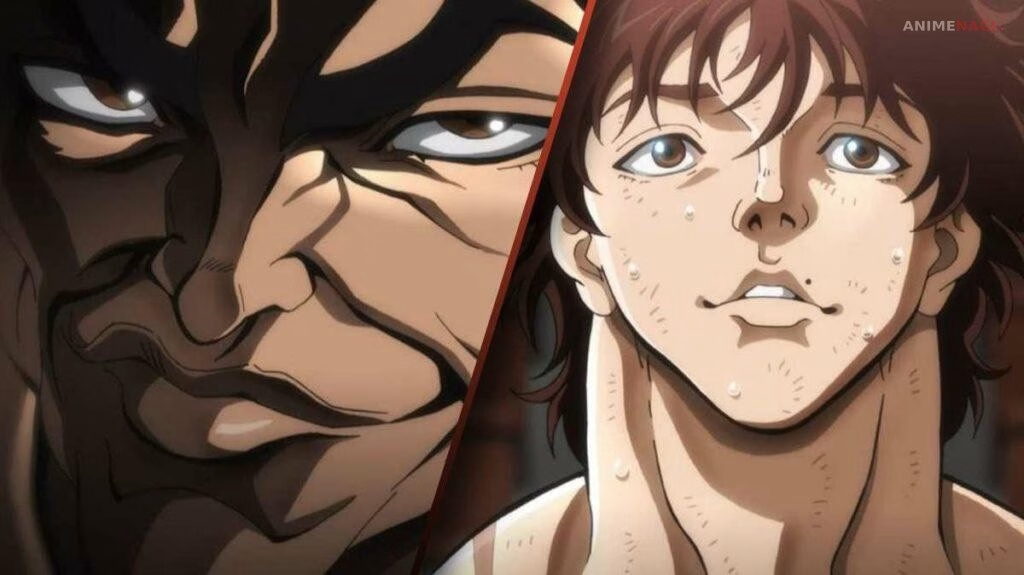
The final battle between Baki Hanma and Yujiro Hanma is one of the most anticipated confrontations in anime and manga history. After years of brutal training, emotional trauma, and impossible fights, Baki finally faces the man who shaped his entire life. Naturally, most viewers expect a clear winner, where the son surpasses the father in a decisive moment. However, the ending refuses to deliver that kind of resolution.
Instead of a traditional victory, the fight concludes in a way that feels emotionally complete but physically ambiguous. Yujiro dominates much of the battle, yet he acknowledges Baki in a way that changes their relationship forever. At the same time, Baki himself accepts Yujiro’s physical superiority while achieving something deeper.
This contradiction is exactly why the ending remains widely debated. The fight was never truly about winning in a physical sense. It was about recognition, emotional closure, and redefining what strength actually means.
To fully understand the ending, it is important to look beyond the punches and examine the emotional and thematic core of the father-son conflict.
The Fight Represents Baki’s Entire Life
The battle against Yujiro is not just another challenge for Baki. It represents the culmination of everything he has endured since childhood, both physically and emotionally. From the very beginning of the story, Baki’s entire identity is built around confronting his father.
Yujiro is not just the strongest creature alive but also the source of Baki’s deepest trauma. The death of Baki’s mother, Emi, at Yujiro’s hands creates a wound that defines his entire journey. Every fight Baki takes part in is ultimately preparation for this one moment.
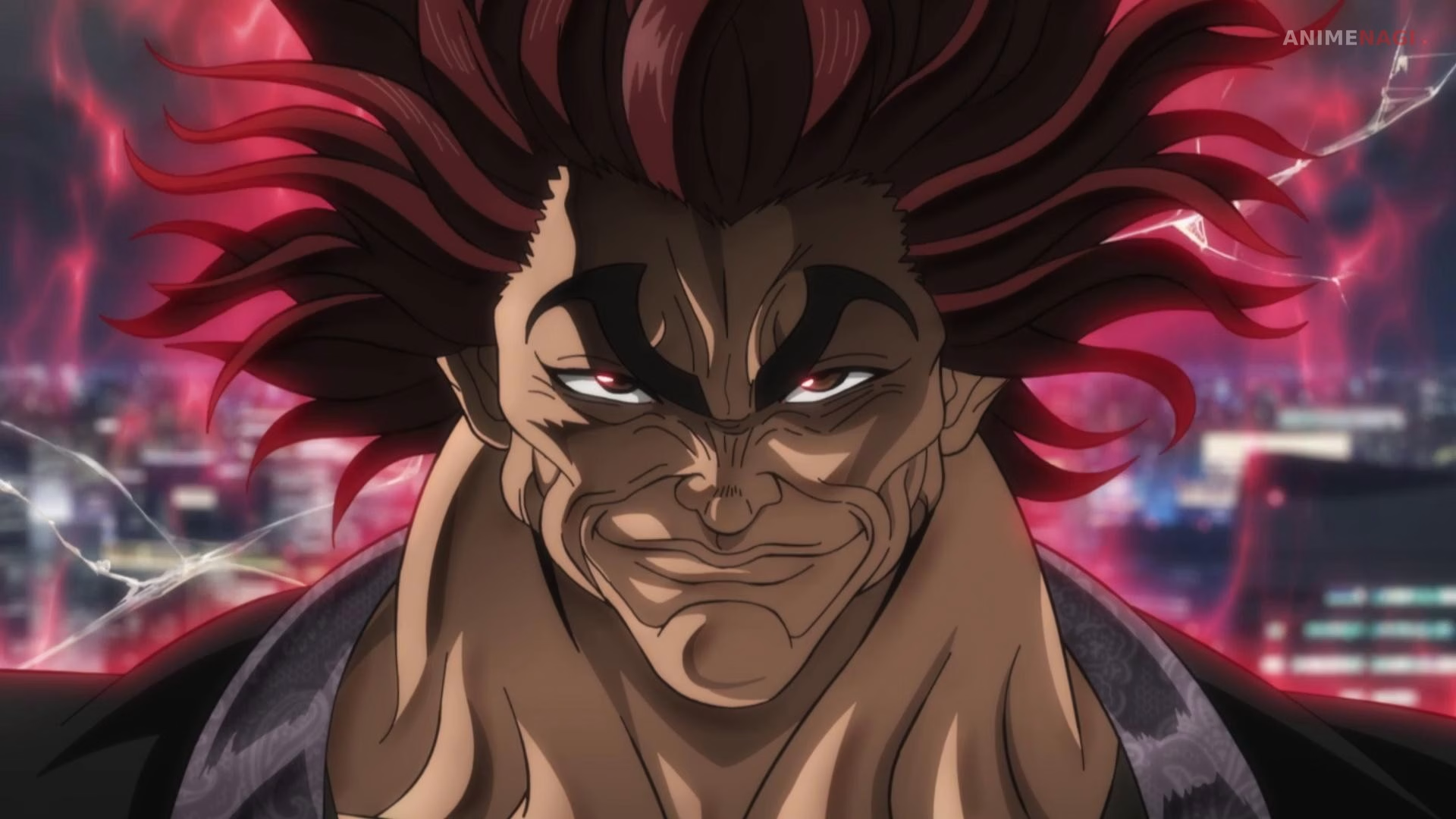
Unlike typical rivalry stories, Baki’s motivation goes far beyond proving strength. His desire to fight Yujiro is tied to unresolved emotional pain and a need for acknowledgment. That is why the final battle carries so much weight.
This context transforms the fight from a simple contest into a deeply personal confrontation between two broken individuals.
Yujiro Was Never a Traditional Villain
One of the key reasons the ending feels unusual is that Yujiro is not written like a typical antagonist. He is undeniably brutal, cruel, and destructive, but he is also portrayed as someone shaped by isolation.
Yujiro’s overwhelming strength separates him from humanity. No one can truly challenge him, which leaves him emotionally detached from others. While he dominates physically, he lacks meaningful connection, making his existence strangely empty.
This dynamic becomes important during the final fight. Baki does not approach Yujiro purely as an enemy to defeat. Instead, he confronts him as a son demanding recognition and emotional accountability.
This shift changes the nature of the conflict. The fight becomes less about defeating a villain and more about forcing a connection between two people who have never truly understood each other.
Emi’s Death Is the Emotional Core of the Fight
At the heart of the father-son battle lies the memory of Emi’s death. This moment is not just a tragic backstory but the emotional foundation of the entire conflict.
During the fight, Baki directly challenges Yujiro about his actions, bringing their unresolved past into the present. These emotional confrontations matter far more than the physical exchanges between them.
The story repeatedly mirrors the original trauma, reminding viewers why Baki fights in the first place. His anger is not simply about revenge but about understanding why his family was destroyed.
This emotional layer transforms the fight into something far more complex than a simple battle. It becomes a confrontation with the past and a demand for acknowledgment.
Baki Wanted Recognition, Not Revenge
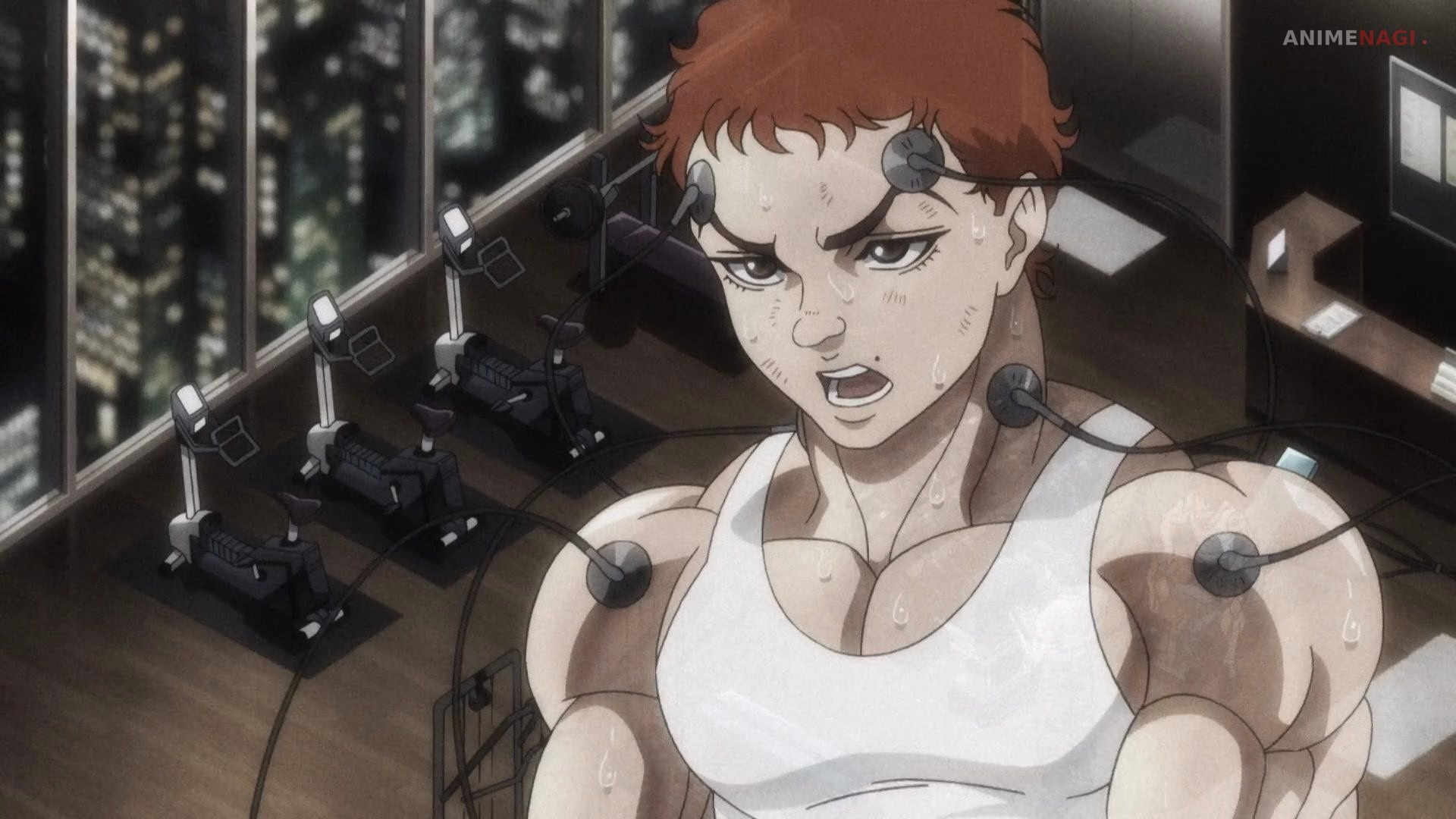
A common misunderstanding is that Baki’s goal is to defeat Yujiro out of revenge. While anger plays a role, his deeper motivation is recognition.
Baki wants Yujiro to see him as more than just another weak being. Throughout the series, Yujiro dismisses others as inferior, valuing only raw strength. Baki challenges this worldview by forcing Yujiro to engage with him emotionally.
The fight becomes a way for Baki to prove that he matters, not just as a fighter but as a person. This is why certain moments in the battle feel more significant than physical damage.
Baki’s true victory lies in being acknowledged by someone who has never respected anyone before.
The Imaginary Dinner Scene Explains the Ending
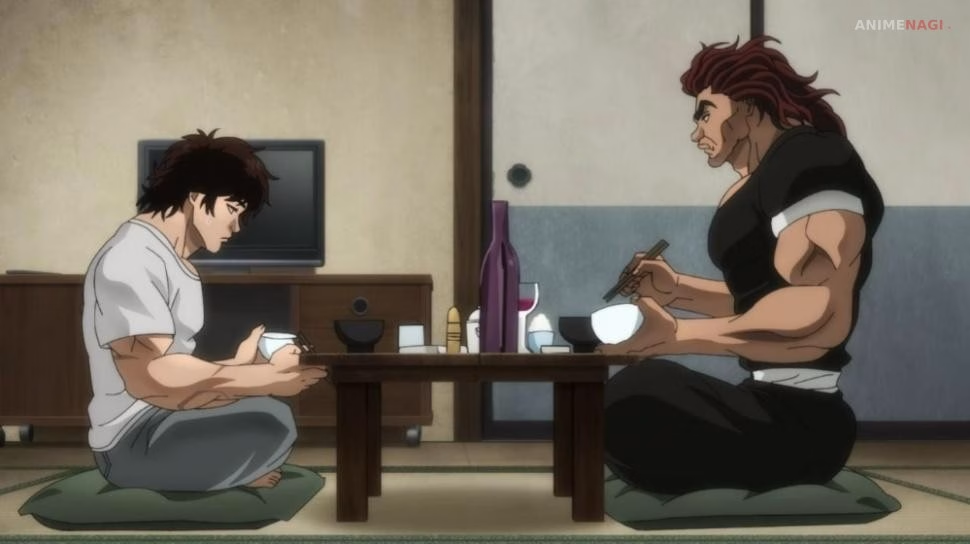
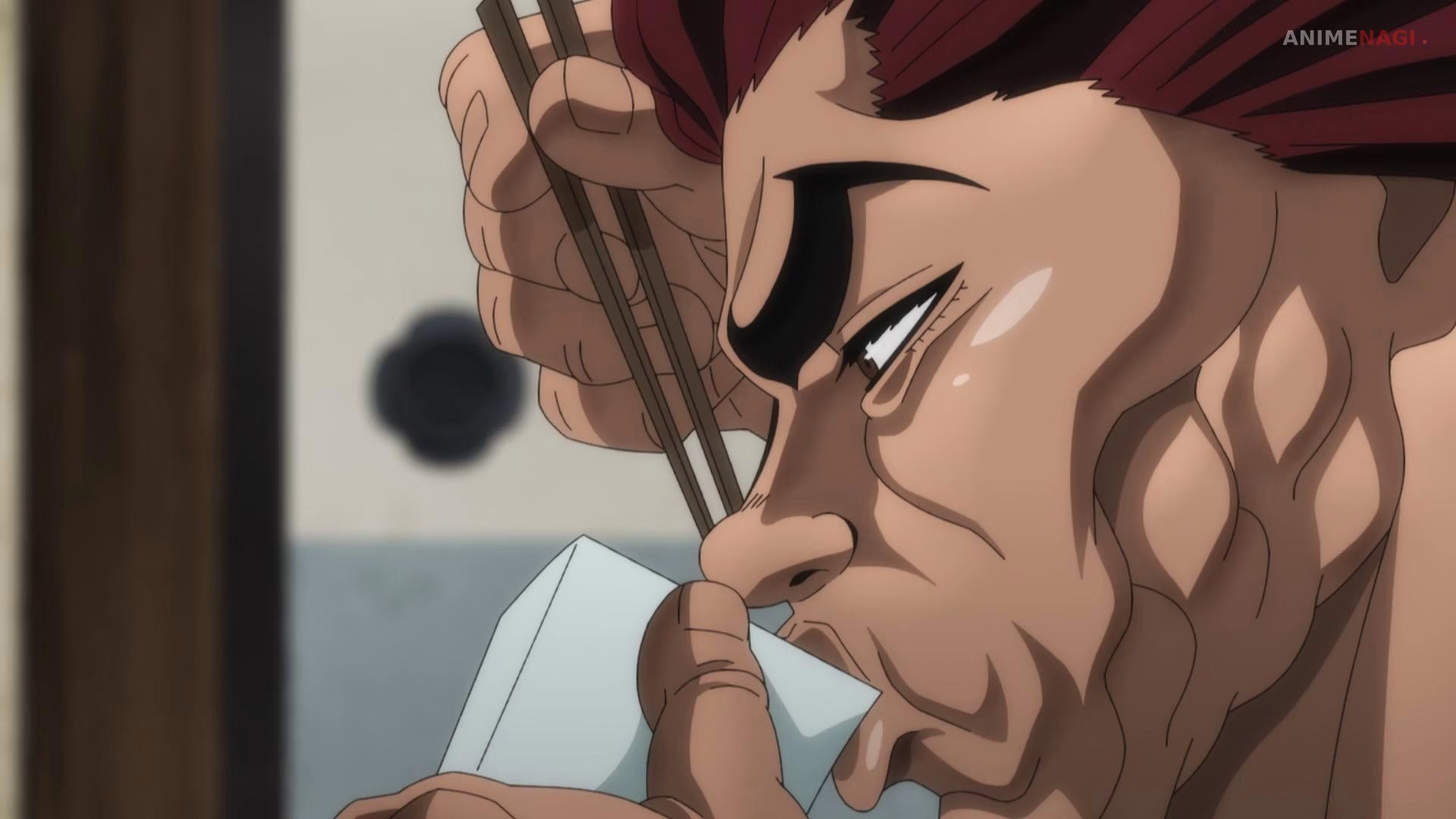
One of the most unusual moments in the fight is the imaginary dinner sequence. At first glance, it appears absurd, even by Baki standards. However, it is actually the most important scene in the entire confrontation.
During this moment, Baki forces Yujiro into a symbolic family interaction. The invisible food and shared space represent the normal father-son relationship Baki never had.
This scene is not about realism but about emotional truth. Baki is recreating the family life that was destroyed when his mother died. By participating, Yujiro is acknowledging that loss in a way he never has before.
The miso soup, often referenced in this scene, symbolizes the emotional bitterness left behind by their broken family. Its presence reinforces the idea that this moment is about unresolved pain rather than physical combat.
Yujiro Accepts Baki in His Own Way
As the fight progresses, Yujiro begins to change subtly. While he remains physically dominant, his emotional responses shift in ways that are unprecedented.
For the first time, Yujiro acknowledges Baki as someone capable of affecting him. This is significant because Yujiro defines strength as the ability to impose one’s will on reality.
Baki succeeds in doing exactly that, not through brute force but through emotional influence. He forces Yujiro into a situation where he must engage as a father rather than just a fighter.
This moment represents a breakthrough. Yujiro does not lose physically, but he loses his emotional isolation.
Why Both Baki and Yujiro “Win”
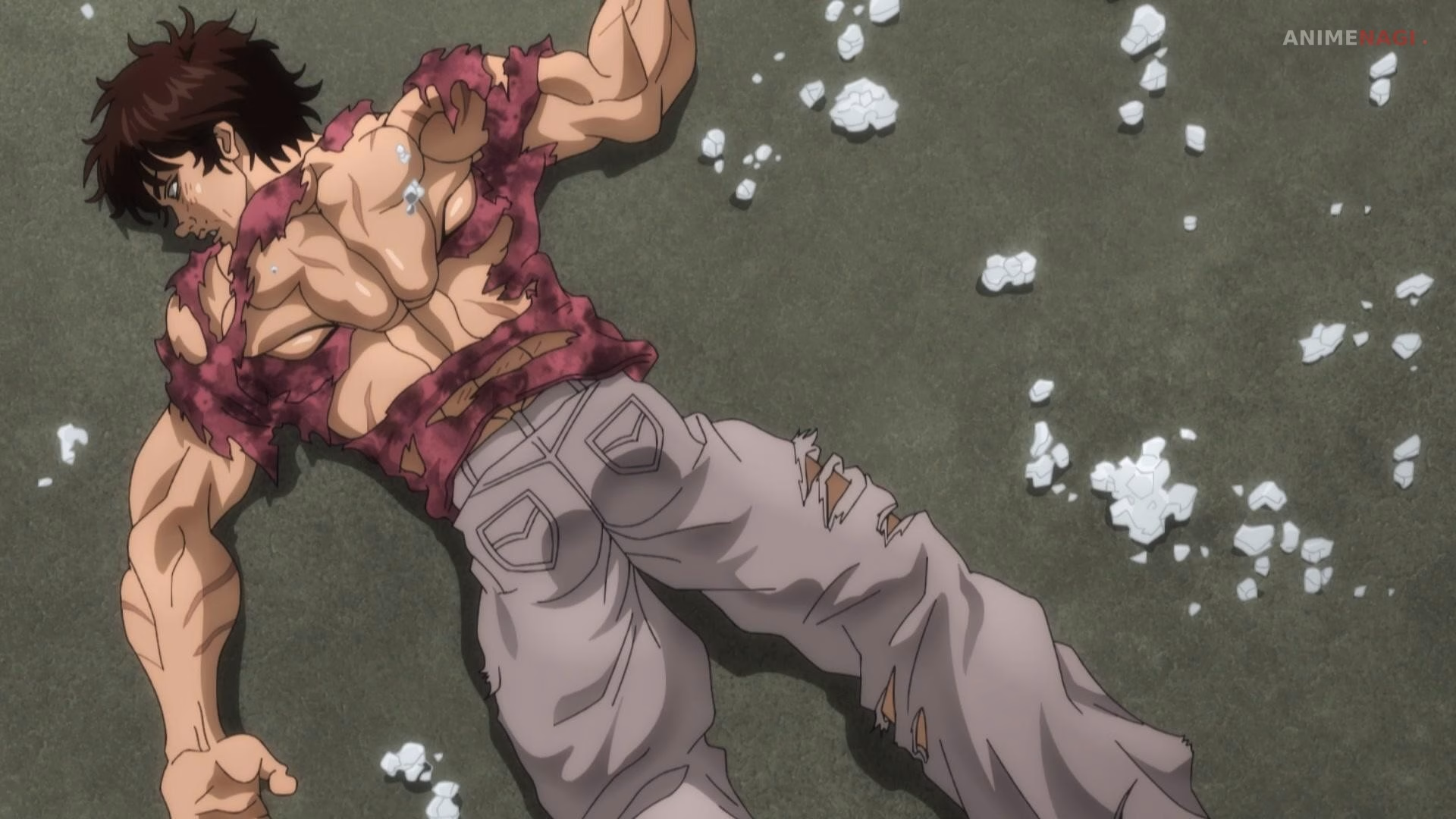
The ending becomes clearer when viewed through the idea of dual victory. Physically, Yujiro remains superior, standing strong while Baki is left injured and exhausted.
However, emotionally, Baki achieves his goal completely. He forces Yujiro to acknowledge him and engage in a way no one else ever has.
This is why both characters effectively declare each other the winner. Yujiro wins the fight in terms of strength, but Baki wins in terms of emotional impact.
The story deliberately avoids choosing one outcome because it is not about a single type of victory. It is about redefining what winning actually means.
The Ending Redefines Strength
Throughout the series, strength is portrayed as the ultimate goal. Fighters train endlessly to become stronger, believing that physical power defines their worth.
The final battle challenges this idea by introducing a different form of strength. Baki demonstrates that emotional resilience and the ability to connect with others can be just as powerful as physical dominance.
Yujiro’s worldview begins to shift as he experiences this form of strength firsthand. He realizes that even he cannot completely control emotional outcomes.
This realization changes the meaning of strength within the story. It becomes something more complex than simple physical superiority.
Baki Finally Finds Emotional Closure
One of the most important outcomes of the fight is Baki’s emotional growth. For most of his life, he is driven by the need to prove himself to Yujiro.
By the end of the battle, he achieves that goal. Yujiro acknowledges him not just as a fighter but as his son. This recognition allows Baki to move forward without the same level of obsession.
The fight effectively releases Baki from the emotional burden he has carried for years. He no longer needs to chase validation because he has already received it.
This emotional closure is the true resolution of the story.
The Father-Son Relationship Is the True Focus
Despite its intense action, Baki is ultimately a story about family. The relationship between Baki and Yujiro drives nearly every major event in the series.
The final fight resolves this relationship in a way that feels realistic within the story’s world. It does not erase the past or turn Yujiro into a good person.
Instead, it allows both characters to reach a form of understanding. They acknowledge each other’s existence in a way that was previously impossible.
This focus on emotional resolution explains why the fight does not follow traditional storytelling expectations.
Why the Ending Divides Fans
The ending continues to divide fans because it challenges expectations. Many viewers anticipated a clear moment where Baki surpasses Yujiro physically.
Instead, the story delivers a more symbolic conclusion. The lack of a definitive winner can feel unsatisfying for those expecting a traditional payoff.
However, for others, this approach makes the ending more meaningful. It emphasizes character development over spectacle and emotional resolution over simple victory.
The unusual tone, including surreal moments like the imaginary dinner, further adds to the division. These elements require interpretation rather than providing straightforward answers.
The final fight between Baki and Yujiro is not about deciding who is stronger. It is about whether two deeply damaged individuals can finally understand each other.
Baki does not need to defeat Yujiro physically to achieve his goal. By forcing emotional acknowledgment, he accomplishes something far more significant.
Yujiro, in turn, experiences a form of connection that his strength has always denied him. This moment changes their relationship permanently, even if it does not change their power dynamic completely.
In the end, the fight is about recognition, closure, and redefining strength itself. That is why Baki vs Yujiro remains one of the most unique and thought-provoking conclusions in anime and manga history.