For years, one of the biggest mysteries in One Piece has been the true nature of Zunesha’s crime. The colossal elephant that carries Zou on its back has wandered the seas for centuries under a punishment so severe that even the strongest characters in the series struggle to comprehend it. When Eiichiro Oda finally connected Zunesha to Joy Boy during the Wano arc, the mystery became even more important because it tied directly into the Void Century, the Ancient Kingdom, and Luffy’s role in the final saga.
While Oda has not fully revealed the exact crime yet, the manga has provided enough clues to build a strong picture of what likely happened 800 years ago. Understanding Zunesha’s punishment also helps explain why Joy Boy failed, why Wano remained closed for centuries, and why the return of Joy Boy has such enormous significance in the modern world of One Piece.
What is Zunesha and why is it important?
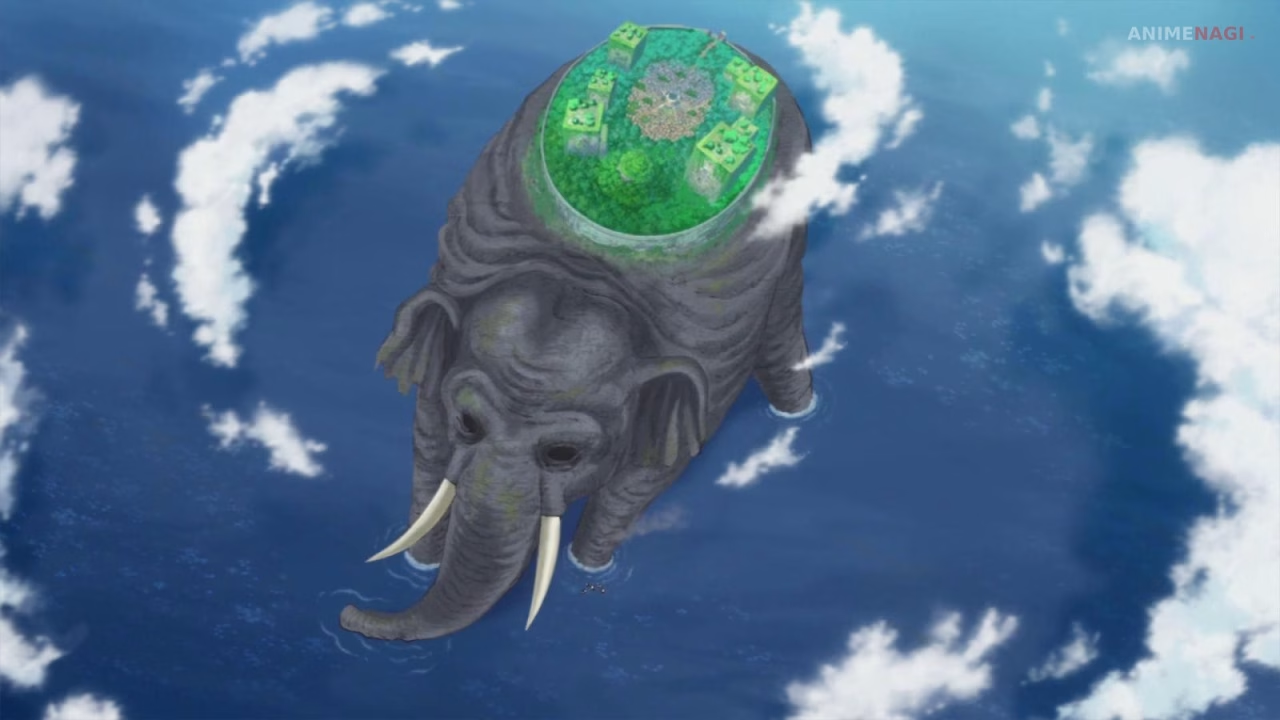
Zunesha was first introduced during the Zou arc as an enormous elephant carrying an entire civilization on its back. The Mink Tribe has lived atop the giant creature for generations, treating it almost like a living homeland rather than an animal.
The elephant immediately stood out because of its unbelievable size and age. According to information revealed in the series, Zunesha has been wandering the seas for approximately 1,000 years. More importantly, it does not act freely. The creature follows a punishment that forces it to keep walking endlessly across the ocean.
This detail became one of the biggest unanswered questions in the story. Who punished Zunesha? What crime was so terrible that it resulted in a millennium of suffering? And why does a creature powerful enough to destroy entire fleets obey those orders without resistance?
Those questions remained unanswered for years until the Wano arc finally connected Zunesha to Joy Boy.
The revelation that changed everything
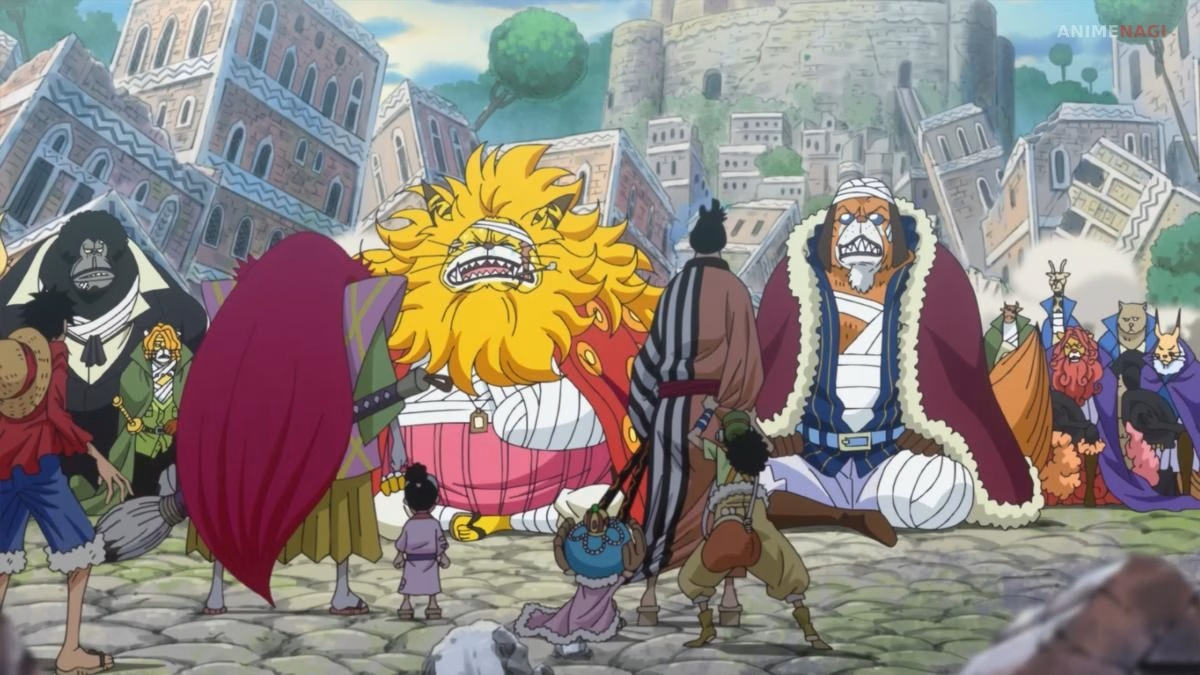
One of the most important moments in Wano came when Momonosuke revealed a That single statement completely changed how fans viewed the giant elephant.
Before this revelation, Zunesha appeared to be a mysterious ancient being with little connection to the central story. Afterward, it became clear that the elephant had directly participated in the events of the Void Century.
Joy Boy is one of the most significant figures in One Piece history. His existence is tied to the Ancient Kingdom, the Poneglyphs, Fish-Man Island, the Ancient Weapons, and the treasure known as One Piece. Learning that Zunesha was one of Joy Boy’s companions instantly elevated the importance of the elephant.
It also introduced a new possibility. If Zunesha fought alongside Joy Boy during the Void Century, then the crime likely happened during the great conflict that shaped the modern world.
Why Zunesha’s punishment is so unusual
The punishment itself provides some of the strongest clues about the crime. Unlike a prison sentence or execution, Zunesha was ordered to walk endlessly across the sea. The elephant cannot simply stop wherever it wants. In fact, the series suggests that Zunesha generally acts only when given permission by someone capable of communicating through the Voice of All Things.
This was demonstrated when Jack attacked Zou. Despite possessing enough strength to destroy an enemy fleet with a single strike, Zunesha waited until Momonosuke gave permission before defending itself.
That behavior suggests that the punishment is not merely physical. It appears to be psychological and spiritual as well. Zunesha has accepted the sentence completely and follows it without question.
The fact that the elephant obeys the punishment after centuries indicates either overwhelming guilt or an unbreakable vow. In either scenario, the crime must have had devastating consequences.
The connection to Joy Boy’s failed promise
One of the strongest theories regarding Zunesha’s crime comes from Joy Boy’s famous apology on Fish-Man Island. Centuries before the main story, Joy Boy made a promise connected to Poseidon and the giant ship Noah. However, he ultimately failed to fulfill that promise. This failure became so significant that he left behind an apology on a Poneglyph.
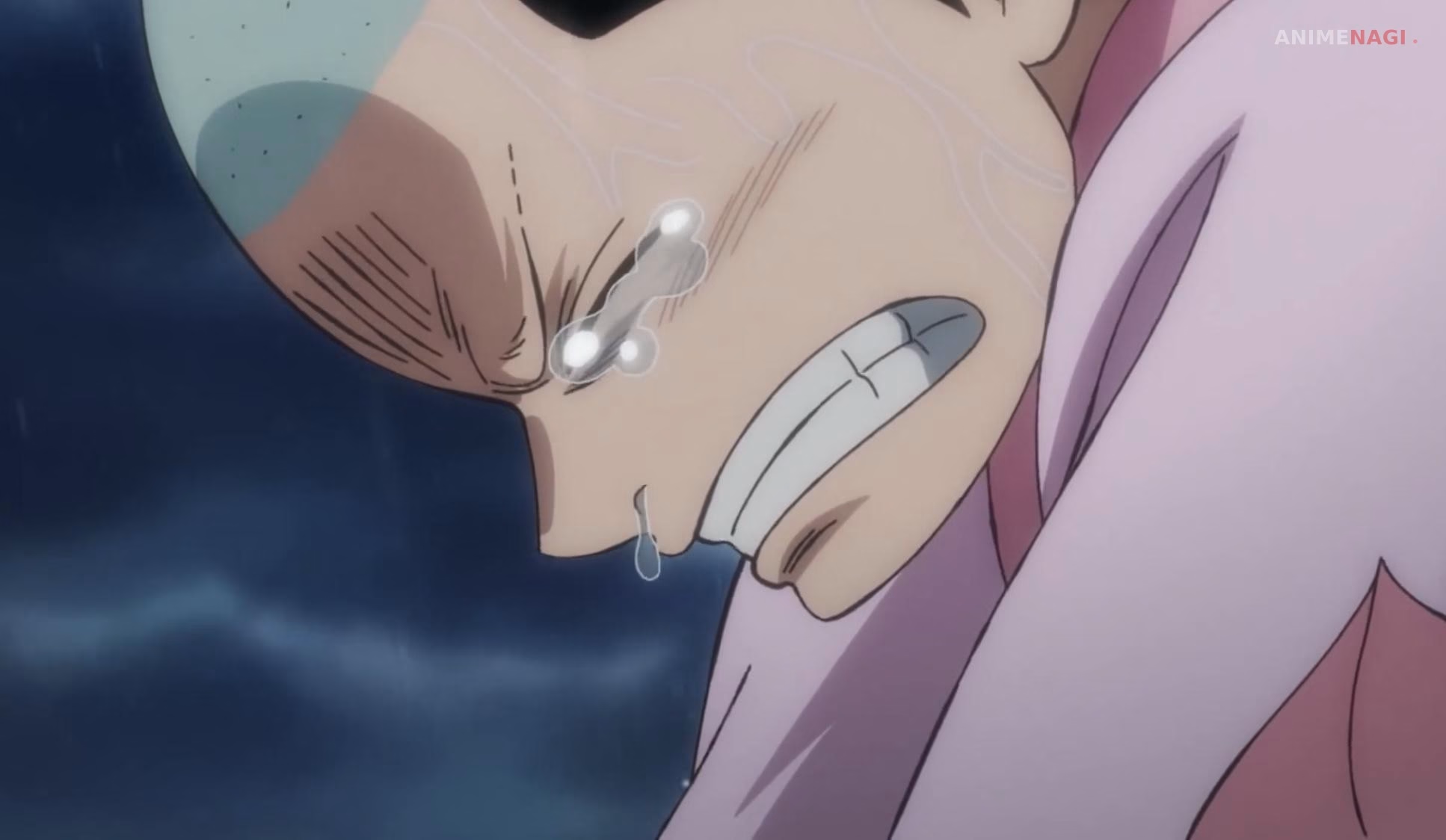
Many fans believe Zunesha’s crime is connected to this failure. The theory argues that Zunesha was responsible for transporting allies, resources, or even entire populations during the final stages of the Void Century conflict. If the elephant failed to arrive at a critical moment, Joy Boy’s plan may have collapsed.
This possibility fits several known facts. Joy Boy lost. The Ancient Kingdom disappeared. Fish-Man Island remained trapped beneath the sea. Noah was never used for its intended purpose.
If Zunesha played a key role in those events, the elephant could have blamed itself for the collapse of Joy Boy’s dream.
Did Zunesha betray Joy Boy?
Another popular interpretation is that the crime involved betrayal. Some theories suggest Zunesha unintentionally betrayed Joy Boy during the Void Century. Rather than acting out of malice, the elephant may have been manipulated, deceived, or forced into a decision that ultimately contributed to the downfall of the Ancient Kingdom.
This idea explains why the punishment seems connected to guilt rather than hatred. If Zunesha deliberately betrayed Joy Boy, execution would have made more sense. Instead, the elephant was allowed to survive while carrying a burden for centuries. That feels more like a punishment intended for someone who made a tragic mistake rather than a villain.
The emotional weight of such a scenario also fits Oda’s storytelling style. One Piece often focuses on characters carrying the consequences of past failures. Zunesha wandering endlessly because of a mistake made 800 years ago would perfectly match that theme. However, there is currently no direct evidence that confirms betrayal as the actual crime.
The possibility that Zunesha failed a mission
Perhaps the most widely accepted theory is that Zunesha failed to complete a crucial mission during the Void Century. Several fan discussions point toward the possibility that Zunesha was supposed to transport allies connected to Joy Boy’s final plan. When the mission failed, the entire alliance collapsed, leading to the victory of Joy Boy’s enemies.
This explanation aligns closely with what readers know about the Ancient Kingdom. The war during the Void Century appears to have involved multiple races and nations working together. Fish-Men, Minks, Wano, and several other groups seem linked to Joy Boy’s cause.
As a massive creature capable of carrying entire civilizations, Zunesha would have been an ideal transport vessel. If the elephant failed to deliver key allies at the right moment, the consequences could have been catastrophic.
Such a failure would also explain why the punishment involves endless movement. The sentence itself may symbolize the mission that was never completed.
Why is Wano connected to Zunesha’s crime
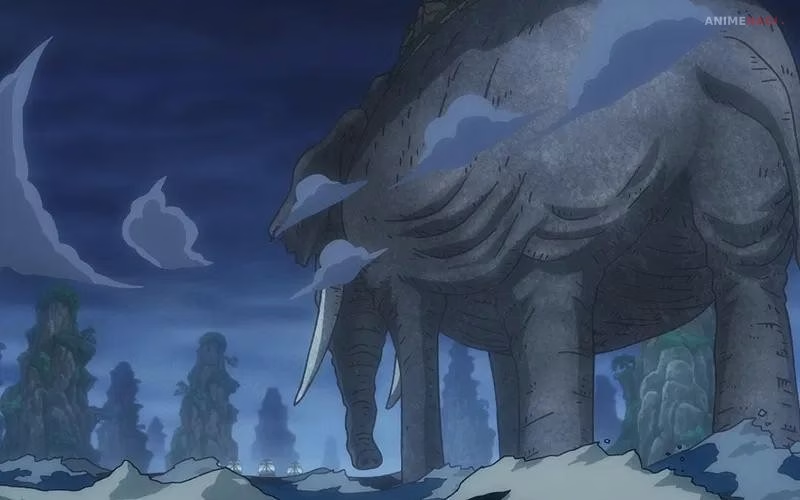
The Wano arc strengthens the theory that the crime is tied to larger historical events. When Zunesha arrives near Wano, the elephant immediately becomes linked to discussions about opening the country’s borders. Oden’s journal also repeatedly connects Wano’s future to Joy Boy’s eventual return.
This is unlikely to be a coincidence. Wano appears to have played a major role during the Void Century. The Kozuki family created the Poneglyphs, and the nation deliberately isolated itself from the outside world.
If Joy Boy’s final plan involved Wano, then Zunesha may have been tasked with transporting forces or supporting operations connected to the country. Failing that mission could have contributed to Wano remaining closed for centuries.
The elephant’s appearance during the climax of the raid suggests that unfinished business from the Void Century is finally reaching its conclusion.
Zunesha and the Voice of All Things
Another fascinating aspect of the mystery involves the Voice of All Things. Only a handful of characters can hear Zunesha’s voice. Among them are Momonosuke and Luffy. This rare ability connects them directly to ancient history and hidden truths.
The elephant communicates with Momonosuke during the Wano arc and even expresses a willingness to fight under his command. This moment demonstrates that Zunesha is not simply following random orders. The creature recognizes specific individuals connected to an ancient legacy.
This relationship suggests the punishment may have included waiting for a particular moment or person.
Rather than wandering aimlessly forever, Zunesha may have been enduring its sentence until the return of someone capable of finishing Joy Boy’s mission. If that is true, then the punishment was never solely about suffering. It was also about redemption.
The moment Zunesha recognized Joy Boy
The biggest breakthrough in understanding Zunesha came during One Piece Chapter 1043.
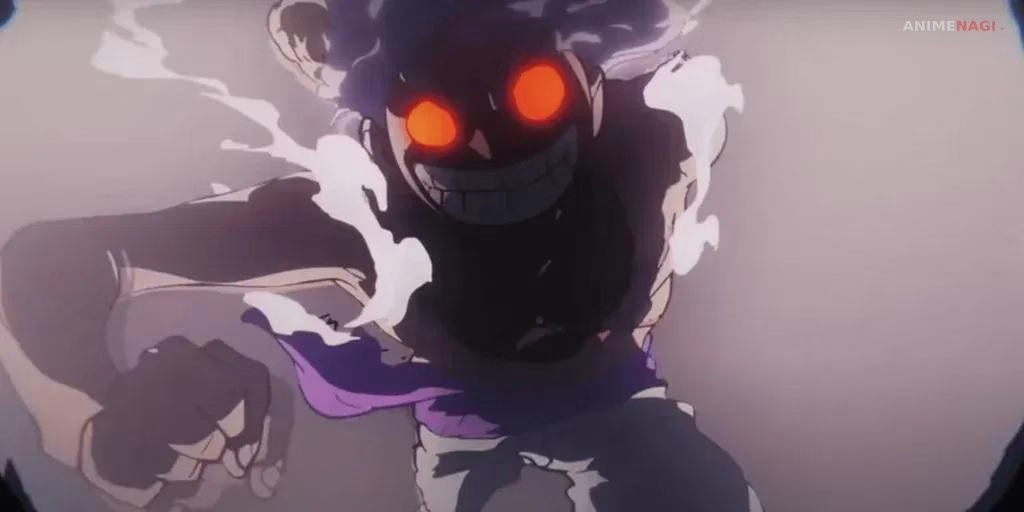
After Luffy’s apparent defeat against Kaido, Zunesha suddenly announces that Joy Boy has returned. The elephant states that it has not heard those sounds in 800 years, referring to what later becomes associated with the Drums of Liberation.
This scene is one of the most important moments in modern One Piece. Zunesha personally knew Joy Boy. The elephant existed during the Void Century and can apparently recognize something unique about Joy Boy’s presence. Whether that recognition comes from Luffy’s awakening, inherited will, or another mystery remains part of the ongoing story.
What matters is that Zunesha immediately understands the significance of the moment. The elephant is not reacting to a rumor or prophecy. It is responding to something it personally experienced 800 years ago.
Is Luffy literally Joy Boy?
Zunesha’s statement created enormous debate within the fandom. When the elephant declared that Joy Boy had returned, many readers wondered whether Luffy had literally become Joy Boy. Others argued that Joy Boy’s will was simply being inherited by a new generation.
Subsequent chapters strongly support the inherited will interpretation. One Piece has consistently emphasized inherited dreams rather than reincarnation. Characters carry forward the hopes of those who came before them. Roger inherited the ambitions of earlier generations, and Luffy continues that tradition.
From this perspective, Zunesha recognizes not the physical return of Joy Boy but the return of the ideals and spirit associated with him.
That distinction is crucial because it reinforces one of the series’ central themes. History does not repeat itself through identical people. It continues through inherited determination.
How Nika changes the mystery
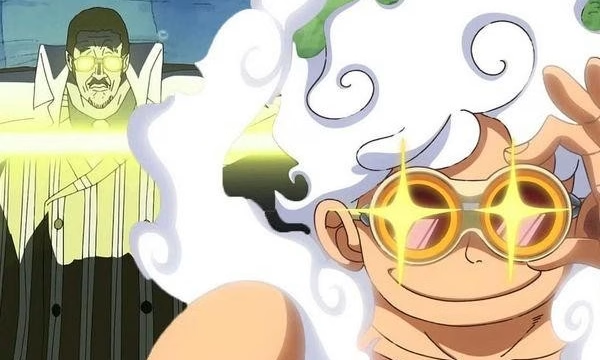
The reveal of Luffy’s Devil Fruit as the Human-Human Fruit, Model: Nika added another layer to the story.
The awakening of this fruit coincides with Zunesha recognizing Joy Boy’s return. The elephant specifically references sounds associated with the Drums of Liberation.
This suggests a direct relationship between Joy Boy and the power of Nika. Whether Joy Boy previously possessed the same fruit remains unconfirmed. However, the narrative clearly links the concepts of liberation, freedom, and Joy Boy’s legacy.
For Zunesha, hearing those sounds again after eight centuries represents the return of hope. The elephant’s reaction is emotional rather than strategic. It feels like someone witnessing the revival of a dream that was thought lost forever.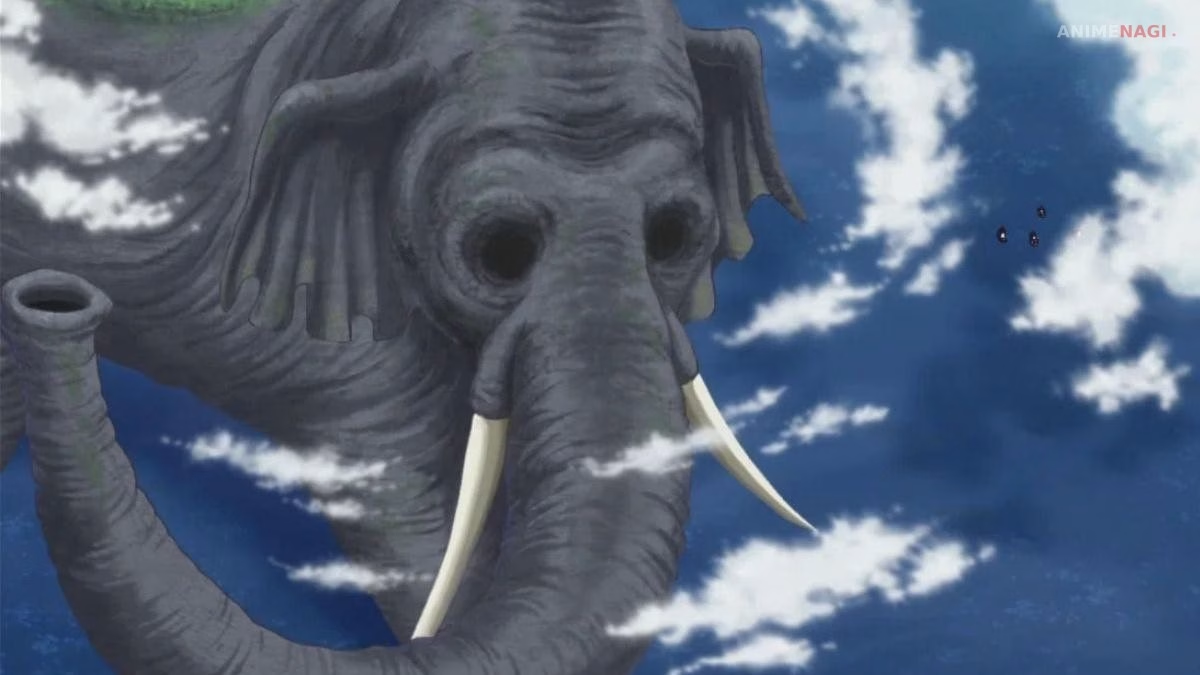
Why Zunesha stayed alive for 800 years
One question that often gets overlooked is why Zunesha survived for so long. Most creatures would not live through centuries of punishment. Yet the elephant remained alive long enough to witness Joy Boy’s return.
The answer likely lies in the nature of the sentence itself. If Zunesha’s crime was tied to the fall of the Ancient Kingdom, then the punishment may have included waiting for the opportunity to make amends. The elephant could not die because its role in history was unfinished.
This interpretation transforms the punishment into something more complex than simple suffering.
Zunesha becomes a living witness to the Void Century, carrying both a civilization and a burden while waiting for the moment when the past can finally be corrected.
What Oda is probably saving for the final saga
Despite all the clues, Oda has intentionally withheld the exact details of Zunesha’s crime. That decision suggests the truth is connected to larger revelations still waiting in the final saga. The crime likely overlaps with the origins of the World Government, the fall of the Ancient Kingdom, and the true identity of Joy Boy.
Revealing the answer too early would expose critical information about the Void Century. This storytelling approach mirrors other long-running mysteries in One Piece. Oda often introduces a question years before providing the complete answer. By the time the truth arrives, it usually reshapes readers’ understanding of the entire world.
Zunesha’s crime appears positioned to serve exactly that purpose. When the full story is finally revealed, it will probably explain not only the elephant’s punishment but also the final failure that led to 800 years of oppression.
The most likely explanation for Zunesha’s crime Based on the evidence currently available, the most convincing theory is that Zunesha failed a mission connected to Joy Boy’s final plan during the Void Century.
The punishment of endless walking symbolically mirrors an unfinished journey. The elephant’s deep sense of guilt suggests responsibility rather than outright villainy. The connection to Wano, Fish-Man Island, and Joy Boy’s failed promise further supports the idea that a critical operation collapsed because something went wrong.
Whether that failure involved betrayal, hesitation, manipulation, or simple inability remains unknown. What seems increasingly clear is that Zunesha was never meant to be a monster. The story portrays the elephant as a tragic figure carrying the weight of ancient mistakes.
After centuries of waiting, the arrival of Luffy and the return of Joy Boy’s legacy may finally provide the redemption that Zunesha has been seeking since the Void Century.